
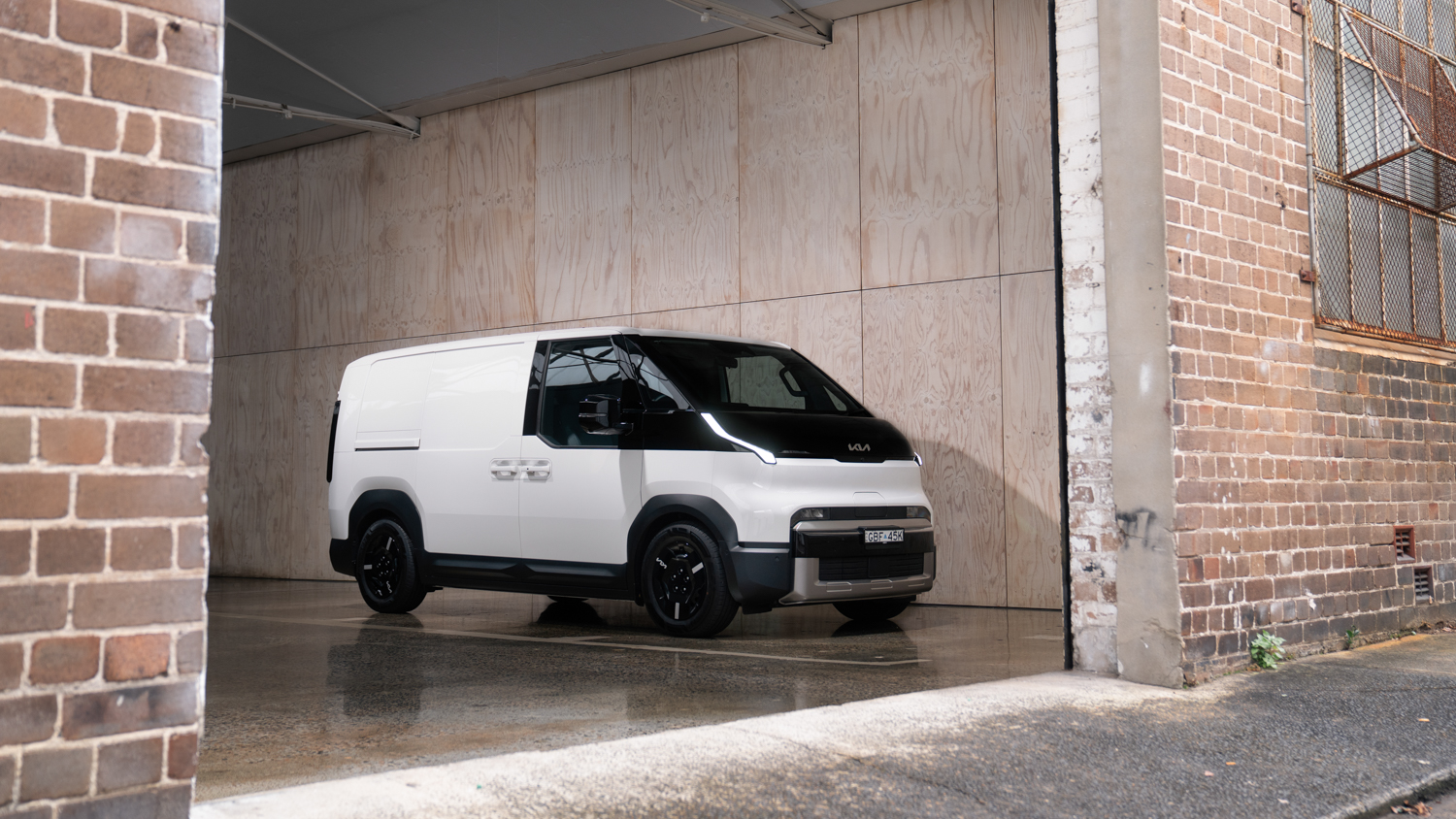
2026 Kia PV5 Cargo Review: Funky van takes on Toyota Hiace, Hyundai Staria Load and Ford Transit with compelling EV drivetrain
The Kia PV5 is a van that breaks the boxy van mould, while also aiming to tempt fleet operators and drivers to go electric.
In a market segment that has long been the domain of diesel, and one where electric vans have so far failed to make a real dent despite a handful of attempts, the PV5 Cargo’s sharp pricing aims to change that.
As with the Kia EV3, EV5, EV6 and EV9, the PV5 is built on a dedicated EV architecture, known as E-GMP.S.
READ MORE: Kia PV5 pricing confirmed: Price parity with Toyota Hiace and other dirty diesels
READ MORE: Australia has a new EV van price leader! Farizon V7E undercuts Kia PV5 and dives below $50K
READ MORE: 2027 “EV1” to be Kia’s most affordable EV, and could mean the axe for the tiny Picanto
And it’s headlined by genuine design intent as well as promised lower running costs and the zip of an electric motor.
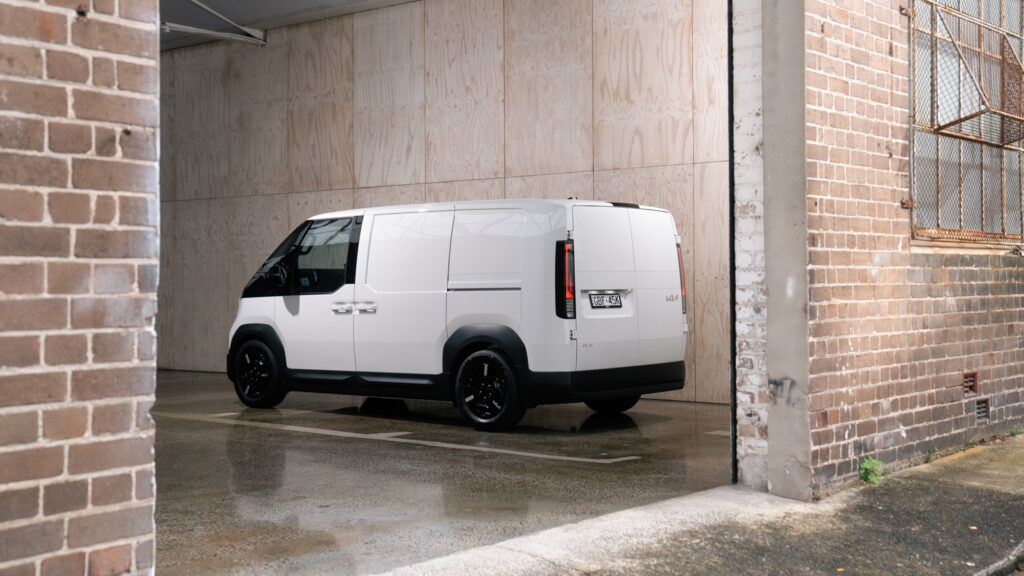
For now, the PV5 is offered as a two-seat commercial vehicle – the Cargo – but in 2027 it will be joined by a people mover version.
2026 Kia PV5 Cargo price and equipment
It’s all about simplicity with the Kia PV5.
Priced from $55,990, the PV5 Cargo arrives in a single variant – the S four-door Long Range – with a single exterior colour (Clear White) and one battery option, the 71.2kWh unit good for up to 416km of range according to the WLTP cycle.
It’s a van that will compete with alternatives powered by petrol or diesel engines. Prime targets include the Toyota Hiace, Hyundai Staria Load and Ford Transit Custom.
The PV5 is a smaller vehicle, around half a metre shorter than the Hiace and Staria and narrower than all three.
That said, in terms of EV rivals, the closest competitors are the Volkswagen ID.Buzz Cargo (from $69,990 plus on-road costs) and Peugeot e-Partner ($59,990 plus on-roads) and the price-busting Chinese Farizon V7E ($49,990 drive-away) and LDV eDeliver 5 ($47,990 drive-away).
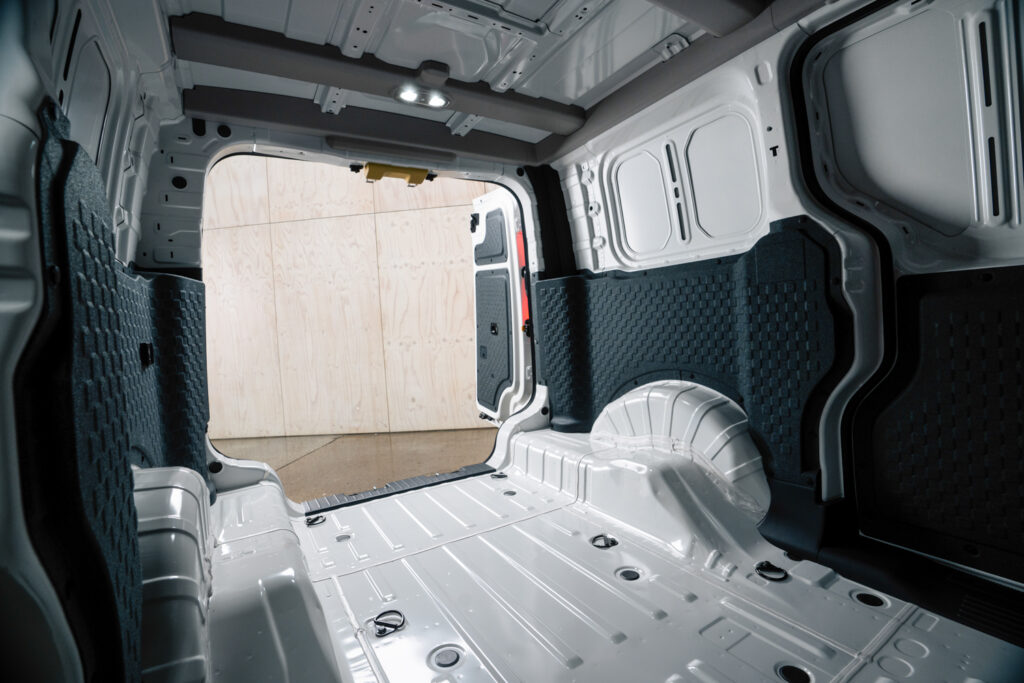
The PV5’s load space, at 4420 litres, is smaller than most; to put that 4.4 cubic metre capacity into perspective, the Toyota offers 6.2m³, the Ford 5.8m³ and the Hyundai 4.94m³.
Clearly the sales pitch revolves around lower running costs and the ability to charge each night, reducing trips to the servo.
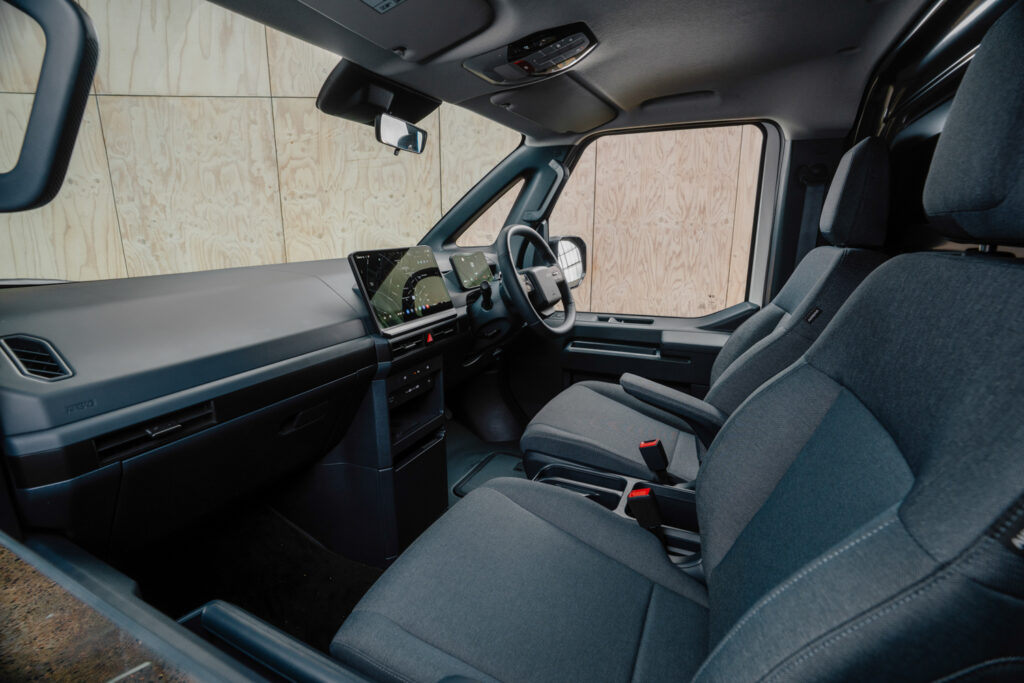
Despite the no-frills single-spec approach, the equipment list is impressively comprehensive. Standard kit includes a 12.9-inch infotainment touchscreen paired with a 7.5-inch digital instrument cluster, wireless Apple CarPlay and Android Auto, satellite navigation, dual USB-C ports and wireless phone charging.
There are also sensibly-sized 16-inch tyres wrapped around steel wheels with plastic aero caps.
There’s also Kia Connect that allows monitoring and basic controls from a smartphone app.
Over-the-air software updates promise to introduce tweaks and improvements, too.
On the safety front there are seven airbags (dua; front, front side, side thorax, side curtain and a centre airbag between the occupants) as well as autonomous emergency braking, lane keeping assist, highway driving assist, blind spot monitoring with a dedicated camera display and surround view monitor.
It recently earned an ANCAP Platinum safety rating with a 91 per cent overall score.
For tradies, the vehicle-to-load (V2L) functionality is a win.
There’s a A standard 230V powerpoint in the load area as well as an external adaptor for additional vehicle-to-load (V2L) functionality.
Eight tie-down points line the low cargo floor, which houses the battery pack beneath (the reason there’s no spare wheel).
DC fast charging at up to 128kW means a 10-80 per cent top-up takes around 30 minutes on a suitable DC charger.
The charge port is in the front, which may not suit everyone.
The 400V battery is an NMC chemistry, so the recommendation is to only charge it to 100 per cent ahead of a longer trip (or day on the tools).

There are also various factory accessories, including a roof platform, cargo liner, nudge bar, dash mat and towbar (the tow capacity is rated at 750kg).
Servicing is every two years or 30,000km.
Servicing costs around $550 per service and there are pre-paid service plans; a single two-year plan is $528 while an eight-year service plan is $2246.
2026 Kia PV5 Cargo: What we think
The PV5 weighs 1910kg and its 740kg payload trails key rivals by several hundred kilograms, plus its 4420-litre cargo area isn’t exactly small but is smaller than key rivals.

That’s enough to rule out tradies regularly hauling bulky or very heavy items taking it near the GVM limit, or anyone routinely filling the van to the roof.
That said, it’s a genuinely useful size and the smaller footprint is an advantage in tight urban environments, and for many city-based operators the trade-off in capacity will be more than offset by easier manoeuvring and lower running costs
On the road, the PV5 punches well above its spec sheet.
The electric motor’s peak numbers – 120kW and 250Nm – don’t sound particularly hearty next to diesel rivals with more torque.
But Kia’s relatively short reduction gear ratio means it all works better up to about 80km/h, which is exactly what you want.

The result is a van that feels genuinely perky in everyday driving.
While I haven’t lined them up side by side, I’d be fairly confident that the PV5 will outzip most diesel vans in the cut-and-thrust of city traffic.
The diesel competitors might win on paper, but in the real world the PV5 simply works better.
It’s the start of a great van driving experience, too.
The low centre of gravity (thanks to 384.8kg of underfloor battery) gives it a settled, confident feel through corners that belies its size, and the regen paddles are a welcome touch for adjusting brake feel on the fly.
It also helps that the PV5 underwent the same local suspension development program of other Australian-delivered Kias.
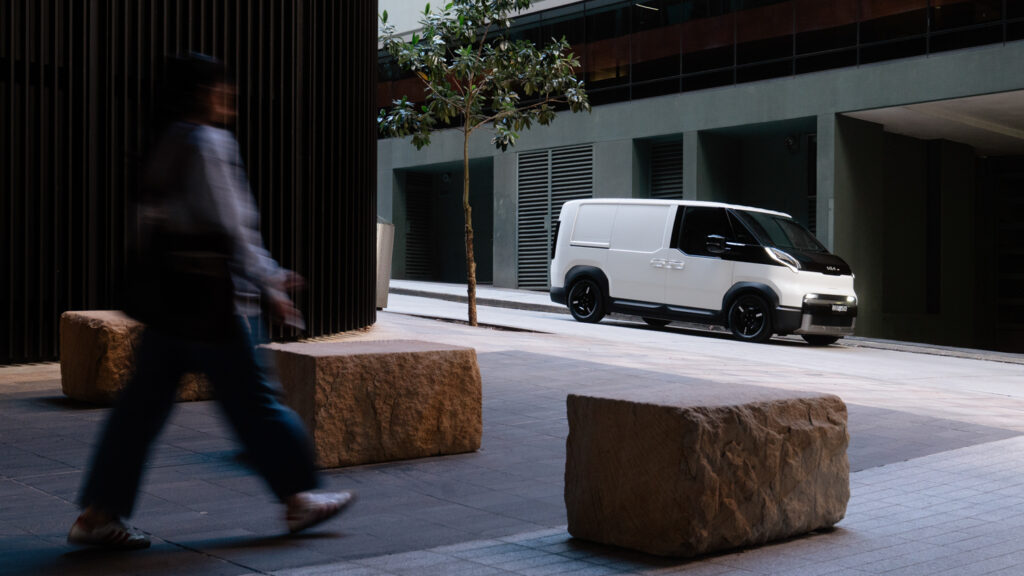
Away from the drive experience, there’s also lots to like.
Cabin storage is genuinely useful, with a dash-mounted covered binnacle, a slide-out tray in the centre console, some underfloor storage and multi-layered door pockets. A segmented console between the seats is also handy for keeping things organised.
Further back, the low load height and dual sliding side doors make loading easy, and the tie-down points are well positioned.
The rear barn doors swing out up to 180 degrees to make loading bulky things easier.
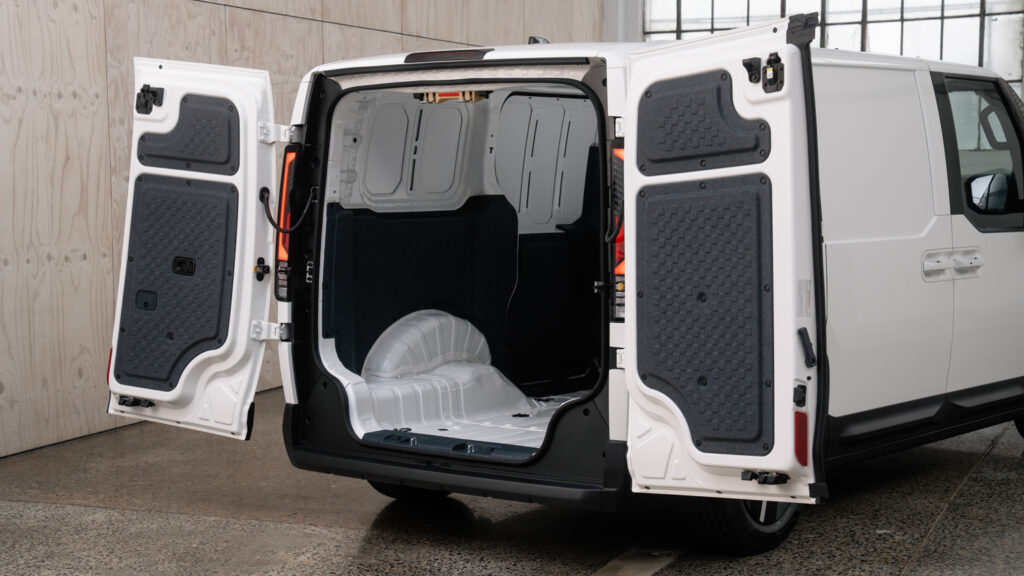
There’s a standard cargo barrier, although it means the rear vision mirror is useless; we’d have liked to have seen a digital rear-view mirror.
And vehicle-to-load (V2L) is a standout for the target market, providing up to 3.6kW of easy to access 230V power, potentially eliminating the need for a separate generator.
The ability to run tools or equipment straight off the van’s battery – perfect for coffee machines! – opens up real possibilities for trades and mobile services.
Add in long two-year service intervals, low running costs, a believable claimed range, and the backing of Kia’s dealer network (a genuine selling point against lesser-known EV van rivals), and the ownership case stacks up nicely.
There are a few niggles.
Kia usually nails the blend of touchscreen and physical controls, but a new operating system and fresh-to-Kia cabin layout in the PV5 leans too heavily on the screen.
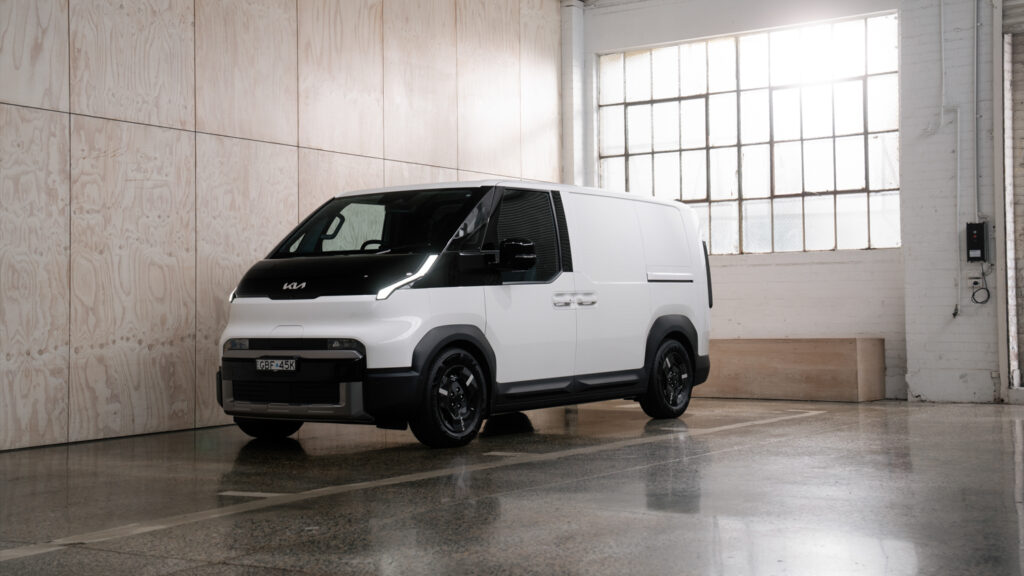
As much of the car world is bringing buttons and dials back, Kia has headed in the opposite direction.
A digital rear-view mirror would be a smart addition given the rear centre mirror’s view is largely blocked.
The lack of a standard spare wheel could be a sticking point for some, even with an accessory solution to be offered through dealers in the pipeline.
And while the NMC battery’s recommended daily charge limit shouldn’t affect most operators in practice, the optics of “don’t charge to 100% every day” won’t sit well with everyone in a market where range anxiety still looms large.
2026 Kia PV5 Cargo: Verdict
The PV5 Cargo is a genuinely impressive first attempt at a dedicated electric van, and it’s far more enjoyable to drive than its modest power and torque figures suggest.
Its reduced payload and cargo capacity compared with diesel options such as the Hiace, Staria Load and Transit Custom will rule it out for operators who need maximum carrying capability.
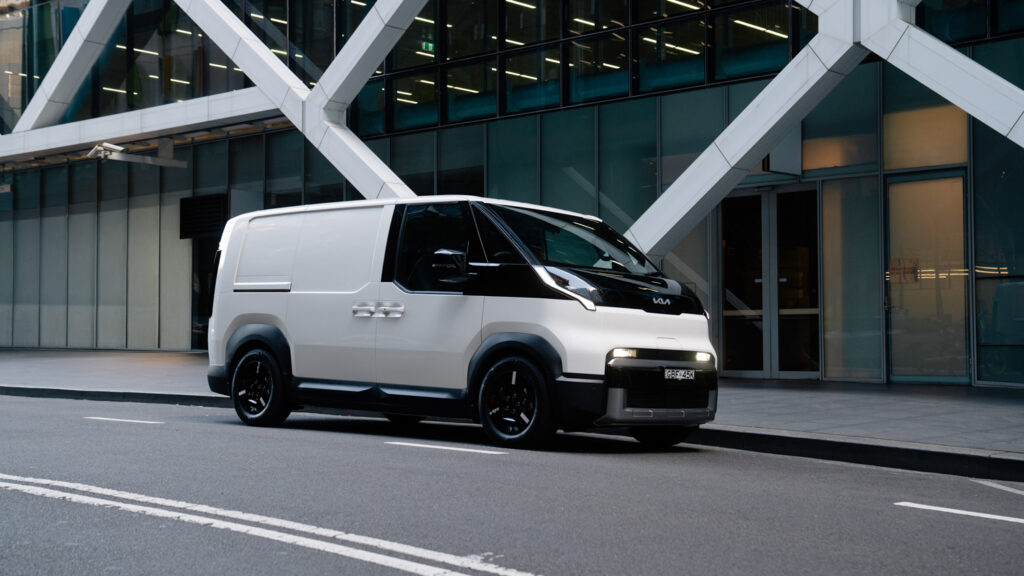
But for businesses running urban routes – where manoeuvrability, running costs and overnight charging matter more than outright cargo volume – the PV5 mounts a compelling case.
Importantly it’s backed by genuinely strong performance, good dynamics, and the security of Kia’s dealer network.
Score: 4.0/5
2026 Kia PV5 Cargo price and specifications
Price: $55,990 plus on-road costs
Basics: EV, 2 seats, 4 doors, van, FWD
Range: 416km (WLTP)
Battery capacity: 71.2kWh
Battery warranty: 8 years/160,000km
Energy consumption: 19.1kWh/100km
Motors: 1 front 120kW/250Nm
AC charging: 10.5kW, Type 2 plug
DC charging: 128kW, CCS combo plug
0-100km/h: NA
I recently attempted to purchase a Kia PV5 Cargo or Crew Van through an Adelaide dealer and came away extremely disappointed with the overall experience. [no Fault of the sales specialist who I felt sorry for]
As someone who was genuinely ready to place an order, I was surprised by what appears to be a very limited offering.
My concerns are:
Only white is available – There appears to be no colour choice whatsoever. It feels like a “poverty pack” specification rather than a modern commercial vehicle. Some beautiful colours overseas
No accessory catalogue available – I provided the dealer with a list of accessories I wanted, including:
Rubber floor mats
Cargo flooring
Side wall protection panels
Towbar
Other practical cargo accessories
Unfortunately, none of these could be supplied or even quoted.
No digital/electrochromatic rear-view mirror – On a panel van with no rear window visibility, I was astonished to find this isn’t available. It raises the question of how the vehicle achieves its safety rating when rearward vision is so compromised. A camera-based rear-view mirror should be standard or at least available as an option.
The PV5 is an exciting concept, but it currently feels as though Kia Australia has launched the vehicle before developing the accessories and options that commercial buyers actually need.
I genuinely wanted to buy this van, but the lack of choice and inability to properly configure it for business use has left me questioning whether Kia Australia is serious about selling the PV5 in the Australian market.