Hyundai Ioniq 3 priced: UK version of new EV rival for BYD and MG starts at $42,500 … that’s promising for Australia
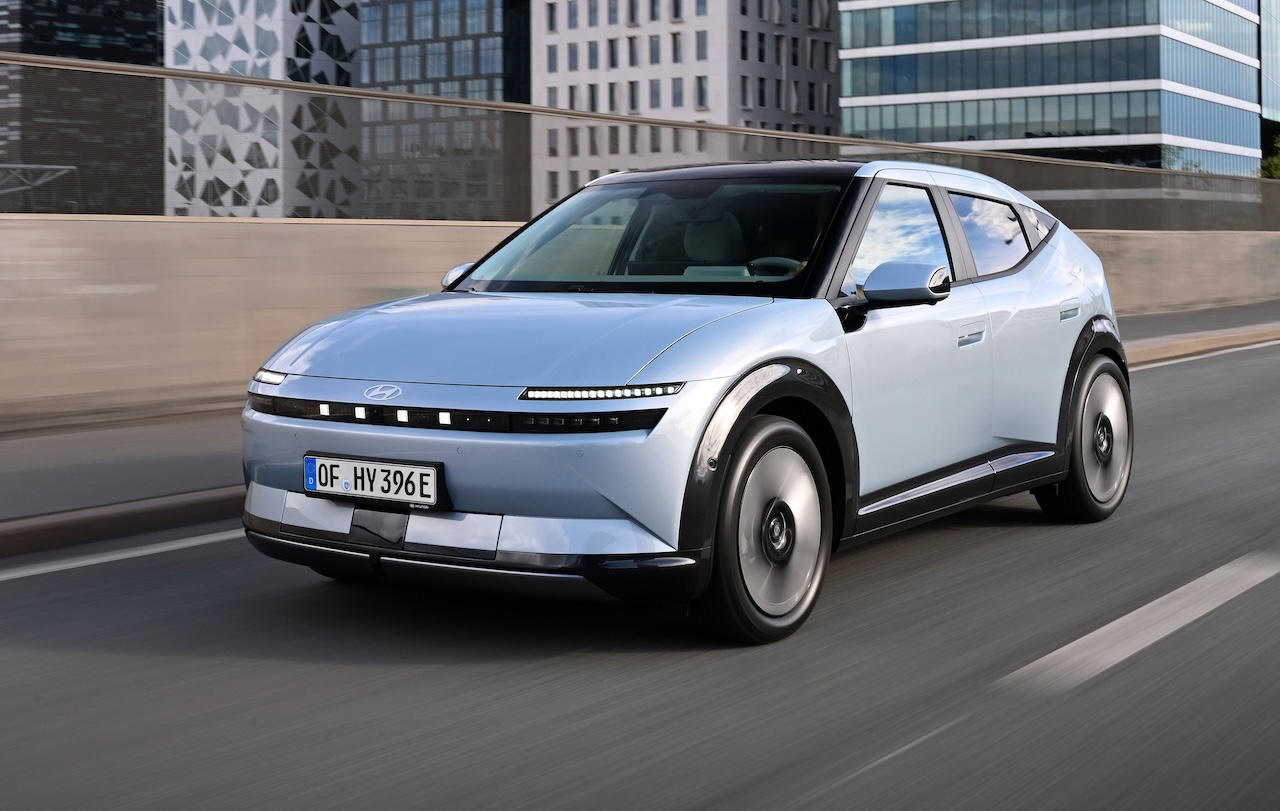
The Hyundai Ioniq 3 has been priced for the UK right-hand drive market, with the Korean brand’s crucial new compact EV starting from the equivalent of about $42,500 ahead of its Australian arrival in early 2027.
Hyundai UK has announced a £22,245 drive-away starting price for the entry-level Ioniq 3 Advance equipped with its smaller 42.2kWh battery.
A straight currency conversion puts that at about $42,500, although UK drive-away pricing and Australian pricing structures differ significantly and currency conversions are not a reliable predictor of what Hyundai Australia will eventually charge.
READ MORE: Is this the $40K car that makes Hyundai an EV power in Australia? Ioniq 3 reboots the electric hatch in a bid to challenge BYD, Jaecoo and MG
READ MORE: Hyundai reveals Ioniq 3 concept: Compact EV a chance for Australia, will share tech with Kia EV3 and go head-to-head with BYD Atto 3 and MG S5
READ MORE: Urgent surgery! 2026 Hyundai Ioniq 6 goes under the knife in dramatic bid to get back in the fight with Tesla Model 3 and BYD Seal
Nevertheless, the number is intriguing because it closely matches previous indications that the Ioniq 3 could start at around $42,000 plus on-road costs when it goes on sale here in the first quarter of 2027.
Hyundai Australia has yet to announce local pricing or confirm exactly which Ioniq 3 variants will be offered.
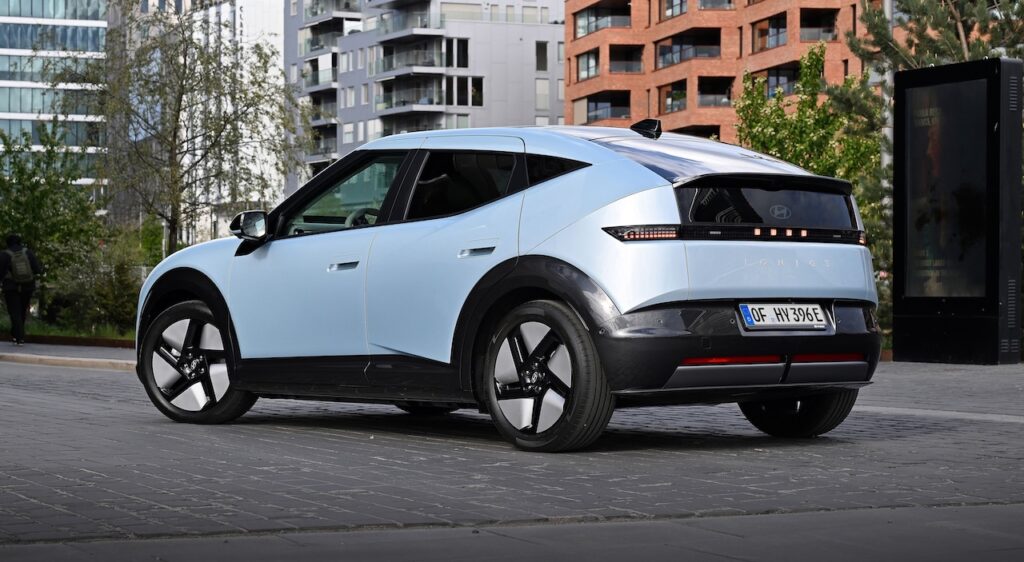
If it does arrive around that price, the Ioniq 3 will find itself pitched into an increasingly aggressive affordable EV market populated by Chinese rivals from BYD, MG, Geely, GAC and others.
The UK range gives us our first look at how broadly Hyundai intends to spread Ioniq 3 pricing.
Above the £22,245 ($42,500) 42.2kWh Advance sits a 61kWh Advance at £25,745 ($49,300), followed by the Premium at £27,445 ($52,600), Ultimate at £29,945 ($57,400) and sporty N Line Evo at £31,945 ($61,200).
Those Australian figures are direct currency conversions only and should not be interpreted as indicative local prices.
The UK announcement also fills in some of the remaining technical blanks following the Ioniq 3’s global unveiling earlier this year.
As previously reported by EV Central, the front-wheel-drive Ioniq 3 comes with a choice of 42.2kWh and 61kWh batteries.
Oddly, the smaller-battery version is also the more powerful, producing 107.8kW and 250Nm compared with 99.5kW and 250Nm for the long-range car.
The 42.2kWh model accelerates from 0-62mph (100km/h) in 8.8 seconds according to the latest UK specification, while the 61kWh version takes 9.5 seconds, or 9.6sec in N Line form.
Hyundai has now also confirmed maximum DC charging rates of 119kW for the smaller battery and 110kW for the 61kWh pack.
Despite that relatively modest peak charging power, a 10-80 per cent charge is claimed to take 29 minutes for the 42.2kWh car and 30 minutes for the larger battery.
An 11kW AC onboard charger is listed for both.
The longest-legged UK Ioniq 3 is the 61kWh Advance, with an expected 308-mile (496km) range.
Adding equipment and larger wheels progressively eats into that figure, with the Premium rated at 303 miles (488km) and Ultimate at 300 miles (483km).
The biggest hit comes with the N Line Evo and its 19-inch wheels, which drops to 265 miles, or about 426km – around 70km less than the most efficient 61kWh version.
The entry 42.2kWh Advance is expected to cover 213 miles, or about 343km.
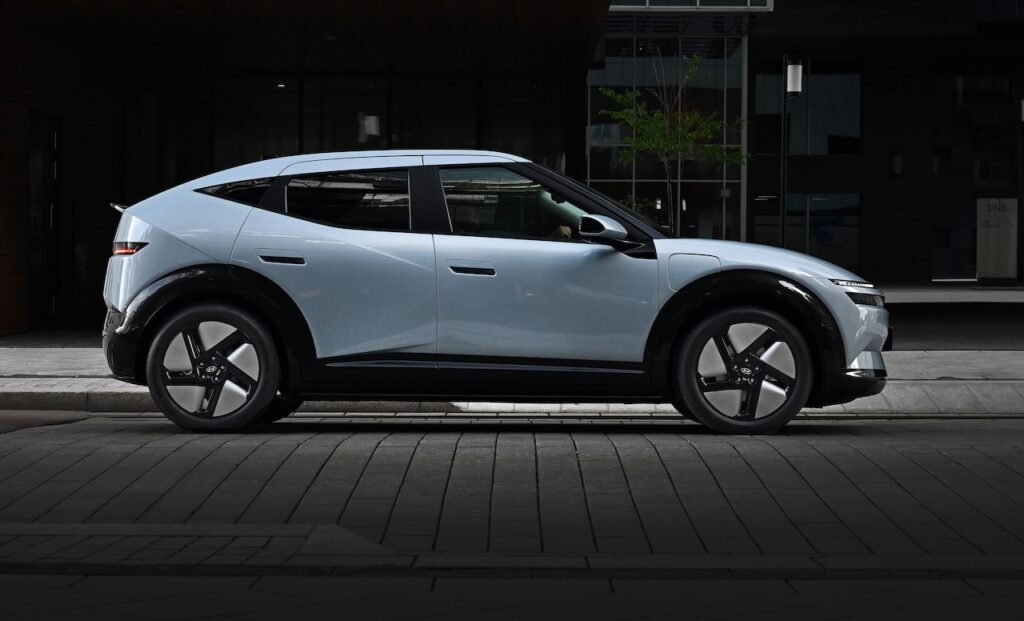
Despite its compact 4155mm length, the Ioniq 3 rides on a relatively long 2680mm wheelbase and offers a 441-litre boot, expanding to 1213 litres with the rear seats folded.
It can also tow up to 750kg and carry up to 100kg on its roof.
Its slippery ‘Aero Hatch’ body has a claimed drag coefficient of around 0.263.
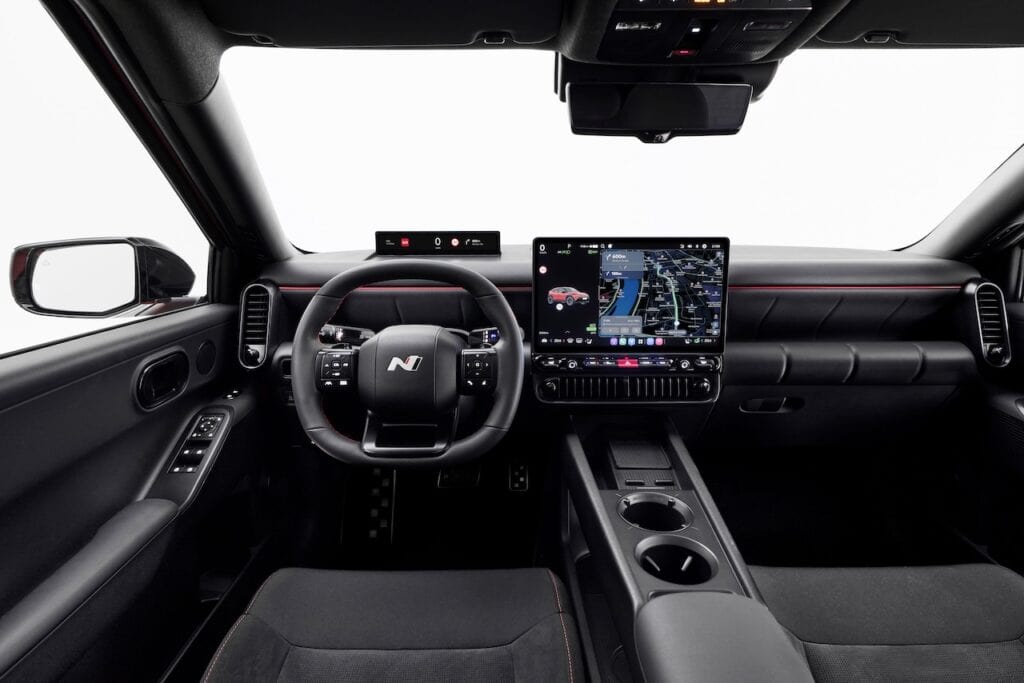
The UK specification also confirms a lengthy equipment menu that includes battery pre-conditioning, a heat pump, vehicle-to-load (V2L), Digital Key 2.0, Highway Drive Assist 2.0, Bose audio and heated, ventilated and reclining ‘Relaxation Seats’, depending on variant and options.
The flagship N Line Evo also introduces Memory Reverse Assist, which can memorise the previous 50 metres of driving inputs to help automatically reverse the car back out of tight spaces.
The Ioniq 3 will become one of Hyundai Australia’s most important new EVs when it arrives in the first quarter of 2027, slotting above the smaller Inster and giving the brand a more affordable alternative to its larger Ioniq models.
And while £22,245 certainly doesn’t guarantee a $42,500 Australian Ioniq 3, the first official overseas pricing suggests EV Central‘s earlier prediction of a circa-$42,000 starting point might not have been far off the mark.