
Is this the $40K car that makes Hyundai an EV power in Australia? Ioniq 3 reboots the electric hatch in a bid to challenge BYD, Jaecoo and MG
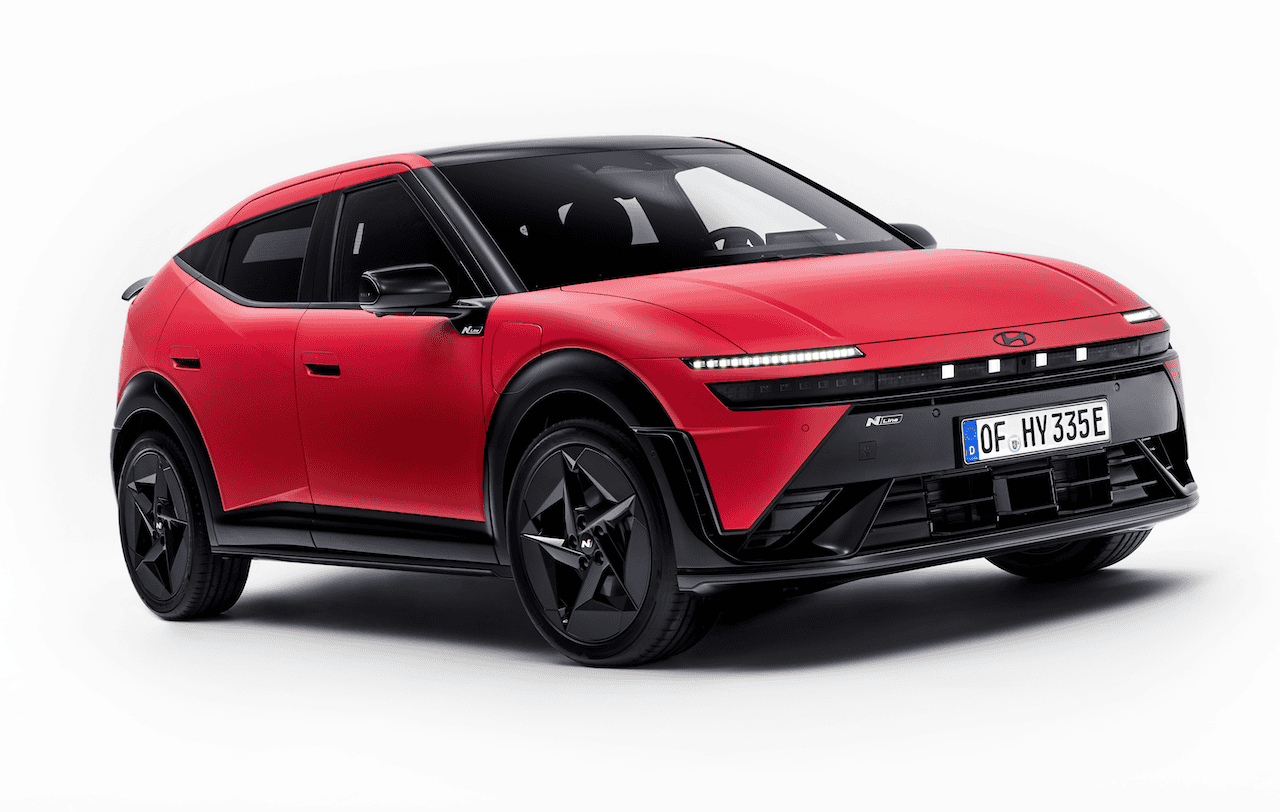
Hyundai has reinvented the humble hatchback and it’s refusing to play safe with its latest all-electric Hyundai Ioniq 3 five-door that will be on-sale in Australia before the end of March 2027.
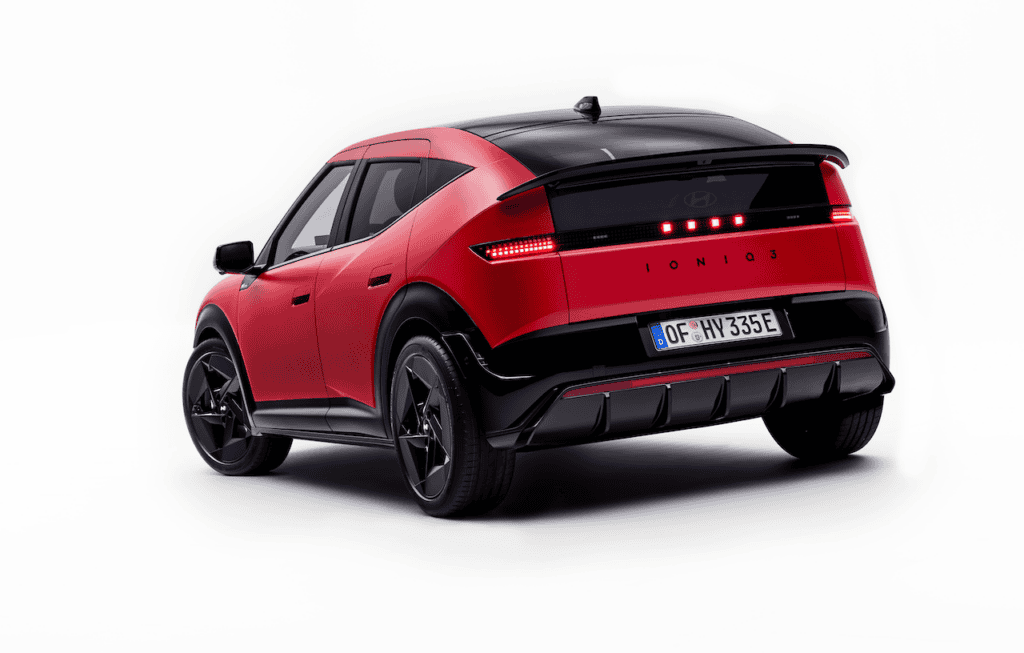
Officially called an ‘aerohatch’ by the Korean car-maker, the all-new Hyundai IONIQ 3 is the first car to be designed under the firm’s next-gen Art of Steel design language that prioritises swoopy styling for enhanced efficiency.
With a 0.26Cd drag coefficient, the design work has paid off and, without resorting to using a massive battery, the most expensive versions of the MG4 and BYD Dolphin rival should be capable of driving up to 500km on a charge.
READ MORE: Radical Hyundai Ioniq Earth and Venus concepts are out of this world
READ MORE: Hyundai Kona EV to be rebirthed in 2027! Popular compact SUV will also continue as hybrid and ICE
READ MORE: 2026 Hyundai Elexio Review: Hyundai calls on China to help it invigorate its EV sales in Australia. Should you be tempted?
When it lands, as well as joining the Inster to bolster the brand’s entry-EV offering, the Ioniq 3 will prove an indirect replacement for the strong-selling i30 petrol hatch that was recently axed.
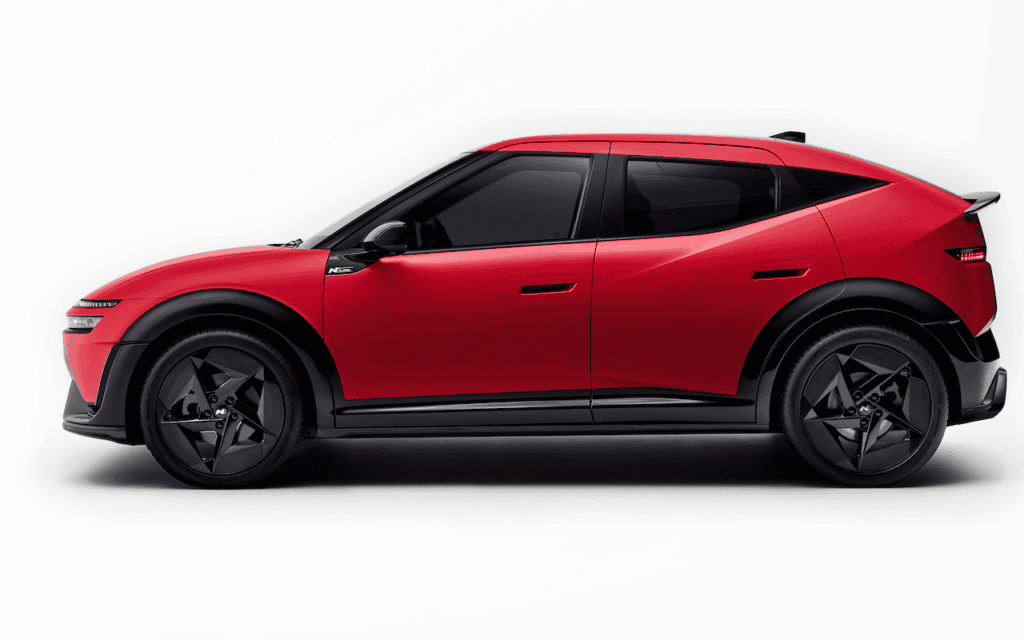
Hyundai Australia says it’s too early for pricing, but the small, stylish Ioniq 3 is tipped to cost around $42,000, plus on-roads, when sales start in Q1 2027, making it a direct rival for the rear-wheel-drive MG4, before discounting.Up close, the Ioniq 3 looks like nothing else in its growing segment and buyers can ramp up its sportiness by opting for the N Line variant.
Choose the styling pack and Hyundai adds large 19-inch alloy wheels, a more prominent ducktail rear spoiler, diffuser, side skirts and an aggressive front bumper, all of which are finished in gloss black, mimicking the finish on the full-fat i20N hot hatch.
Hyundai has refused to comment on whether a proper Ioniq 3 N is in the works.
If you’re wondering about the N Line-specific four LED dashes within the slimline front grille, they are supposed to signify an ‘H’ in Morse code.
Beneath the skin, you’ll find the a 400-volt E-GMP platform fron the same family as the larger Hyundai Elexio, but here the new Ioniq family member measures 4155mm long (4170mm for the N Line), 1800mm wide and stands 1505mm tall with a 2680mm wheelbase.
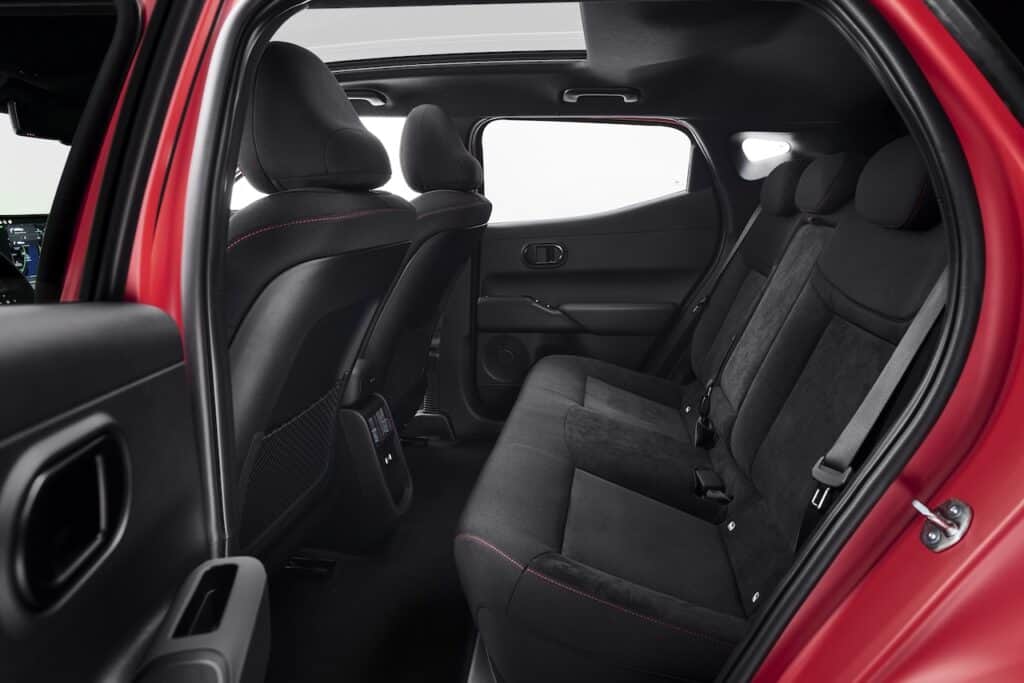
Despite its rakish looks, head and legroom are on par with the larger i30 hatch, while in the rear there’s a respectable 441-litre boot.
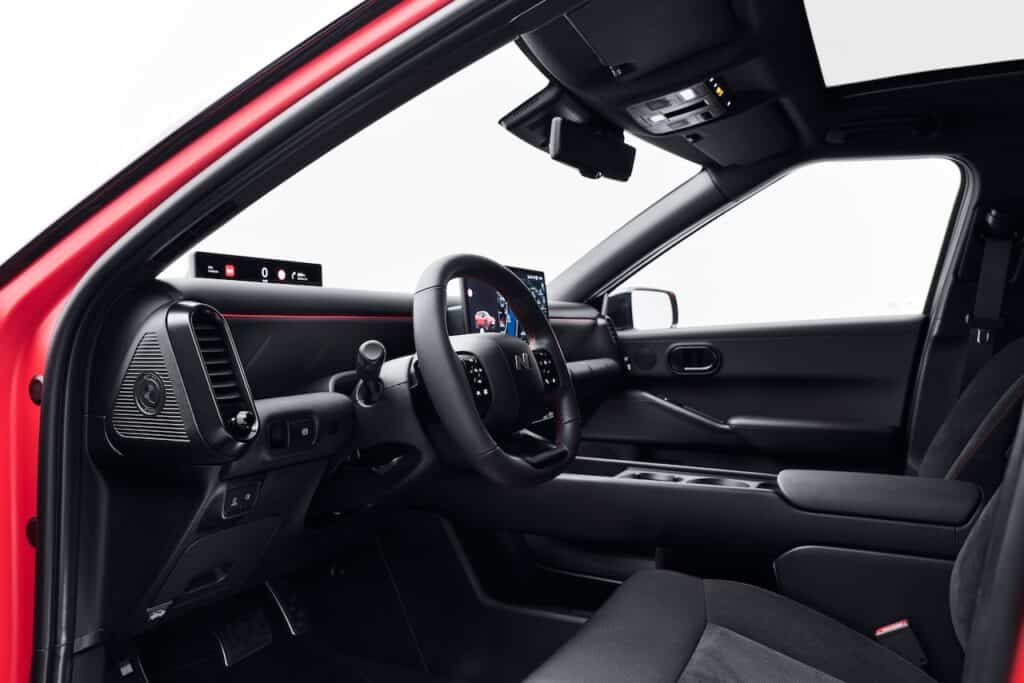
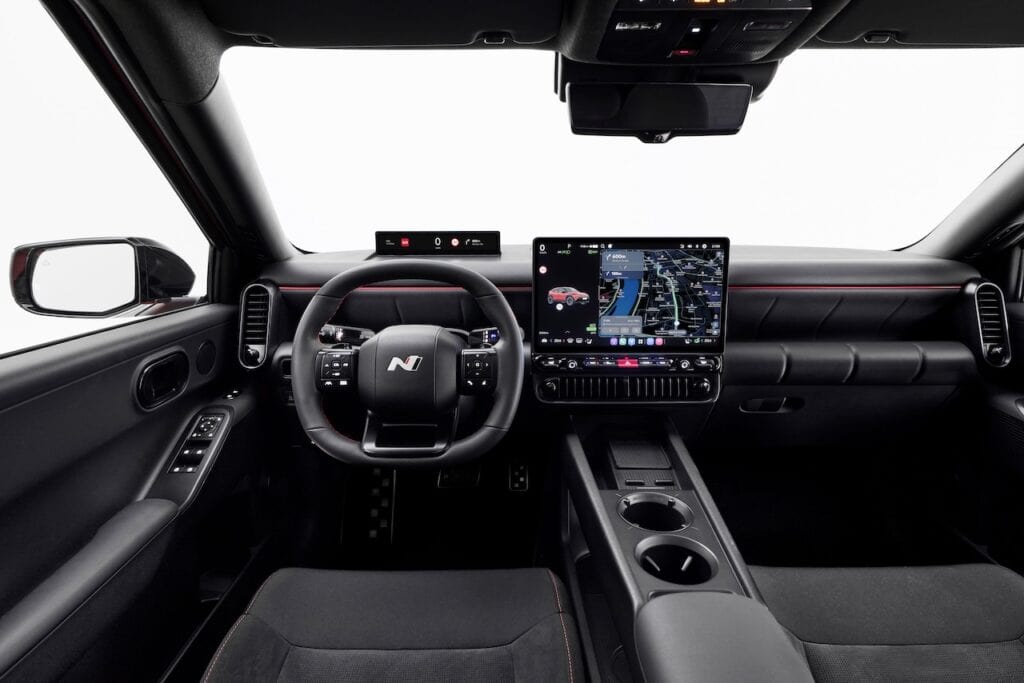
Inside, entry versions come with a large 12.9-inch infotainment system that’s swapped out for a much bigger 14.6-inch unit in the N Line.
Whatever you get, all run the brand’s latest Android-based software and those screens are backed up with proper physical buttons designed to be pleasing to use, with tactile feedback normally offered by more expensive cars.
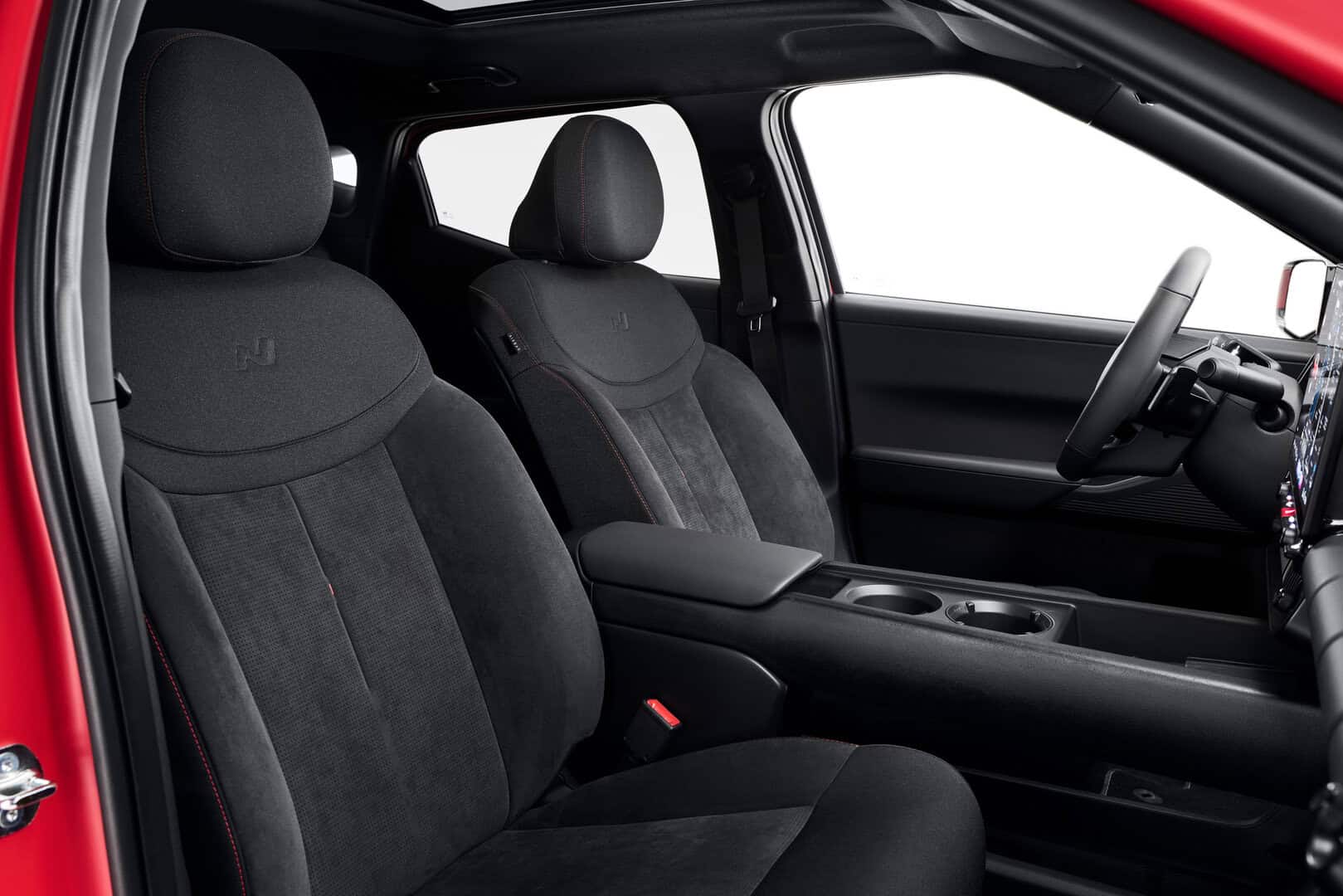
The parallels with bigger cars continue with the new heated and ventilated ‘Relaxation Seats’, which employ jazzy fabrics inspired by 1970s Italian furniture.
As well as feeling premium to the touch, designers say they have upped the proportion of recycled and bio-based materials.
From launch, a powerful Bose premium sound system is also an option, while both dual-zone climate control and ambient LED lighting will be standard.
Hyundai Australia has yet to detail which versions of the latest EV hatch it will bring, but entry versions come with a 42kWh lithium-iron-phosphate (LFP) battery that provides more than 335km.
If that sounds too short, a more energy-dense 61kWh nickel-manganese-cobalt (NMC) battery will also be available, which can cover around 500km on the Euro WLTP test cycle.
Charging speeds are competitive in the class but not class-leading, with DC charging limited by the 400-volt electrics.
Hyundai says a 10–80 per cent refill takes 29 minutes with the smaller battery and 30 minutes for the long-range NMC battery.
AC charging is up to 11kW as standard, but a faster 22kW capability will be offered as an option from launch. Vehicle-to-load (V2L) is also available, allowing the Hyundai to charge laptops or e-bikes.
Off the line, neither version sets the class alight for acceleration, with the single e-motor that drives the front wheels producing either 108kW or 99kW in the long-range version (yep LR power is less), with both variants producing 250Nm of torque.
The lighter standard-range IONIQ 3 sprints from 0–100km/h in 9.0 seconds, while the heavier, less powerful long-range variant takes 9.6 seconds. Top speed for both is limited to 165km/h.
Created to be among the safest small cars money can buy, Hyundai is confident of a five-star ANCAP rating, with all versions coming with bright LED headlamps, seven airbags, a blind-spot monitor, a 360-degree camera, adaptive cruise control and remote auto parking.
Personalisation should also be impressive, with the little EV offered in eight exterior paints and four interior colour combinations.
A year is a long time in EV evolution at the moment.
Very nice looking car & should sell very well. Hard to predict when we have no idea what ELSE will be in the market come Q1 FY27.