
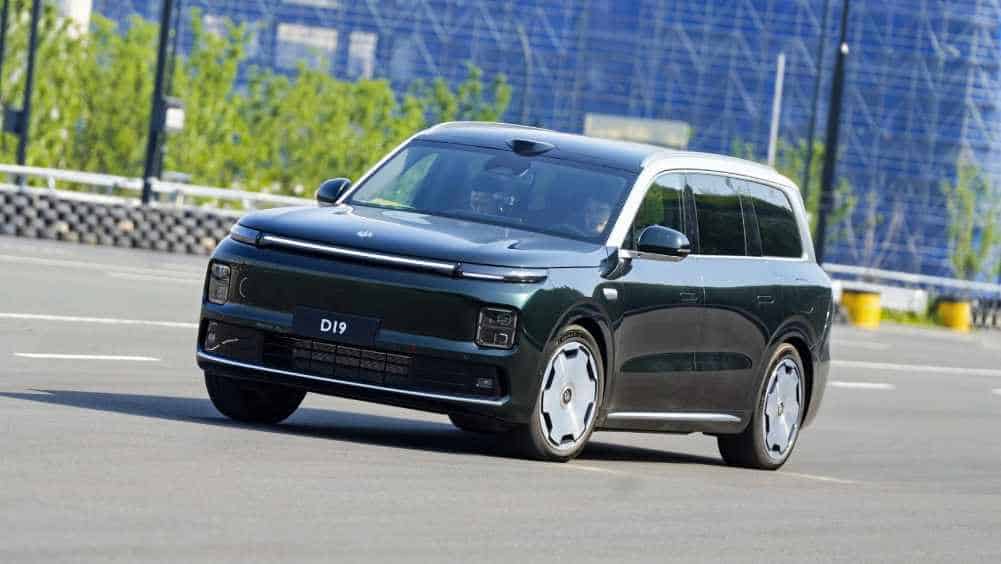
Leapmotor D19 Brief Drive: We test the family plug-in hybrid you barely ever need to plug in
Australia loves a big thing, right? A pineapple on the Sunshine Coast. A banana in Coffs Harbour. A suspicious-looking potato in the NSW Southern Highlands. Some people even seem to like Pauline Hanson, who has always struck me as a giant… actually, never mind.
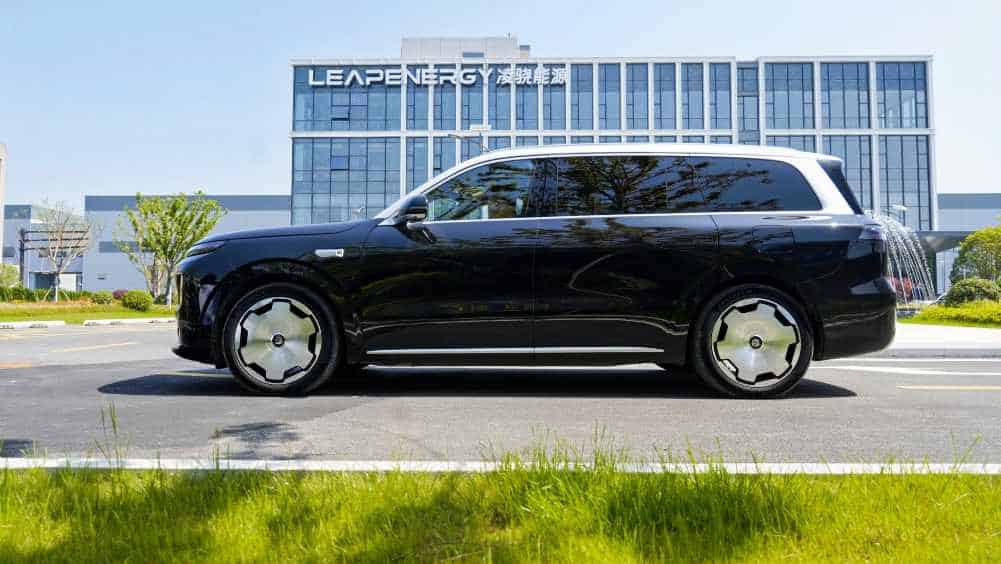
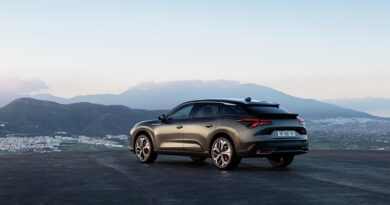
Anyway, Chinese Leapmotor will soon be hoping the D19 joins that list. Because this thing is big. Bigger than a Toyota LandCruiser 300 Series big.
Just launched in China, the D19 is Leapmotor’s new flagship SUV, a three-row family hauler offered with six or seven seats, and in either full battery-electric form or as a REEV (Range Extender Electric Vehicle), which is the one we’ve tested.
READ MORE:
Leapmotor B05 Ultra Brief Drive
Haval H6 PHEV Brief Drive
Porsche Taycan GT Brief Drive
And when I say “tested”, I mean briefly sampled on a rented test track near Leapmotor’s Chinese headquarters. Still, first impressions count.
Before we go any further, a confession. In the world of big three-row SUVs, I reckon a six-seat layout beats seven every time. Yes, there will be families who need the extra seat, but for everyone else, the two-chair second-row layout is a way-more-luxurious configuration.
It works in the Hyundai Ioniq 9. It works in the Tesla Model Y L. And it works here.
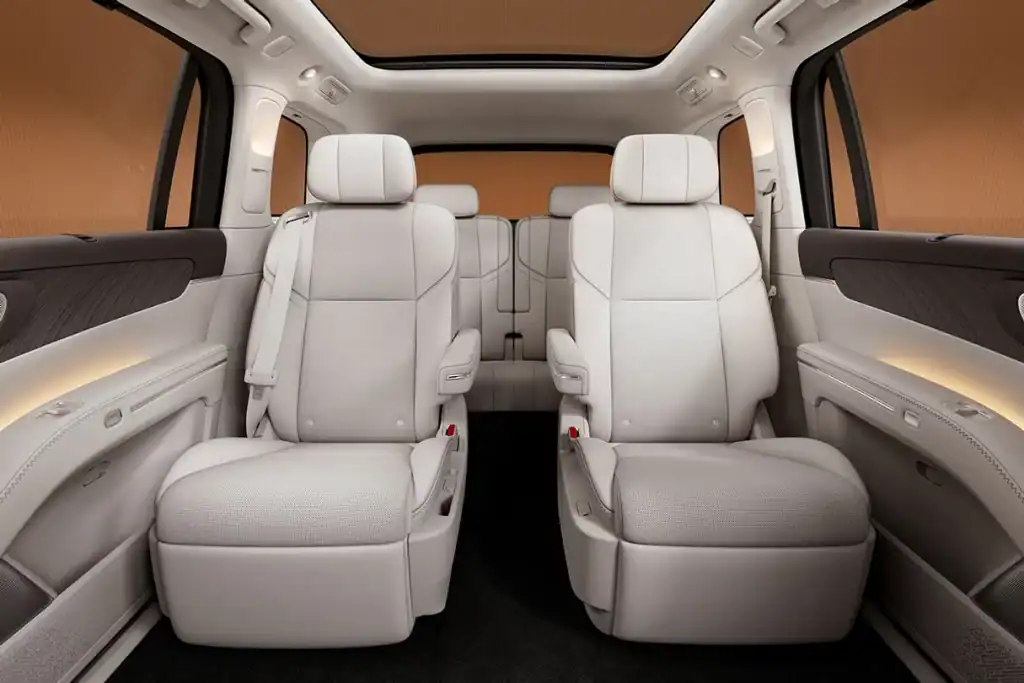
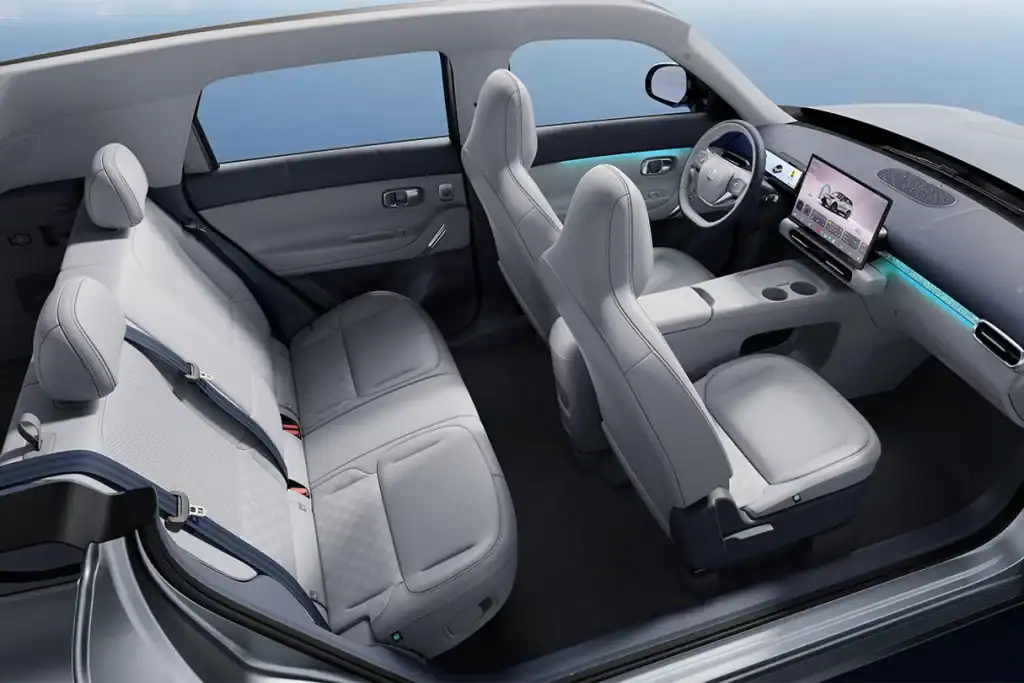
In typical Chinese fashion, there is a lot of equipment. The D19 gets 20-inch alloys, air suspension, a huge 15.6-inch central screen up front, twin 9.0-inch touchscreens for rear passengers, and heated, ventilated and massaging seats in the first and second rows.
There’s also an 8.1-litre fridge and a 21.4-inch screen that folds down from the roof in between the first and second rows, which means the rear cabin can transofrm into a mobile cinema, complete with chilled drinks.
In China, the D19 REEV costs the equivalent of around $A45,000. Now, that doesn’t mean it would cost anything like that in Australia. But even with the usual right-hand-drive, shipping, compliance and local-market mark-ups, there’s every chance the D19 could land as a real value play if Leapmotor Australia gets its hands on it.
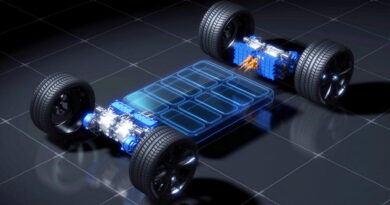
The REEV part matters, too. Unlike a traditional plug-in hybrid, where the petrol engine can drive the wheels, a range-extender EV uses its engine as a generator. In the D19, that means a 1.5-litre turbo-petrol engine is there to recharge the battery or feed the electric motors.
The simple version? It feels like an EV, but it can keep going when the battery runs low.
And the D19’s battery is massive. Leapmotor offers 63.7kWh and 80.3kWh LFP battery packs, with the bigger unit delivering a claimed electric-only range of up to 500km on China’s CLTC test cycle.
That number will fall once translated to a more realistic WLTP-style figure, but something around 400km of EV running still feels achievable, which would mean most owners wouldn’t even have to plug it in once a week.
For context, something like the Chery Tiggo 9 Super Hybrid uses a 34kWh battery and claims around 170km of electric-only range. The Leapmotor’s 80.3kWh pack is closer to the battery size you’d expect in a proper EV.
The combined outputs are big, too. The petrol engine and twin electric motors produce 300kW and 520Nm, with Leapmotor claiming a 0-100km/h time of six seconds. We didn’t get close to thay mind you. Our best was nearer 10 seconds, though there were four adults on board.
Still, the D19 never feels slow. It doesn’t punch off the line like a big-engined SUV, but it gathers speed smoothly and with very little fuss. Rolling acceleration is strong enough, and it will keep pushing well beyond 100km/h without feeling strained.
Underneath, the D19 REEV uses Leapmotor’s 4.0 platform and runs an 800-volt electrical architecture. The full EV version steps that up to 1000 volts.
So, to the drive.
Our test loop was very, very brief, and very straight. Corners were rare, excitement was low, and the only real attempt to unsettle the D19 came through a short slalom course set up by the brand.
It was enough, though, to determine that the ride is soft. In the version we drove, the D19 delivers that familiar Chinese-market float, where comfort is king and body control is somewhere further down the must-have list.
At times, it has that slightly weightless, lunar-buggy feeling, as though the car is bouncing gently across the surface of the moon. Which sounds relaxing, and mostly is, until you ask it to change direction quickly.
The steering is better. There’s a little weight to it, and it doesn’t feel totally disconnected, but this is very clearly not trying to be a dynamic SUV. It is big, plush and relaxed.
That said, Chinese suspension tuning can feel very different to what Australian buyers expect. The good news is that Leapmotor International is majority-owned by Stellantis, the giant behind Alfa Romeo, Fiat, Peugeot and plenty more, and the brand says export-market vehicles are tuned in Europe.
That will make a big difference to how the car feels in Australia, if the brand green-lights the model for us. And a D19 with Chinese-market pricing and equipment, but a more European-style ride and handling tune, could look very interesting here.
“In Australia, it could work,” the brand told us.
“Definitely it’s a flagship right now. And wherever there is appetite, we will try to be there. The localisation for overseas is nine-to-12 months after what has happened in China. If tomorrow morning we say, ‘you know what, we want D19’, that is nine months.”
No, it doesn’t drive like a performance SUV. And no, based on this brief China drive, it would need a firmer more engaging tune before being unleashed on Aussie roads. But as a big, plush, long-range family SUV with a clever powertrain and a massive battery, the D19 feels like the kind of car that could put Leapmotor on the map here.
Leapmotor D19 price and specifications
Price: TBA
Basics: PHEV, 5 seats, 5 doors, SUV, AWD
Electric Range: Up tp 500kms (CLTC)
Battery capacity: 63.7kWh or 80.3kWh LFP
Battery warranty: TBA
Energy consumption: TBA
Powertrain: 1.5L petrol + dual electric motors, 300kW/520Nm
AC charging: Unstated
DC charging: Unstated
0-100km/h: 6.0s (claimed)

With that much battery, why in hell would you buy a vehicle with an ICE when it just adds to running and maintenance costs? It makes no sense at all.