How Hyundai’s 35-year investment in EVs led to the ELEXIO
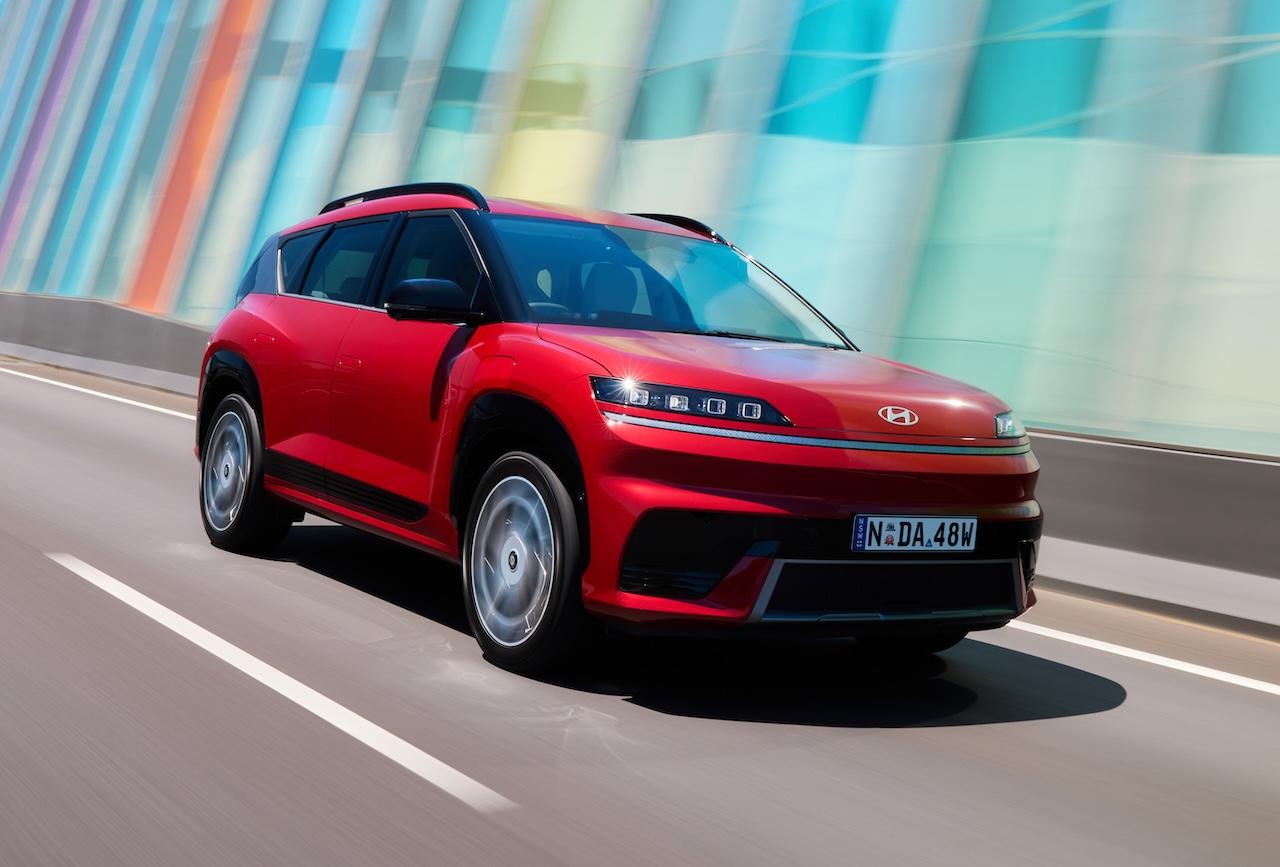
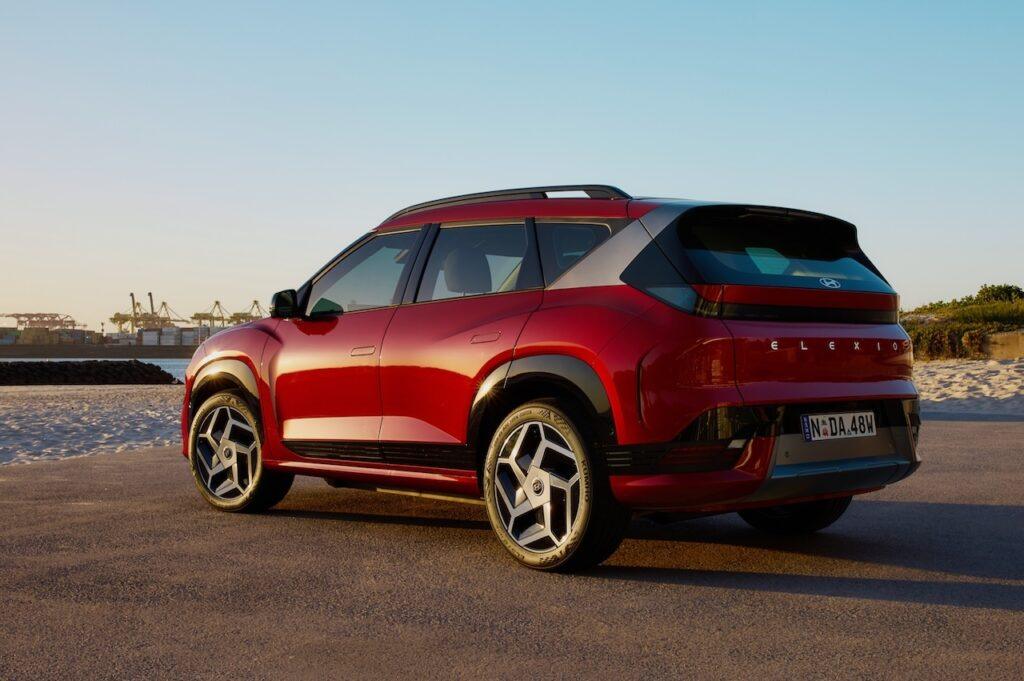
The Hyundai ELEXIO has arrived in Australia, and it’s more than just a modern, sophisticated family EV.
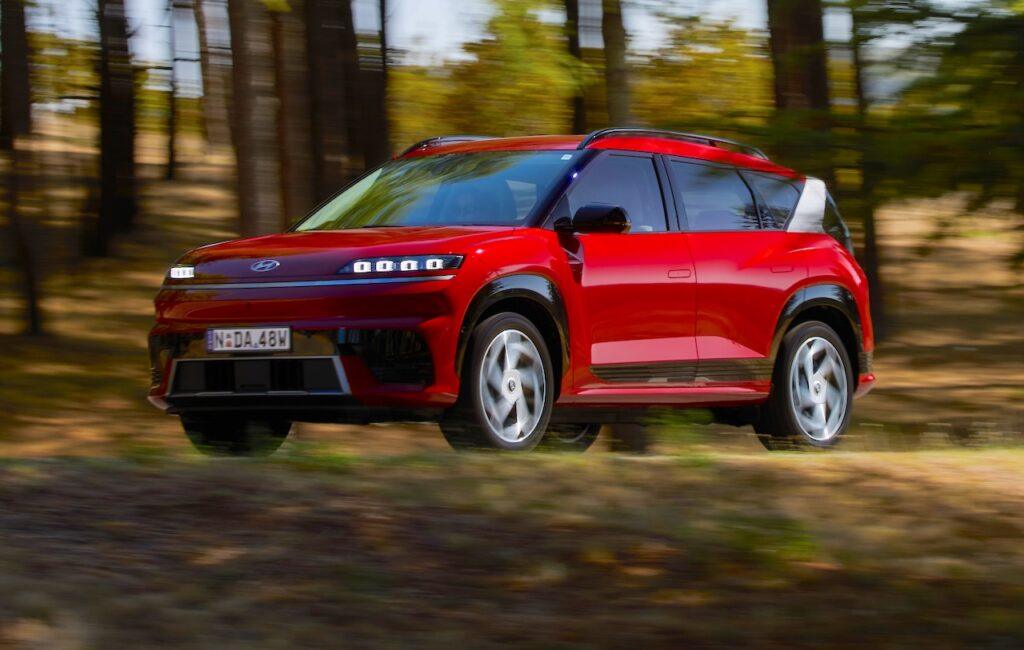
It’s also the latest expression of more than 35 years of Hyundai research, design and development into electric vehicles.
Starting with their early experiments in the 1990s with the Sonata Electric Vehicle, followed by the fuel cell electric SANTA FEs in the noughties, the original IONIQ brought to Australia in 2018 and the critically acclaimed new-generation IONIQ 5 and IONIQ 6, Hyundai is one of the first manufacturers to start mass-producing alternative powertrain vehicles beyond internal combustion.
The ELEXIO takes that development process to the next level, as it marks the next step in Hyundai’s EV development process..
“We’re proud to introduce ELEXIO to our multi-award-winning Hyundai hybrid and electric SUV line-up,” said Hyundai Motor Company Australia Chief Operating Officer, Gavin Donaldson.
“Designed for modern Australian families, ELEXIO delivers the ideal balance of size, space, efficiency and outstanding value,” he said.
“It also reflects Hyundai Motor Company’s 35-year commitment to developing eco-friendly electric vehicles and advancing intelligent mobility solutions that make every day driving smarter, cleaner and more rewarding.”
Hyundai’s first global foray into EVs came in 1991, just five years after it launched in Australia.
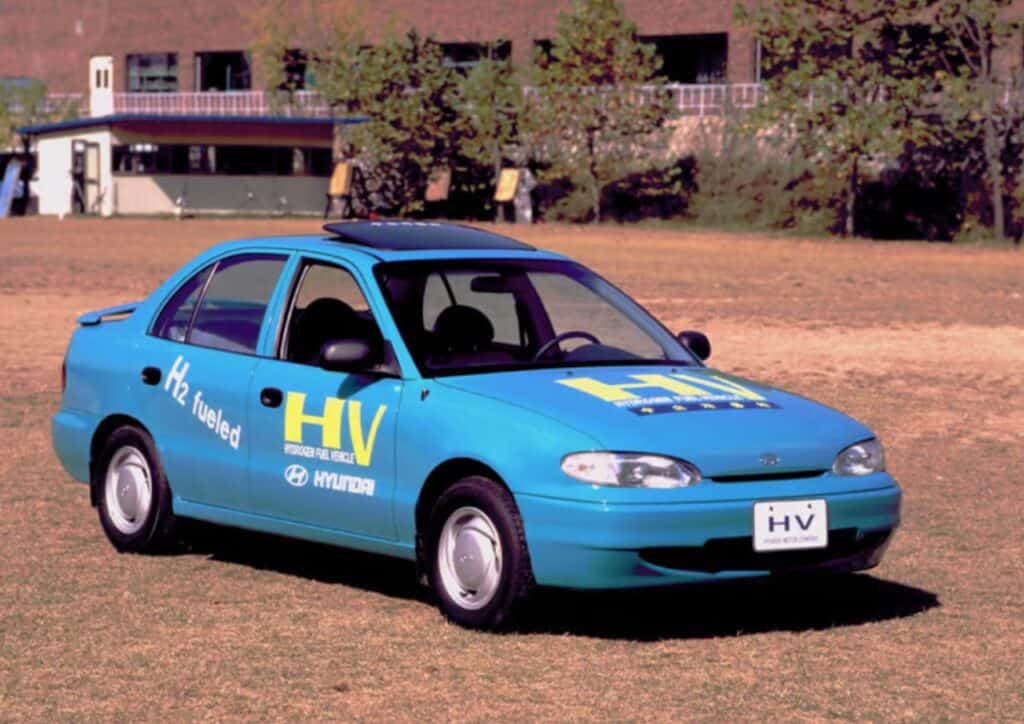
That year it unveiled the Sonata Electric Vehicle in South Korea. While based on the Y2 generation of that well-known family sedan sold in Australia with orthodox four-cylinder and V6 petrol engines, the EV concept was powered by lead acid batteries.
That’s a far cry from today’s sophisticated chemistries that feature in Hyundai EVs, including the ELEXIO’s incredibly efficient lithium ion battery pack.
An EV based on the popular Excel small car followed, with a range of just 100km, then came a second electrified Sonata with a range of 140km.
Progress for sure, but it shows just how far Hyundai has come since then when you compare those efforts with the range of their new entry-level ELEXIO – 562km (according to the WLTP testing protocol) 1.
In 1995, Hyundai opened its Namyang research and development centre in South Korea, and EV progress accelerated. Soon after there was an Accent EV with nickel-metal hydride batteries and a 390km range!
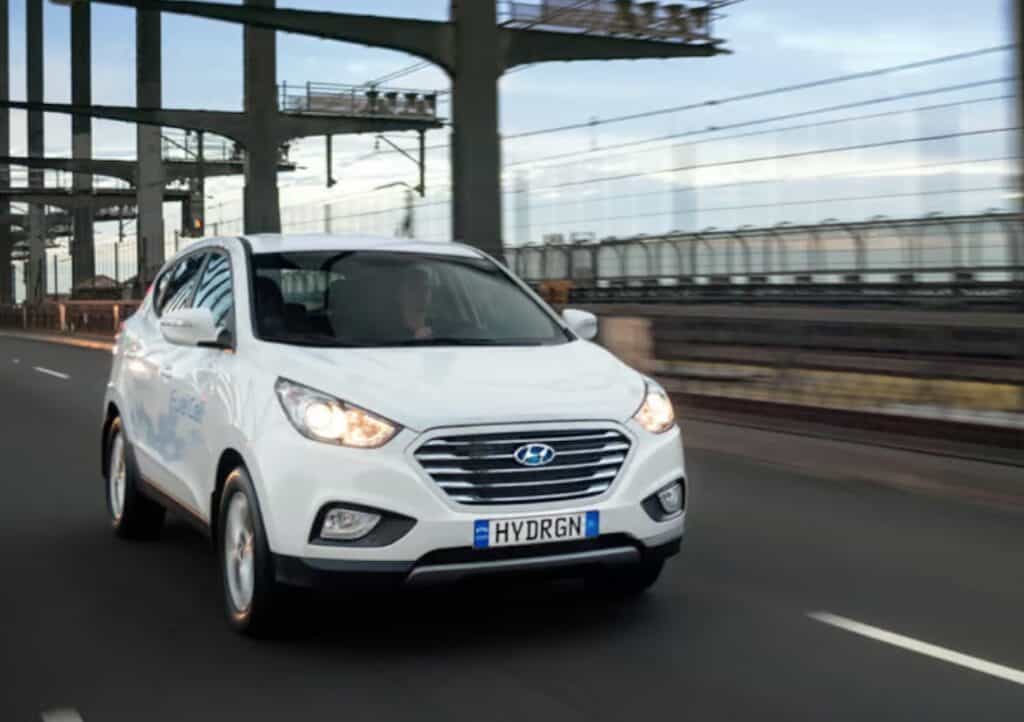
But it wasn’t only battery electric vehicles Hyundai was developing; both petrol-electric hybrids and hydrogen fuel cell powertrains debuted over the next few years, including a hydrogen iX35 SUV.
Nowadays Hyundai has an expanding range of frugal hybrids on offer to Australian customers for many of its models, while it continues to support the expansion of the hydrogen economy in Australia with the Nexo FCEV.
In 2010, all this research and development resulted in the launch of Hyundai’s first production EV, the Blueon. Based on the tiny i10 city car, its sales were limited to government agencies in South Korea.
It featured a 16.4kWh lithium-polymer battery with a six-hour charging time to refurbish its 140km range.
The ELEXIO? Using a DC fast-charger, it can recharge its battery from 10 to 80 per cent in approximately 38 minutes2.
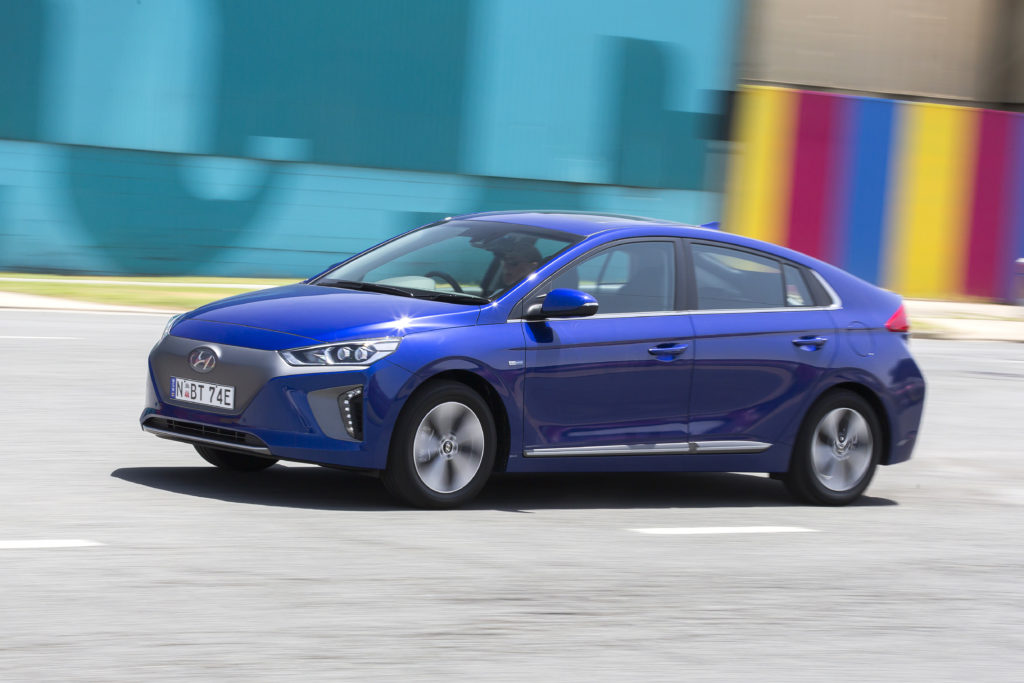
In 2016, Hyundai’s electrified commitment crystalised into the IONIQ passenger car, the first car in the world offered with three electrified powertrains (hybrid, plug-in hybrid and EV).
Two years later, in late 2018, the IONIQ line-up arrived locally to commence Hyundai’s Australian EV journey.
The IONIQ went on sale with a 28kWh battery pack, an 88kW e-motor driving the front wheels and a 280km range. Typical of Hyundai’s ongoing EV development, the battery was later bumped up in size and the range expanded beyond 300km.
“The new Hyundai IONIQ marks the opening of an exciting new chapter for our company,” said the Korean brand’s boss in Australia, JW Lee.
“IONIQ makes responsive and eco-friendly electrified driving accessible to a wide range of customers.”
The IONIQ was no science experiment. It was a bonafide member of the Hyundai range, one offered with not only a comprehensive warranty covering both the vehicle and the battery, but also full servicing back-up, including capped-price servicing.
All this was provided by Hyundai’s nationwide dealer network, built up through the decades to be one of the most experienced and trustworthy in the country.
It’s an advantage Hyundai retains today. Few other brands, especially new ones arriving in Australia, can provide this sort of aftersales support to its customers.
It continues to evolve and improve, now offering a seven-year warranty – yet another recent upgrade.
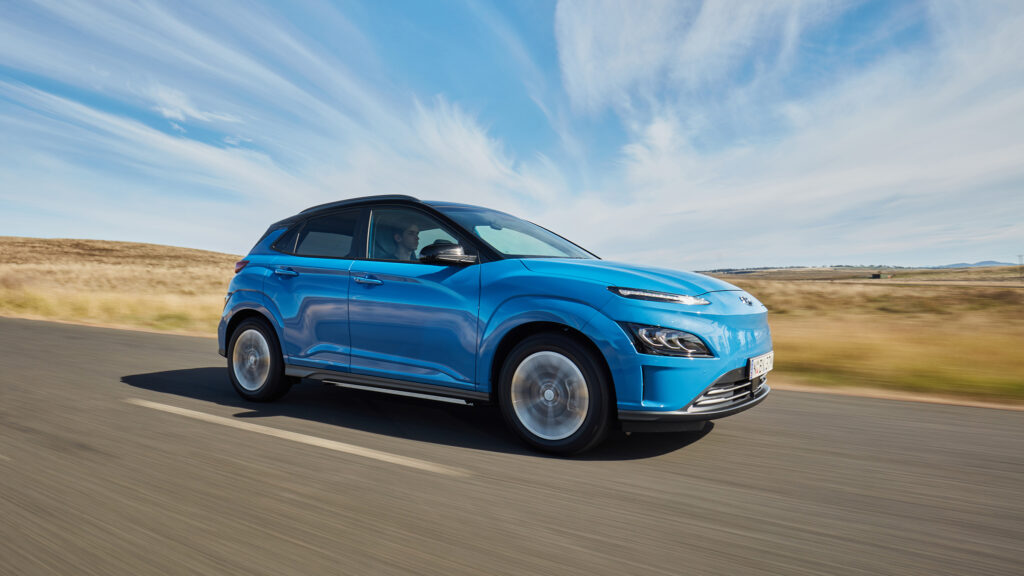
The next step for Hyundai in 2019 was the launch of the KONA Electric, which shared its compact SUV body with the immensely popular petrol-powered version, but boasted an emissions-free range up to 449km on a single charge.
However, it was the debut of the E-GMP electric vehicle architecture in 2020 that cemented Hyundai as one of the globe’s leading EV players.
A cutting-edge combination of batteries, e-motors, software and hardware, the E-GMP promised – and delivered – a driving range beyond 500km as well as the modular ability to spin off a variety of new models.
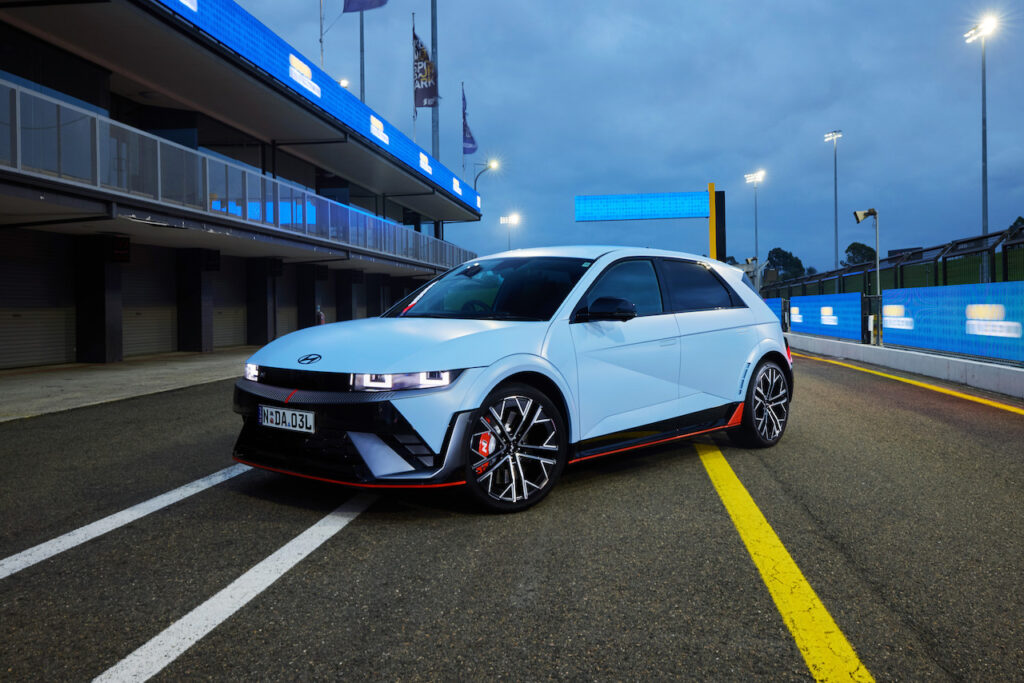
And they have come in a steady stream since then: the IONIQ 5 SUV – including the spectacular IONIQ 5 N – plus the sleek IONIQ 6 sedan, and the luxurious IONIQ 9 large SUV.
These vehicles come in a variety of battery sizes and motor combinations. They are also expertly tailored to suit their intended purpose, offering fast charging, long ranges, stimulating performance and spacious interiors expertly created by Hyundai designers and engineers.
And now, the ELEXIO is the latest E-GMP model to encapsulate that same cutting-edge tech.
Built in a sleek new factory, it is the most affordable Hyundai E-GMP model yet and as a five-seat five-door SUV, is positioned in the heart of Australia’s most popular EV sales segment.
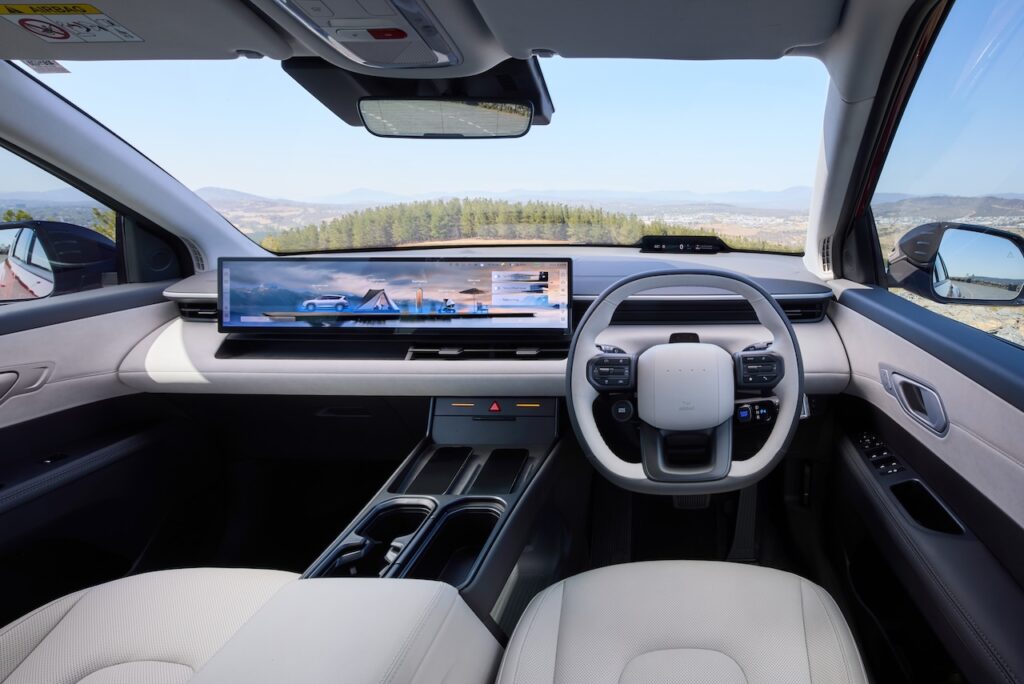
It is stacked with gear and features, such as an all-new 27-inch Connect C Infotainment System + HUD, Bluelink Connected Car Services and Digital Key 2 Touch3, Hyundai SmartSense safety4, an ANCAP five-star safety rating and a spacious interior including a 504-litre boot expandable up to 1,540 litres.
Essentially, the ELEXIO is the culmination of 35 years of Hyundai’s intense EV research and development. Contained within its aerodynamic shape are decades of learnings combined with the latest technology.
As a result, ELEXIO is as trustworthy and complete as any EV on sale in Australia today.
1Figure based on WLTP (Worldwide Harmonised Light-Duty Vehicles Test Procedure) static laboratory combined average city and highway cycle test, which measure, energy consumption, range, and emissions in passenger vehicles, designed to provide figures closer to real-world driving behaviour. Real life driving results will vary depending on a combination of driving style, type of journey, vehicle configuration, battery age and condition, use of vehicle features (such as heating and air conditioning), as well as operating, environmental and climate conditions.
2When connected to a 150kW charger, the ELEXIO can recharge from 10% to 80% in approximately 38 minutes. Charging times may increase if peak charging rates are not achieved. Charging times may vary based on factors including but not limited to charger type and condition, battery temperature, electricity supply, auxiliary consumables (e.g. air-conditioning) and environmental conditions.
3The Hyundai Digital Key 2 feature requires a compatible mobile device, Bluelink® app installation and an active Bluelink® subscription. Features, app and specifications are subject to change. Hyundai Digital Key 2 and Digital Key 2 Touch can be shared via the Wallet app (Apple Wallet, Google Wallet and Samsung Wallet) on your mobile device. Shared keys can only be used on devices that are compatible with Hyundai Digital Key. Convenience aid only. Not intended as a permanent key replacement.
4Hyundai SmartSense® is a registered trademark of Hyundai Motor Company. Safety features are not a substitute for attentive driving. The accuracy and operation of Hyundai SmartSense® technologies may vary based on factors including, but not limited to, weather, speed, traffic, road conditions and markings. Availability of various Hyundai SmartSense® safety features depend on vehicle variant and transmission. Please refer to your Owner’s Manual for further details on Hyundai SmartSense® feature limitations.