BMW i7 EV flagship overhauled: But has enough been done to keep pace with the new Mercedes-Benz EQS?
Little more than four years since it was first introduced, BMW has been forced to comprehensively overhaul its seventh-gen BMW 7 Series and i7 to avoid its luxury limousines being left in the wake of more advanced and sophisticated rivals.
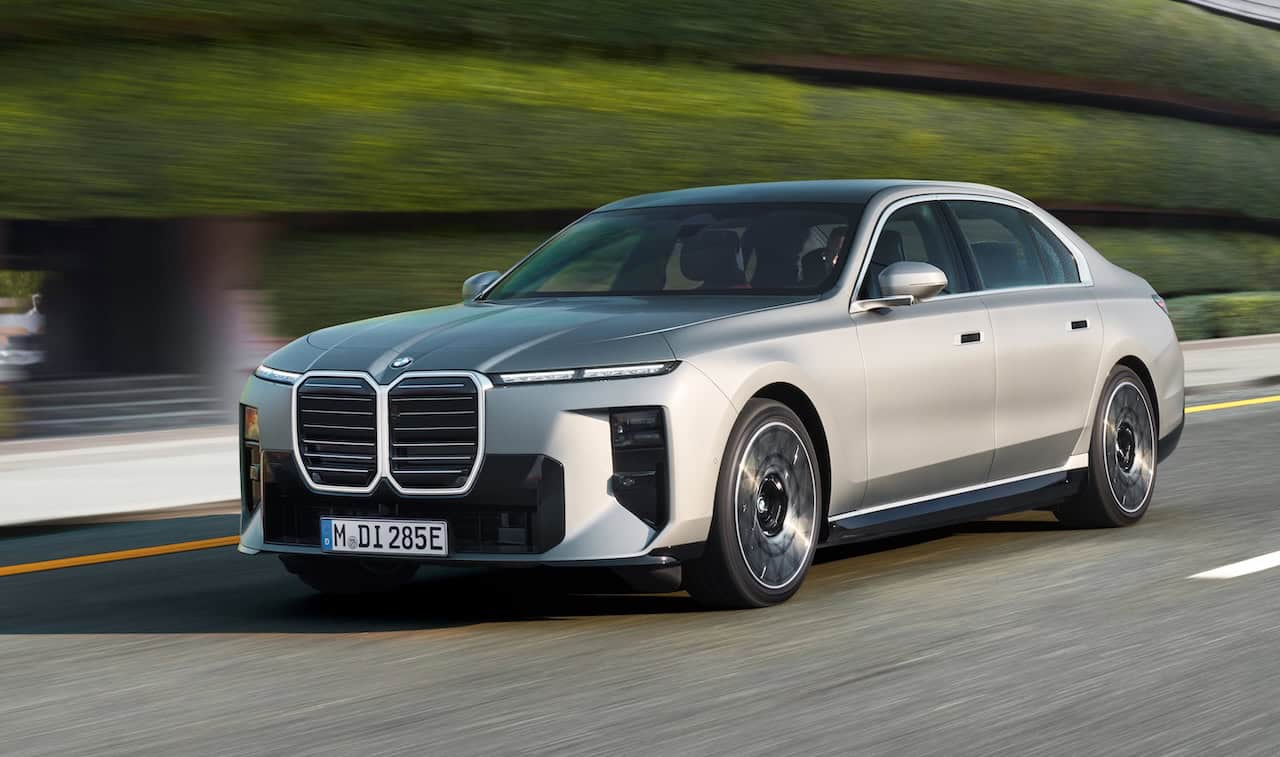
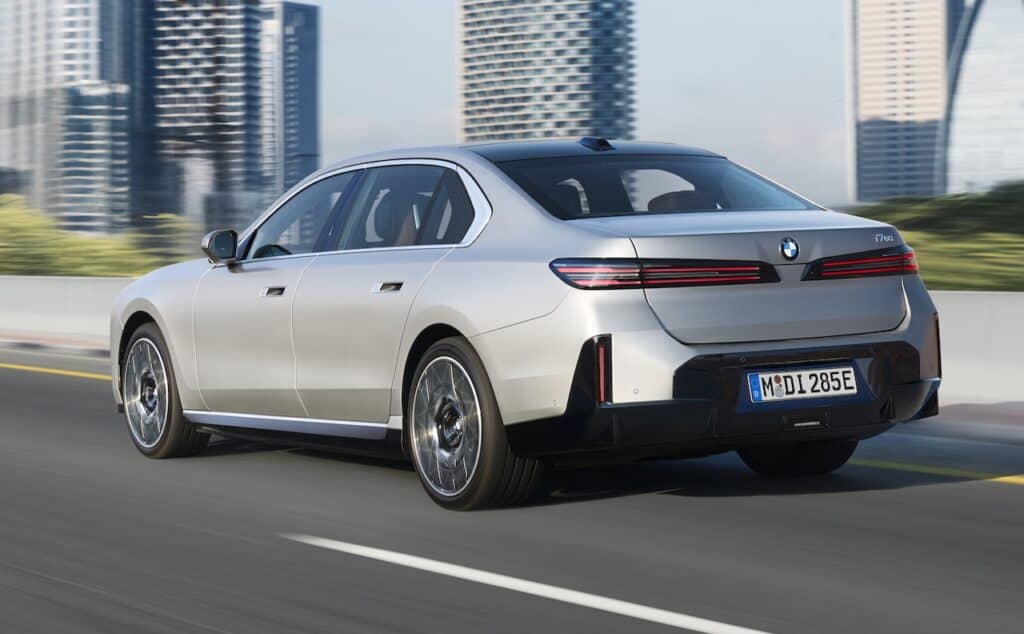
Not that it’s easy to tell from the outside.
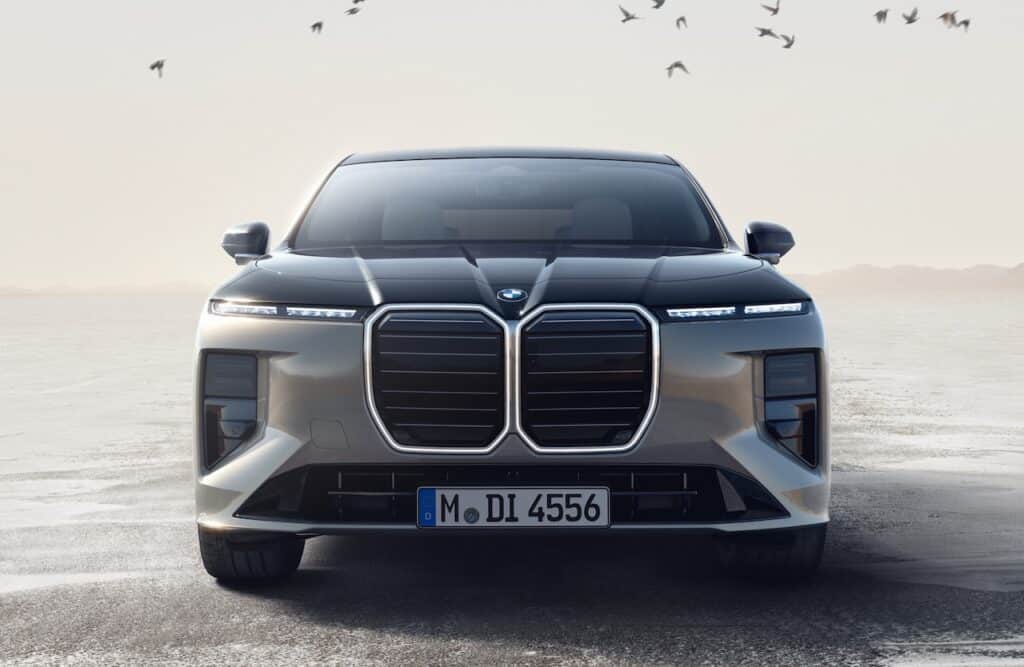
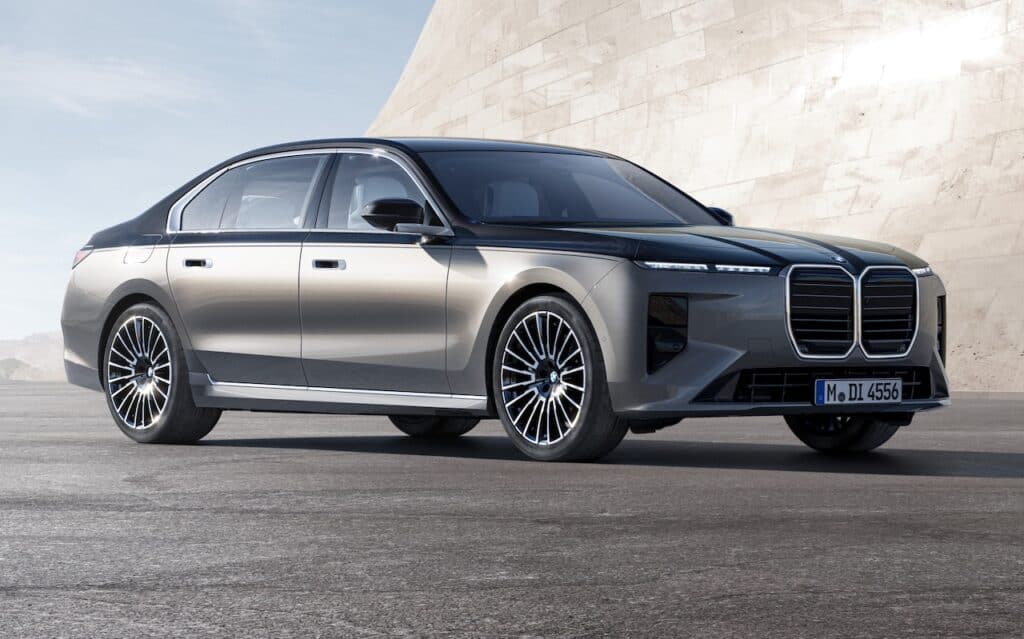
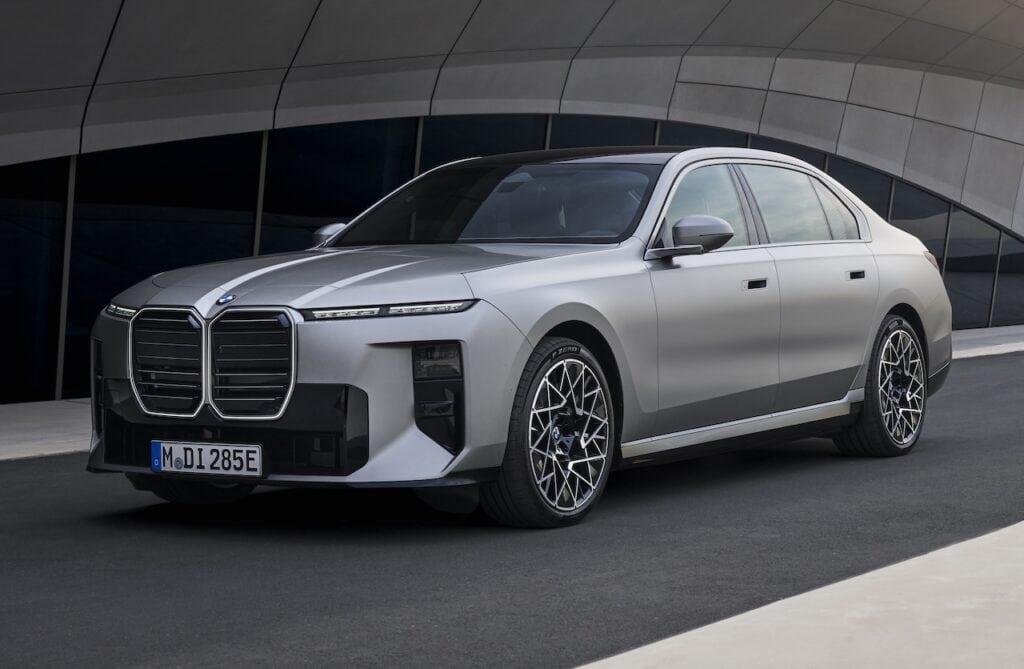
The easiest tells are the pair of slim split headlamps that now feature sparkly crystals embedded within them.
READ MORE: 800km range hero? Upgraded BMW i7 to gain Rimac batteries, boosting luxo limo’s range and charging speed
READ MORE: BMW details rear-wheel drive iX3 40: Single motor Neue Klasse electric SUV will be Tesla Model Y and Zeekr 7X rival
READ MORE: BMW chops EV pricing: iX1 and iX2 are now cheaper, new entry-level iX1 added
The rest of the changes risk slipping under the radar but, side-by-side, the tweaked front and rear bumpers, fresh light bar that runs across the tailgate, plus different alloy wheel designs all smarten up the big BMW. Even if you don’t love the illuminated grille graphics, both the i7 and its combustion sibling make an impression.
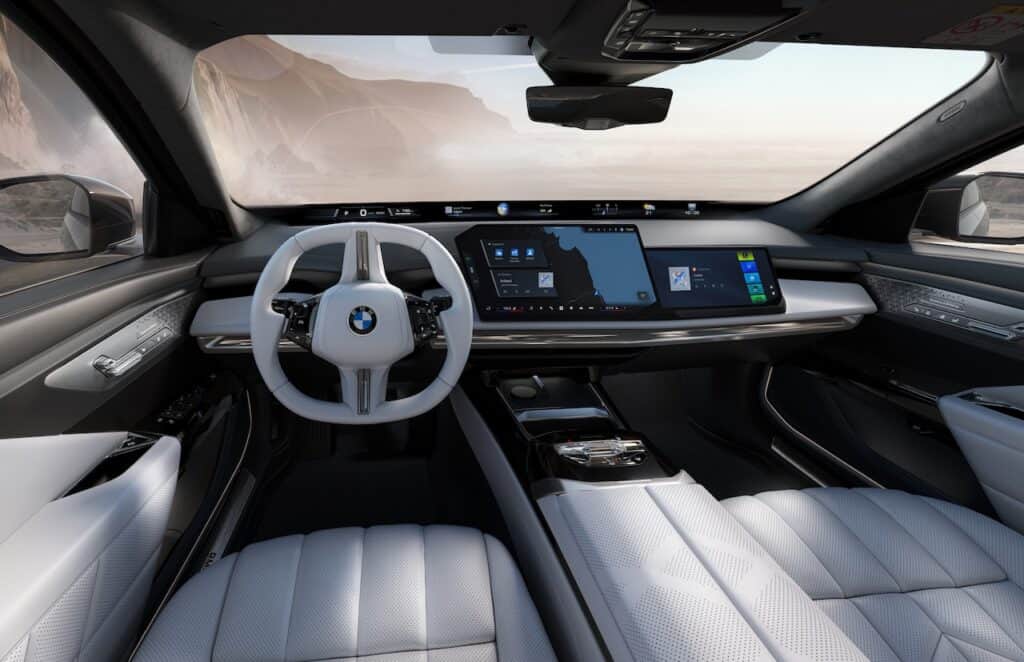
Inside, the cabin is almost all new, with the Mercedes EQS and Genesis Electrified G80 fighter embracing the car-maker’s latest Neue Klasse technology.
It’s hard not to be wowed by the clear and configurable BMW Panoramic Vision full-width display that stretches from pillar to pillar, while the large 17.9-inch touchscreen infotainment system — combined with a dedicated display for the passenger for the first time — is hard to miss.
All are adopted from the latest iX3 SUV and feature the firm’s next-generation X operating system, running powerful processors for a faster, more intuitive experience.
If that’s not enough, there’s also a colossal 3D head-up display that eliminates the need to ever take your eyes off the road.
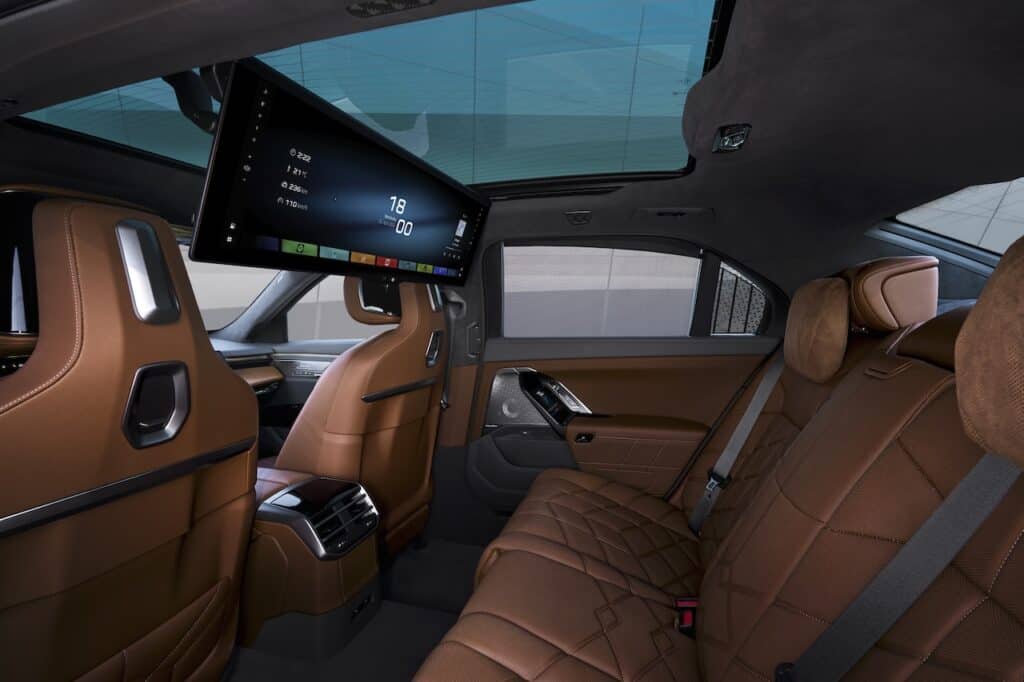
In the posh seats in the second row, the full-width 31.3-inch cinema-grade touchscreen carries over, but it has been upgraded and now has a camera and microphone for video conferencing.
The system also works with a 36-speaker 4D Bowers & Wilkins sound system that has Dolby Atmos capability for the full multiplex experience.
Airline-style Executive seats are still an option, while a new ambient light system is said to be so impressive BMW declares it an “immersive experience” in its own right.
Upgraded automatic soft-close doors that use more precise radar sensors offer greater levels of accuracy, helping avoid embarrassing ingress or egress incidents.
A standard panoramic sunroof and four-zone climate control, meanwhile, become standard in all markets.
Beneath the skin, if anything, the changes are even more dramatic.
Teaming up with Croatian hypercar-maker Rimac, BMW has managed to bin the old car’s batteries and slot in its latest and most advanced sixth-generation battery tech.
The result is a new 112.5kWh power pack that squeezes 4695 cylindrical lithium-ion cells into the same space as before while delivering 20 per cent more energy density for a dramatic boost to range.
Compared to the old prismatic cells that saw the previous electric 7 travel up to 625km on a charge, the new i7 can drive beyond 700km on the same Euro WLTP test cycle.
That sounds impressive for such a big car but is completely blown out of the water by the recently updated Mercedes EQS, which can cover 926km before its cells need recharging.
To be fair, that figure is for a rear-wheel-drive limousine and all BMW i7s come with dual motors and all-wheel drive.
From launch there’s a 335kW i7 50 xDrive, 400kW i7 60 xDrive and flagship 500kW i7 M70 xDrive.
Sadly for BMW, the big Benz claws back another victory when it comes to charging speeds thanks to its 800-volt electrics, with EQS peak charging rates beyond 350kW.
BMW and Rimac, meanwhile, were only able to boost i7 charging rates to 250kW, with a 10–80 per cent top-up taking 29 minutes.
That said, optimised route planning and predictive heat management both do their best to unlock faster charging in the real world.
On the combustion side, the current 740i available in Australia has been overhauled and has now been renamed the 740, gaining trick 48-volt mild-hybrid tech.
A powerful V8-powered M Performance version arrives later and is also set to benefit from the fuel-saving tech — not that the 740’s 0.2L/100km improvement is much to write home about, but at least you now get 294kW of power (+14kW).
The 740i-replacing electrified twin-turbo 3.0-litre inline six-cylinder musters an additional 14kW more power (294kW) but is no quicker from 0–100km/h (5.4 seconds) and is only fractionally less thirsty than before (7.7L/100km vs 7.9L/100km).
A more efficient 230kW 740d xDrive will also be offered in some markets, while an upgraded pair of plug-in hybrids could prove attractive to buyers if approved for Australia when they’re introduced this November in Europe.
The most appealing (and powerful) is the M760e M Performance, which combines 450kW/800Nm with a brisk 0–100km/h dash of 4.2 seconds, plus a useful 80km EV range and combined fuel use as low as 3.5L/100km.
On sale now in Europe, BMW Australia has yet to provide timings, pricing or a forecast for how the refreshed i7/7 Series line-up might look locally.
Currently, the luxury limousine is priced from around $270,000 (plus on-road costs) for the entry 740i and a little over $300,000 (plus ORCs) for the battery-electric i7 flagship.