Spread the love! Call for Albanese govt to support low income earners so they can go electric
The Electric Vehicle Council (EVC) has urged the Federal Government to do more to help lower-income Australians switch into EVs, while also welcoming new support for electric trucks and a decision to defer any road user charge for battery-powered vehicles.
Handing down its latest Budget, the Albanese Government confirmed it would maintain the Electric Car Discount (ECD) in full until April 2027 before gradually phasing down the fringe benefits tax (FBT) exemption scheme for more expensive EVs.
But the EVC said more direct support was needed to help lower-income Australians move out of older petrol and diesel vehicles, particularly as fuel prices continue to rise.
READ MORE: EVs continue to ride the sales boom in April: Almost one in six new cars sold were zero emissions battery electric
READ MORE: Unplugged! EV buying incentives to be reduced as sales spiral. Not everyone is happy
“Lower income Australians bear the brunt of petrol price increases when driving older and less fuel-efficient petrol and diesel vehicles,” said EVC head of legal, policy and advocacy Aman Gaur.
The EVC cited research from economic thinktank e61 claiming lower-income Australians spend proportionally six times more of their income on transport costs than high-income earners.
The industry body said the government should consider additional incentives to help lower-income households transition to EVs and access lower running costs.
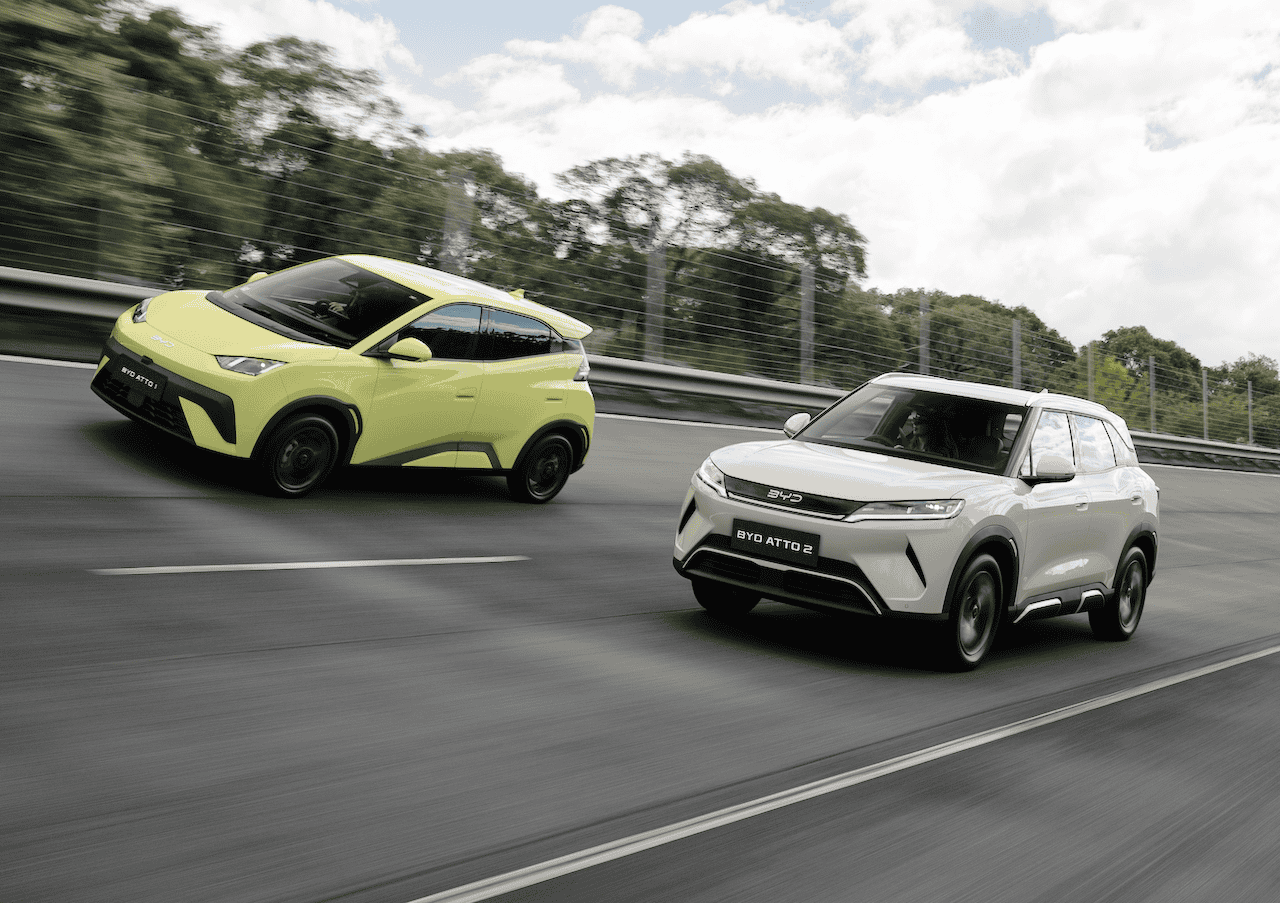
The call comes at a time when EVs such as the BYD Atto 1 and BYD Atto 2 (pictured top) are not only achieving price parity with ICE vehicles, but undercutting them.
The EVC also welcomed measures aimed at accelerating the uptake of zero-emissions heavy vehicles, including National Competition Policy reforms designed to support electric truck adoption.
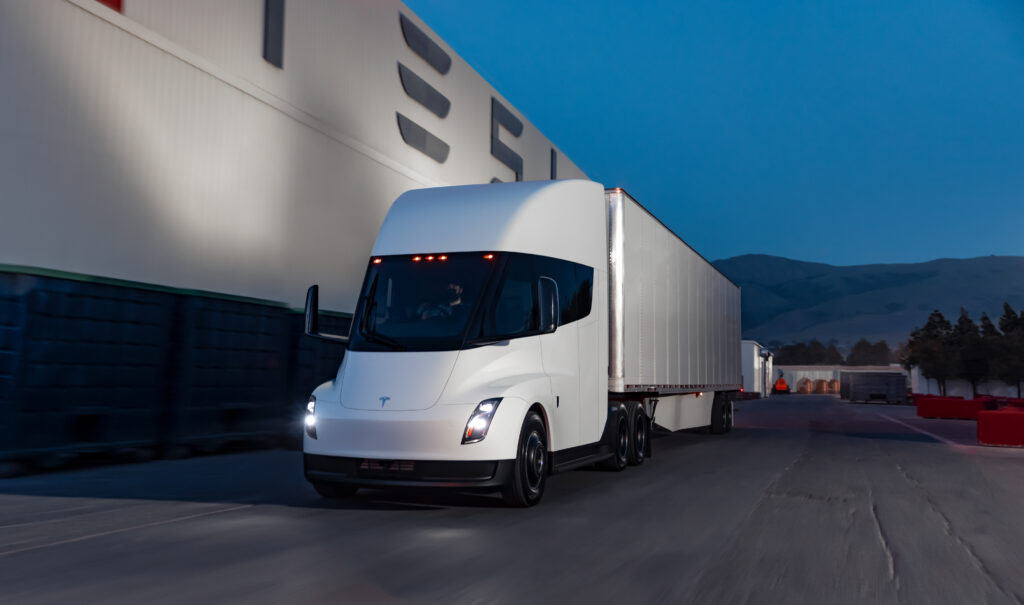
“Our trucks account for over a quarter of our road transport emissions and almost entirely run on diesel, making freight one of the largest opportunities for cutting fuel costs and reducing emissions,” said EVC head of energy, infrastructure and commercial Dr Alina Dini.
The council said it wanted to see further action to reduce the upfront cost of electric trucks and remove regulatory barriers slowing their introduction.
The Federal Government also confirmed it would defer the introduction of a road user charge for EVs, a move welcomed by the EVC amid ongoing high fuel prices.
“A global fuel crisis is not the time to introduce new taxes on motorists,” said Gaur.
The EVC said any future road user charging system should apply to all vehicles rather than only EVs, and only be introduced once electric vehicles make up 30 per cent of the national fleet.
The council also warned against introducing charges for electric trucks too early, arguing it could stall growth in the emerging segment.
While much of the focus ahead of the Budget had centred on speculation the Electric Car Discount could be scrapped, the government instead confirmed a phased transition for the scheme.
Under the updated policy, the FBT exemption for eligible EVs will remain unchanged until April 2027. From then, EVs priced below $75,000 will continue to qualify for the full exemption, while vehicles priced between $75,000 and the luxury car tax threshold will receive a reduced 25 per cent exemption.
From April 2029, all eligible EVs below the luxury car tax threshold will qualify for a permanent 25 per cent FBT discount.
The EVC said popular EVs from brands including BYD, Tesla and Hyundai would remain fully eligible during the transition period.
EVC chief executive Julie Delvecchio said the continuation of the Electric Car Discount would continue helping Australians reduce fuel and maintenance costs.
“At a time where petrol is over $2 a litre, switching to an EV is one of the best ways people can confidently save thousands each year,” she said.
The EVC has previously claimed EV owners can save around $3000 annually through lower servicing and fuel costs compared to equivalent petrol and diesel vehicles.