Why heavy-duty electric trucks are about to become a big thing on Aussie roads … and save you money at the checkout
The cost advantage of switching from diesel to electricity is well understood by EV owners, now new research shows the transition could ultimately affect the price Australians pay for everything from groceries to building materials.
New modelling claims a fleet of 100 heavy electric vehicles could save millions of dollars a year in energy costs, just as Australian governments have agreed to remove regulatory barriers that have made electric trucks harder and sometimes less productive to operate than diesel equivalents.
That’s potentially significant for consumers because almost everything bought in Australia spends part of its journey aboard a truck or delivery van, meaning diesel prices and freight costs ultimately flow through supply chains.
READ MORE: Health warning: Enormous diesel health bill prompts call for faster EV transition
READ MORE: Which is best for the environment: EV or ICE? Here’s the truth about CO2 emissions across the lifecycle of new cars
READ MORE: Hydrogen fuel cells are trucking wonderful says Mercedes boss
Commercial EV charging specialist JET Charge estimates a 100-vehicle heavy fleet could spend about $7.5 million annually on diesel at $2.46 per litre, compared with about $1.3 million in electricity for equivalent EVs charged at depots.
That produces a claimed $6.2 million annual saving before potential reductions in maintenance costs.
However, the figure is modelling rather than measured costs from an actual 100-truck fleet and would vary significantly depending on vehicle type, kilometres travelled and diesel and electricity prices.
JET Charge assumes a heavy commercial vehicle such as a 12-metre bus or rigid truck consumes 40-50L/100km, while an electric equivalent uses about 130kWh/100km. Its calculations assume commercial depot electricity costs of 13-18 cents/kWh.
Those numbers demonstrate the dramatically different scale of heavy vehicle electrification compared with the passenger EVs familiar to Australian motorists.
A typical electric car or SUV consumes around 15-25kWh/100km, meaning JET Charge’s example heavy EV uses roughly five to eight times as much electricity.
How much energy does an electric truck use?
| Vehicle | Typical/assumed energy consumption | Compared with passenger EV |
|---|---|---|
| Electric passenger car/SUV | ~15-25kWh/100km | Baseline |
| Heavy electric rigid truck/12m bus | ~130kWh/100km | ~5-8 times higher |
| Diesel heavy vehicle equivalent | 40-50L/100km | — |
The new economics coincide with federal, state and territory Treasurers agreeing to a heavy vehicle productivity reform package that includes measures specifically aimed at making zero-emissions trucks easier to operate.
The reforms will be backed by $400 million in federal funding to states and territories and include streamlined truck permitting, improved road access for heavier electric trucks and work towards exempting quieter EVs from some delivery curfews and noise restrictions.
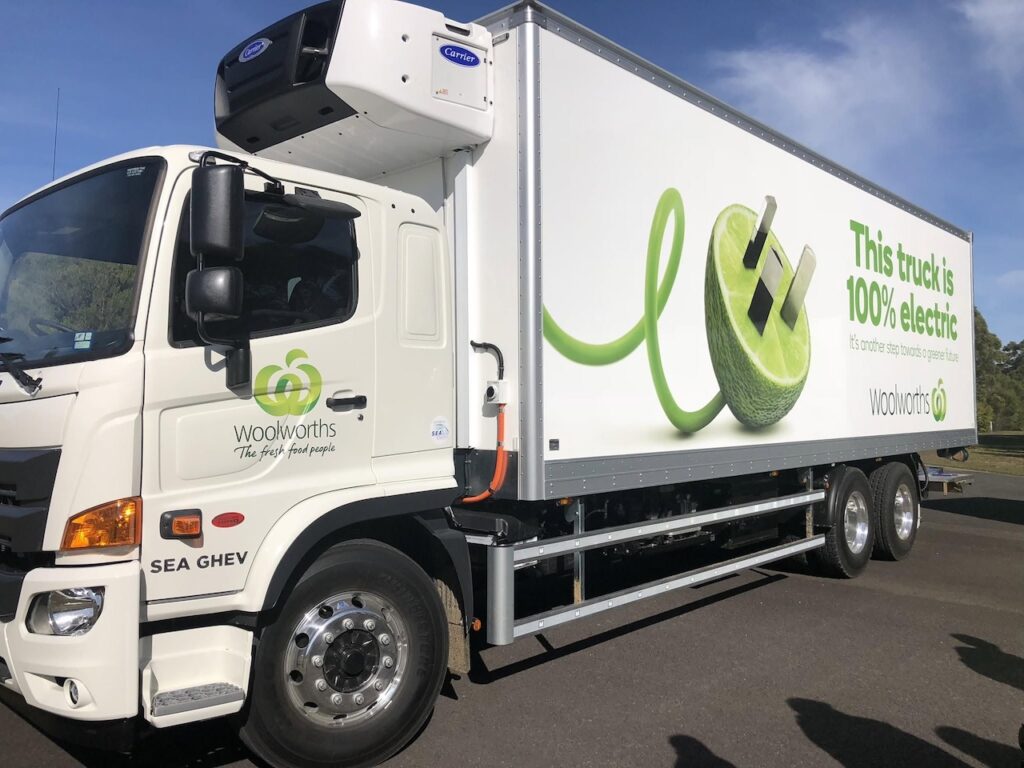
One of the disadvantages facing heavy EVs is their batteries add weight, potentially restricting how much freight a truck can legally carry or which roads it can use.
The Electric Vehicle Council’s ELECTruck report estimates an articulated truck consumes around 45,000 litres of diesel annually. It also cites a Productivity Commission estimate that outdated heavy-vehicle mass limits cost the Australian economy $4 billion annually.
Noise restrictions can cost freight operators $100-$150 per truck per day, according to one case study cited by the EVC, which estimates reforming delivery curfews could improve productivity by 15-25 per cent.
Electric trucks nevertheless remain rare in Australia.
About 630 have been sold and EVs accounted for just 0.7 per cent of Australian heavy vehicle sales in 2025, according to Truck Industry Council figures quoted by the EVC.
Electric Vehicle Council CEO Julie Delvecchio said replacing diesel trucks also had implications for Australia’s dependence on imported fuel.
“Every electric truck on the road is one less truck relying on imported diesel,” she said.
EVC Heavy Vehicle Lead Cameron Rimington said battery weight made road-access reform particularly important.
“A truck that can’t carry a full load isn’t commercially viable, no matter how much cheaper it is to run,” he said.
JET Charge says commercial interest is accelerating, with some operators compressing five-year fleet electrification plans into around 18 months.
But charging those vehicles presents a vastly different infrastructure challenge to plugging a passenger EV into a home wallbox.
JET Charge says depot projects can have 18-24 month lead times because of requirements including grid upgrades, planning approvals, high-capacity electrical equipment and charging hardware.
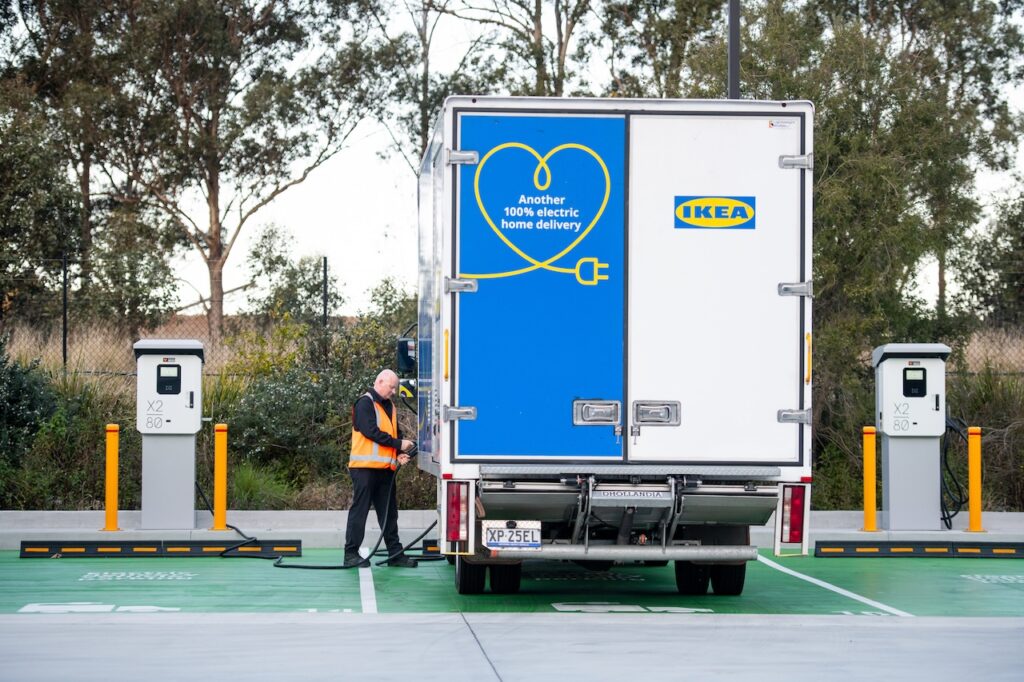
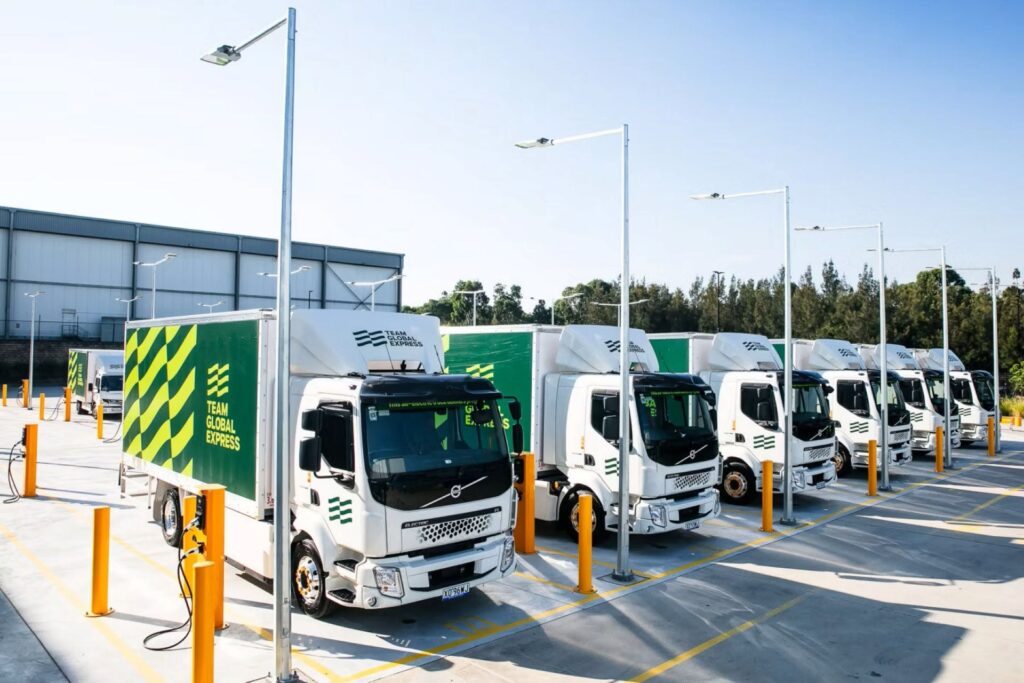
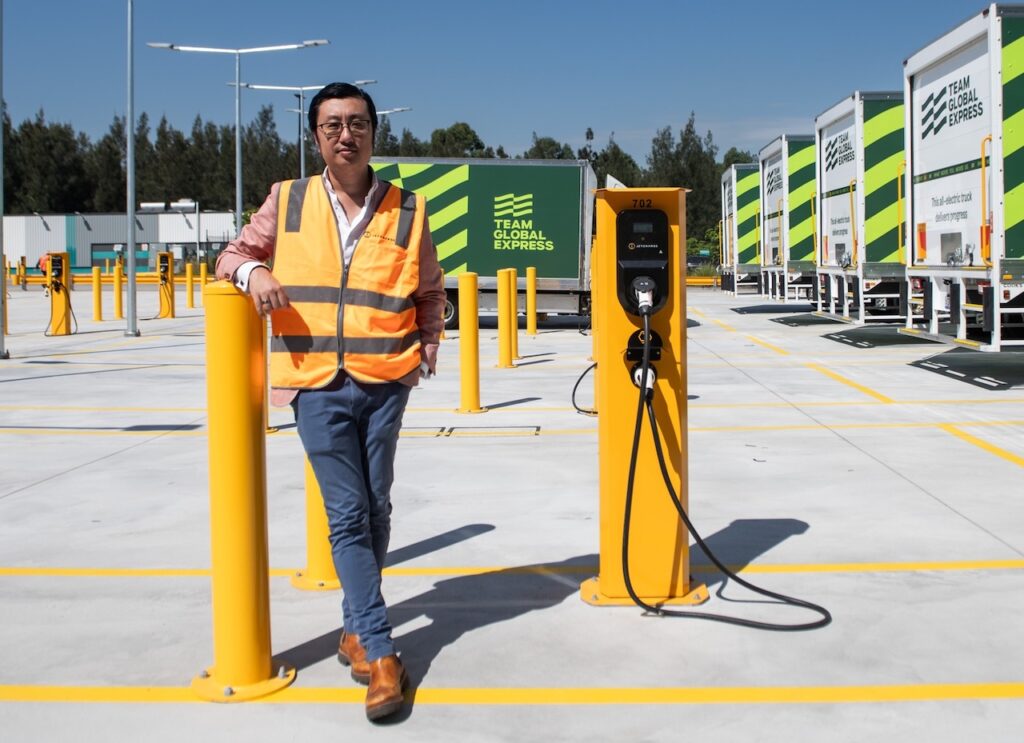
It has already developed infrastructure for fleets including IKEA and Team Global Express. Its $4.5 million IKEA project installed 59 chargers across seven locations, supporting more than 100 electric delivery vehicles.
JET Charge says IKEA’s zero-emission deliveries increased from five per cent in 2022 to 83 per cent by October 2025.
“The question for Australian fleet operators is no longer if they should electrify,” said JET Charge CEO Tim Washington. “It’s whether their charging infrastructure will be ready when the vehicles arrive.”