Mercedes-Benz C-Class PHEV gets 290kW flagship and 100km EV range: Major facelift headed to Australia in 2027
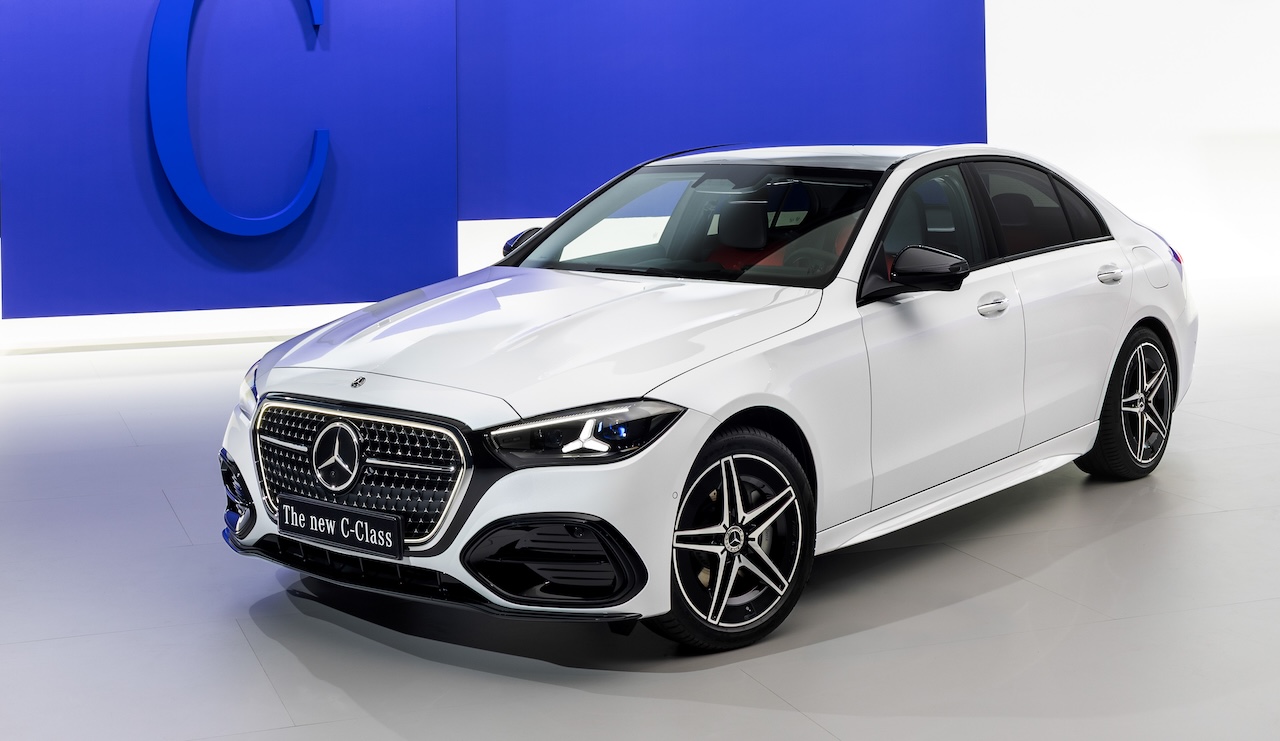
Mercedes-Benz has unveiled a comprehensively facelifted C-Class with a new 290kW plug-in hybrid flagship, up to 100km of electric driving range and a substantial technology overhaul ahead of its Australian arrival in the first half of 2027.
The Australian line-up is yet to be confirmed, but the global range includes rear-wheel drive C 300 e, all-wheel drive C 300 e 4MATIC and a more powerful C 400 e 4MATIC.
The latter combines a 190kW/400Nm 2.0-litre turbo-petrol four-cylinder with a 100kW/440Nm electric motor for total system outputs of 290kW and 650Nm.
READ MORE: Mercedes-Benz C-Class Electric unveiled: Iconic German luxury car goes EV, headed for Australia
READ MORE: About turn: Mercedes-Benz changes its mind and confirms plug-in hybrid C-Class for Australia to challenge the BMW 330e as demand for PHEVs grow
READ MORE: Mine’s bigger than yours! Mercedes C-Class EV interior revealed with enormous touchscreen that tops new BMW i3
It accelerates from 0-100km/h in 5.3 seconds, compared with 5.9 seconds for the rear-drive C 300 e and 6.1 seconds for the C 300 e 4MATIC.
The C 300 e uses the same 100kW/440Nm electric motor but combines it with a 160kW/320Nm version of the 2.0-litre four-cylinder petrol engine.
All three plug-in hybrids use a 19.53kWh usable lithium-ion battery, with Mercedes-Benz claiming an electric driving range of up to 100km under the WLTP test cycle.
Charging capability is 11kW AC and 55kW DC.
The existing C 350 e is officially rated at 104km in Australia, but that figure is derived from the more generous NEDC test cycle rather than WLTP. Mercedes-Benz Australia lists the existing car with the same 19.53kWh of usable battery capacity, as well as identical 11kW AC and 55kW DC maximum charging rates.
That makes a direct comparison between the old and new Australian cars impossible until local homologation figures for the facelift arrive.
The new PHEVs form part of what Mercedes-Benz describes as the most comprehensive technical upgrade in C-Class history.
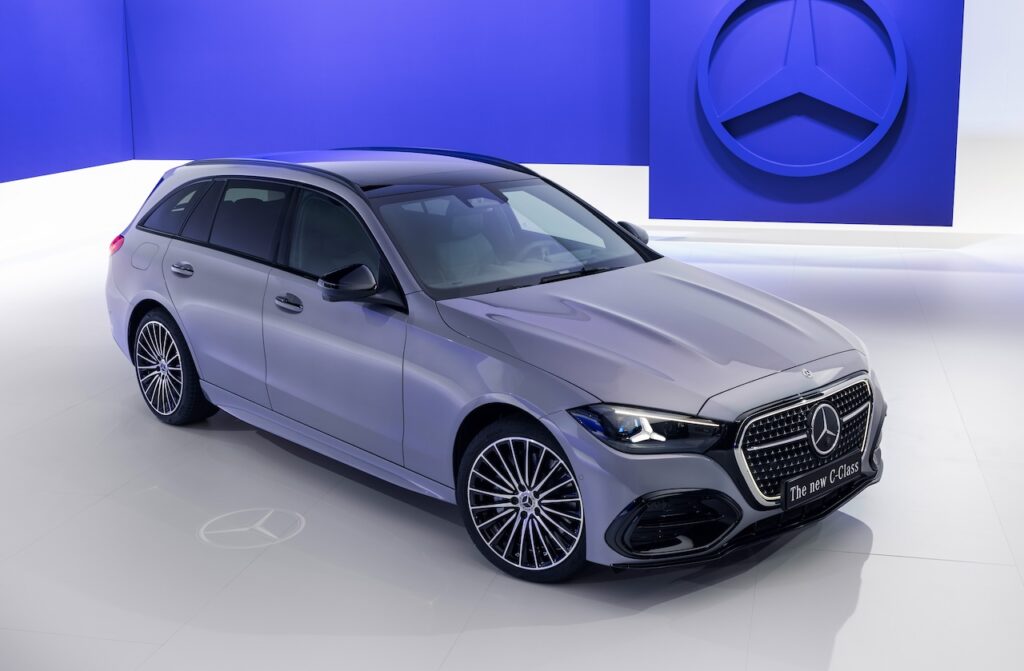
But this is not an all-new generation of the traditional C-Class. Instead, it is a major facelift of the existing W206-generation sedan.
It will also have a very different C-Class sharing the showroom.
The new battery-electric C-Class has already been revealed and confirmed for Australia, meaning Mercedes-Benz will offer the familiar C-Class formula with petrol and plug-in hybrid power alongside a new dedicated EV.
In Australia, the outgoing W206 range currently includes two PHEVs.
The $98,200 before on-road costs C 350 e returned plug-in hybrid power to the mainstream C-Class range in 2025 and produces 230kW and 550Nm from its 2.0-litre turbo-petrol engine and 95kW electric motor. Mercedes-Benz Australia currently quotes its 104km NEDC electric range and 20-minute DC 10-80 per cent charging time.
There is also the much more powerful Mercedes-AMG C 63 S E Performance, although its high-performance PHEV drivetrain is not covered by this latest announcement.
The facelift extends well beyond the engines.
There’s a redesigned and optionally illuminated grille, new headlights and tail-lights incorporating Mercedes’ three-pointed-star graphics, reshaped bumpers and new wheel designs.
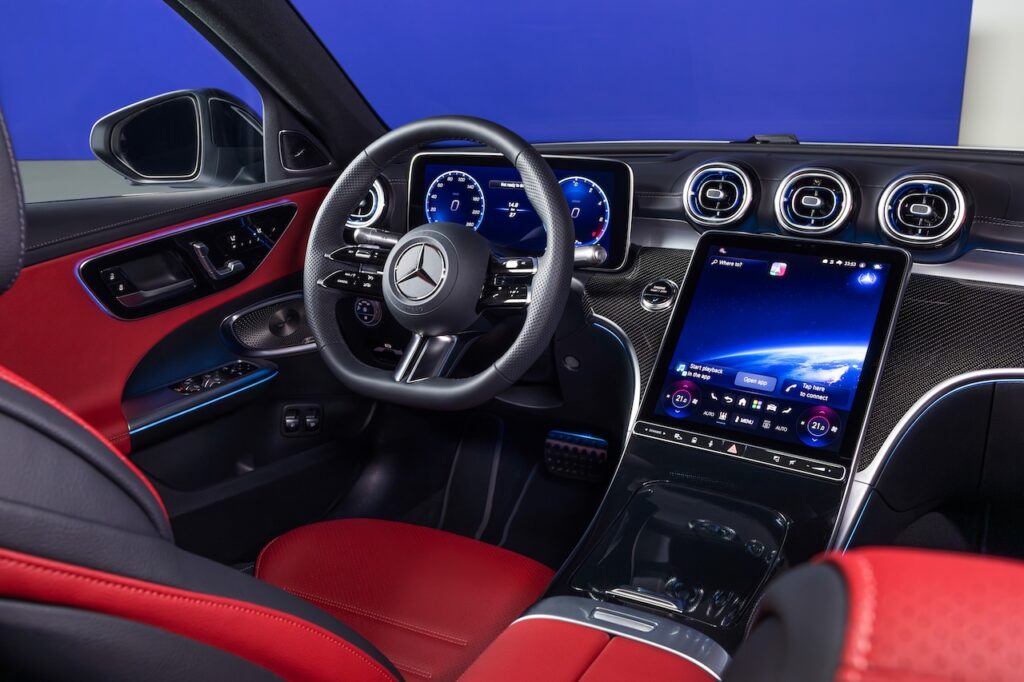
Inside, the familiar 12.3-inch digital instrument display and portrait-oriented 11.9-inch central touchscreen remain, while Mercedes has introduced a new steering wheel and substantially upgraded the electronics behind the screens. The EV version has the option of anew widescreen display.
The C-Class adopts the Mercedes-Benz Operating System, or MB.OS, as well as the fourth generation of MBUX.
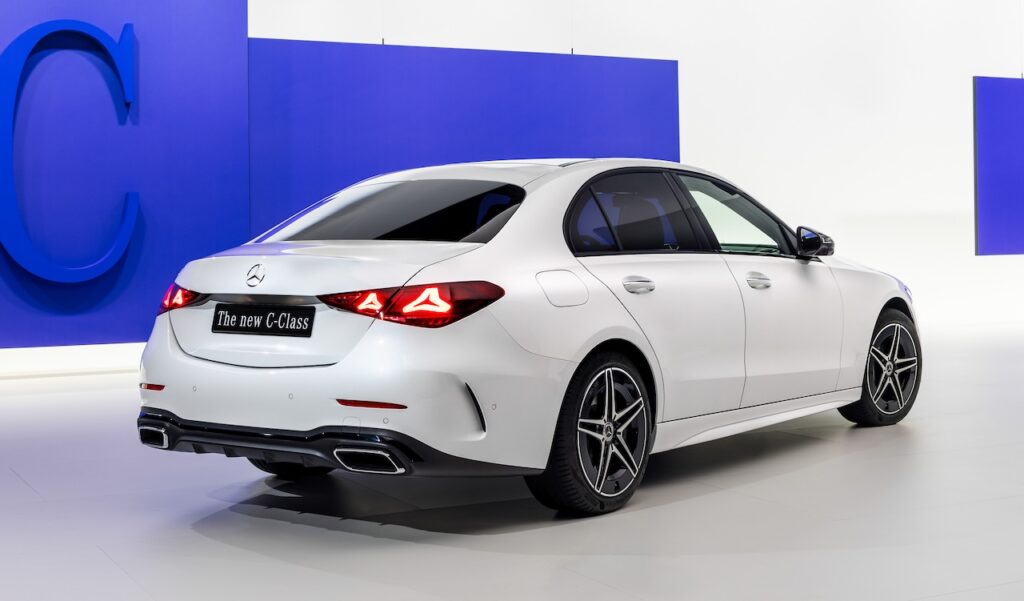
Its new AI-powered virtual assistant draws on ChatGPT, Microsoft Bing and Google Gemini and can conduct multi-part conversations and retain context through short-term memory.
MB.OS also enables over-the-air updates to numerous vehicle systems and integrates Google Maps data into Mercedes-Benz’s navigation system.
Mercedes has also revised the suspension, while available rear-wheel steering can turn the rear wheels by up to 2.5 degrees and reduce the turning circle by 43cm to 10.64 metres.
The facelifted Mercedes-Benz C-Class is due in Australia in the first half of 2027.
Which PHEV variants will be offered here remains to be confirmed. While the sedan is a certainty, the wagon version is less likely.