‘No going back’: EV shift is permanent and not every brand will survive it, says auto industry chief
Australia’s peak automotive industry body says the electric vehicle surge of 2026 is a permanent structural shift – and that the flood of new brands riding it means some won’t survive.
Federal Chamber of Automotive Industries chief executive Tony Weber says there is no going back to the EV market of 2025, which finished the year with electric vehicles accounting for 8.3 per cent of new vehicle sales.
“I think the change in the EV market in 2026 is structural,” Weber said at a recent relaunch event for Chinese car maker XPeng, one of many newcomer brands shaking up the Australian new-car market.
READ MORE: EVs outsell diesel and hybrids for the first time as new-car market smashes all-time record; Tesla, BYD booming
READ MORE: It’s gonna be a record! Global EV sales set to soar beyond 23 million in 2026 and Australia is contributing!
READ MORE: Australia’s EV sales storm as fuel crisis bites
“We will never go back to where we were at the end of last year in 2025, which was 8.3 per cent EV penetration. Those days are gone. We’ve now moved on to another phase.”
Weber’s statement will bring some satisfaction to EV brands Tesla and Polestar which quit the FCAI because it lobbied against aggressive vehicle emissions standards and strict mandates in the lead-up to the introduction of the NVES CO2 reduction regulations.
Battery electric vehicles hit a record 23 per cent of the new vehicle market in June 2026, with around 110 EV models now on sale.

And in some market segments – including mid-sized SUVs – EVs were the dominant force; in the first six months of 2026 32 per cent of all medium SUVs sold were powered solely by electricity.
Weber points to the crisis in the Middle East and its impact on petrol and diesel prices as one trigger, but he says the bigger driver is the sheer volume of vehicles on the road and the experience owners are having.
“People know people that have had EVs, live with them, enjoy them, provide other people with the confidence to follow,” he says.
“They understand … the recharging network is now appropriate for what they want to do. That gives confidence, and hence growth.”
Something’s gotta give: Some brands will inevitably disappear
The EV boom has been led by brands most Australians hadn’t heard of a few years ago, and Weber says buyers have embraced them.
“Right across the economy we’re seeing that Australians are prepared to move into new brands. The car market is no different,” he says.
“These vehicles are well built. They’ve got long quality warranties on them, service networks. People quite rightly think that this is a real option.”
But with more brands arriving every year in what Weber describes as one of the most open and competitive car markets in the world, he says a shakeout is inevitable.
“You would expect that there will be a rationalisation of the market. We cannot grow to 100, 150 brands,” he says.
“Like high school economics tells you, in open and competitive markets you get new players and people and brands – that is very basic economics.”
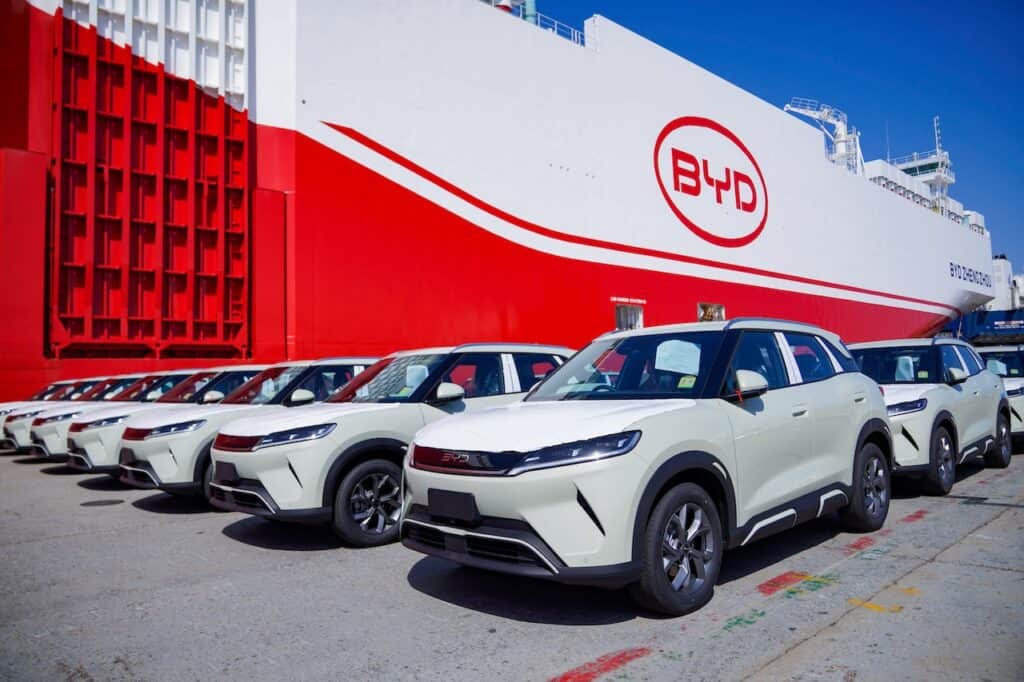
Weber says the competitive free-for-all is the logical end point of 40 years of market liberalisation that began with the Button Plan, which progressively removed quotas, tariffs and non-tariff barriers.
He makes no apology for the casualties that will follow, arguing the open market was designed to serve consumers, not car makers or dealers.
“It’s all designed for consumers. And the Button Plan in many ways has come to fruition. We have a very vibrant, competitive market. We have high quality products… at really low prices. It’s working.”
Unsurprisingly, Weber declined to nominate which brands are under the most pressure.
Already the local Peugeot distributor has announced it will hand the distribution rights back to parent company Stellantis.
Stellantis has also stopped importing Fiat passenger cars into the country.
Citroen import ceased in 2024.