2026 Toyota RAV4 Review: Top-selling electrified SUV is more expensive, but key updates have delivered a better vehicle
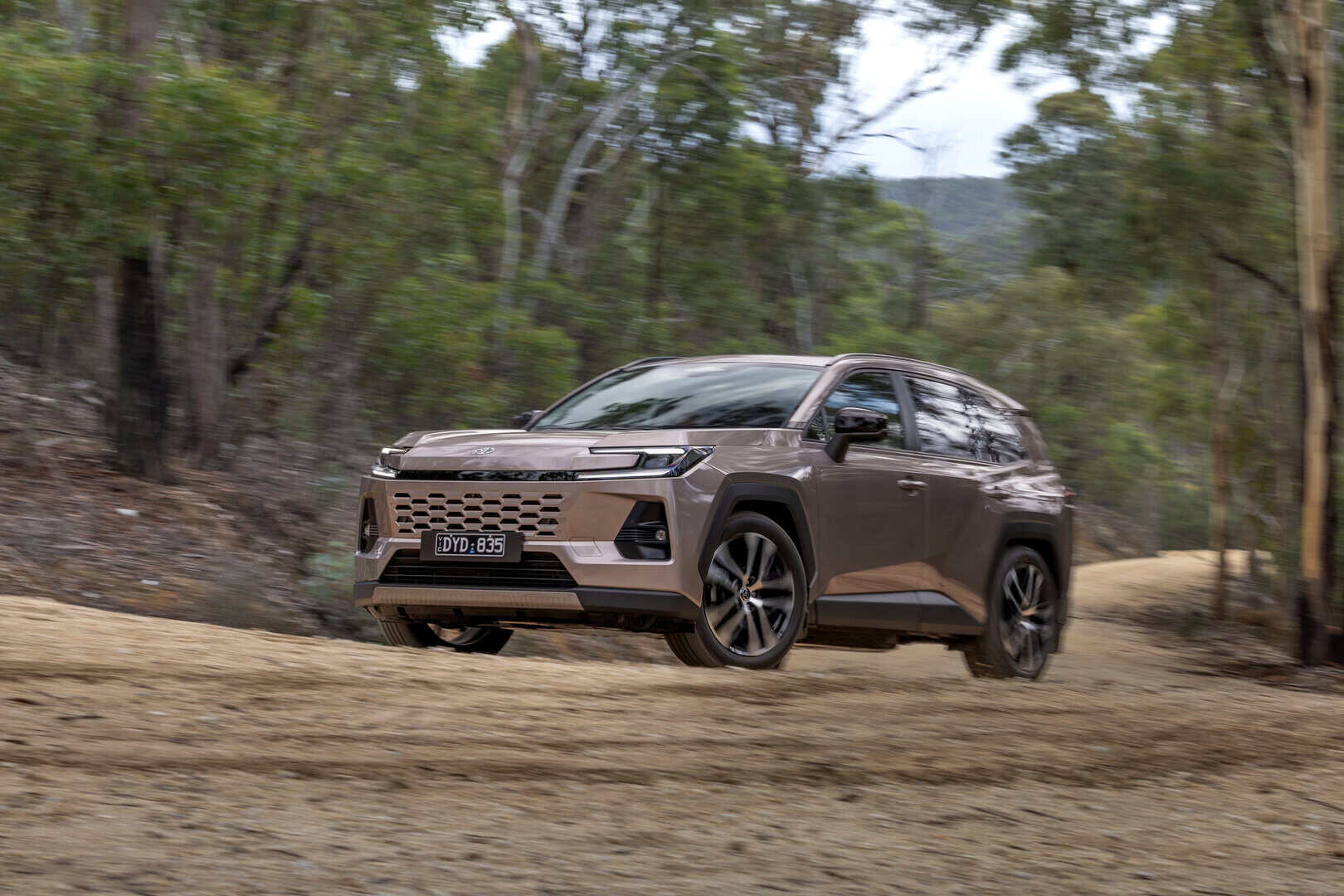
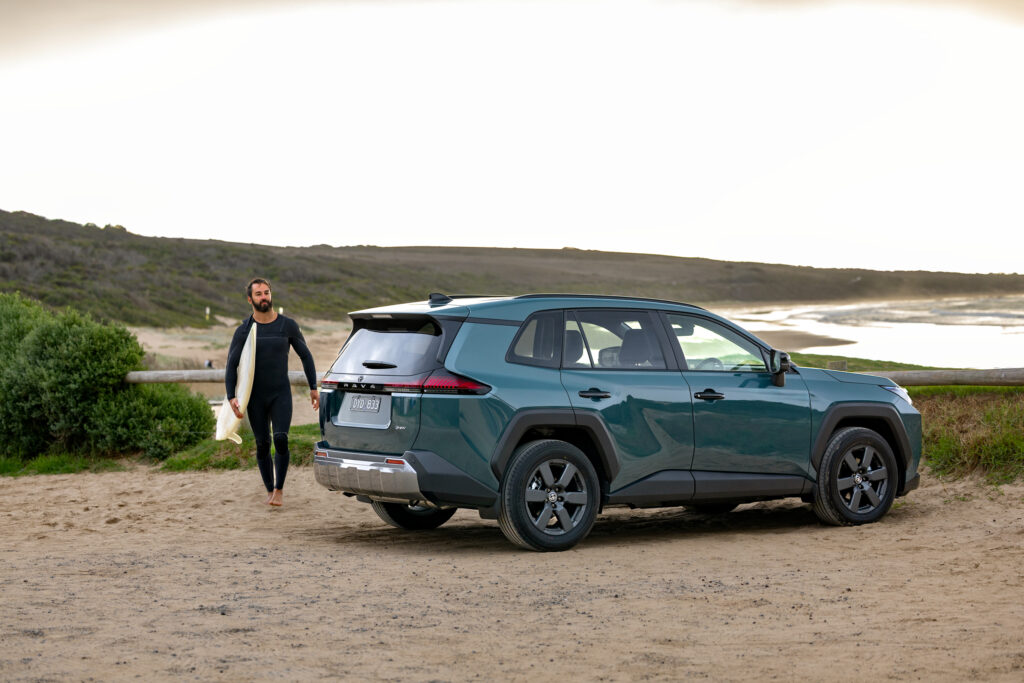
The sixth-generation Toyota RAV4 has arrived with more gear, more Tesla-inspired tech and a broader model range that incorporates a plug-in hybrid option for the first time.
Despite being pitched as all-new, there’s plenty of the previous RAV4 beneath the skin, including the hybrid drivetrain and basic architecture.
But the familiar formula that’s kept the RAV4 at the top of the SUV sales charts for years has been executed with a higher level of polish designed to keep traditional rivals at bay: think Honda CR-V, Mazda CX-5, Hyundai Tucson, Kia Sportage, Subaru Forester, Mitsubishi Outlander and Nissan X-Trail.
READ MORE: New Toyota RAV4 could make history as first SUV – and electrified – top seller
READ MORE: Toyota Hilux EV price announced
READ MORE: Toyota confirms compact EV for Australia: More affordable Toyota C-HR BEV on the way to fight BYD Atto 3 and Geely EX5 … but don’t rush your dealer just yet
Of course, there’s also a new breed of mid-sized SUVs trying to steal sales from the RAV4. They include the Geely Starray, BYD Sealion 6, Jaecoo J7, Chery Tiggo 7, GWM Haval H6 and MG HS.
Hybrid-only since late 2024, the new RAV4 builds on that powertrain with a revised front motor, a new lithium-ion battery and suspension tweaks that make a genuine difference on the road.
A plug-in hybrid joins the range later in 2026. There are some things to know going in, though: prices are up by as much as 10 per cent, combined system power has actually dropped compared to the outgoing model, and the car won’t carry an ANCAP safety rating for much of 2026.
Is any of that likely to stop it from being an SUV favourite?
Read on…
2026 Toyota RAV4 price and equipment
The 2026 RAV4 range starts at $45,990 before on-road costs for the entry GX and runs through the GXL ($48,990), Edge ($55,340 – and pitched as a more adventurous off-roady model variant), Cruiser ($56,990) and XSE ($59,015 with the “mandatory” premium paint).
That represents an increase of up to more than 10 per cent over the outgoing model – a meaningful step that will register with buyers who were already stretching the budget.
All-wheel drive is a $3350 option on most variants, while regular hybrid XSE and Edge come with it as standard.
Every variant gets a 12.3-inch digital instrument cluster, Toyota’s new in-house-developed Arene infotainment software with over-the-air update capability, dual-zone climate control, integrated navigation and five USB-C ports.
The GX and GXL use a 10.5-inch central touchscreen, while the upper grades graduate to a 12.9-inch unit – adequate but not leading edge in this era of pixel-saturated rivals.
Importantly, physical buttons and a proper volume dial remain. That might sound unremarkable, but in a segment where too many rivals have buried simple functions in swipe-heavy touch menus, it’s a meaningful point of difference.
The Arene operating system also enables remote locking and unlocking, sending navigation destinations to the car from your phone, closing the windows remotely and – very much a Tesla nod – using your smartphone as a key. Continuing the Tesla theme, the RAV4 can also use its external cameras as a dashcam, capturing the previous 10 seconds of footage.
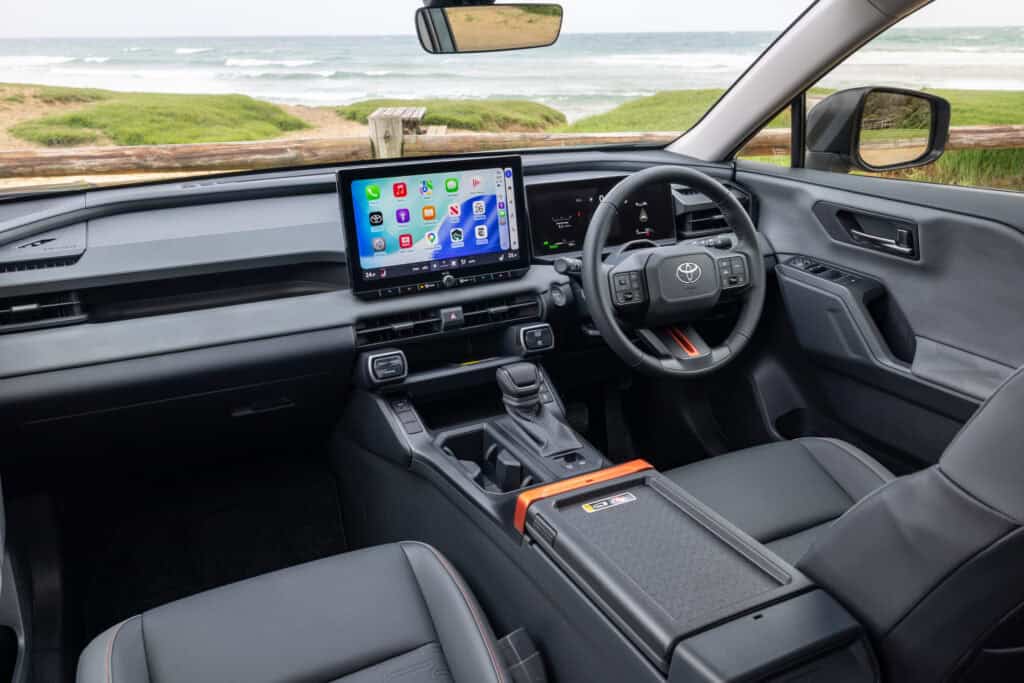
The GX misses out on a wireless phone charger; all other variants get one, the Cruiser two.
Step up to the GXL and you add 18-inch alloys (the GX gets 17s), a power-adjustable driver’s seat and rain-sensing wipers.
The Edge brings leather-look trim, heated front seats and a powered tailgate.
XSE adds 20-inch alloys, a sunroof, ventilated front seats, a 360-degree camera and a memory function for the driver’s seat.
The Cruiser tops the standard hybrid lineup with a panoramic sunroof, partial leather trim, head-up display and a nine-speaker JBL system.
For buyers who want to go the whole way, the PHEV-only GR Sport arrives later in 2026 at $66,340 with AWD as standard. It gets unique styling touches, GR Sport badging (right down to the brake calipers), a rear spoiler, aluminium pedals and adjustable dampers – plus a wider track courtesy of wheels spaced 20mm further apart.
The PHEV is also available in XSE guise for (PHEV) for $59,515 as a front-drive model or $64,015 with all-wheel drive, each before on-road costs.
There’s no battery electric RAV4; Toyota has the bZ4X for those buyers. And there’s no seven-seat option, unlike the Honda CR-V, Nissan X-Trail and Mitsubishi Outlander.
Towing capacity is 800kg for front-wheel drive variants and 1500kg for all-wheel drive.
2026 Toyota RAV4: What we think
Get behind the wheel of the new RAV4 and the immediate sensation is one of familiarity.
All regular hybrid models get the 2.5-litre four-cylinder engine.
It’s largely unchanged from the previous car, pairing an unchanged 105kW/221Nm petrol engine with a new 100kW/208Nm electric motor up front.
There’s also a new 1.1kWh battery, with Toyota finally ditching old school nickel-metal hydride technology for lithium-ion.
All-wheel drive variants add a 40kW/121Nm electric motor to the rear axle.
As before, there’s no mechanical link between the engine and rear wheels in those all-wheel drive variants.
Despite the tweaks, tougher emissions regulations mean combined power – what the engine and e-motors can produce together – has actually gone backwards.
Previously the RAV4 hybrid made up to 163kW, whereas with this new model that tops out at 143kW across both the front-wheel drive and all-wheel drive variants.
Peak torque – the pulling power you use most day-to-day – is unchanged at 221Nm (engine only, Toyota doesn’t add the e-motor torque in for a combined total, but it’s helping out), and Toyota says there’s more available lower in the rev range for a more responsive feel.
Front-drive models are claimed to hit 100km/h in 8.0 seconds while all-wheel drive variants lower that to 7.7 seconds.
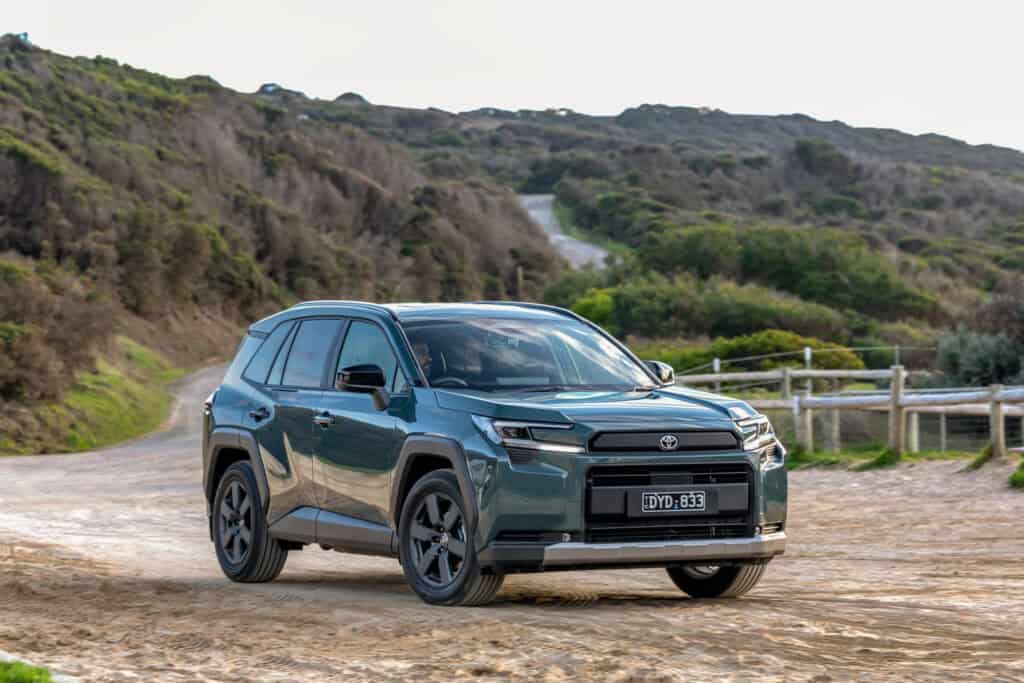
Fuel consumption improves marginally with this latest RAV4 to a claimed average 4.5L/100km for front-wheel drive models and 4.6L/100km for all-wheel drives, although the RAV4 now requires more expensive premium unleaded fuel – so overall running costs could actually increase slightly.
Under way, the transition from a standing start is smooth and seamless, the electric motor handling the early work before the petrol engine joins the party.
Toyota’s claim that torque is more accessible lower in the rev range proves true; there’s a sharper eagerness off the mark that makes poking the nose into gaps in traffic or surging out of a tight corner more effortless.
Ask it for everything at highway speed though, and the petrol engine settles into an unsexy drone.
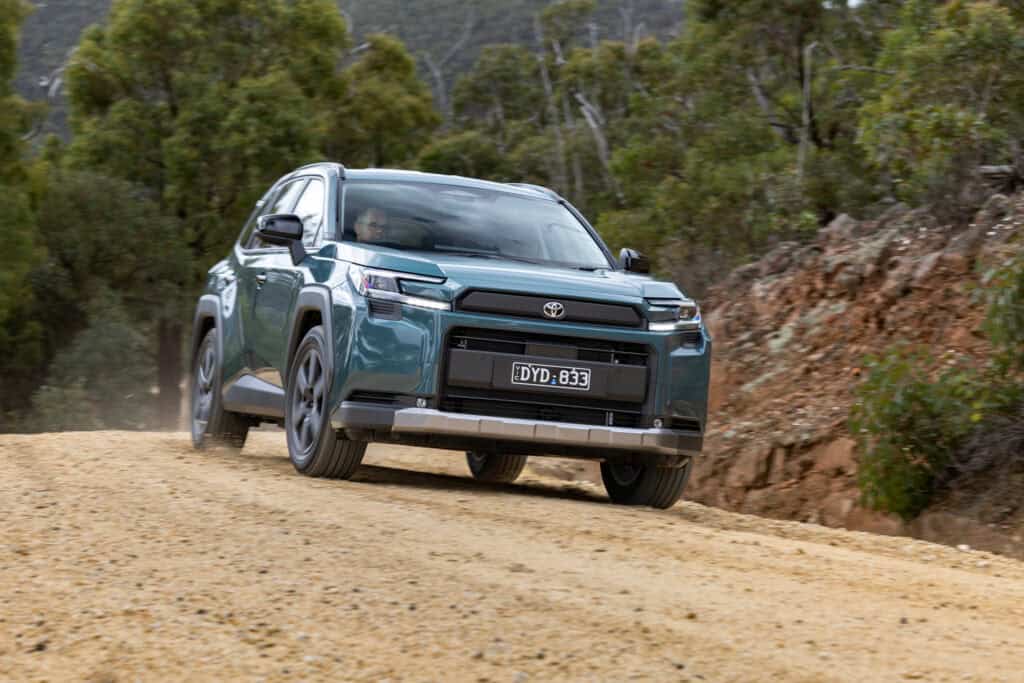
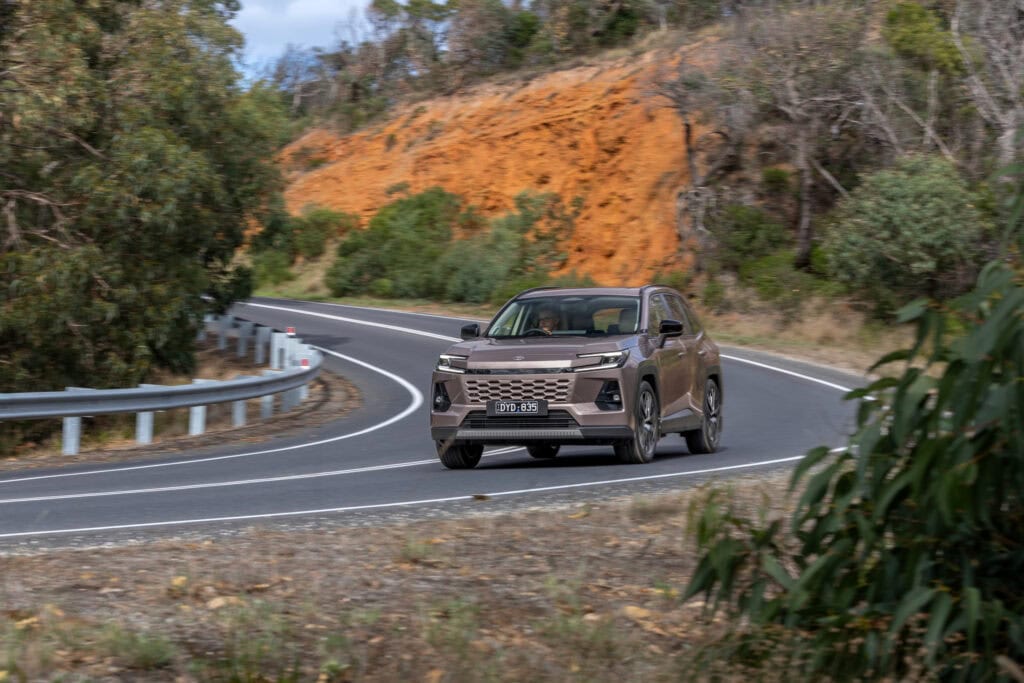
Tweaks to the suspension and a stiffer body structure have delivered a car that now corners with even more confidence.
The steering has meaningful weight, grip levels from the tyres are impressive, and body control over bumps and road imperfections is excellent; it settles quickly and doesn’t wallow.
Refinement at highway speeds is good, albeit with some tyre noise on some surfaces.
The overall ride quality is well-sorted for Australian conditions.
It makes for a family SUV that is genuinely satisfying to drive, something of a rarity from some rivals more intent on packing the car full of goodies.
The safety situation is worth spelling out. Eight airbags are standard, along with autonomous emergency braking, blind-spot warning, lane-keep assist, exit assist, and front and rear cross-traffic alert.
But there will be no ANCAP rating for most of 2026. Toyota has confirmed that safety system upgrades – both active and passive – are planned for later in the year, and those are expected to earn a five-star result under the current 2026 protocols.
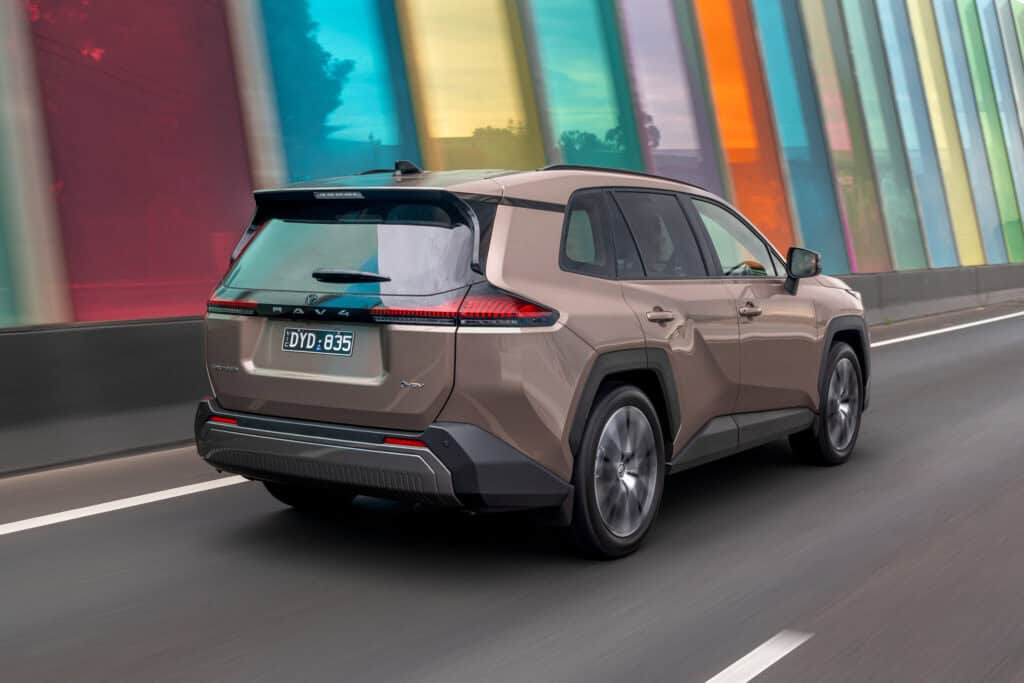
Those updates won’t be retrofitted to cars already delivered.
There’s no clear answer on what the changes involve, other than that they won’t require any structural changes to the vehicle.
Inside, the new Toyota RAV4 the dimensions are essentially unchanged from the outgoing model – same platform, same bones – but the interior freshen-up is substantial.
Analogue gauges are gone, replaced by a customisable 12.3-inch digital instrument cluster.
The dash has been properly modernised and the overall ambience, while still leaning on Toyota’s familiar grey plastics, feels more contemporary.
Head- and legroom are generous up front although back seat space is average for the class. The rear centre seat loses foot space to a floor hump and its occupant sits slightly elevated, but that’s a familiar compromise in this class.
Storage is well-handled throughout, with a reversible centre console lid you can open toward either occupant or remove and flip to create a hard shelf.
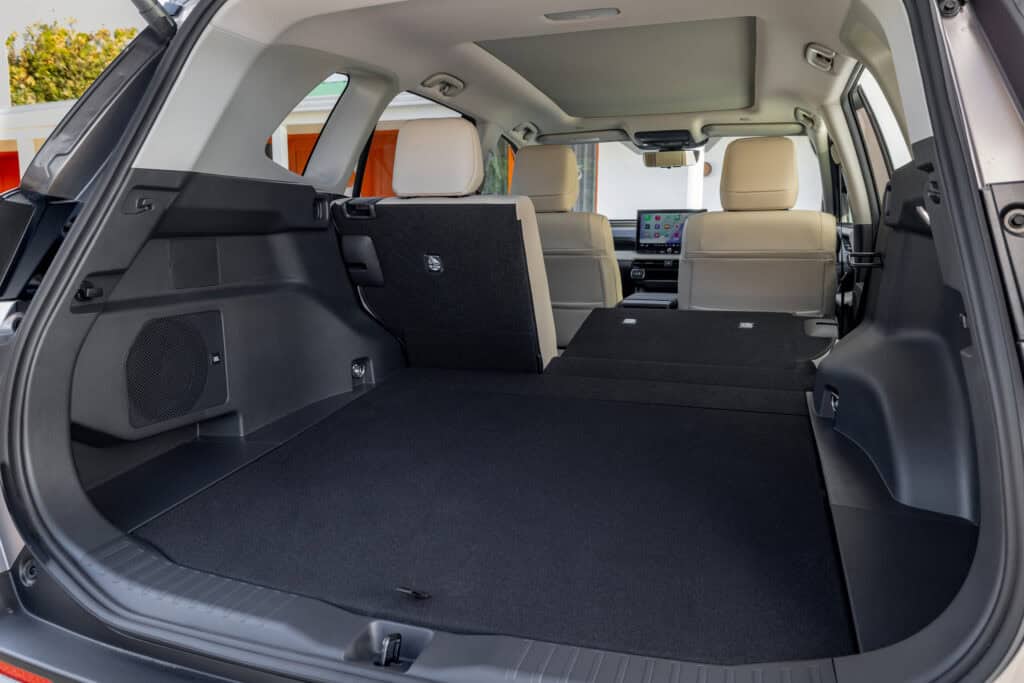
Boot space is 705 litres, with a split underfloor to keep valuables out of sight. The rear seat folds 60/40 for extra cargo flexibility.
2026 Toyota RAV4: Verdict
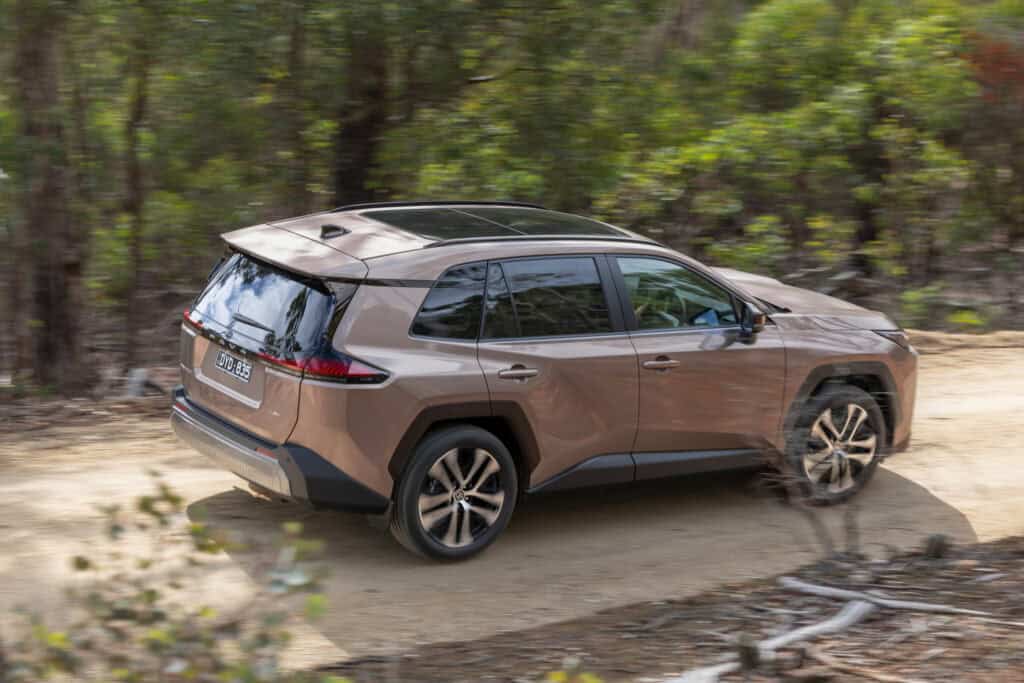
The 2026 RAV4 is quintessential Toyota: it doesn’t rewrite the mid-size SUV rulebooks but instead modernises things and addresses some areas that could do with improvement, particularly tech.
Improvements to the driving experience seal the deal for an SUV that is practical, unfussy and impressively easy to live with.
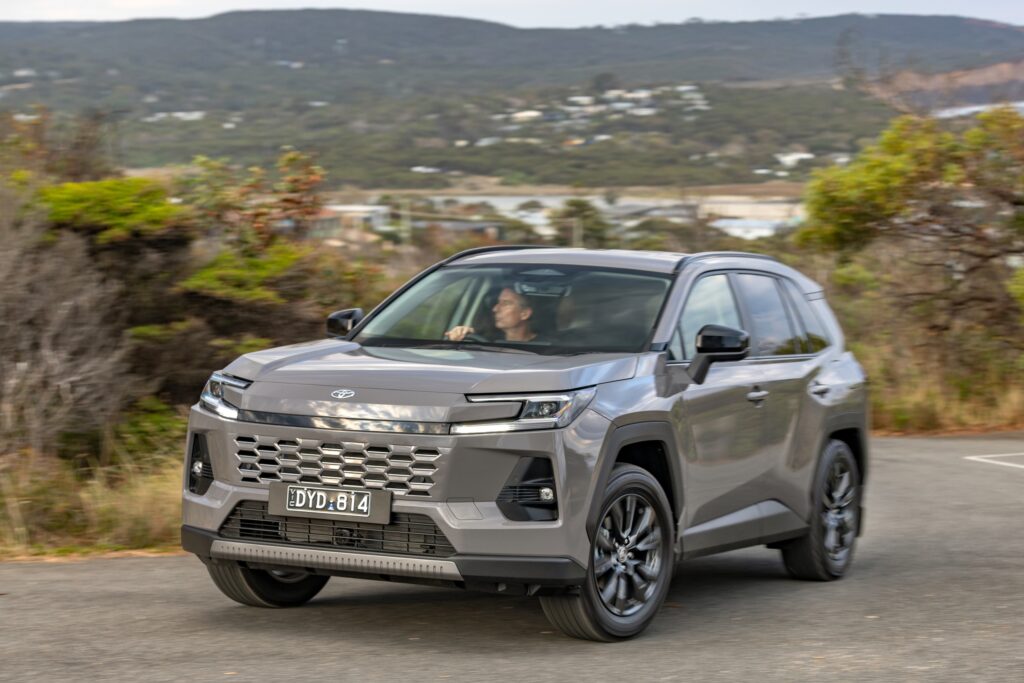
There are negatives: prices are higher than ever and you’ll have to fill it with premium unleaded.
Despite all of that, the core of the RAV4 – the reason buyers keep coming back – remains stout.
Start saving and stick it on the shortlist.
SCORE: 4.0/5
2026 Toyota RAV4 price and specifications
Price: From $45,990 (plus on-road costs)
Basics: Hybrid, 5 seats, 5 doors, SUV, FWD or AWD
Drivetrain: 105kW/221Nm 2.5-litre 4-cylinder and 100kW/208Nm electric motor; additional 40kW/121Nm rear e-motor for AWD models; 143kW combined peak
Fuel use: 4.5L/100km (FWD), 4.6L/100km (AWD)
0-100km/h: 8.0 seconds (FWD), 7.7 seconds (AWD)