
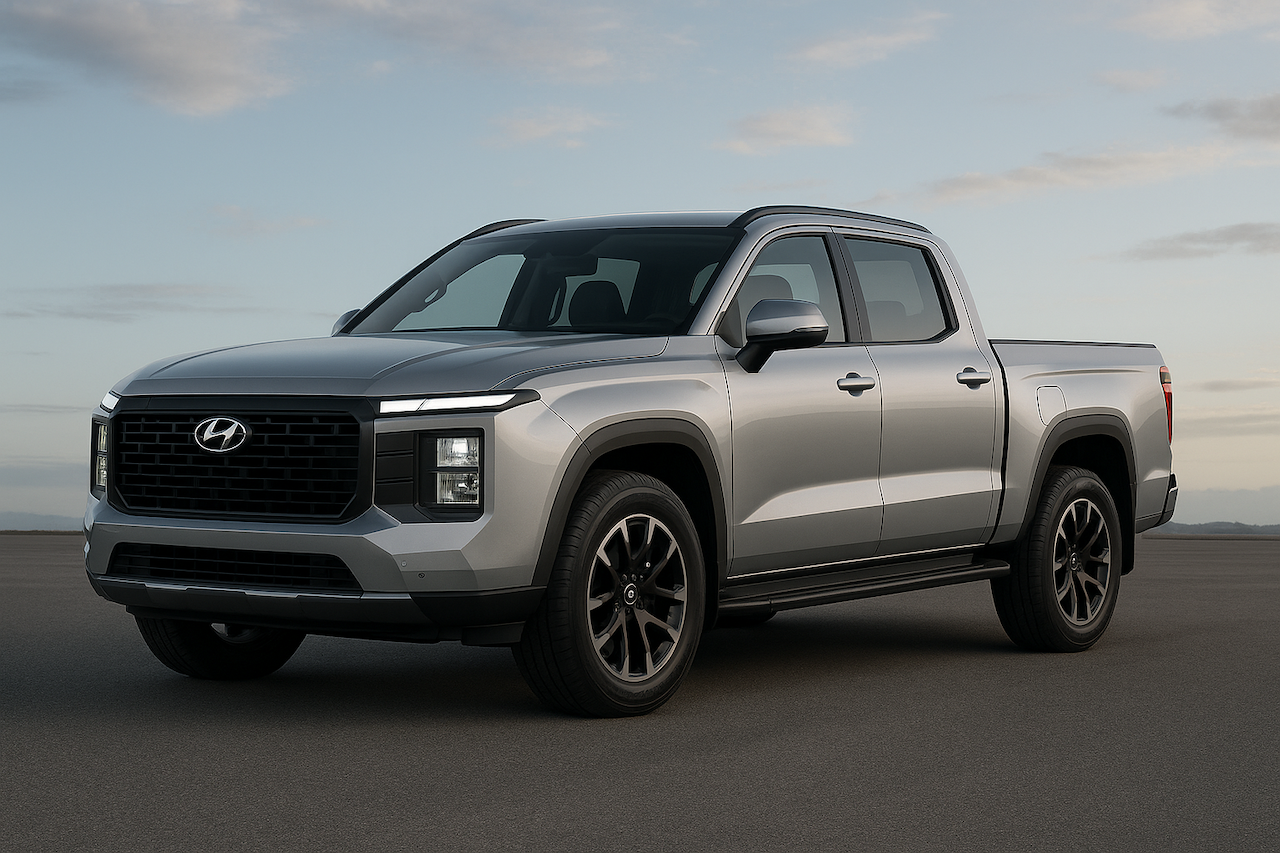
Hyundai’s 1000km-plus electric ute delayed: It’s still coming to Australia but it could take until 2030 to get here
Hyundai remains committed to launching an electrified dual-cab ute in Australia, but its local boss has warned the crucial new model could take until 2030 to arrive as the Korean giant works through its drivetrain, production and pricing options.
An extended-range electric vehicle (EREV) powertrain capable of delivering more than 1000km of driving range remains Hyundai Australia’s preferred solution for the new ute, which would give the brand a rival for the growing number of electrified pick-ups heading our way.
But Hyundai Australia CEO Don Romano says getting the right vehicle at the right price is more important than rushing into an increasingly crowded ute market.
READ MORE: Hyundai’s Australian V2G roll-out takes a big step forward: Passes crucial test using new standard
READ MORE: 2026 Hyundai Ioniq 6 N Review: It’s got an ass only a Narwahl could love, but otherwise this EV super-sedan is an amazing electric track car
READ MORE: Is this the $40K car that makes Hyundai an EV power in Australia? Ioniq 3 reboots the electric hatch in a bid to challenge BYD, Jaecoo and MG
Romano had originaly forecast the Hyundai ute could show up as soon as 2027.
“I think it may take longer than we had initially anticipated to get there but I’d rather get it right than fast,” Romano said.
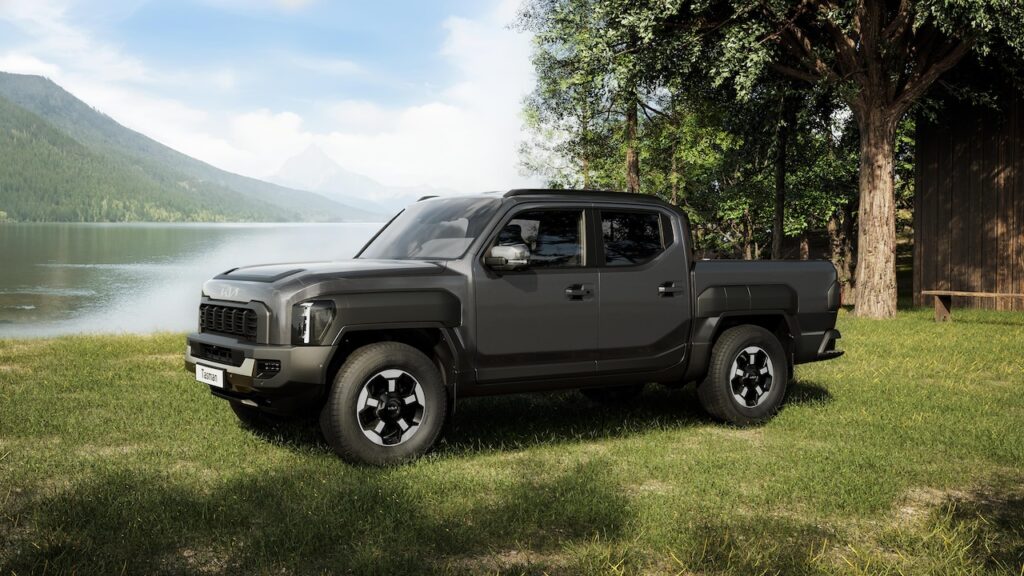
Hyundai has been exploring several paths to its first Australian dual-cab, including leveraging its relationship with General Motors in the US, tapping into sister brand Kia’s experience developing the Tasman, or producing its own vehicle.
The EREV route remains “option number one”, according to Romano.
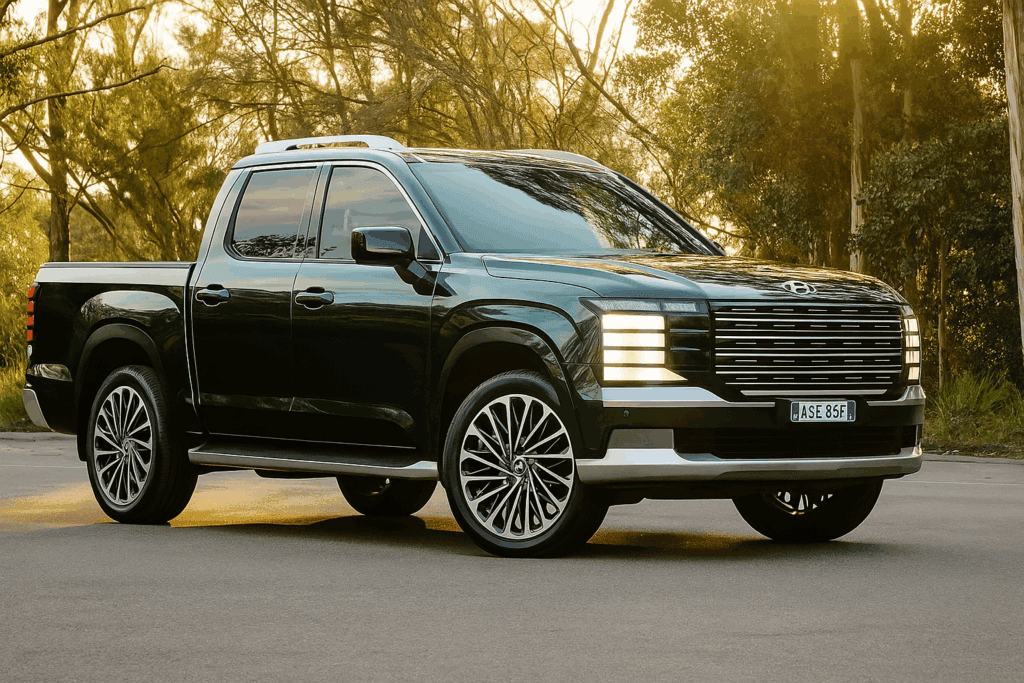
Unlike a conventional hybrid, an EREV primarily uses its combustion engine to generate electricity rather than directly drive the wheels, allowing it to combine EV propulsion with the long-distance capability demanded by Australian ute buyers.
Hyundai has previously flagged more than 1000km of potential driving range from its new-generation EREV technology, potentially providing an answer to one of the biggest challenges facing battery-electric utes in Australia – maintaining useful range while towing or travelling in remote areas.
But exactly where the new ute would be built is now emerging as another significant part of the equation.
Production in the US could expose Hyundai Australia to unfavourable exchange rates, potentially pushing the price of the new model beyond where the company believes it could compete effectively.
“If it’s built in the US we have an exchange rate issue we would have to deal with, there are also tariff issues depending on where we would also consider building,” Romano said.
“So we’re going to keep our options open in this area because what we need is a… pickup truck, and it has to be unique.
“A lot of the Chinese brands are already bringing in pickup trucks, and I don’t think Australia needs another standardised pickup truck, so what will make ours unique?”
By the time Hyundai gets there, the answer to that question could be more important than ever.
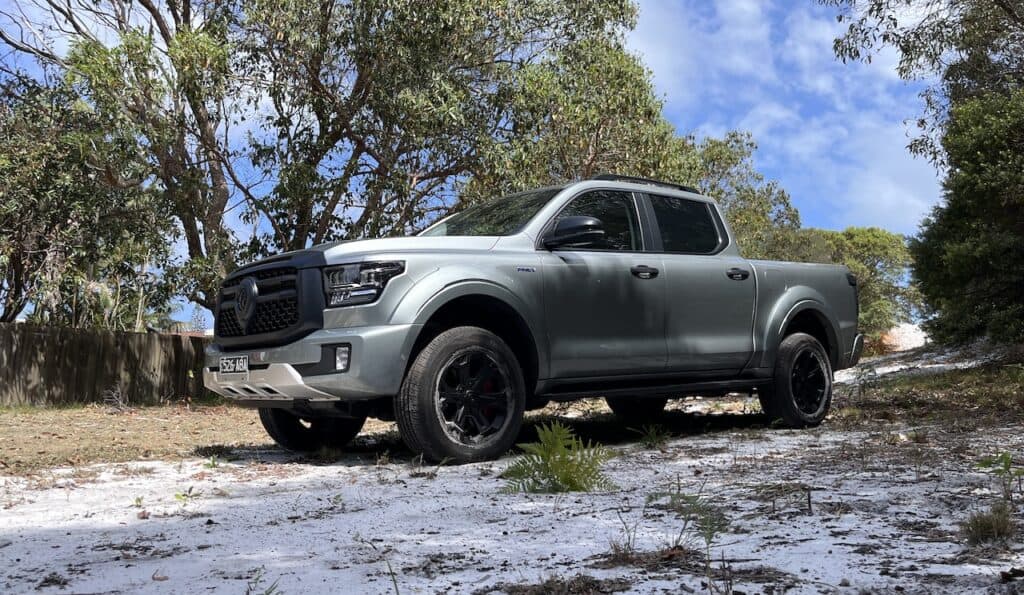
The BYD Shark 6 has already established plug-in hybrid power in Australia’s dual-cab market, while GWM has followed with the Cannon Alpha PHEV and JAC with the lower-priced Hunter PHEV.
And the field is set to become much more crowded. Chery is preparing the Stockman plug-in hybrid for Australia, while other Chinese manufacturers are developing PHEV and EREV utes as electrification spreads rapidly through a segment traditionally dominated by diesel.
Ford has also entered the field with the PHEV version of the top-selling Ranger.
That means Hyundai could be arriving into a very different ute market by the end of the decade, with electrified powertrains increasingly mainstream and Chinese brands having had years to establish themselves.
Instead, Hyundai is investigating whether one of its manufacturing operations closer to Australia could eventually play a role.
“We have plants throughout Asia Pacific – we have plants in Indonesia, Thailand, Malaysia, Vietnam – and we want to utilise those plants as much as possible to minimise the impact of foreign exchange,” Romano said.
“So if there’s an option there and it takes a little longer, so be it. As long as we get the right ute at the right price.”
Australia’s New Vehicle Efficiency Standard (NVES) is another major consideration, and one that adds weight to Hyundai choosing an electrified powertrain rather than simply introducing another petrol or diesel dual-cab.
The company is assessing how the ute would fit within its broader Australian emissions position alongside drivetrain choice, production location and cost.
“We’ll have to leave that hanging in limbo for now until we can better define, one; the impact to NVES, two; the drivetrain, three; the FX (foreign exchange) and alternative locations,” Romano said.
While that means Hyundai is not yet prepared to lock in an arrival date – or even the final vehicle – Romano insists the project itself remains alive.
“It’s definitely going to happen. The timing is really the issue, because if it’s built in the US… and if the FX is favourable, it would be sooner. But if it’s not, we don’t need another ute that’s priced too high,” he said.
“I’d say we’re still looking at between now and 2030. There’s a timeframe, but even that isn’t a guarantee and it would be subject to us saying ‘that’s the right ute for Australia’, and I haven’t got to that point yet that anything we’re doing at this stage is a guaranteed right vehicle for Australia.”
Your use of LLM generated images instead of paying an artist to create the images has taken you down many notches in my trust of your website and news articles. Can I trust that your reporter wrote the article or just generated that too? If a human didn’t write it / create the images, why should I read it? Very disappointed, EVC…