Polestar 4 SUV revealed and priced: More practical EV gets rear window, 630km range and undercuts coupe on dollars
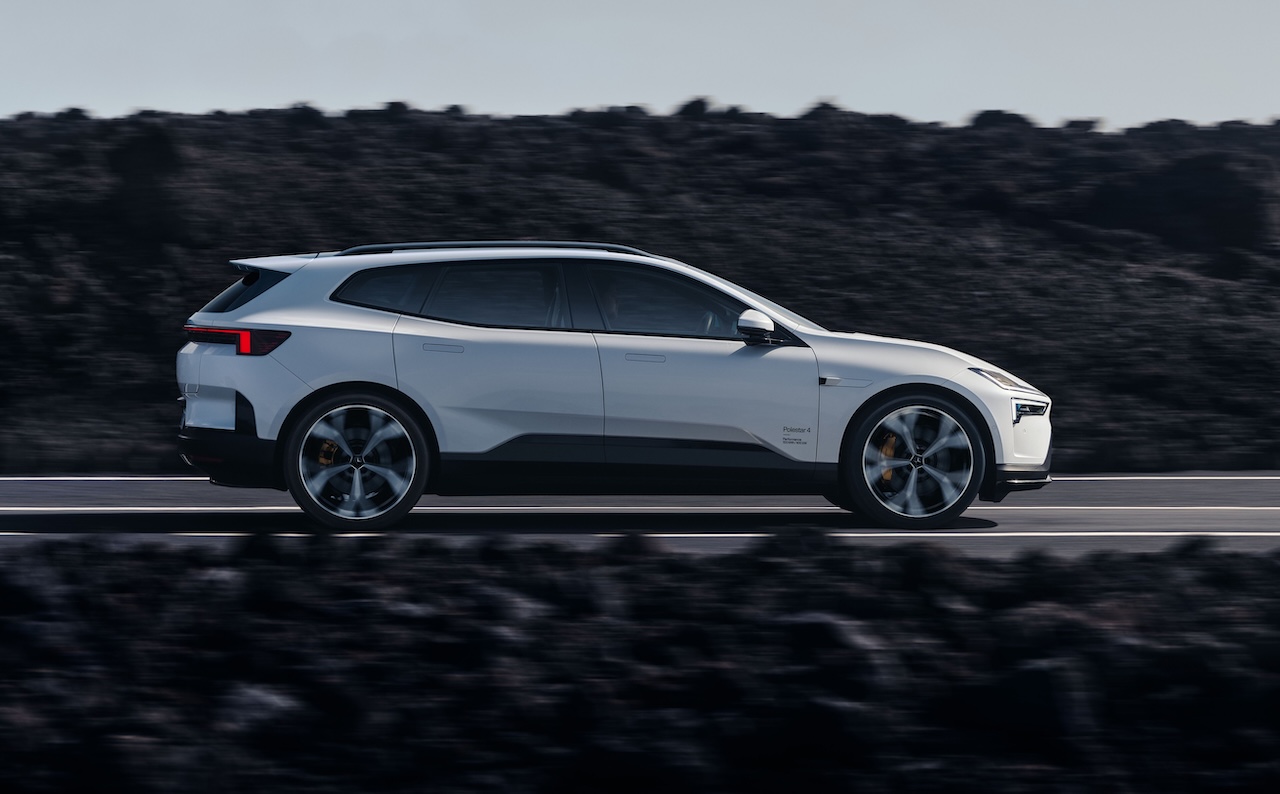
The new Polestar 4 SUV has been officially revealed, transforming the Swedish EV brand’s best-selling SUV-coupe into a more conventional and practical electric SUV, complete with the rear window conspicuously absent from the original.
Due to reach Australian customers in the fourth quarter of 2026, the Polestar 4 SUV has been priced from $73,900 plus on-road costs for the Rear motor and $81,750 for the Dual motor, rising to $95,450 when fitted with the Plus pack and Performance pack.
That means the new SUV is actually cheaper than the recently updated Polestar 4 coupé, which is priced from $78,500 for the Rear motor and $86,350 for the Dual motor.
READ MORE: https://evcentral.com.au/polestar-4-suv-outed-does-a-rear-window-and-a-more-practical-shape-deliver-a-bmw-ix3-benz-glc-and-volvo-ex60-fighter/
READ MORE: https://evcentral.com.au/another-polestar-4-update-rolls-in-top-selling-swede-has-better-handling-is-more-sustainable-and-dual-motor-cops-a-price-cut/
READ MORE: https://evcentral.com.au/polestar-model-rush-all-new-polestar-2-coming-at-record-speed-new-polestar-4-with-rear-window-also-on-the-way/
The Polestar 4 SUV was first confirmed earlier this year as part of the brand’s rapid model expansion, with teaser images revealing the addition of a conventional rear window and a more upright, estate-like rear body. The production version follows that formula closely.
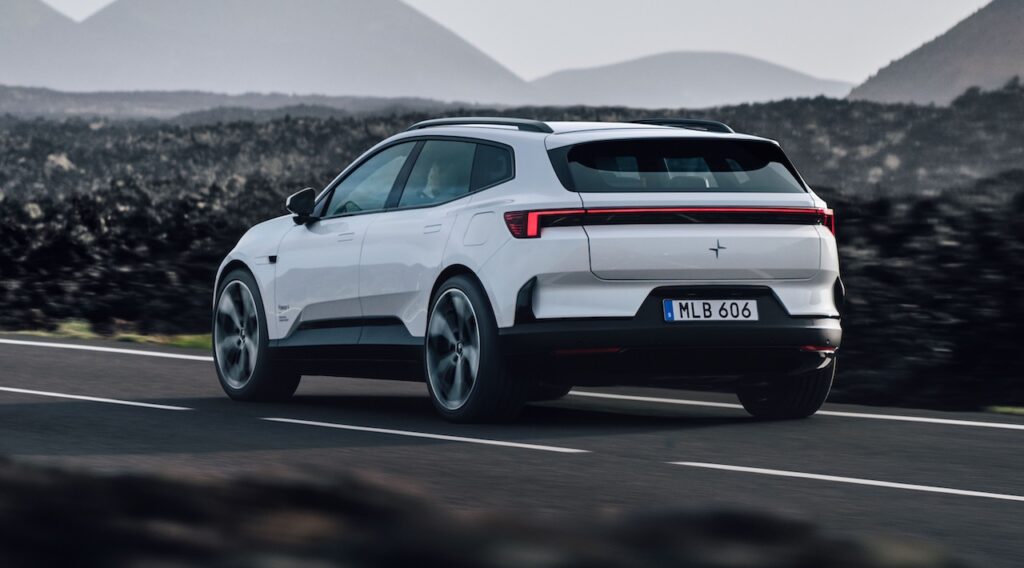
While the front end and much of the body are shared with the Polestar 4 coupé, the SUV gains a straighter roofline and more upright tailgate, along with full-length roof rails capable of supporting a 100kg dynamic load. Polestar says only 48 new parts were required to create the new body style.
Most significantly, there is now a conventional rear windscreen and standard rear-view mirror, addressing one of the most controversial design features of the original Polestar 4. Buyers can still option the camera-based digital rear-view mirror for $1000.
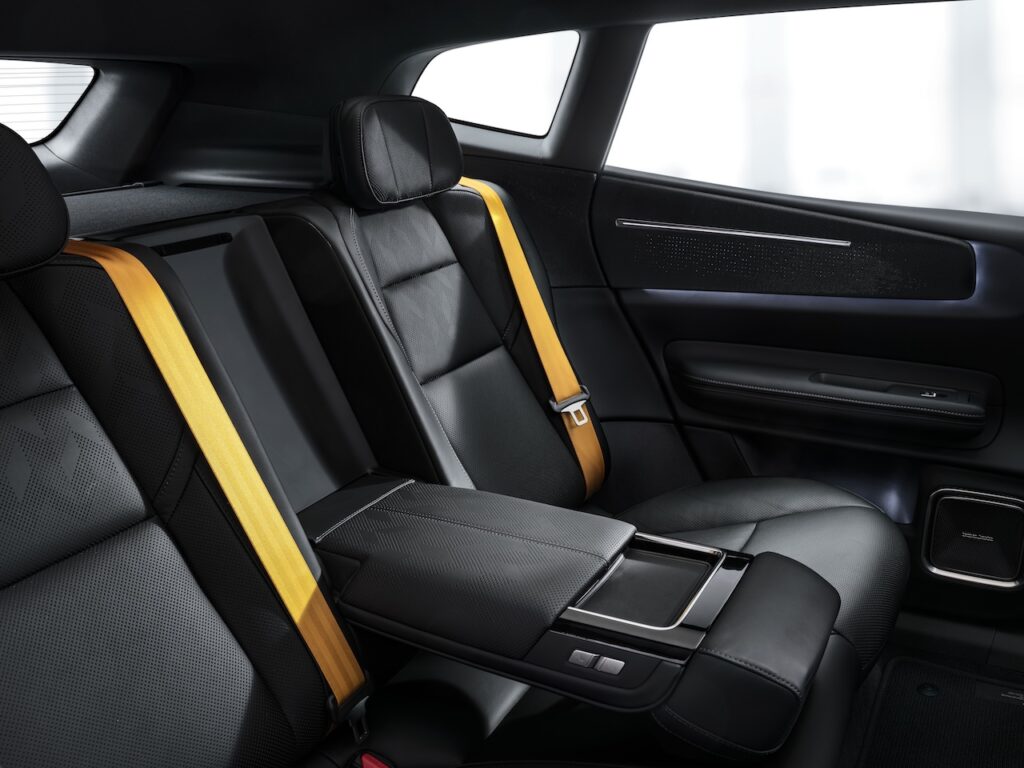
The more upright rear also increases second-row headroom by 25mm and allows for a larger panoramic glass roof stretching all the way to the tailgate. An electrochromic version capable of electrically controlling the amount of light entering the cabin is a $2200 option.
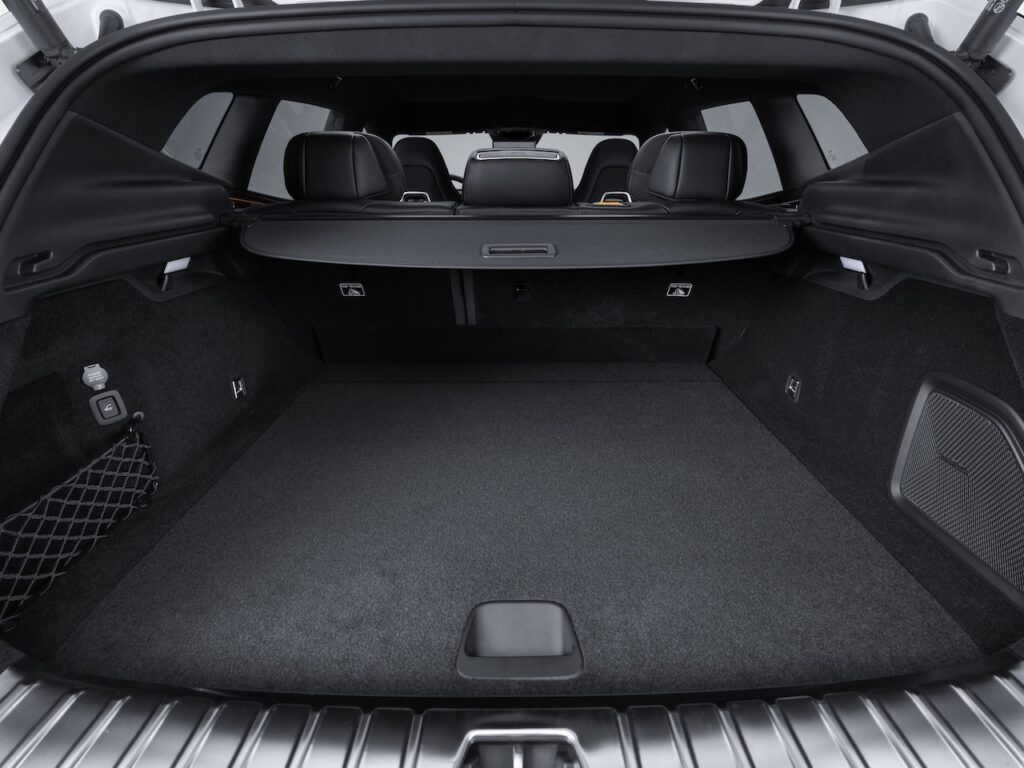
Luggage capacity is another obvious beneficiary. There is 530 litres behind the rear seats when measured to the seatbacks, or 655 litres to the roof, while folding the 60/40 split rear seats increases capacity to 1665 litres. Including the front luggage compartment, Polestar claims 1680 litres of total storage.
Underneath, however, the SUV remains closely related to the recently updated Polestar 4 coupé.
Both versions use the Geely-developed SEA architecture and a 100kWh battery, with a choice of rear- or all-wheel drive.
The Rear motor produces 200kW and 343Nm, reaches 100km/h in 7.3 seconds and has a claimed WLTP range of up to 630km.
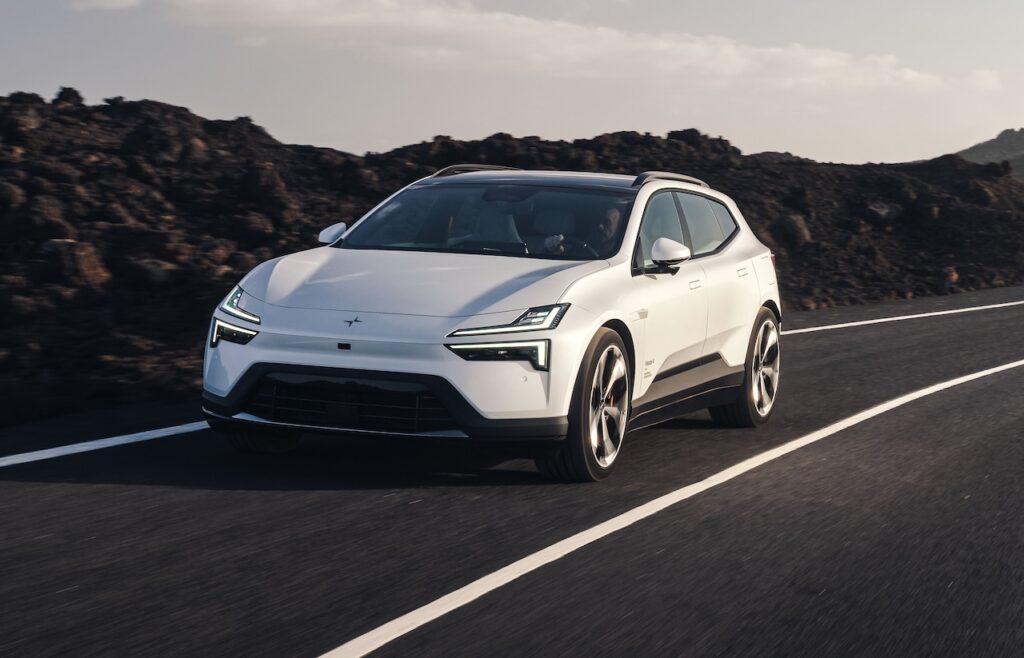
The Dual motor develops 400kW and 686Nm, cutting the 0-100km/h sprint to 3.9 seconds while reducing maximum claimed range to 600km.
Those numbers put the newcomer squarely into the increasingly competitive premium electric mid-size SUV class occupied by models such as the BMW iX3, Volvo EX60 and Mercedes-Benz GLC EV.
The Polestar’s pricing is particularly aggressive against those newer European rivals. The Volvo EX60 currently starts at $86,990 plus on-road costs, while the BMW iX3 opens at $89,900 and the recently priced Mercedes-Benz GLC 400 4MATIC costs $112,200.
Maximum DC charging remains 200kW, while 22kW AC charging is available in selected markets and listed as a $900 option in Australia.
The SUV also adopts the chassis specification introduced with the latest Polestar 4 coupé, including its revised suspension and steering calibration.
The $7200 optional Performance pack brings recalibrated ZF active dampers, Brembo brakes and new 22-inch wheels with Pirelli P Zero tyres. But it is only available for the Dual motor when already fitted with the $6100 Plus pack.
Another significant addition is vehicle-to-load (V2L) capability, which will eventually be offered across the entire Polestar 4 family via a software update.
It can deliver up to 3.3kW through a separately available adaptor, allowing the battery to run camping equipment, power tools and other electrical devices. Owners can set a minimum battery charge level at which external power supply will stop.
A new Camping mode will also arrive via software, maintaining cabin climate control while providing access to entertainment, lighting and vehicle functions.
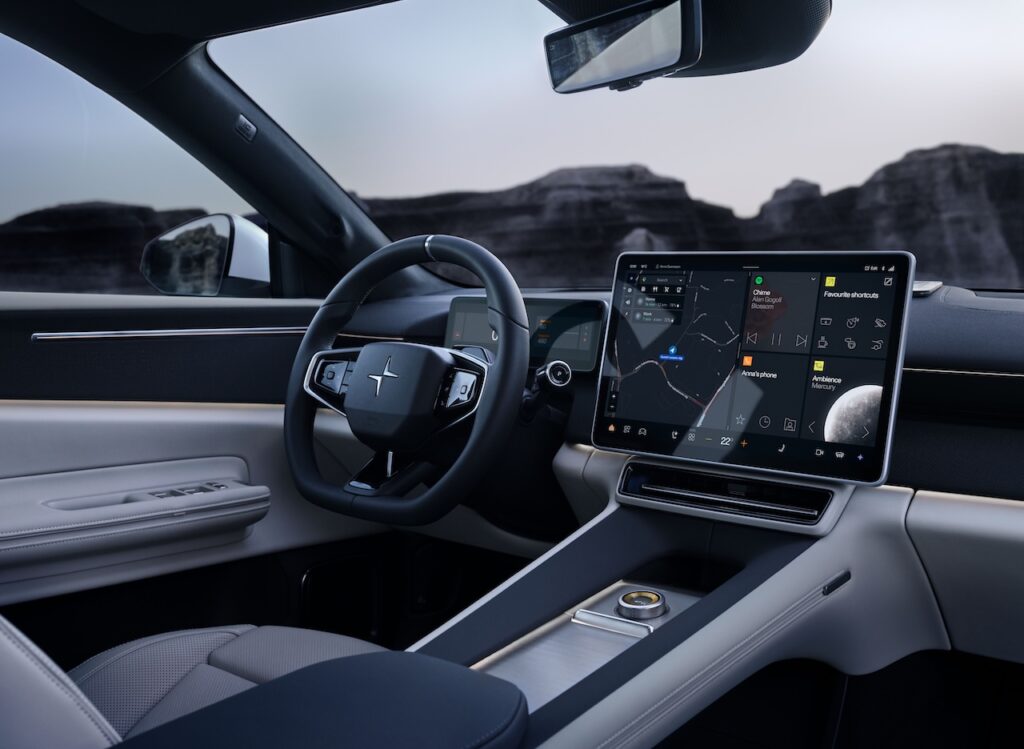
Google Gemini is incorporated into the Google built-in infotainment system, replacing traditional command-based Google Assistant voice interaction with the AI model’s more conversational functionality.
Polestar also claims the SUV has one of the lowest cradle-to-gate carbon footprints in its current range, at 20.2 tonnes of CO2-equivalent for the Rear motor and 21.1 tonnes for the Dual motor.
Production of the Polestar 4 SUV began in Busan, South Korea, during the second quarter of 2026, with first Australian customer deliveries scheduled for the final quarter of the year.