The wait is over! Reborn Mitsubishi Pajero finally revealed – but where is the PHEV?
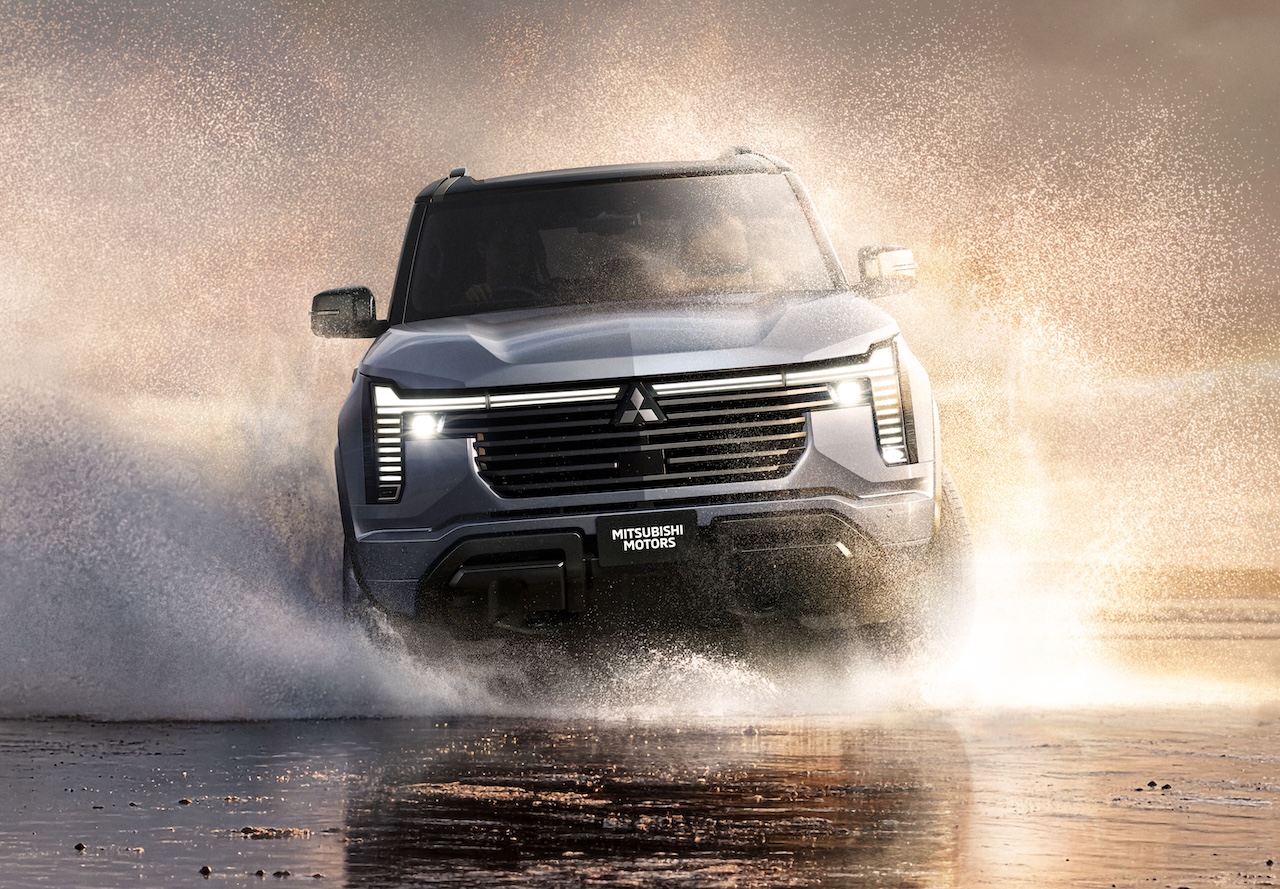
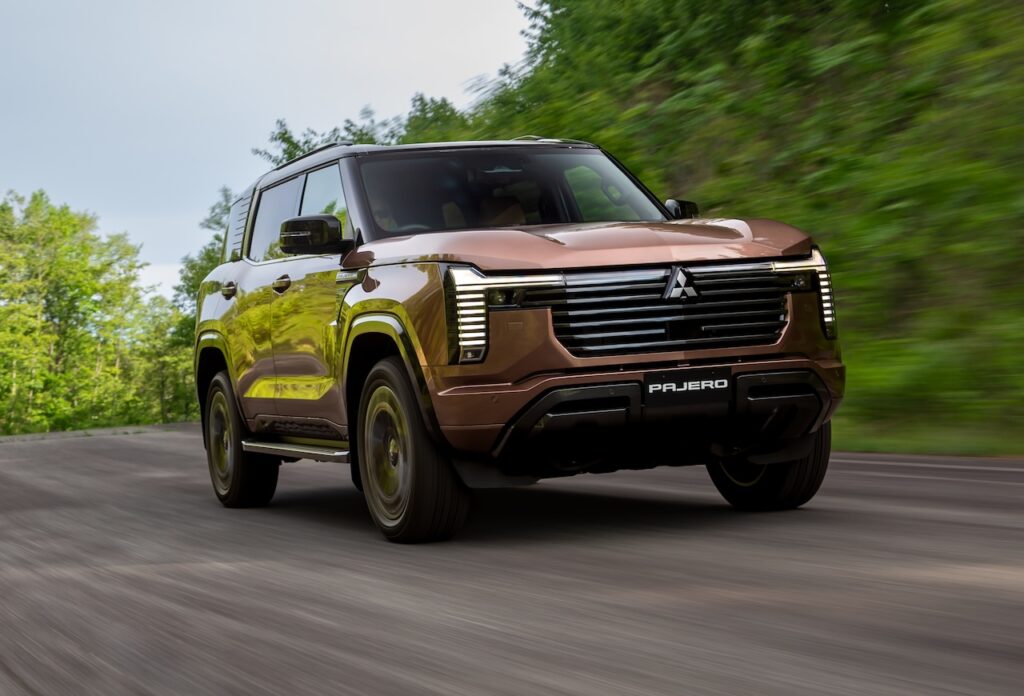
The wait is over. This is our first proper look at the reborn Mitsubishi Pajero, with Mitsubishi finally ripping the covers from its new-generation flagship off-roader ahead of its Australian arrival.
And there’s plenty here to get excited about, from its chunky new styling and serious ladder-frame 4WD hardware to its seven-seat interior and return to flagship status within the Mitsubishi range.
Frustratingly, though, there’s no fresh news on electrification.
READ MORE: More Mitsubishi Pajero details revealed: Serious 4×4 hardware locked in ahead of future PHEV arrival
READ MORE: It’s official: Mitsubishi Pajero is being reborn in 2026 and a PHEV is part of the powertrain plan
READ MORE: Plug-in hybrid Mitsubishi Pajero previewed: Toyota Prado basher has 100km EV range and quad-motor all-wheel drive!
As expected, the new Pajero has been unveiled with diesel power, leaving buyers waiting for the plug-in hybrid version Mitsubishi has previously indicated is part of the longer-term powertrain plan.
That means the big news for EV Central isn’t what’s under the bonnet today, but what Mitsubishi has now revealed about the vehicle that will eventually provide the foundations for an electrified Pajero.
The new Pajero will be built in Thailand and is confirmed for Australia during Mitsubishi’s 2026 fiscal year, which runs until the end of March 2027. It will initially launch in Thailand before expanding to Japan and Australia, then around 100 markets globally from fiscal 2027.
For now, Mitsubishi has confirmed a specially developed 2.4-litre turbo-diesel four-cylinder engine producing 480Nm, matched to a new eight-speed automatic transmission.
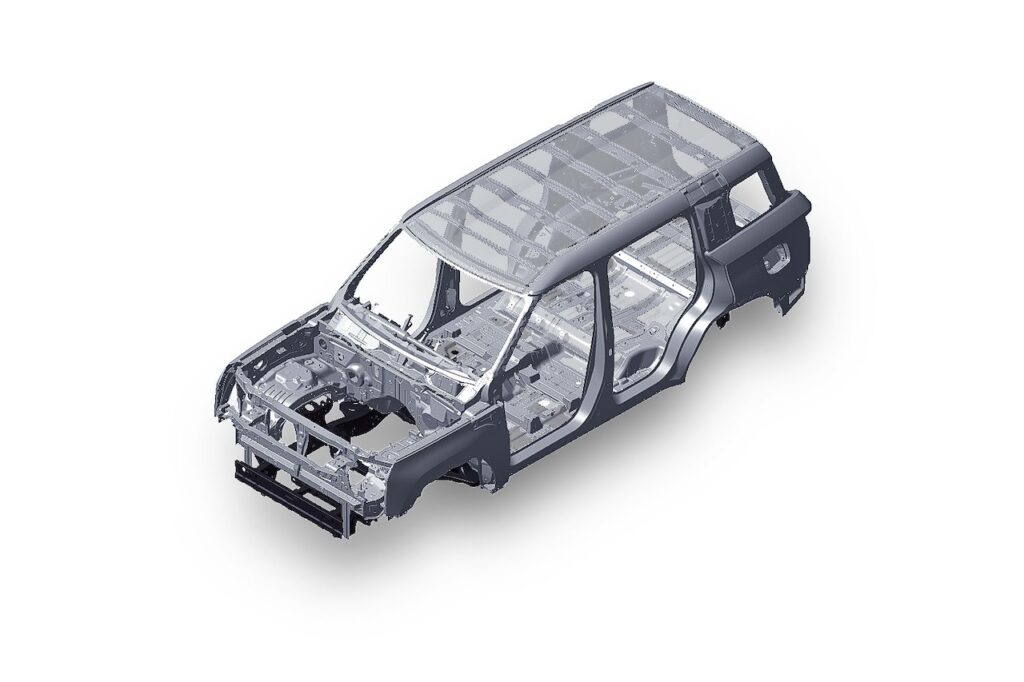
The Pajero returns to a separate ladder-frame chassis derived from the Triton ute after the third- and fourth-generation models used a monocoque-based construction, and combines it with Mitsubishi’s Super Select 4WD-II system and Super-All Wheel Control (S-AWC).
Super Select 4WD-II provides four settings – rear-wheel-drive 2H, full-time four-wheel-drive 4H, centre-differential-locked 4HLc and low-range 4LLc – while S-AWC integrates Active Yaw Control, stability and traction control and braking to manage the vehicle’s behaviour.
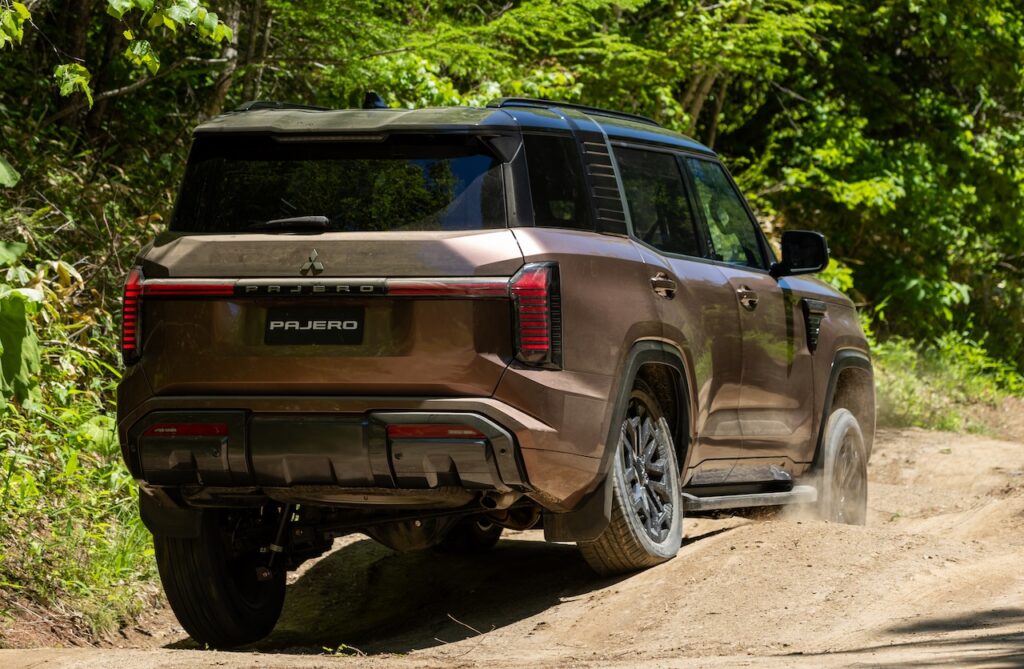
There are also seven selectable drive modes: Normal, Eco, Gravel, Snow, Mud, Sand and Rock.
That combination is particularly significant because Mitsubishi already uses S-AWC as a key part of the twin-motor Outlander PHEV’s electric all-wheel-drive system.
Exactly how Mitsubishi will combine the Pajero’s more traditional low-range 4WD hardware with plug-in hybrid propulsion remains one of the big unanswered questions.
EV Central has previously reported Mitsubishi is developing electrified powertrains for its next generation of serious off-road vehicles, including the Pajero and Triton.
The wild Elevance concept unveiled in 2025 offered one possible glimpse into that future, combining plug-in hybrid power with four electric motors and more than 100km of claimed electric driving range. But Mitsubishi has not confirmed that sophisticated arrangement for the production Pajero.
For now, the production car is considerably more conventional.
Underneath is double-wishbone independent front suspension and a newly developed five-link rigid rear axle, while Mitsubishi says increasing the use of high-tensile steel and enlarging sections of the ladder frame has increased torsional and bending rigidity.
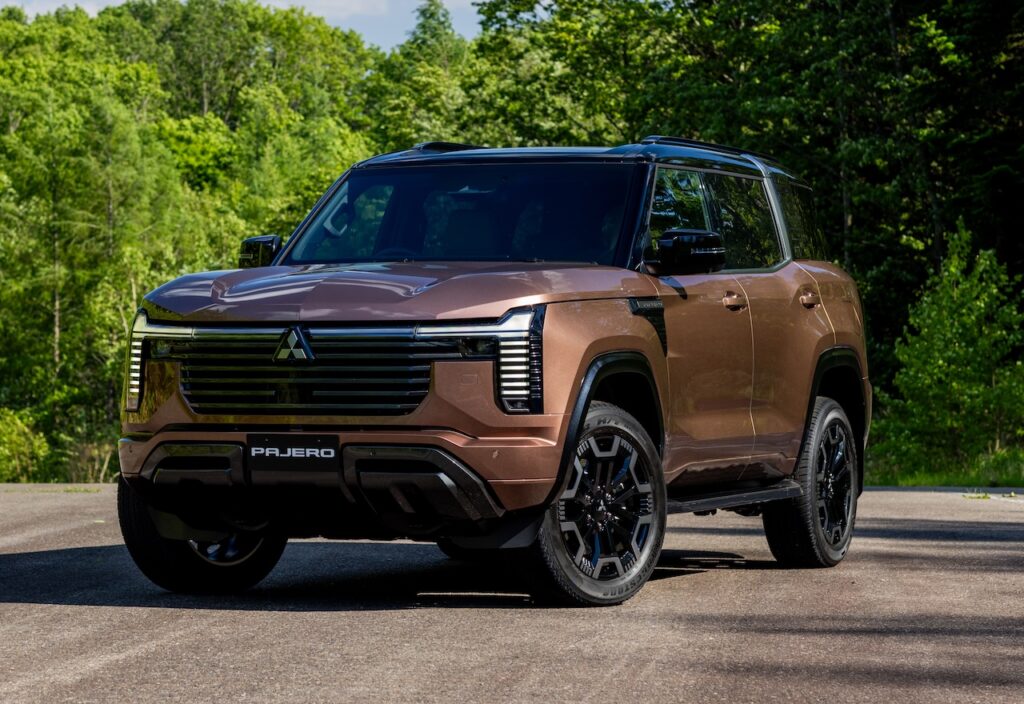
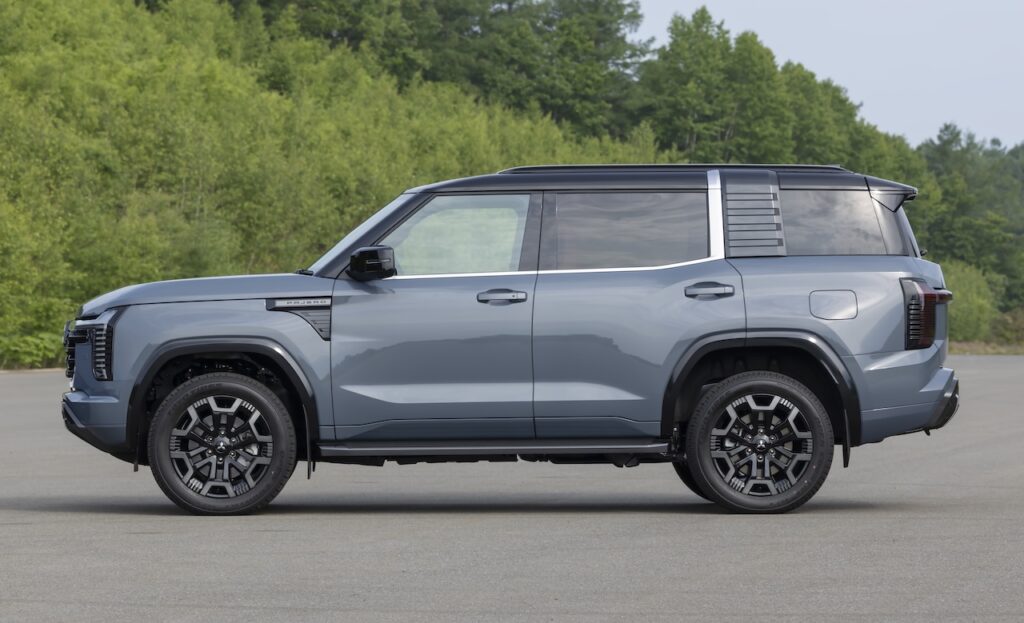
The new Pajero measures 4920mm long, 1925mm wide and 1910mm high, with a 2870mm wheelbase.
Ground clearance is 230mm on versions equipped with 20-inch tyres, with a 30.4-degree approach angle, 22.6-degree breakover angle and 25.8-degree departure angle. Mitsubishi also quotes a 52:48 front-to-rear weight distribution.
And then there’s the way it looks.
Mitsubishi describes the design theme as “Grand Charisma”, but the important thing is that the new Pajero clearly isn’t trying to disguise its off-road intentions.
The upright body, heavily pronounced wheelarches and bluff front end are accompanied by several deliberate references to previous Pajeros.
The C-pillar is inspired by the roll bar of the original first-generation model, while the hexagonal treatment at the rear references the externally mounted spare wheel of earlier Pajeros. There are two grille treatments – horizontal-bar and honeycomb – and distinctive T-shaped headlights.
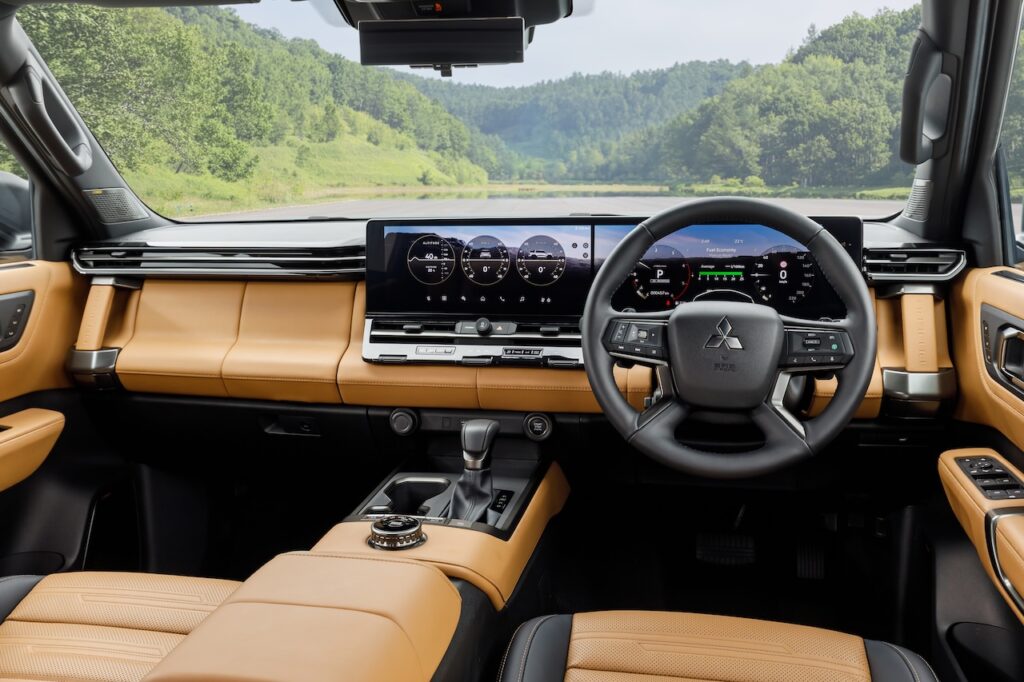
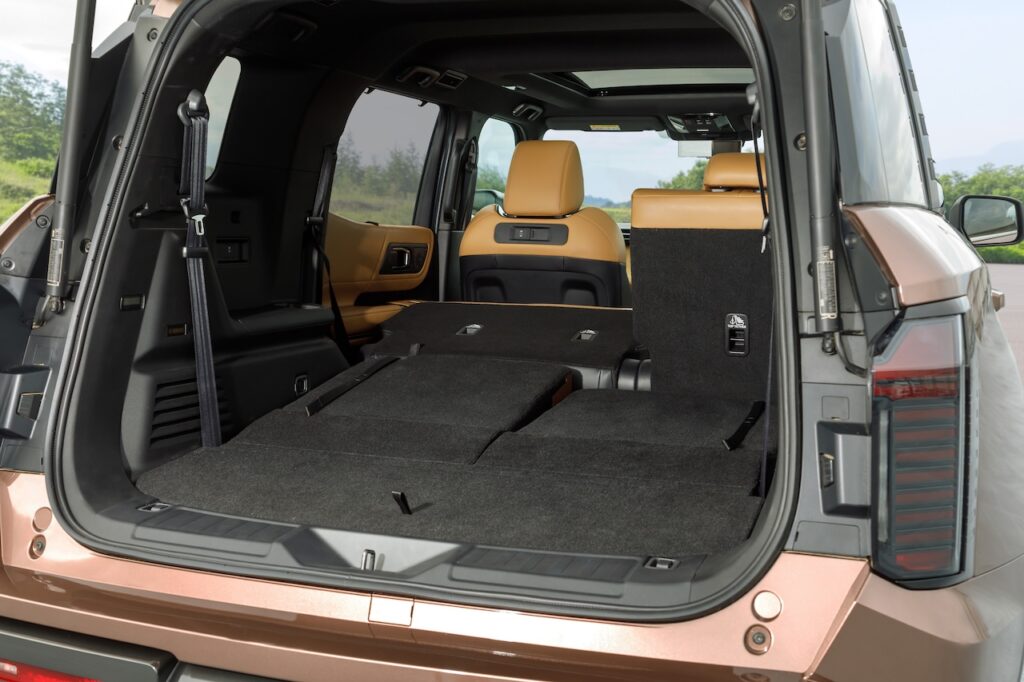
Inside, the Pajero is a three-row seven-seater and makes another nod to its predecessors with a modern interpretation of the old triple-gauge display.
Two 14.3-inch screens are integrated into a broad dashboard display, although some versions use a 12.3-inch screen. The Multi-Meter can show information including altitude, compass heading, temperature, vehicle pitch and roll angles and AYC operation.
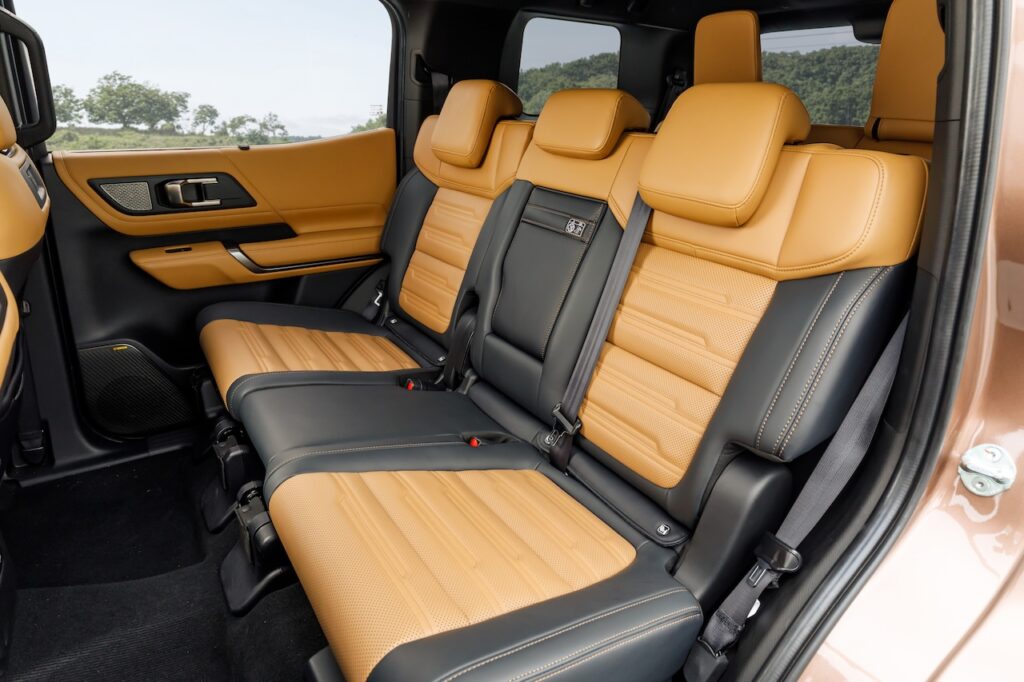
The second-row seats have 150mm of fore-aft adjustment and a tumble mechanism to improve access to the third row, while equipment includes three-zone climate control and ventilated seating. A 12-speaker Yamaha audio system is also available.
Safety technology includes autonomous emergency braking with pedestrian, cyclist and motorcycle detection, Emergency Lane Assist, front cross-traffic alert and Mitsubishi’s MI-PILOT adaptive cruise and lane-centring system.
Eight airbags are fitted, including a centre airbag for the first time in a Mitsubishi, while a 3D Multi Around Monitor includes an under-floor view designed to help drivers place the vehicle over difficult off-road terrain.
The Pajero name dates back to 1982 and Mitsubishi says more than 3.29 million examples were produced across the first four generations, with the model sold in more than 170 countries and regions.