BYD’s giant new Toyota LandCruiser rival shown: Tai 9 packs an EV-sized battery, 310km electric range and 2300km total range!
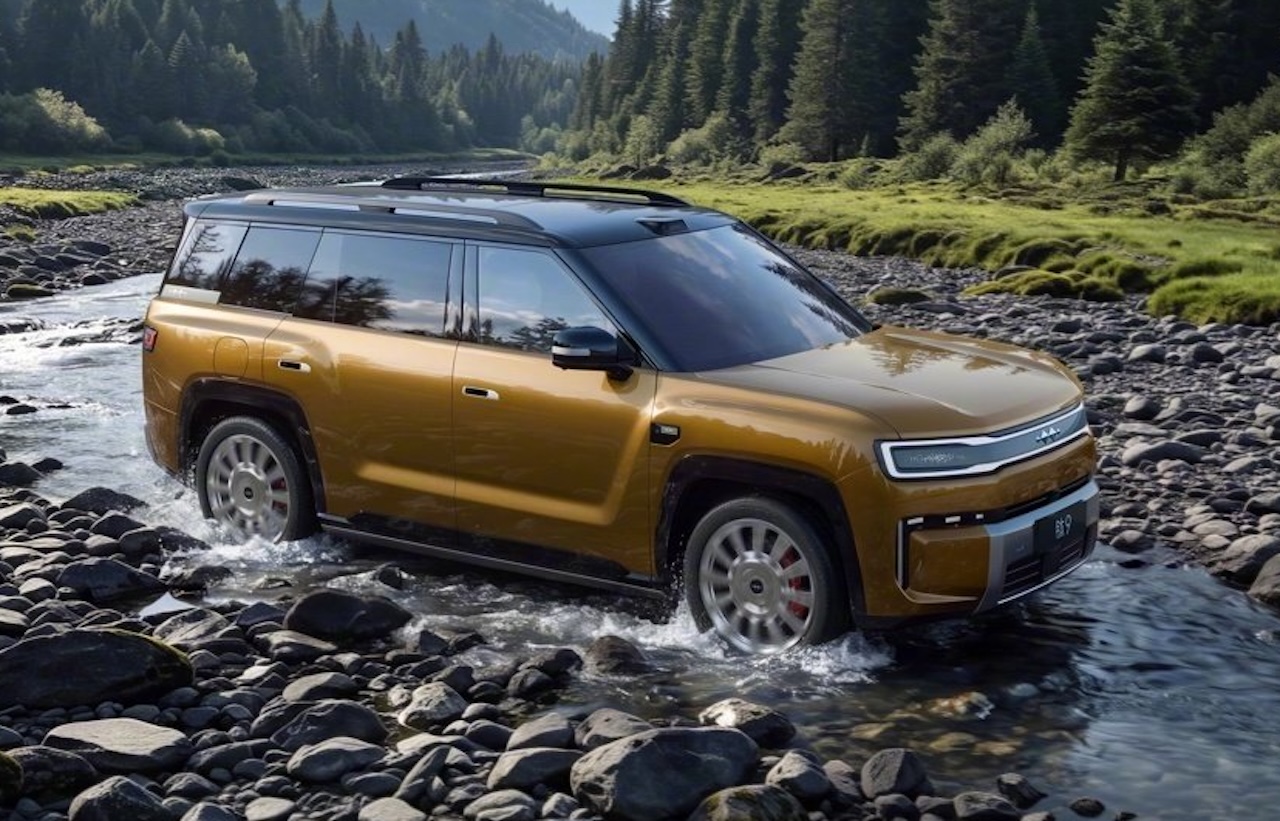
BYD has unveiled its enormous new Fang Cheng Bao Tai 9 plug-in hybrid SUV, combining a battery larger than those fitted to some dedicated EVs with a claimed 310km of electric-only driving range.
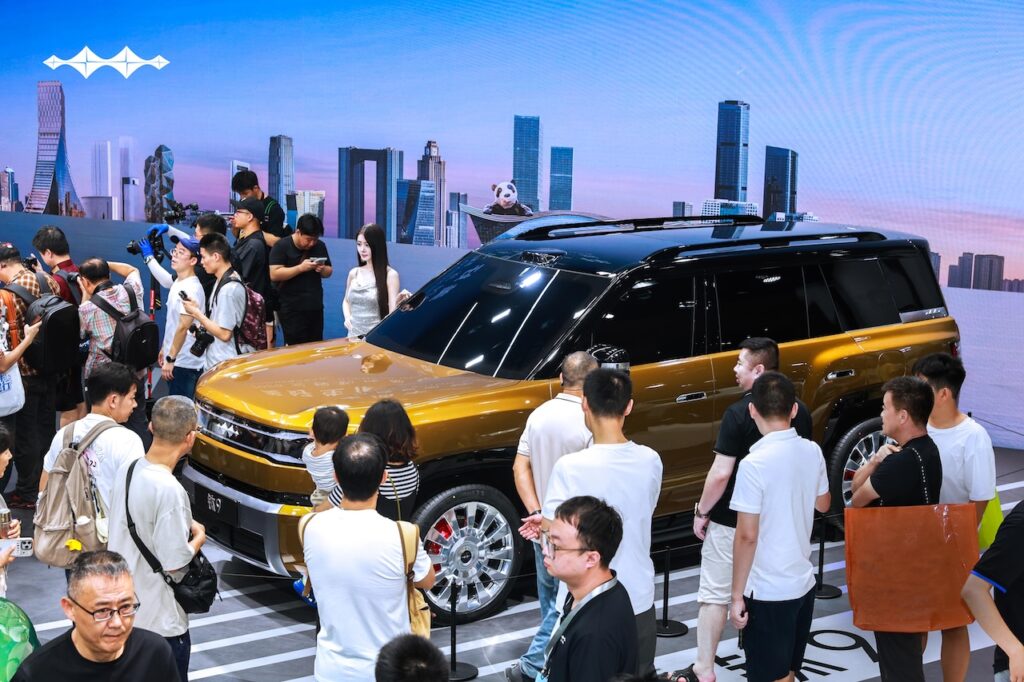
Making its public debut at the 2026 Chengdu motor show, the six-seat Tai 9 sits above the Bao 8 – sold in Australia as the Denza B8 – and stretches beyond 5.2 metres long.
And that existing Fang Cheng Bao-Denza relationship makes the Tai 9 particularly interesting for Australia, even though BYD has yet to announce export plans for its latest plug-in hybrid flagship.
READ MORE: BYD Denza Z sports car debuts: Preposterously powerful and fast coupe and convertible on the way
READ MORE: Right-hand drive confirmed for BYD Ti7: Yep, looks like the Prado fighter will be a BYD not a Denza
READ MORE: 2026 Denza B8 PHEV Review: LandCruiser challenger arrives as Australia’s heaviest SUV. Will it make a dent?
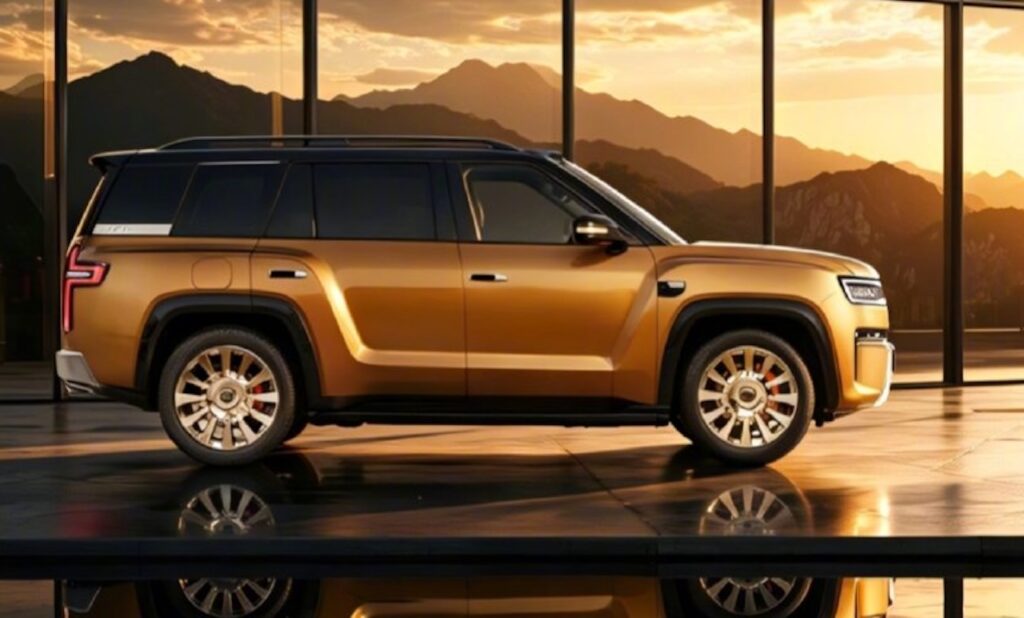
The Tai 9 measures 5270mm long, 1999mm wide and up to 1880mm tall, with a substantial 3130mm wheelbase accommodating a three-row 2+2+2 seating layout.
For perspective, that makes it 75mm longer than the Denza B8, with an extra 210mm between the axles. It’s also longer than a Mercedes-Benz GLS or BMW X7.
But arguably the more interesting number for EV Central readers is 66.48kWh.
That’s the capacity of the Tai 9’s lithium iron phosphate battery – meaning this plug-in hybrid carries more battery capacity than some dedicated battery-electric cars.
BYD claims it can travel up to 310km on electricity alone under the WLTC test cycle, potentially allowing the Tai 9 to operate as an EV for substantial periods before its petrol engine is required.
The drivetrain combines a 1.5-litre turbo-petrol engine producing up to 115kW with front and rear electric motors.
Each electric motor can produce a peak 200kW, with Chinese reporting from the Chengdu reveal putting combined electric motor output at 400kW.
With its fuel tank and battery full, BYD claims the Tai 9 can travel more than 2300km under China’s CLTC test regime.
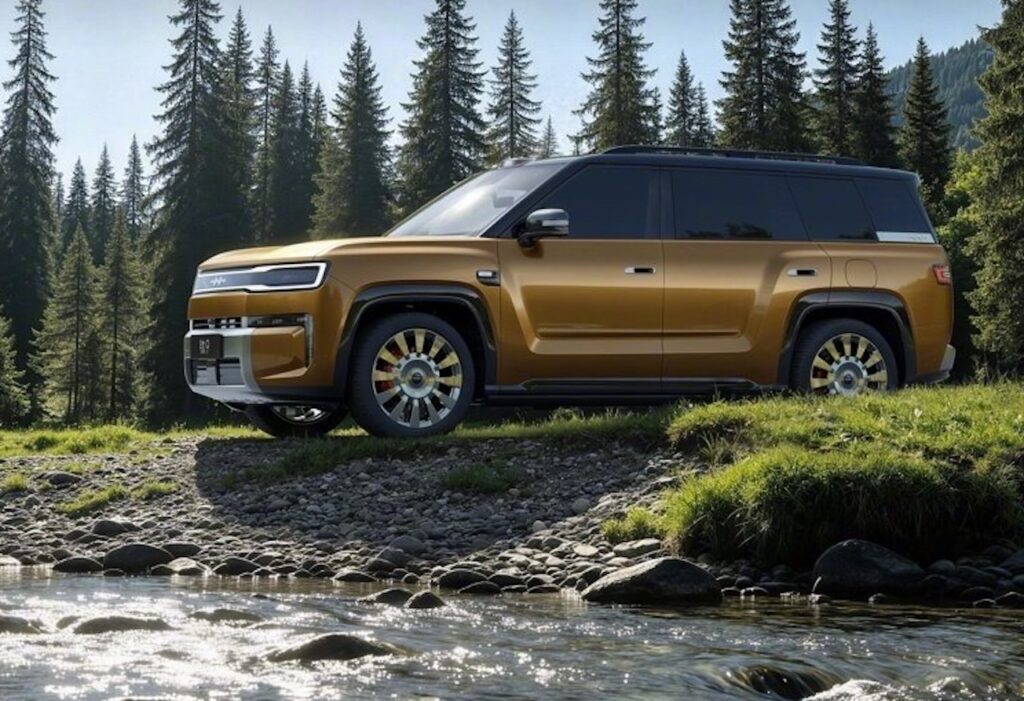
The Tai 9 also introduces what BYD calls its new DMS platform and differs fundamentally from the more off-road-focused Denza B5 and B8.
Rather than the separate-frame construction used by those SUVs, the Tai 9 employs a monocoque body more closely aligned with large luxury family SUVs.
The Tai 9 unveiled at Chengdu gets BYD’s DiSus-P Ultra intelligent hydraulic suspension system, which can continuously adjust suspension damping and ride height.
It also incorporates an individual wheel-lift function intended to help keep the vehicle stable if a tyre is damaged, while active rear-wheel steering should improve manoeuvrability despite the Tai 9’s 5.27-metre length.
Chinese regulatory information lists a kerb weight of either 2865kg or 2965kg depending on specification, a 220km/h maximum speed and the choice of 21- or 22-inch wheels.
An electrically retractable towbar is also available and the Chinese regulatory filing lists a 2000kg braked towing capacity when fitted.
A roof-mounted LiDAR unit forms part of BYD’s DiPilot 300 driver-assistance package – also known as God’s Eye B – supporting assisted driving functions on both highways and urban roads as well as automated parking.
The Tai 9 also gets an unusual split rear opening that Fang Cheng Bao calls its “Tiandi Gate”, rather than the conventional one-piece tailgate fitted to most large SUVs.
Inside, the six-seat cabin uses individual second-row captain’s chairs and a dashboard dominated by a wide display arrangement incorporating separate central and front-passenger screens.
So could we eventually see the Tai 9 in Australia? Nothing has been confirmed, but there’s a clearer route because of the Fang Cheng Bao Bao 5 and Bao 8 have already been transformed into the Denza B5 and B8 for this market.
That means the Tai 9 could potentially become another Denza product if BYD decides to develop it for right-hand drive. It could also become a BYD.
It would also give the rapidly expanding Chinese brand an enormous electrified alternative to traditional premium family SUVs while offering substantially more EV capability than most plug-in hybrids currently sold in Australia.