2026 Lexus RZ Review: At $42K less than its predecessor the Lexus EV looks sharp against BMW, Audi, Tesla and Volvo
Lexus led the way on hybrids in the luxury space, showing the likes of BMW and Mercedes-Benz how to lure customers with viable fuel-mising alternatives.
The Japanese brand has been a lot less successful in the EV space, with two high-priced offerings largely failing to fire on the sales front.
Enter the updated Lexus RZ.
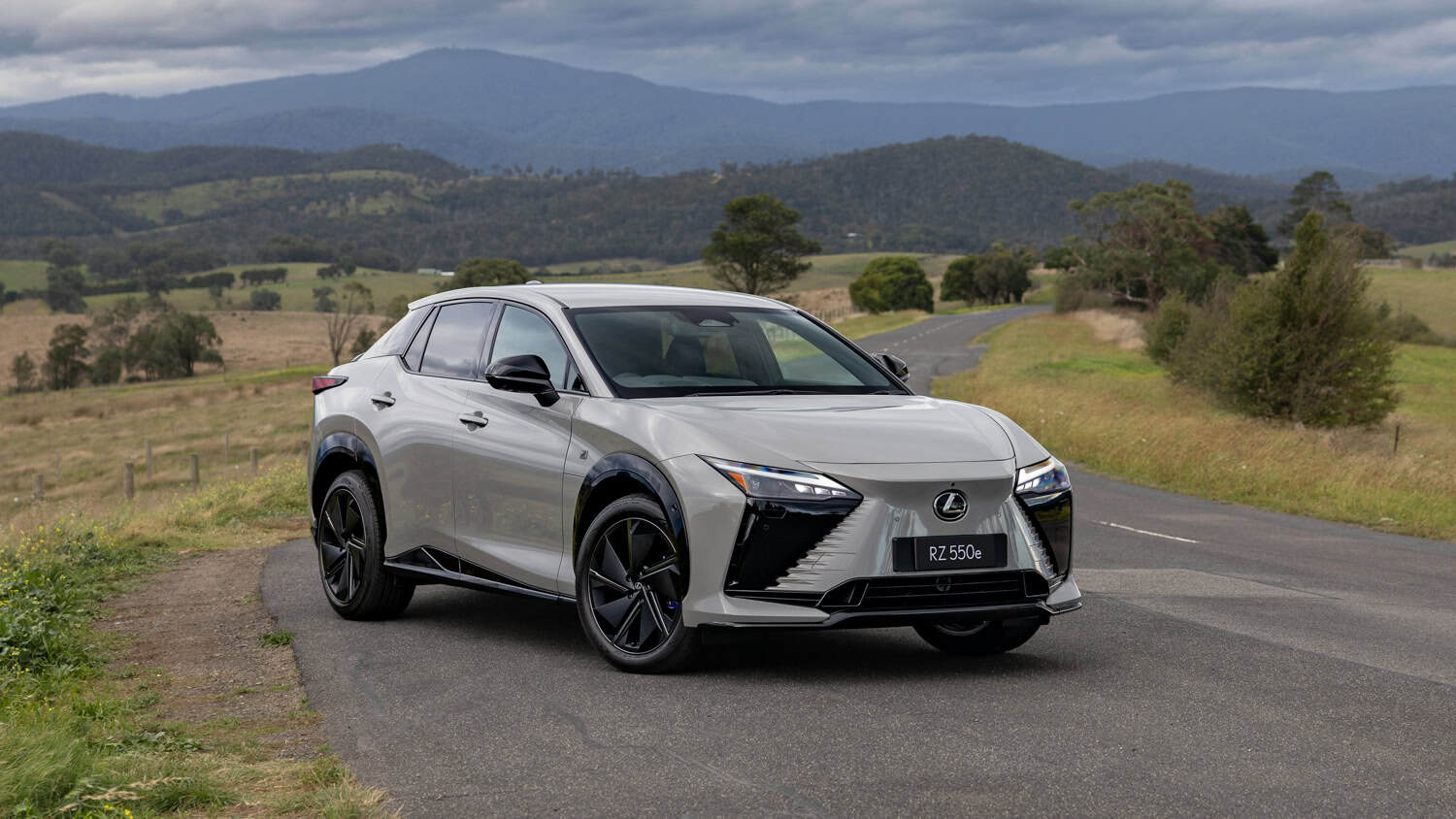
Still based on the underpinnings of the Toyota bZ4X, the RZ is a mid-sized SUV that goes head-to-head with the BMW iX3, Audi Q6 e-tron and the template-setting Tesla Model Y.
READ MORE: It’s $40K cheaper and EV sales are booming. So why isn’t the 2026 Lexus RZ going to sell in big numbers?
READ MORE: Three-row Lexus TZ EV looking good for Australia
READ MORE: Axed! 2025 Lexus UX 300e bows out in Australia leaving upgraded RZ as luxury brand’s only EV
For 2026 Lexus has added more features, more refinement, tweaks to the driving experience and more EV range.
It’s also added a sporty-looking F Sport variant to the mix.
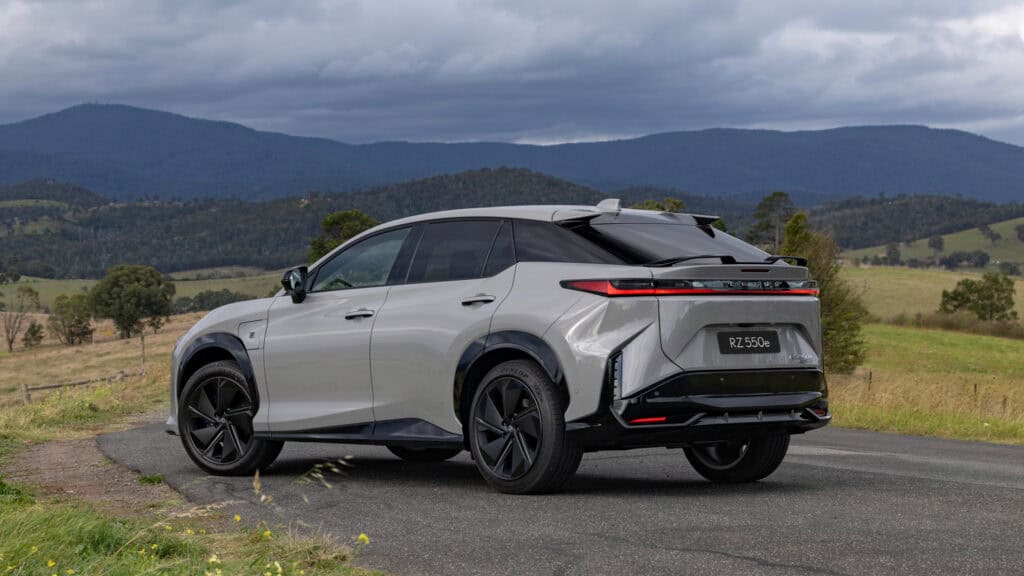
But the big news is the price, which has taken a circa-$40K haircut in an effort to kickstart interest.
Now, we’ve seen a lot of price adjustments in recent years, but the RZ’s big price rewind is among the biggest.
2026 Lexus RZ price and equipment
More power, more range and more gear for less money: It’s not a bad sales pitch and is well trodden across the automotive world.
But when the upgraded version comes with a price cut of up to $42,000 it’s something worth taking notice of.
The Lexus RZ – the Japanese brand’s mid-sized SUV that competes with everything from the BMW iX3 and upcoming Volvo EX60 to top-end versions of the Tesla Model Y – is now priced from $84,500 plus on-road costs.
It’s a massive cut from the lofty $123,000 kick-off price off its predecessor, which was a car that sold in tiny numbers – and often with big discounts.
That entry price is for the RZ500e Luxury (which steps in for the RZ450e Luxury) while the RZ500e Sports Luxury sits at $91,000 and the RZ550e F Sport at $105,000.
Both variants now fall under the Luxury Car Tax threshold for fuel-efficient vehicles, potentially making them eligible for FBT exemptions – for now, at least (the government is winding back the benefits from 2027).
The RZ500e gets a revised 74.7kWh battery pushing WLTP range to 460km – a 16 per cent improvement over the outgoing model.
The maximum AC charge rate doubles to 22kW, enabling a full charge in around 3.5 hours; the more common 7.4kW home chargers will take more like 11 hours for a full charge.
DC charging can be done at up to 150kW for a 10-80 per cent charge in around half an hour; that’s respectable but plenty are faster.
Performance from the dual electric motors climbs courtesy of a power boost to 280kW (the RZ is available with a single motor set-up overseas but the company is not planning on selling that here).
Whereas previously the RZ got a smaller motor up front, the revised model matches front and rear motors with the same peak outputs of 167kW and 269Nm.
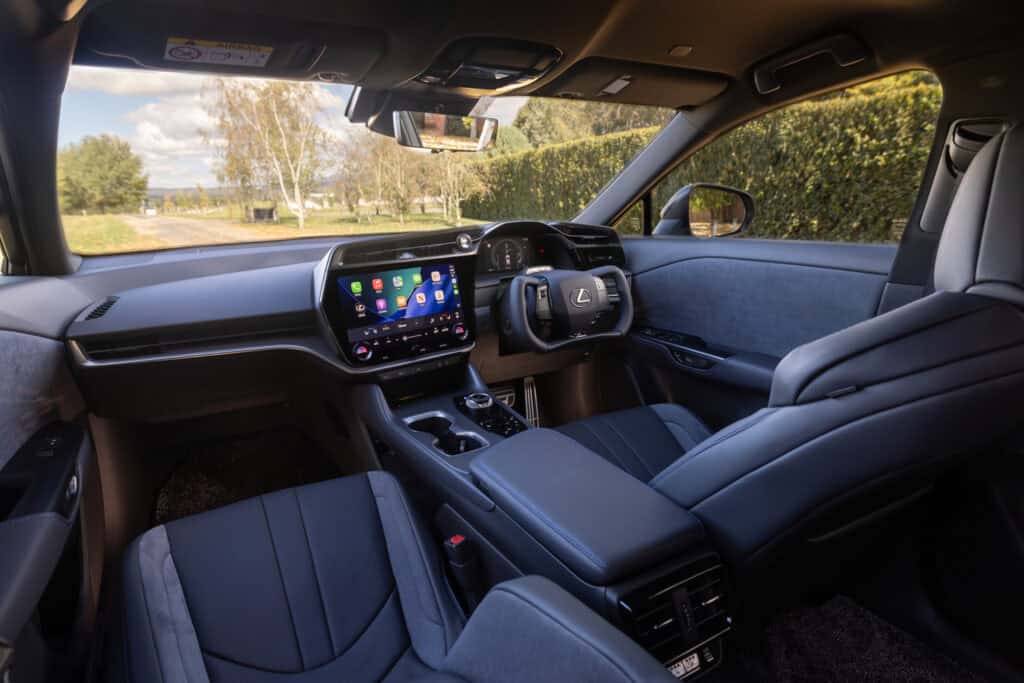
Standard specification on the Luxury includes a 14-inch infotainment display, seven-inch digital instrument cluster, quality finishes and materials and Lexus Safety System+ with the full suite of active safety tech.
The Sports Luxury adds a head-up display, heated and ventilated front seats, heated outboard rear seats, a double sunroof and a 13-speaker Mark Levinson sound system (the base car gets a 10-speaker Panasonic system).
Topping the range is the RZ550e F Sport at $105,000, which adds a 77kWh battery and ups the power to 300kW (the motors are unchanged, with the battery providing the additional oomph; Lexus makes no mention of additional torque with the 550e).
Despite the larger battery, range drops slightly to 437km partly due to the more aggressive tyres.
There’s also a unique yoke steering wheel paired to a new steer-by-wire system that significantly reduces how much you need to turn the wheel; it only deviates 200 degrees either side of centre, so a little over one full turn to go from lock-to-lock.
That F Sport also gets an Interactive Manual Drive mode lets drivers use paddle shifters to simulate eight gears, complete with synthesised motor sounds and a virtual tachometer.
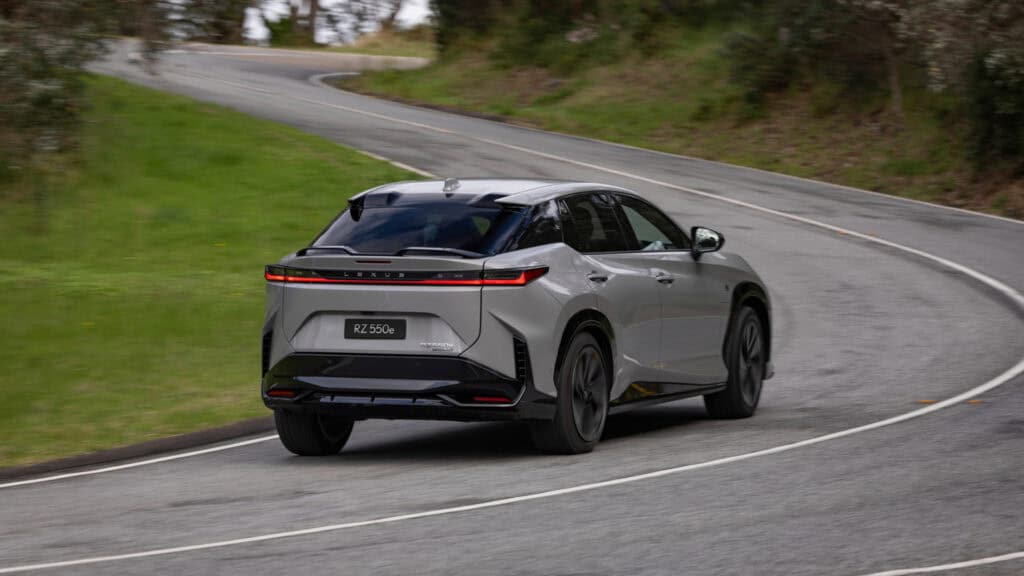
Visually it’s distinguished by a unique front bumper, rear spoiler, gloss black alloys and an optional two-tone paint finish.
A limited-edition RZ600e F Sport Performance will follow later in 2026; Lexus isn’t saying how many it will sell here, other than to say it will be very exclusive.
One thing that is missing for the updated RZ lineup is access to Lexus On Demand, which gave owners the ability to drive other vehicles from within the fleet.
It was previously available to RZ buyers but has been left to other (more expensive) Lexus models.
2026 Lexus RZ: What we think
The price drop is enough to get excited about with the updated Lexus RZ.
It’s now in a happier place and starts to look more serious against EVs from both traditional brands and relative newcomers wanting to carve a slice of the luxury pie.
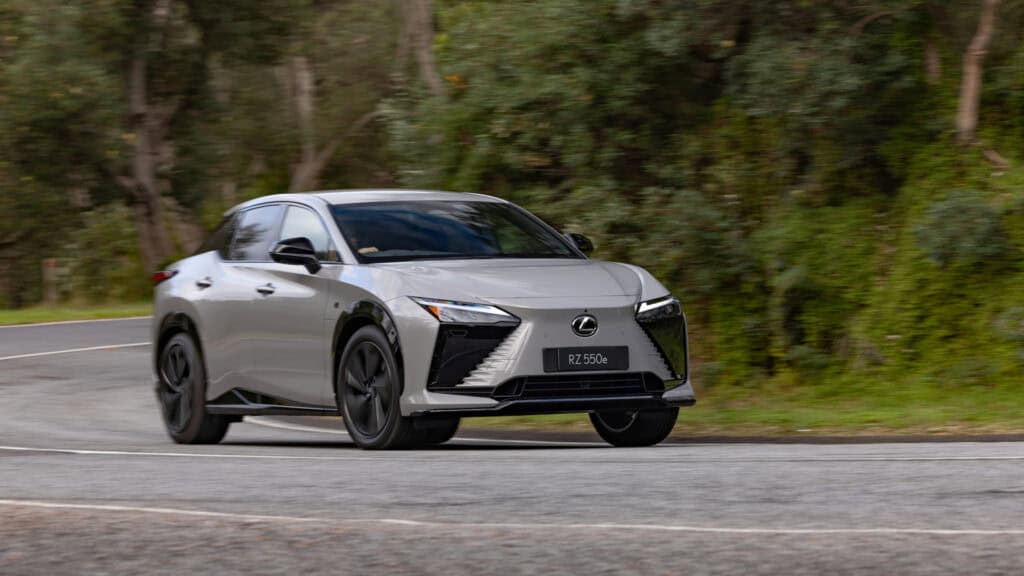
But, of course, there’s a lot more to the freshened RZ.
The Lexus RZ was always a good thing to drive, and the updated model edges that experience forward without reinventing it.
Steering feel is refreshingly well-sorted at a time when many Chinese rivals seem to divert their attention to gizmos and tech.
And the overall tuning suggests there’s a sense of calibration here that reaffirms the engineering maturity.
All variants ride on 20-inch wheels with Dunlop tyres, and while the suspension leans towards firm, it never tips into harsh or sharp territory.
The F Sport is the firmest of the bunch, and on roads with successive smaller bumps it can get busy, but it’s more of a minor comfort trade-off than a major complaint.
Performance across the range is strong enough that nobody’s going to grumble.
The F Sport pulls a little harder courtesy of its 300kW output, but the gap between variants isn’t noticeable in everyday driving given the emphasis is on the generous torque that is ever-present
In short, all variants are suitably muscular when you want them to be.
Where the F Sport genuinely distinguishes itself is through its steer-by-wire system and yoke steering wheel.
At freeway and country road speeds – think 70km/h and up – it feels reassuringly normal because the steering ratio stretches out.
Around town the system becomes noticeably more reactive and sensitive, meaning tight turns, three-point turns and parking manoeuvres require far less hand input than you’d typically need.
You never need to take your hands off the wheel, which is the point.
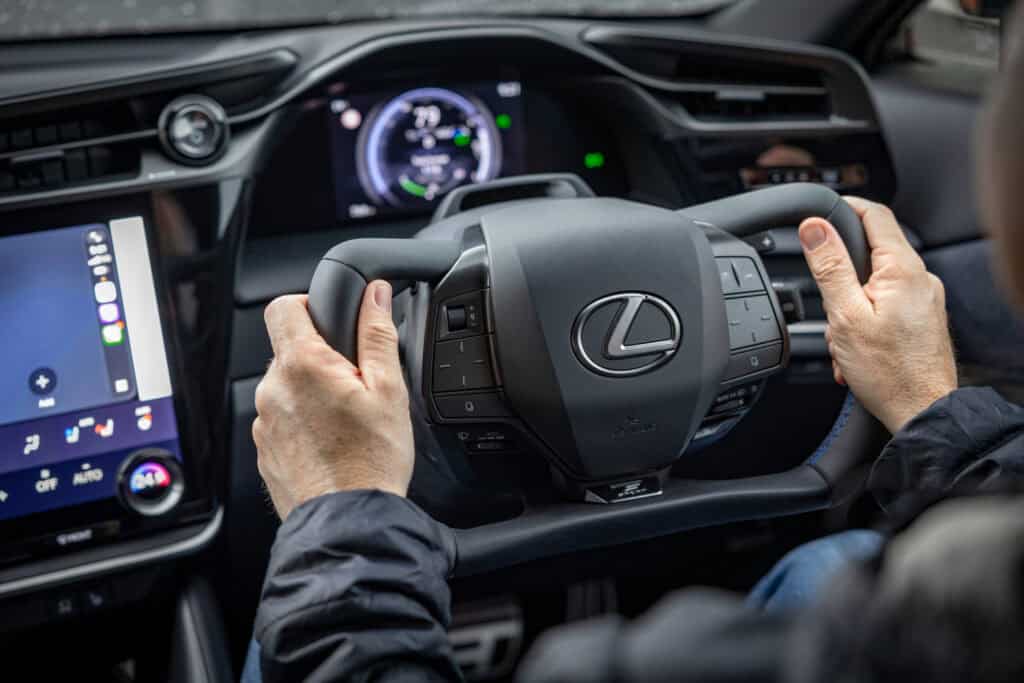
But it does require some recalibration; more than once during around town manoeuvres I found myself reaching for the top of the wheel that simply isn’t there.
Similarly, with a three-point turn you can keep one hand on the wheel.
What the yoke does do, unexpectedly, is transform the feel of the cabin.
It opens up the view ahead and gives the interior an airier, more expansive quality that’s hard to quantify but easy to notice – all of which makes a difference to the overall ambience.
Less endearing is the beeper that kicks in every time you put the car in reverse.
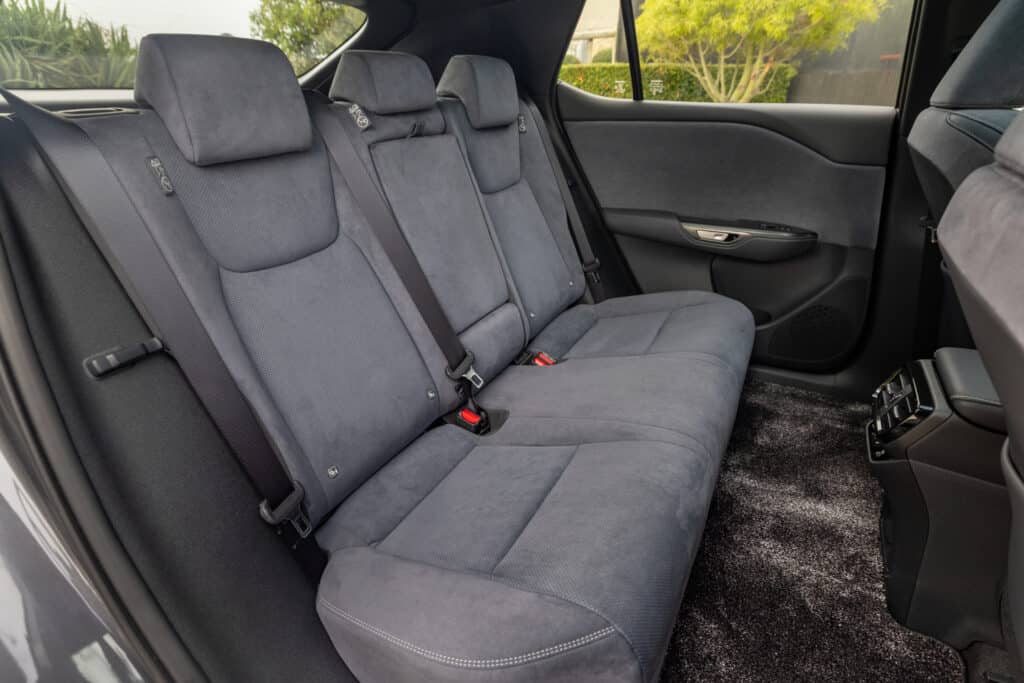
Materials and finishes across the range are plush and elegant and space is well managed.
One quirk that persists is that there’s still no glovebox. The passenger-side knee warmer that occupies that space is a thoughtful touch, but it remains an odd omission.
There’s a decent centre console, a couple of cupholders and enough storage elsewhere to get by.
The F Sport’s Interactive Manual Drive mode, which uses shift paddles on the yoke to simulate an eight-speed gearbox, is worth a mention.
It’s an idea borrowed from the Hyundai Ioniq 5/6 N, allowing you to pretend you’re driving a dual-clutch semi-automatic transmission.
It’s got the fake redline, torque limiting in taller gears and jolty full-throttle upshifts.
It’s also got a fake sound that isn’t remotely convincing.
It’s fun to try something different but ultimately doesn’t add authenticity to the driving experience.
2026 Lexus RZ: Verdict
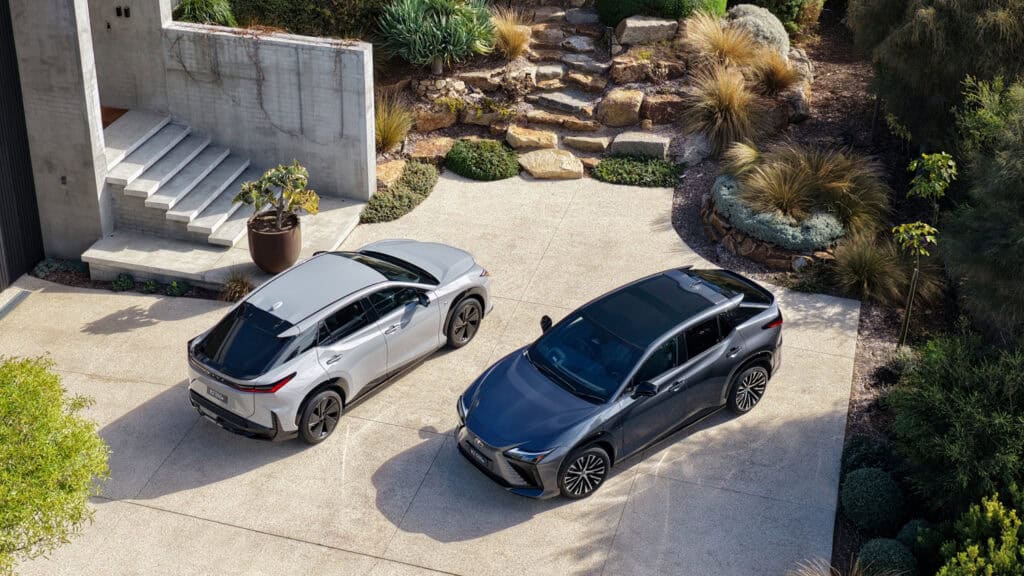
The Lexus RZ has gone from an expensive luxury EV that didn’t remotely stand out to a car now worth sticking on the consideration list, especially if you’re looking at top-end versions of mainstream models.
In a segment that now includes some genuinely class-defining electric SUVs, Lexus’s offering remains polished and refined without ever threatening to hog the limelight.
Key to its newfound appeal is a vastly improved value equation, while improvements to the driving experience – including how far you can go between charges – are also worthwhile.
Short story: if you’re after something that redefines what an electric SUV can do, look elsewhere.
If you want a composed, well-finished luxury machine from a trusted luxury brand at a price that makes sense, the RZ deserves a serious look.
Score: 4/5
2026 Lexus RZ price and specifications
Price: From $84,500 plus on-road costs
Basics: EV, 5 seats, 5 doors, SUV, AWD
Range: 460km (Luxury and Sports Luxury), 437km (F Sport)
Battery capacity: 74.7kWh (Luxury and Sports Luxury), 77.0kWh (F Sport)
Battery warranty: 8 years/160,000km
Energy consumption: 18.0kWh/100km (Luxury and Sports Luxury), 18.6kWh/100km (F Sport)
Motors: 1 front 167kW/269Nm and 1 rear 167kW/269Nm, combined outputs 280kW (Luxury and Sports Luxury), 300kW (F Sport)
AC charging: 22kW, Type 2 plug
DC charging: 150kW, CCS combo plug
0-100km/h: 4.6 seconds (Luxury and Sports Luxury), 4.4 seconds (F Sport)