Honda Super-ONE priced for Australia: Honda’s first EV takes on China’s affordable electric car army
Honda Australia has priced its first battery-electric vehicle from $36,900 drive-away, making the Super-ONE the cheapest EV on sale locally that doesn’t come from China.
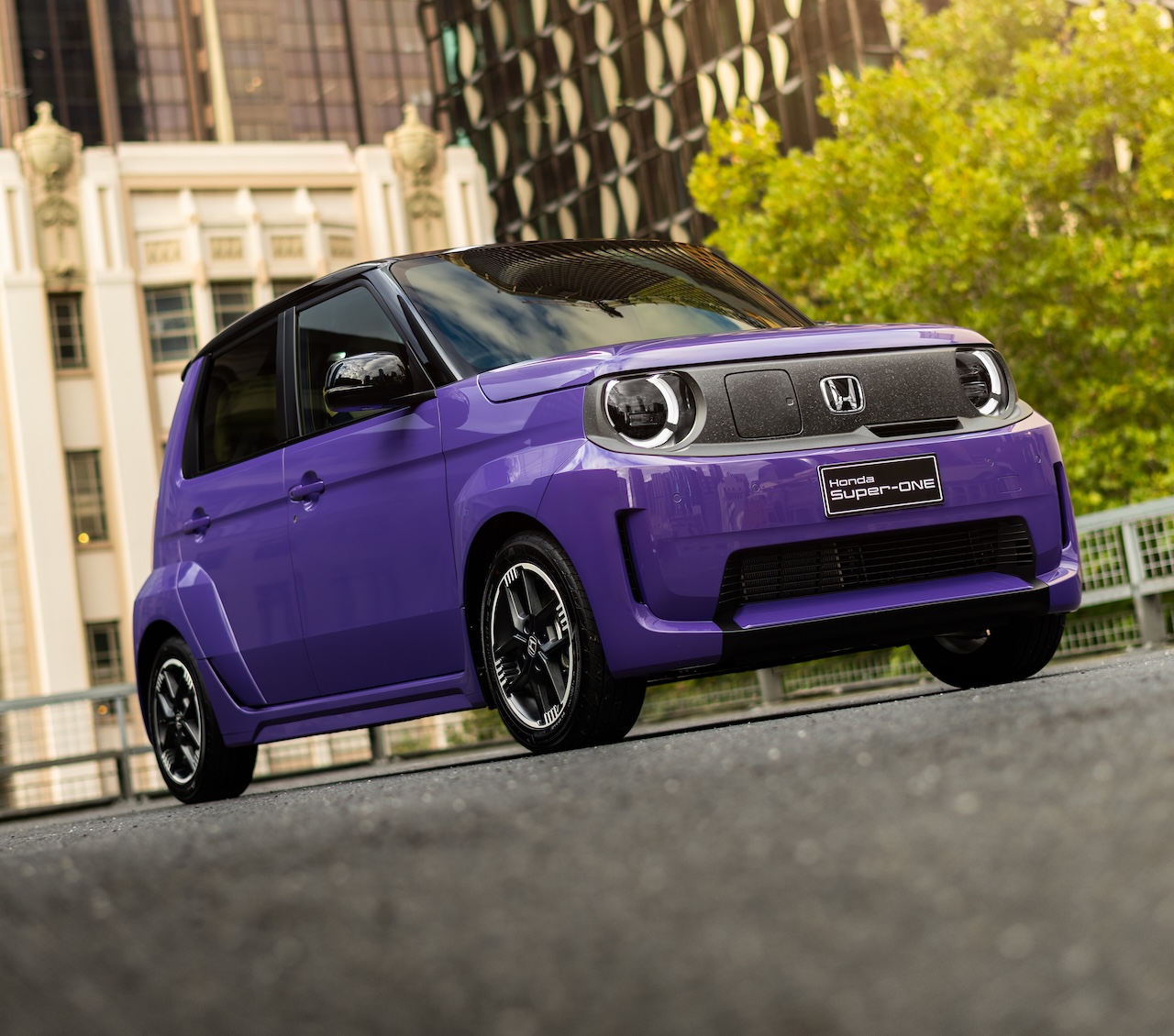
Revealed earlier this year as a character-filled city EV focused on driving enjoyment rather than outright range, the retro-styled Super-ONE will arrive in Honda showrooms from October 1 in two grades.
The flagship Two-Tone version, finished exclusively in Violet Boost with a contrasting black roof, is priced at $37,400 drive-away.
While the Super-ONE undercuts every other Japanese, Korean, European or American electric vehicle currently available in Australia, it enters one of the country’s most fiercely contested market segments.
Its biggest rival, the recently launched BYD Atto 1, starts from just $23,990 before on-road costs, while other affordable electric SUVs and hatchbacks include the Geely EX2 ($26,490), BYD Dolphin ($29,990), GAC Aion UT ($31,990), BYD Atto 2 ($31,990), GWM Ora 5 ($31,990), MG4 ($31,990), Leapmotor B10 ($35,888) and Jaecoo J5 EV ($36,990).
Honda is banking on the Super-ONE’s distinctive personality rather than outright value to win buyers.
READ MORE: Honda Super-One EV confirmed for Australia: Tiny city car will be a fun and different drive promises Honda
READ MORE: Honda Prelude Aussie pricing confirmed: Legendary sports car returns as petrol-electric hybrid
READ MORE: Dead before arrival: Honda kills off pioneering 0 Series sedan and SUV just months before radical EVs are due to launch
Based on the Japanese-market N-One e: kei car, the compact EV measures just 3.5 metres long and combines retro-inspired styling with a lightweight body, tipping the scales at only 1093kg. It also features Honda’s flexible Magic Seats for added interior versatility.
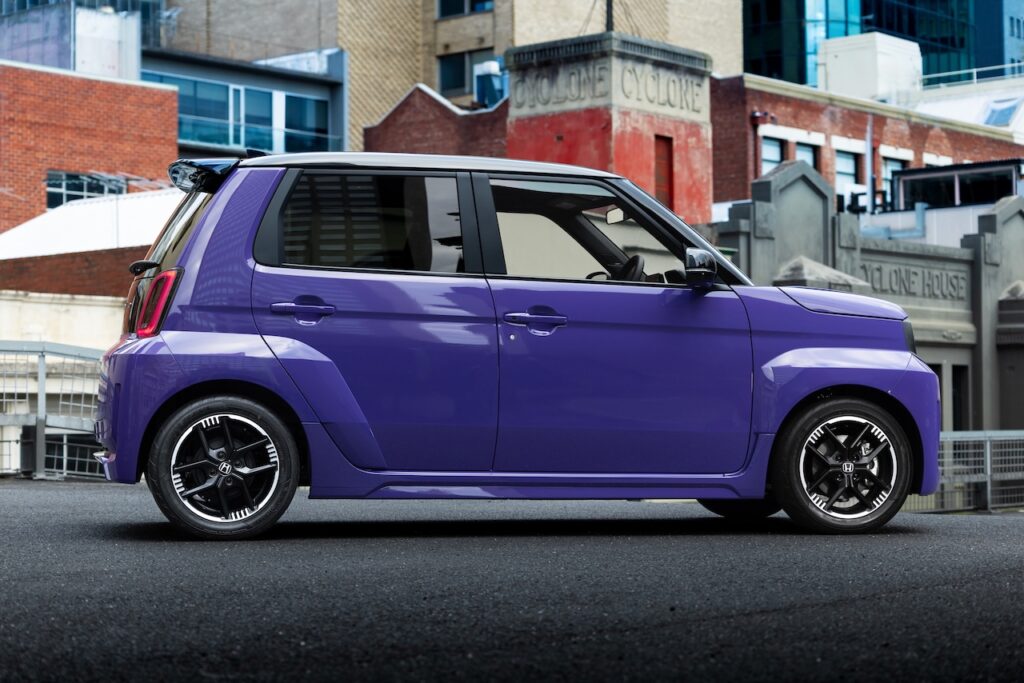
The biggest point of difference is Honda’s new BOOST Mode, designed to inject extra driver involvement into what is traditionally a quiet and linear EV experience.
BOOST Mode temporarily lifts power from 47kW to 70kW while maintaining peak torque of 162Nm, and also introduces a simulated seven-speed transmission complete with artificial engine sounds to mimic the feel of driving a conventional petrol-powered hot hatch.
Energy comes from a 29.6kWh lithium-ion battery delivering a claimed driving range of up to 253km. Honda says DC fast charging can replenish the battery from 15 to 80 per cent in around 30 minutes, while regenerative braking and one-pedal driving are standard.
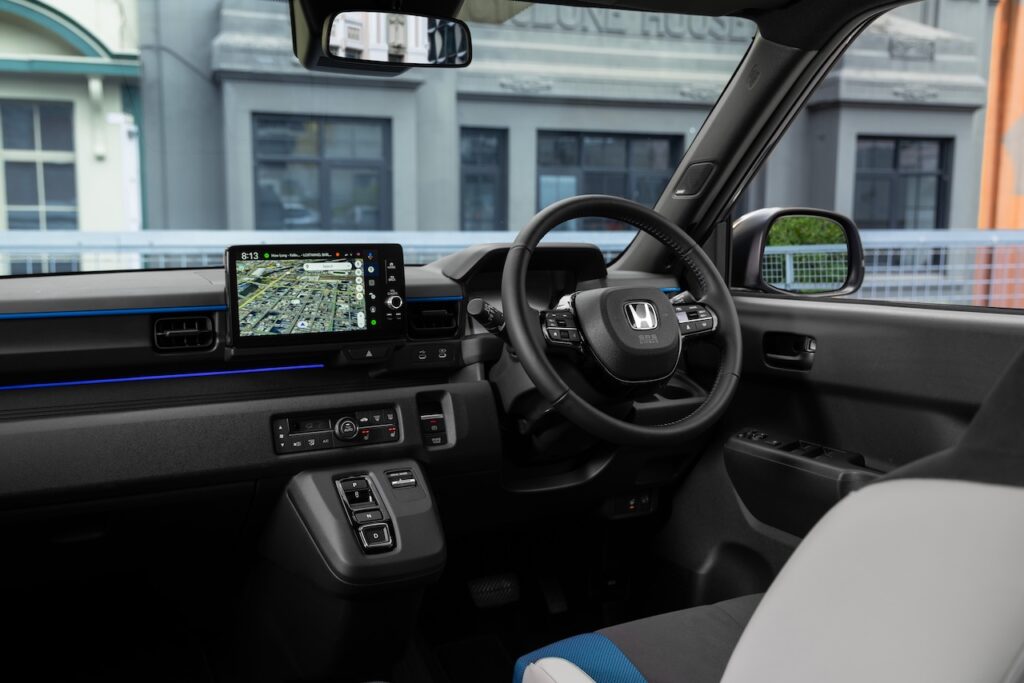
Honda says Australian interest has been strong since the Super-ONE was first revealed, with more than 6500 expressions of interest lodged to date – exceeding those recorded for the latest Civic Type R.
Despite that demand, supply will be tight initially, with fewer than 130 vehicles allocated to Australia before the end of 2026. Larger shipment volumes are expected from early 2027.
The Super-ONE is backed by Honda Australia’s five-year unlimited-kilometre warranty, five years of roadside assistance and five years of capped-price servicing at $199 per visit, with an optional extension available through the Honda Extend program.
The tiny hatch represents an important milestone for Honda Australia as the brand enters the battery-electric passenger car market for the first time.