Yes please! Australia puts its hand up for Toyota’s first plug-in hybrid ute
Toyota’s emerging compact ute is shaping up as an intriguing electrified alternative to the HiLux, with new patent information providing further evidence the Japanese giant is developing a car-based load-hauler potentially powered by plug-in hybrid technology.
Known internally as Project 150D, the as-yet unnamed dual-cab is expected to be based on Toyota’s monocoque TNGA architecture rather than the ladder-frame construction underpinning the HiLux.
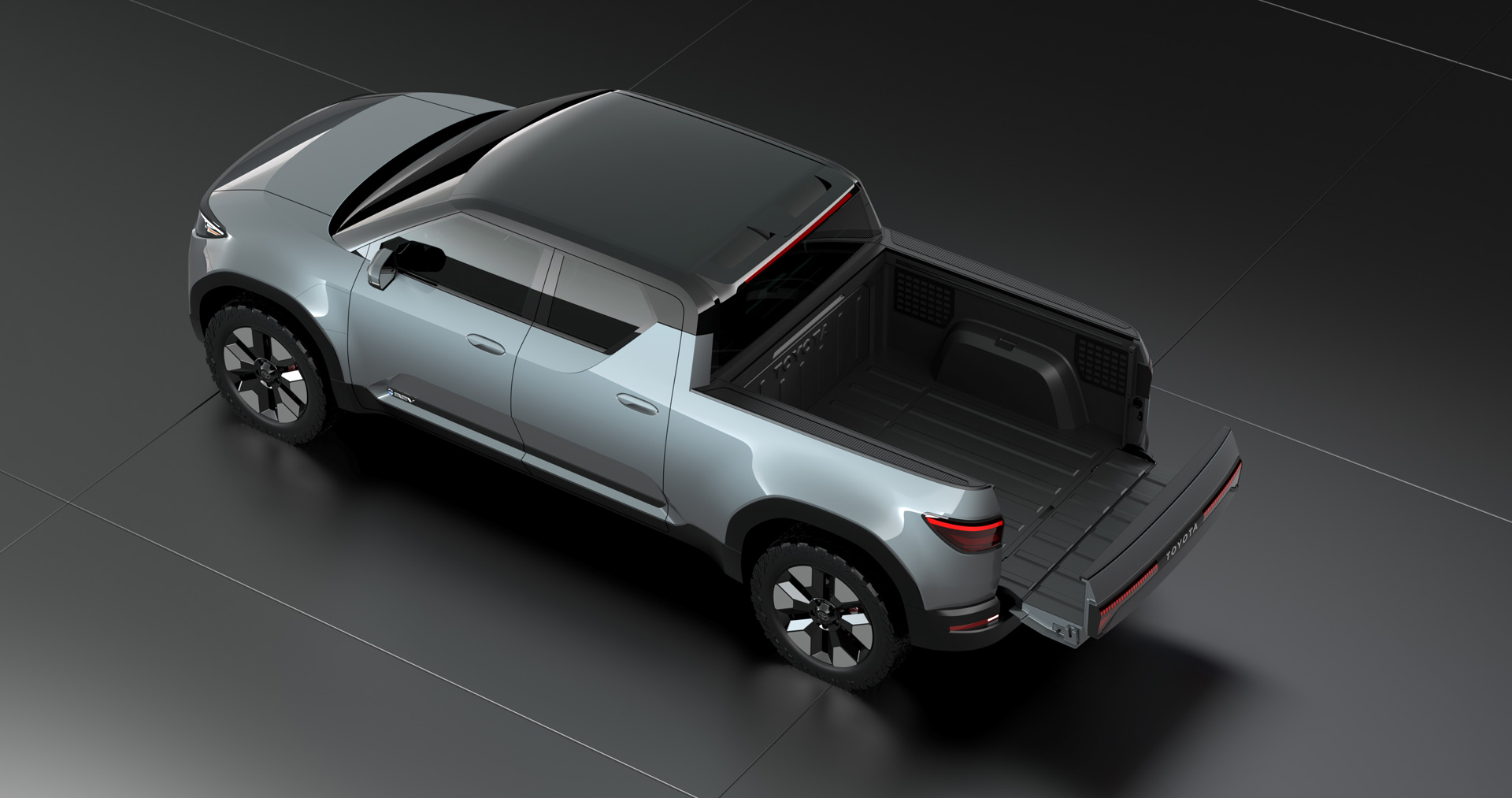
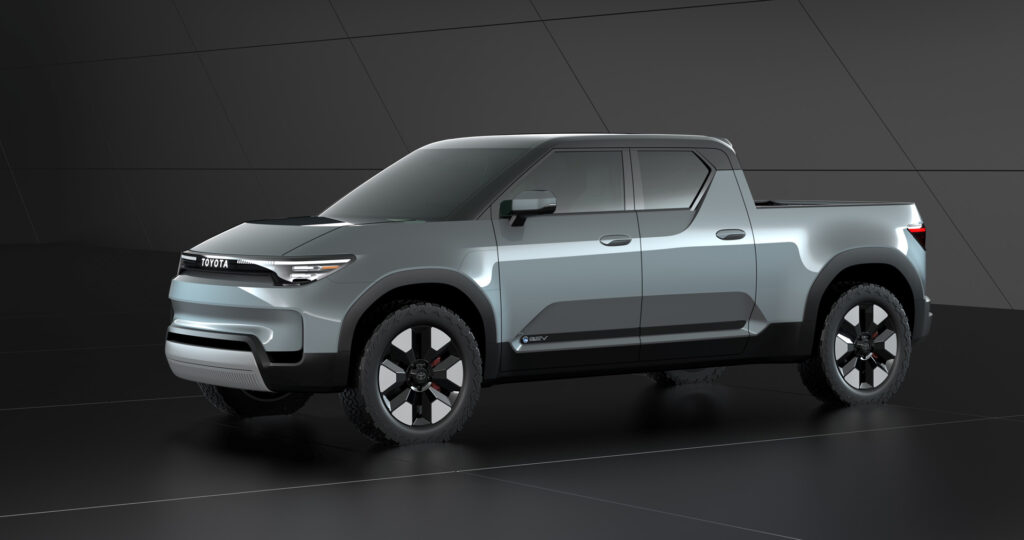
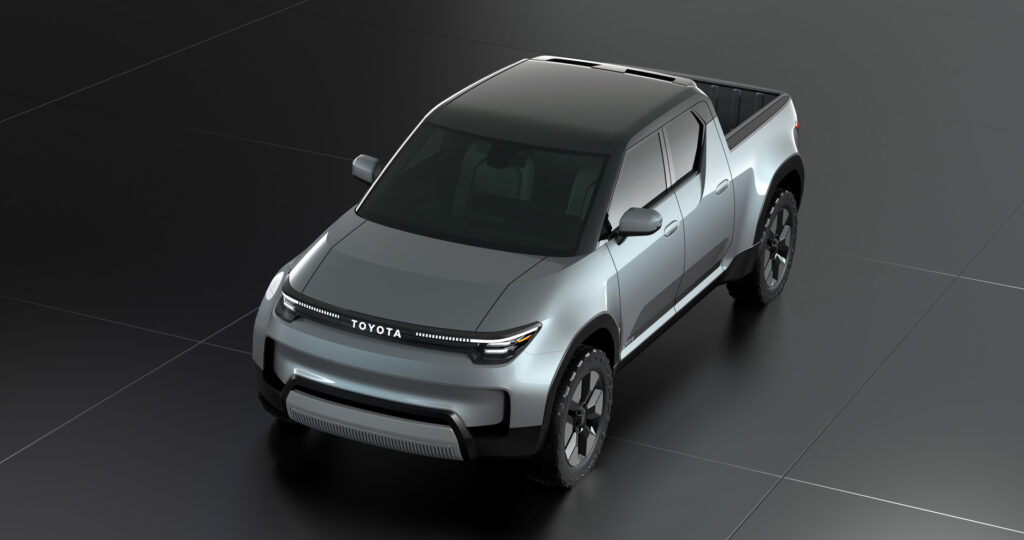
That puts it conceptually closer to the Ford Maverick and upcoming BYD Mako/Shark 5 than traditional one-tonne utes such as the Ford Ranger and Toyota HiLux. A previous Toyota BEV ute concept dubbed EPU is roughly equivalent to Project 150D in size.
We’ve used it here for illustrative purposes only.
READ MORE: Toyota locks-in futuristic electric HiLux and LandCruiser EV for 2026 debut in Europe, but will battery-powered ute and rugged SUV make in Down Under?
READ MORE: 2026 Toyota HiLux BEV Review: Why this isn’t the electric ute that will make buyers switch away from diesel
READ MORE: “Get that on EV Frickin’ Central!”: Toyota boss exults in Australian launch of new HiLux EV in 2026, hydrogen HiLux coming in 2028
Reports from South America have pointed to an electrified drivetrain, potentially making Project 150D Toyota’s first plug-in hybrid ute when it launches, reportedly in Brazil during the first half of 2027.
Media reports say the new Toyota could adopt a version of the Prius plug-in hybrid system, combining a 2.0-litre petrol engine with electric motors for a claimed system output of about 166kW.
An e-CVT transmission and additional rear electric motor would provide Toyota’s eFour electric all-wheel-drive system.
Toyota has yet to officially confirm those specifications, however, and reporting from Brazil has varied over the exact electrified drivetrain planned for Project 150D.
What now appears clearer is how Toyota intends to make a passenger-car-derived platform cope with the demands of carrying loads in a ute tray.
A recently uncovered Toyota patent details a load-distributing suspension mounting arrangement for a monocoque vehicle.
The system includes what Toyota describes as a “strainer”, designed to spread loads from the tray through the body structure rather than concentrating them around conventional suspension mounting points.
Associated changes to the body sheet metal and suspension components are also intended to increase strength, addressing one of the obvious challenges in developing a load-carrying ute from a platform originally intended for passenger vehicles.
Project 150D has previously been linked with the Corolla Cross architecture, and camouflaged prototypes have already been spotted testing in Brazil ahead of its expected 2027 debut.
It would give Toyota an entirely different proposition to its existing HiLux and the basic IMV 0-based HiLux Champ sold in some Asian markets.
The Champ has effectively been ruled out for Australia because it does not meet local regulatory requirements, but Toyota Australia has made clear it is interested in a more sophisticated compact ute if one becomes available.
Asked whether Toyota Australia would consider Project 150D if it was made available globally, Toyota Australia senior manager of product planning and pricing Ray Munday said: “We’d certainly look into it”.
“If it was the right product at the right price, we believe there is some demand for that here. But it’s always got to be about the right product at the right price. Otherwise, it won’t be successful,” he said.
Toyota’s interest comes as the smaller ute market begins to gain momentum internationally.
Ford has enjoyed strong success with the Maverick in North America, while BYD is preparing its smaller Mako – also known as the Shark 5 in some reports – as an electrified companion to the larger Shark 6.
For Toyota Australia, a smaller plug-in hybrid ute could also provide another avenue to reduce fleet emissions under the New Vehicle Efficiency Standard without asking traditional HiLux buyers to make the leap to a full battery-electric workhorse.
Toyota already sells the battery-electric HiLux in Australia, although the current model is aimed primarily at fleet and mining applications rather than replacing diesel-powered versions for towing and long-distance recreational use.