2026 Toyota HiLux BEV Review: Why this isn’t the electric ute that will make buyers switch away from diesel
Toyota may be a powerhouse with off-roaders and utes, but it’s failed to fire with electric cars.
And so far the entire car industry has failed to fire with electric utes.
So… teaming electric motors with the iconic HiLux ute might seem like a risky move.
Except that the HiLux BEV – or battery electric vehicle – already has customers snapping it up.
READ MORE: Toyota shock admission: Electric HiLux and 4WDs won’t suit mainstream buyers until battery tech leaps forward
READ MORE: All-electric Toyota Hilux BEV price announced
READ MORE: Toyota HiLux BEV key numbers revealed ahead of 2026 arrival in Australia: They’re … interesting
READ MORE: “Get that on EV Frickin’ Central!”: Toyota boss exults in Australian launch of new HiLux EV in 2026, hydrogen HiLux coming in 2028
READ MORE: 2026 Toyota HiLux EV confirmed: Battery electric workhorse set to join diesel ute in next-gen line-up. Australian launch appears certain
READ MORE: Has solid state battery tech been surpassed already?
They’re typically from big businesses such as mining fleets wanting to green their image by lowering their vehicle fleet’s carbon emissions.
2026 Toyota HiLux BEV price and equipment
The HiLux BEV is offered as a dual-cab only, with a choice of a regular pickup body or a cab-chassis.
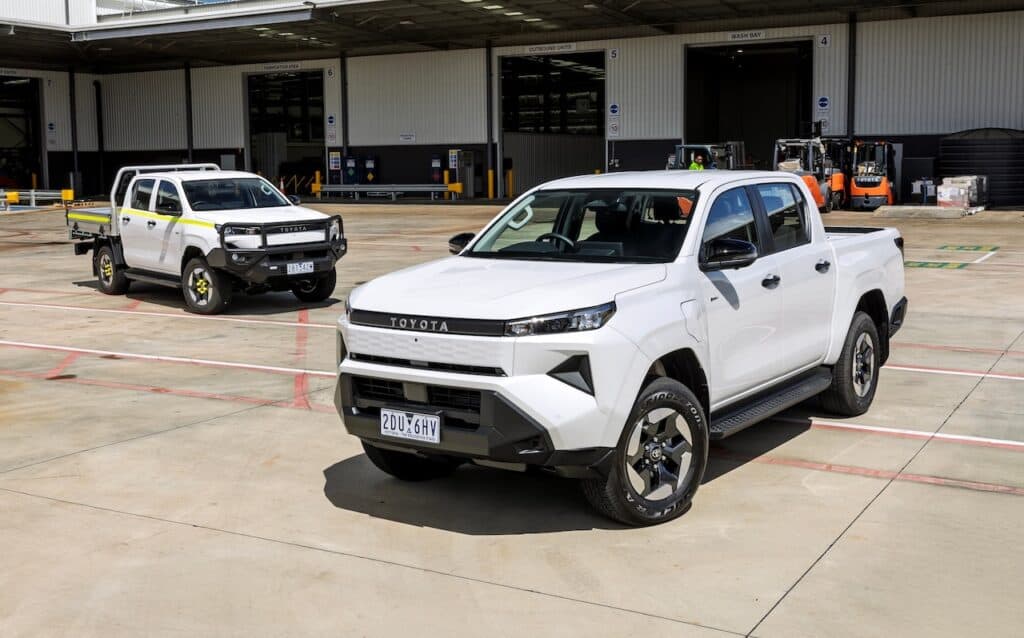
Pricing kicks off at $74,990 plus on-road costs for the SR cab-chassis, stepping to $76,490 for the SR pickup and $82,990 for the SR5 pickup tested here.
That makes it a fairly expensive ute, around $17,000 more than an equivalent diesel HiLux, which is a huge price penalty.
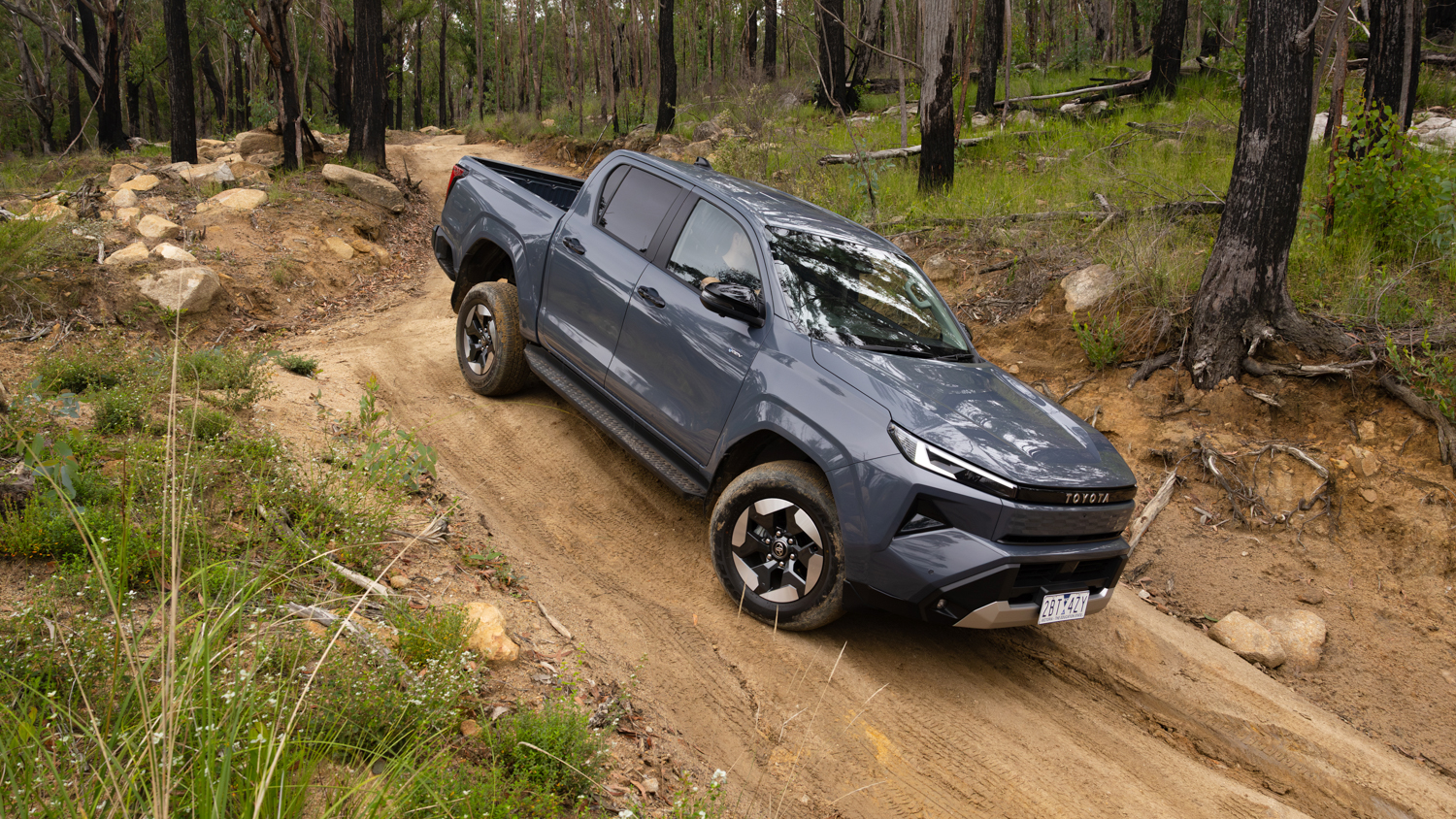
From a styling perspective it’s similar to other HiLuxes, with some key differences up front.
There are BEV badges, a more aerodynamically shaped grille – the electric drivetrain doesn’t have the cooling requirements of a diesel – and aerodynamically designed 17-inch alloy wheels.
The charge port sits on the flank and covers both AC and DC charging.
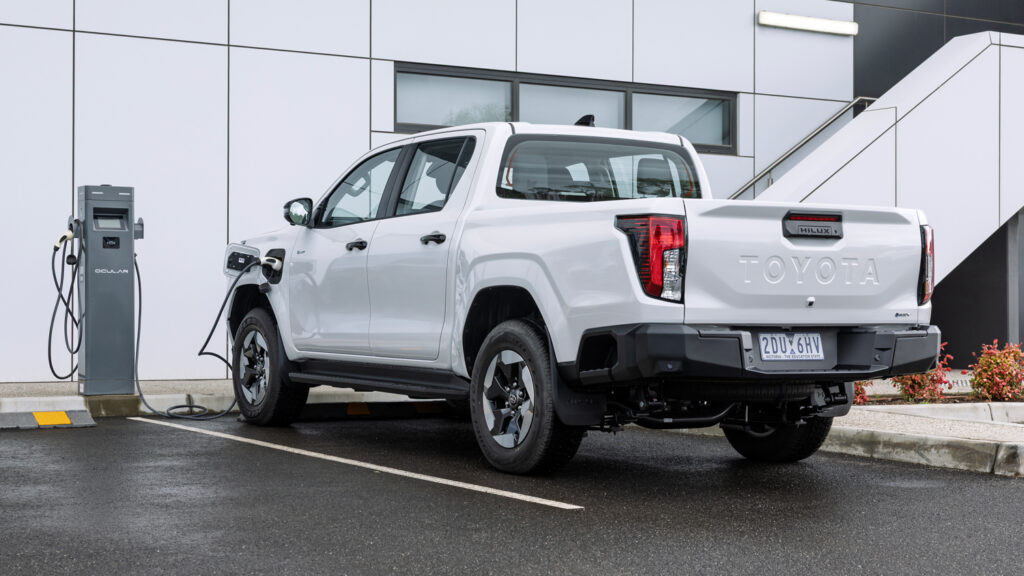
Underneath is a 59.2kWh battery — not exactly huge — that sits between the chassis rails, essentially under the centre of the car.
Claimed range is just 315km for the pickup models – or only 245km for the cab-chassis (the difference is due to inferior aerodynamics without a tray on the back).
However, that’s using the outdated NEDC test.
With the more realistic WLTP test claimed range drops to 240km for the pickup (there’s no figure for the cab-chassis, but clearly it will be less again).
Either way, it’s not much.
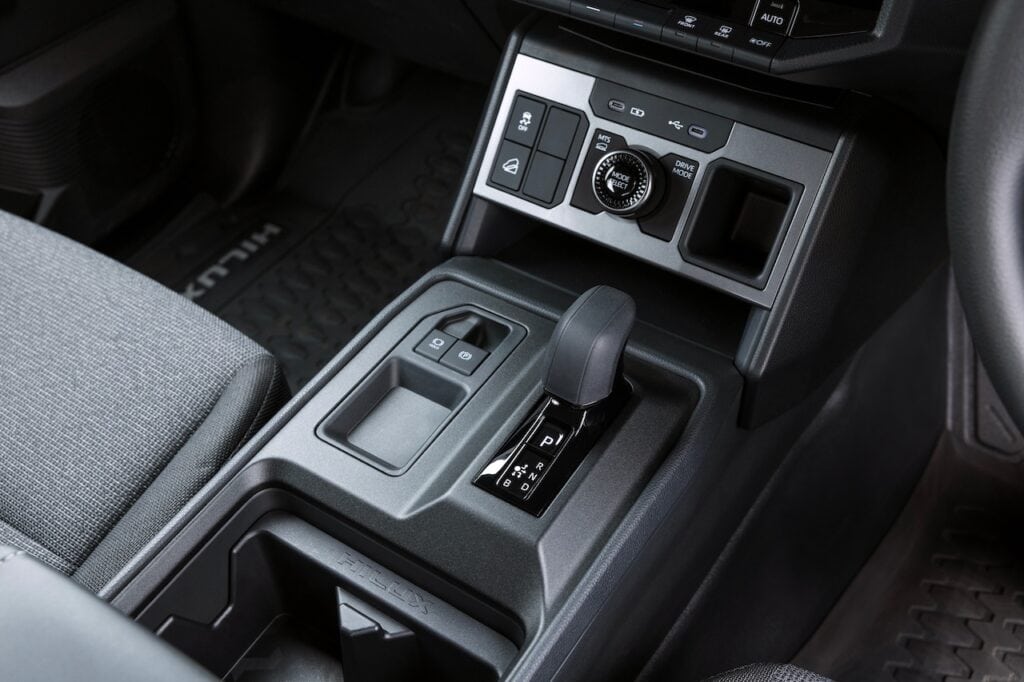
The HiLux BEV gets two electric motors.
The front motor makes 82.2kW and 205.5Nm (nothing like being precise with the outputs!) and the rear motor 129.3kW/268.6Nm.
As with all Toyotas it’s covered by a capped price service program.
The first 10 services cost just $220.
However, whereas many brands have lower service requirements for EVs, with the HiLux BEV it has the same intervals as the diesel: six months and 10,000km.
2026 Toyota HiLux BEV: What we think
The big challenge with the electric Toyota HiLux is range – or lack thereof.
You’re not going to go anywhere near as far as you will with a regular (diesel) HiLux.
But for suburban tradies or the mining fleets that are the target market for the HiLux BEV that’s a lot less of an issue.
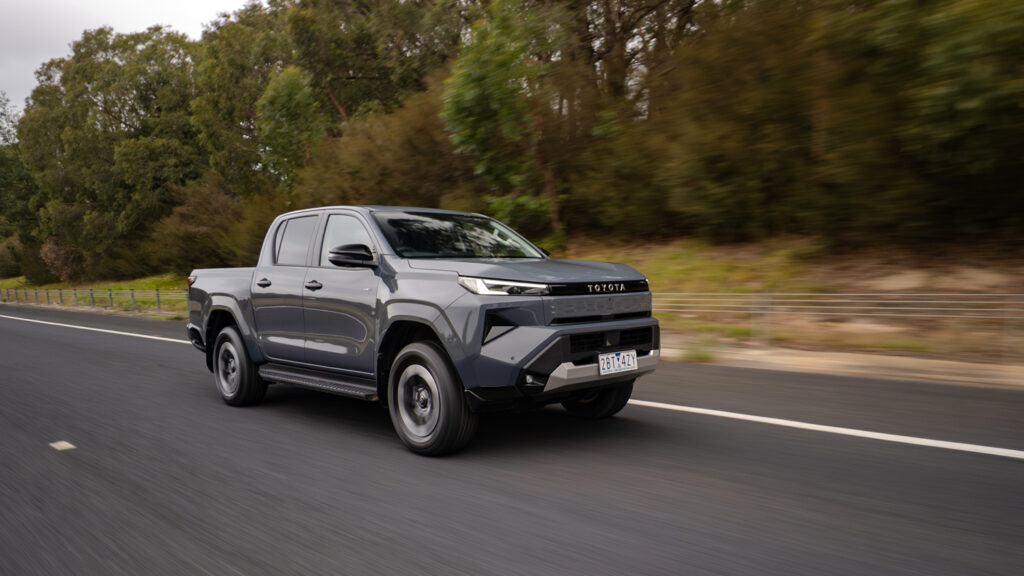
It’s fine for zipping around town and potentially shorter trips, but you won’t be tearing off into the outback and through the scrub. It’s not that sort of vehicle – and Toyota isn’t trying to pitch it to people like that.
Drive a few hundred kilometres each day and pop it back on charge overnight.
It also doesn’t quite have the capability of a regular diesel HiLux.
Ground clearance is down slightly, for example, courtesy of a different rear suspension setup that allows the electric motor to be bolted to the chassis rather than hanging off the axle (something that would seriously impact ride quality and how it drives).
There are still leaf springs back there, but instead of a live rear axle it uses a De Dion system, essentially an axle running across the back, but dropping below the motor.
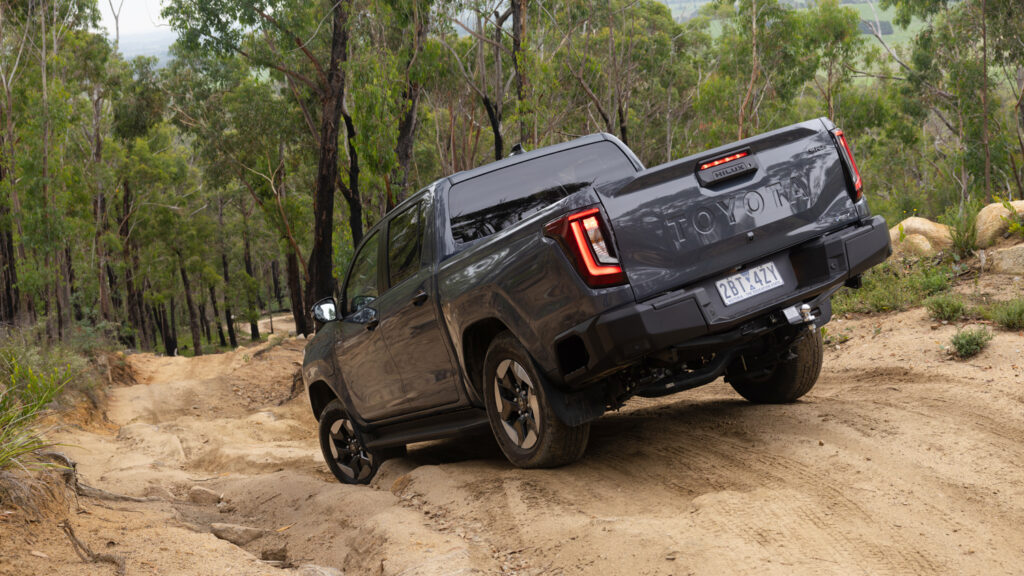
And much of the HiLux’s capability is retained.
The battery, for example, gets some serious protection underneath, so if you’re off-road and hit it from below, it should hopefully shrug it off.
There are dual motors, one at the front and one at the rear, delivering four-wheel drive capability without a transfer case or a driveshaft between the axles – it’s all managed electronically.
Between them the motors make up to 144kW (the two motors can’t produce their peak at the same time), slightly less than the 150kW of the diesel.
Toyota doesn’t claim a peak torque figure, but it’s less than what the diesel versions make because even if the motors can produce their peak torque simultaneously there’s only 474.1Nm between them, less than the diesel’s 500Nm).
That said, performance-wise few are likely to have many complaints.
With that easy accessibility to the torque and really swift responses – far quicker than you get in a diesel HiLux – it performs pretty well.
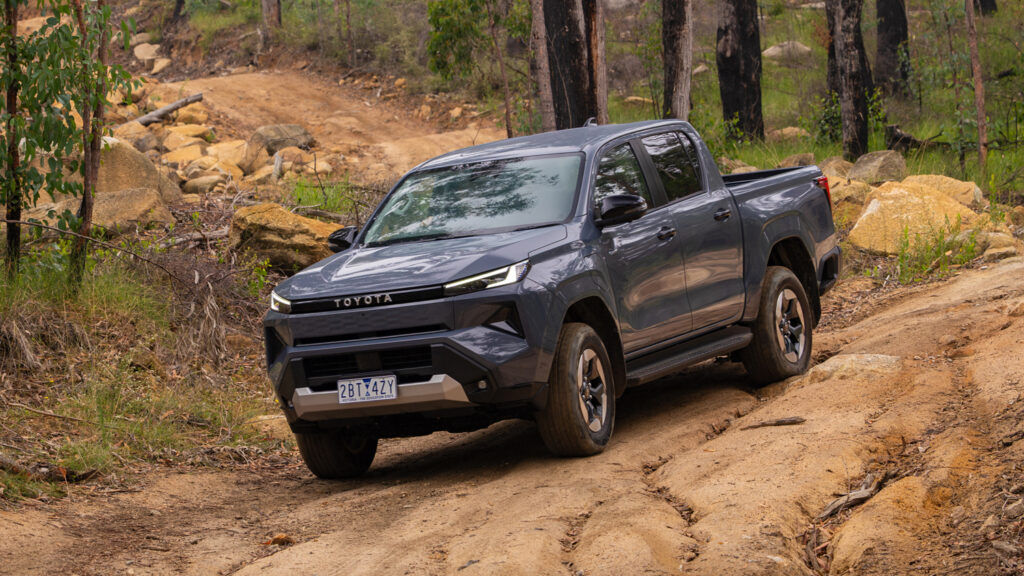
It’s a fairly smart thing off the line in the way it picks up, and the thrust works nicely around town.
At higher speeds – above about 80km/h – it loses some enthusiasm, but it’s still fine for country road cruising.
Carrying capacity isn’t at the same level as diesel HiLuxes, though.
Payloads sit at around 800kg depending on the model, while towing capacity is 2000kg – a full tonne and a half less than a diesel HiLux.
But again, this is not a ute aimed at everyone, and certainly not at heavy-duty towers and adventurers.
Think of it as more of a worksite vehicle – one that could potentially be used by a tradie in town.
On the road the suspension is fairly firm.
Yes, utes tend to be, but the HiLux EV is firmer than a diesel HiLux, which can make it pretty sharp over bumps.
2026 Toyota HiLux BEV: Verdict
Anyone can walk into a dealership and buy an electric HiLux, but not many will: Toyota realises this is essentially a fleet vehicle.
It’s aimed largely at mining fleets trying to reduce their carbon impact, and Toyota has already had hundreds of orders from the likes of BHP.
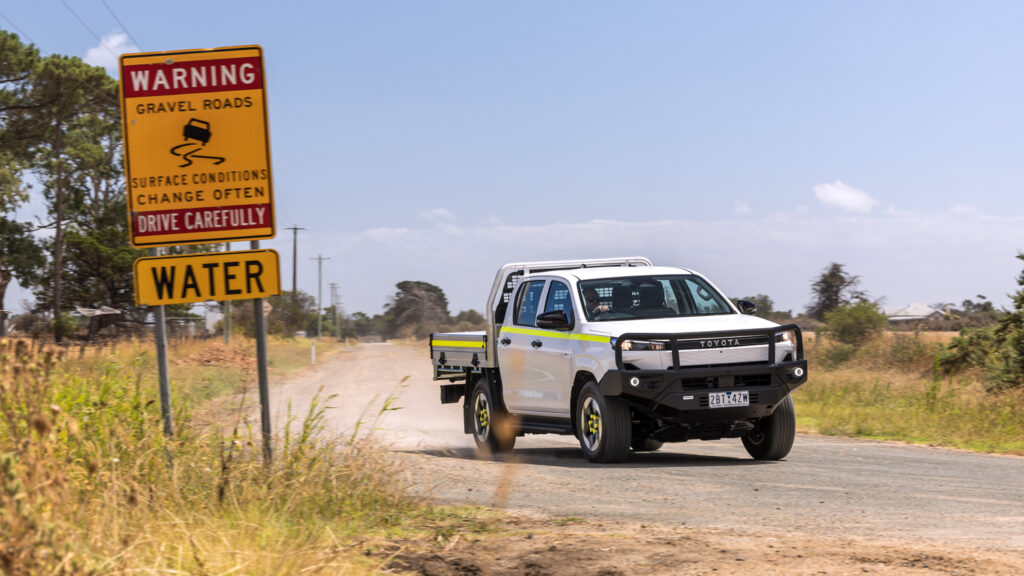
For that use it makes a fair bit of sense: you’re going back to base, staying in a relatively small area, and you may not have the weight-carrying expectations of people heading into the bush.
Ultimately they are the biggest issues: price, a short driving range and a lower load capacity compared with diesel models.
No doubt they’ll be addressed as battery tech improves.
For now, think of the HiLux BEV as an EV step in the right direction, giving a pointer to where things are heading rather than something about to shake up the diesel status quo.
Score: 2.5/5
2026 Toyota HiLux BEV price and specifications
Price: From $74,990 plus on-road costs
Basics: EV, 5 seats, 4 doors, dual-cab ute, AWD
Range: 240km (WLTP)
Battery capacity: 59.2kWh
Battery warranty: 8 years/160,000km (guarantee of 70% of original capacity)
Energy consumption: 20.2kWh/100km (pickup), 25.6kWh/100km (cab-chassis)
Motors: 1 front 82.2kW/205.5Nm and 1 rear 129.3kW/268.6Nm
AC charging: 10kW, Type 2 plug
DC charging: 150kW, CCS combo plug
0-100km/h: NA