
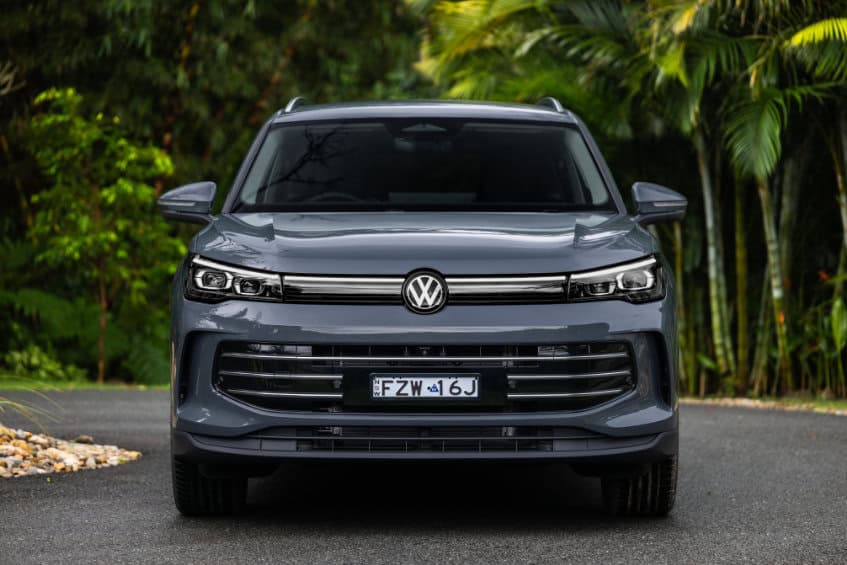
2026 Volkswagen Tiguan eHybrid Review: VW joins the plug-in hybrid battle with an ace up its sleeve
The new Volkswagen Tiguan has gone plug-in in Australia, and the timing couldn’t be better for the German giant.
This new Tiguan eHybrid arrives as plug-in hybrid sales continue to surge (up 119 per cent so far this year, and more than 500 per cent in April alone), which gives VW serious ammunition in what has become the most serious fight in Australia.
It will be aimed at the Chinese, amongst others, and while the Tiguan eHybrid can’t match the newcomers on price, I would argue it can better them in the field of on-road manners and driving fun. How much the buyer values the latter over the former will be the make-or-break for the plug-in Tiguan.
But more on all of that in a moment.
READ MORE: Volkswagen ID. Polo GTI performance numbers confirmed: Heavier and slower than ICE but VW guarantees great handling
READ MORE: Volkswagen debuts full-size three-row plug-in SUV: ID. Era 9X challenges Mercedes, BMW and Denza
READ MORE: Re-hatched: Why the overhauled Volkswagen ID.3 Neo might finally have everything it needs to do well in Australia and beat the Tesla Model 3 and MG4
2026 Volkswagen Tiguan eHybrid price and equipment
There are two versions on offer. The 2026 Volkswagen Tiguan eHybrid Elegance is priced from $64,590 before on-road costs, while the more powerful R-Line starts from $74,550 before on-roads. Both are currently being offered with sharper drive-away deals that will put you on the road for less than the RPP.
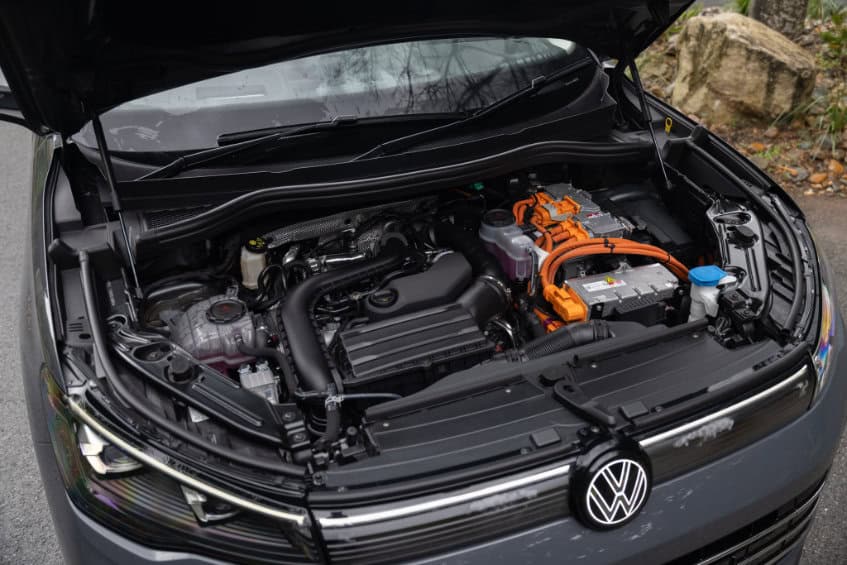
Both use a 1.5-litre turbo-petrol engine matched with a front-axle electric motor and a 19.7kWh battery, with claimed electric range of around 115km on the WLTP cycle. Charging is covered by 11kW AC capability at home, or up to 40kW DC charging when you’re out and about.
The Elegance produces a combined 150kW and 350Nm, while the R-Line lifts those numbers to 200kW and 400Nm. Both are front-wheel drive and use a six-speed dual-clutch automatic transmission.
Shop for the Elegance and you’ll find 19-inch alloy wheels, an auto-opening boot and VW’s HD Matrix LED headlights.
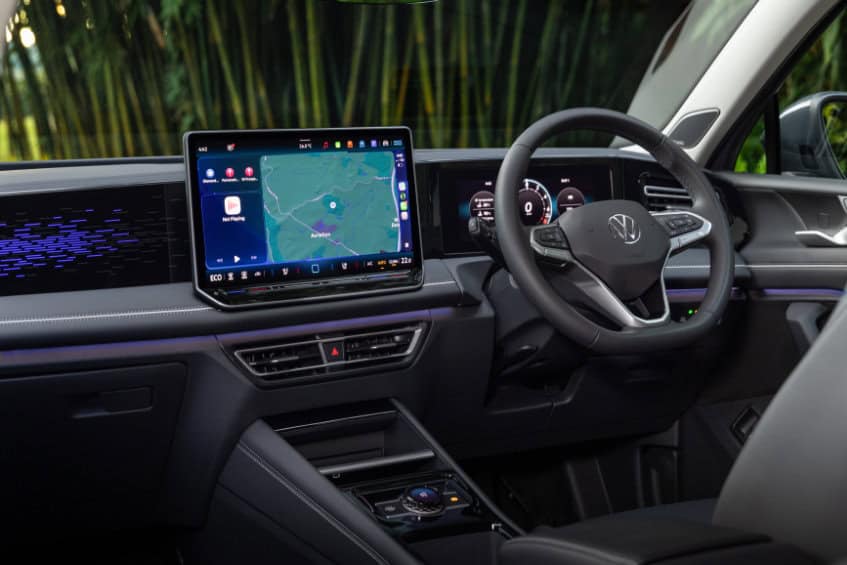
Inside, there’s leather trim, three-zone climate, dual wireless charging pads and a trio screens – a 15-inch central screen, a head-up display and a digital cockpit. The sound is Harman Kardon, the front seats have heating, cooling and massage functions, and there’s adaptive damping, and a clever e-diff that smooths out understeer and dials up grip.
The R-Line gives you the extra grunt, but also adds a tougher look, 20-inch alloys and progressive steering.
2026 Volkswagen Tiguan eHybrid: What we think
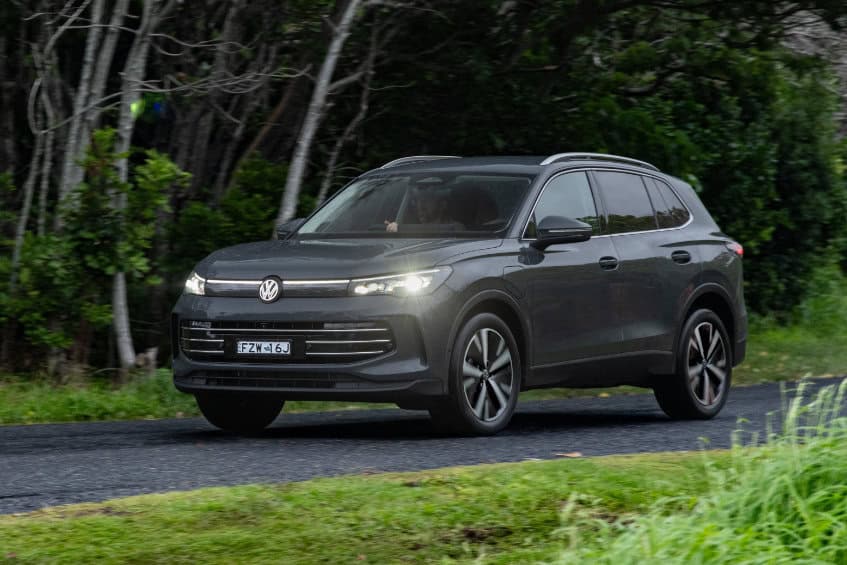
The real boon here isn’t the price or the equipment. There are others who will give you more for less. This is more about the way the Tiguan eHybrid drives.
At low speeds, the electric motor gives the SUV a much smoother and perkier feel than a petrol-only model. It steps away from traffic like a small EV, with instant response before the petrol engine joins in, making it feel properly brisk and well suited to suburban driving.
The Tiguan also feels properly polished from behind the wheel. It feels tied down and composed through corners, with a sense of engineering quality that is sometimes missing in its cheaper competitors.
It isn’t perfect. The ride can feel firm and occasionally jittery on rougher surfaces, while the brake pedal and steering weighting didn’t feel consistent, and so could feel a bit unpredictable. Neither issue is a deal-breaker, but both take some getting used to.
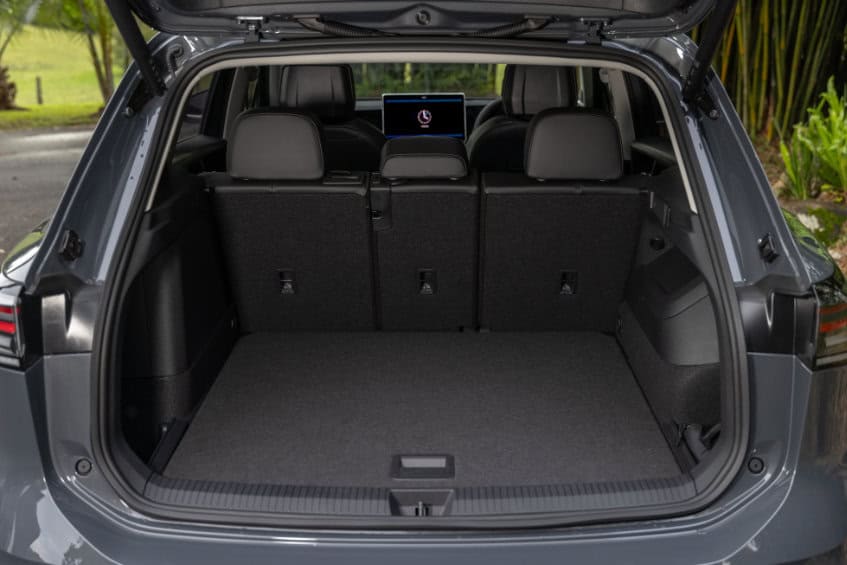
2026 Volkswagen Tiguan eHybrid boot.
Inside, the Tiguan eHybrid feels broadly premium, especially in R-Line form, with a large central screen, quality-feeling fit and finish, and clever touches like a wireless charging tray that actually holds your phone in place when youre driving, rather than the flat pad most brands offer that can send your device careening through the cabin like an errant missile.
There are some cheaper plastics in places, and the driver-monitoring system can be irritating, particularly when it locks the screen if it thinks you’re not paying enough attention.
Space remains family friendly, with good rear-seat room and a battery-impacted boot rated at 490 litres with the rear seats in place, expanding to 1486 litres with them folded.
2026 Volkswagen Tiguan eHybrid: Verdict
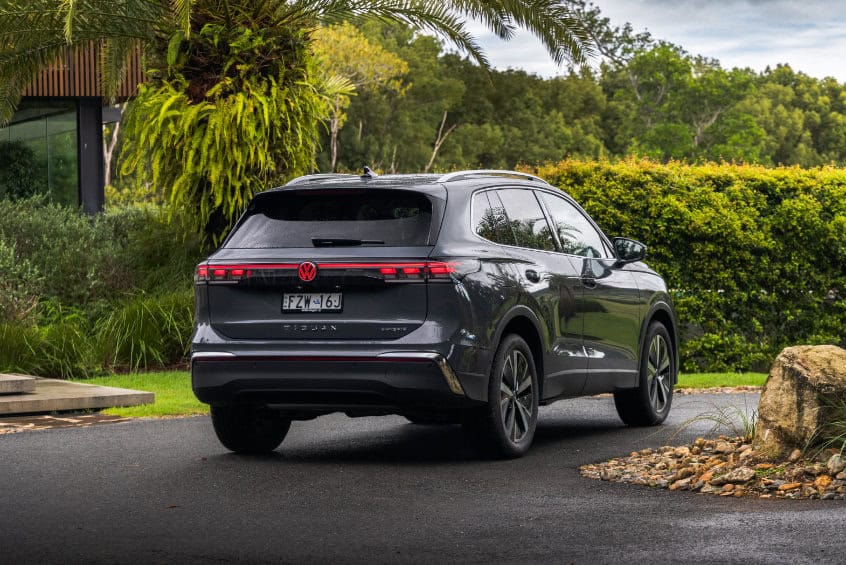
The lingering question is price. The Tiguan eHybrid is not cheap, especially against the wave of Chinese plug-in hybrids now arriving in Australia, many of which offer more equipment, more power or more battery for less money.
But the Volkswagen counters with a more polished drive experience, a lovely cabin feel, and a plug-in system that won’t just save fuel, but also genuinely improves the way the car feels day to day.
SCORE: 3.9/5
Price: From $64,590 plus on-road costs
Basics: PHEV, 5 seats, 4 doors, medium SUV
EV range: Approx 115kms
Battery capacity: 19.7kW (net)
Fuel use: 1.6/1.7L/100km (WLTP)
Drivetrain: 1.5L-litre 4-cylinder turbo, front motor, total 150kW/350Nm or 200kW/400Nm
AC charging: 11kW, Type 2 plug
DC charging: 40kW, CCS combo plug
0-100km/h: 7.2s – 8.2s

would be nice if you could actually buy one in the US.
115 kms range 😩