Hyundai’s Australian V2G roll-out takes a big step forward: Passes crucial test using new standard
Just days after EV Central revealed Hyundai and Kia will launch vehicle-to-grid (V2G) technology in Australia this year, Hyundai has confirmed the completion of the nation’s first V2G discharge using the latest ISO 15118-20 global communications standard.
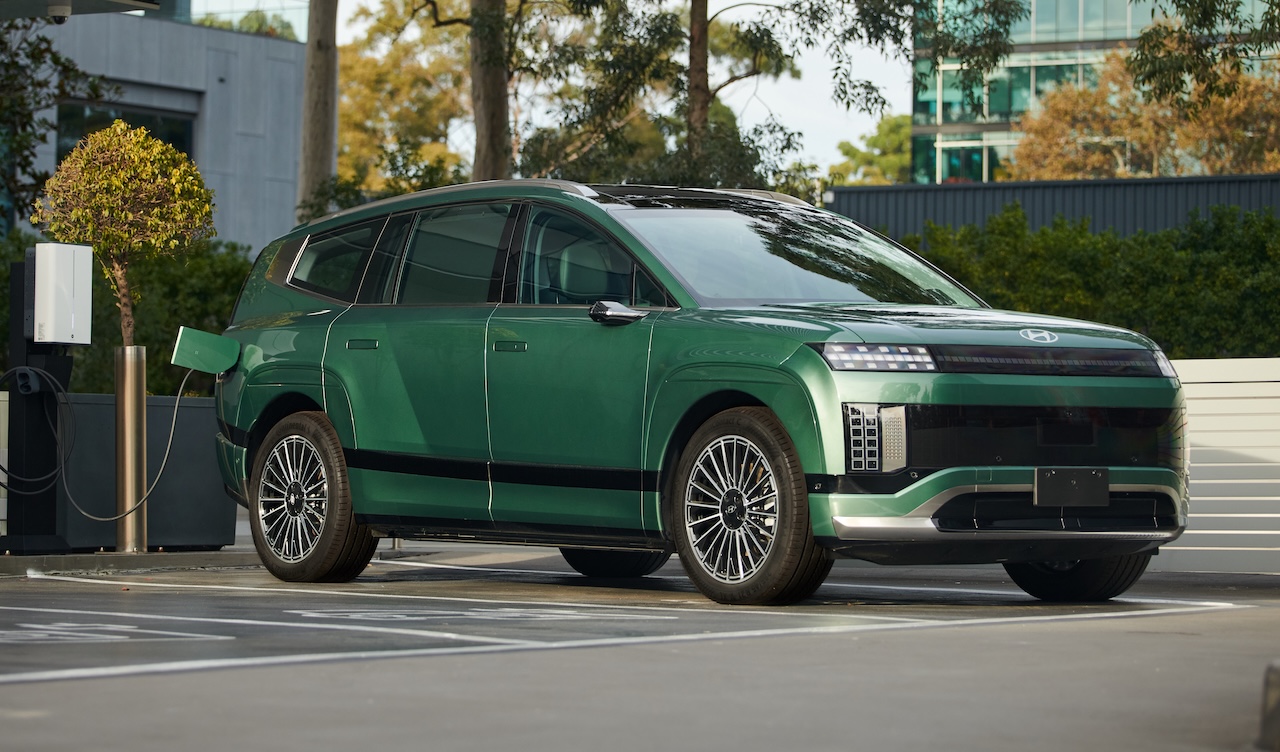
The breakthrough, achieved using a Hyundai IONIQ 9 and a newly-homologated StarCharge Halo bidirectional charger, provides further evidence Hyundai’s long-awaited V2G rollout is rapidly progressing towards customer deployment.
While Hyundai and Kia have already confirmed V2G capability will begin arriving in Australia during the third quarter of 2026, the successful test demonstrates the technology is moving beyond planning and certification work into real-world operation.
READ MORE: V2G is go for Hyundai and Kia in Australia! Vehicle to grid fitted to Korean EVs this year. It’s a big deal, but there are limitations
READ MORE: Big step forward for V2G in Australia: Federal government’s huge investment expansion
READ MORE: Grid up! Regulation rewrite boosts bi-directional charging in Australia to enable V2G, V2H
Hyundai paired an IONIQ 9 electric SUV with a StarCharge Halo 7.4kW bidirectional DC charger to complete what it says is Australia’s first V2G discharge using the ISO 15118-20 communications protocol.
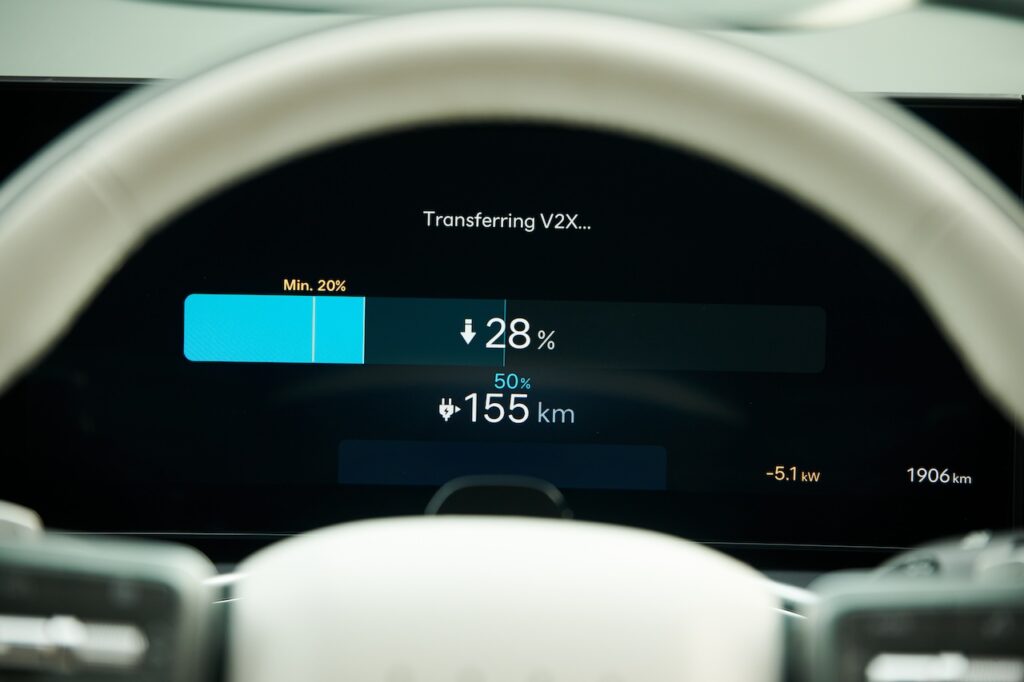
The test is significant because it combines the latest international V2G communications standard with locally approved charging hardware, creating a pathway towards manufacturer-backed, standards-compliant vehicle-to-grid services.
The breakthrough builds on the 2024 rewrite of Australian Standards AS4777.1 and AS4777.2, which removed one of the major regulatory barriers to bi-directional charging in Australia.
Those standards govern how chargers and inverters interact with the electricity network, ensuring power can safely flow from EV batteries back into homes and the grid.
ISO 15118-20 tackles a different challenge. The communications protocol allows an electric vehicle, charger and the electricity network to securely exchange information and manage two-way energy flows.
In simple terms, AS4777 helps make the charger acceptable to the Australian grid, while ISO 15118-20 helps make the car and charger work together properly.
Together, the standards form a critical foundation for widespread V2G deployment.
That matters because Australia’s limited V2G activity to date has largely centred on CHAdeMO-equipped vehicles such as the Nissan Leaf.
Hyundai’s demonstration points towards a future where CCS2-equipped mainstream EVs can participate in vehicle-to-grid programs using globally recognised standards.
Unlike the vehicle-to-load (V2L) systems already available on Hyundai and Kia electric vehicles, V2G allows electricity stored in an EV battery to be exported back into the power grid, potentially helping owners reduce energy costs, support network stability and participate in virtual power plants.
The announcement follows EV Central’s recent report that Hyundai and Kia expect to launch V2G functionality in Australia during the third quarter of this year.
Initial Hyundai models expected to support the technology include the IONIQ 5, IONIQ 6 and IONIQ 9, while Kia is preparing V2G capability for the EV5 and EV9.
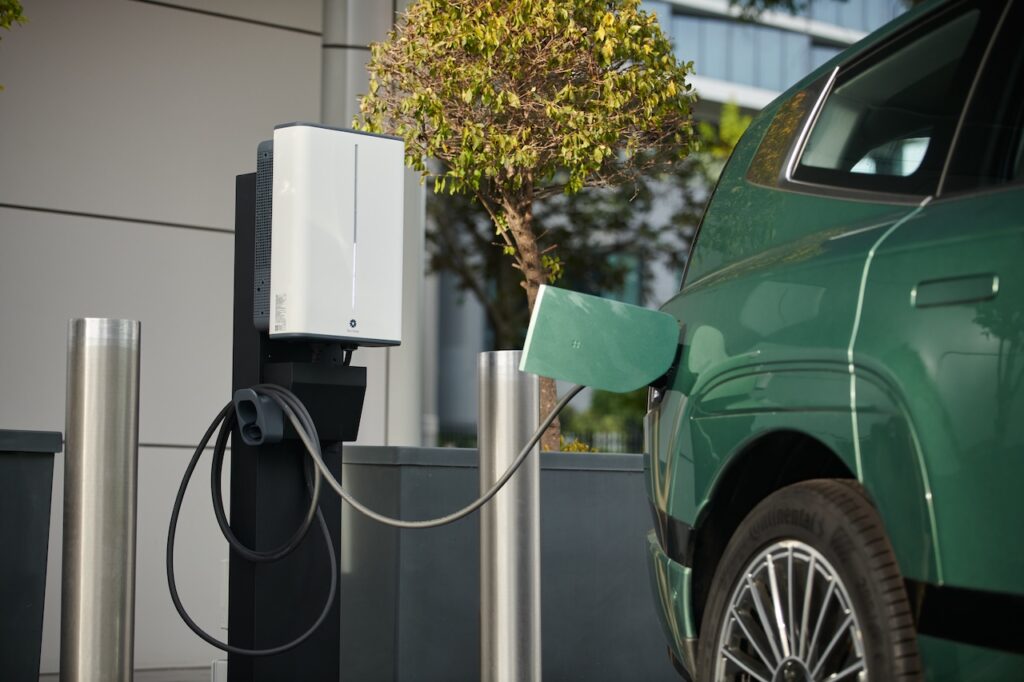
Hyundai said the StarCharge Halo charger used in the demonstration received Clean Energy Council approval in March and complies with Australian grid connection requirements.
The company also confirmed local V2G software enablement and certification programs for the IONIQ 9 are continuing through 2026.
Hyundai Australia chief executive Don Romano said the successful test was the result of extensive work by the company’s engineering teams in Australia and Korea.
“Electric cars can do far more than just drive. They can power homes and support the grid,” he said.
“This first V2G discharge using ISO 15118-20 with the IONIQ 9 demonstrates that we are delivering real innovation, not just talking about it.”
Globally, Hyundai Motor Group is already advancing V2G technology through customer trials in Korea, commercial services in Europe and vehicle-to-home programs in the United States.
The announcement comes as momentum behind V2G continues to build in Australia.
Earlier this month the Federal Government significantly expanded support for bi-directional charging through an enlarged ARENA-backed program designed to accelerate V2G adoption, virtual power plants and grid integration projects.
ARENA estimates up to 2.6 million Australian households could adopt V2G technology by 2040.