Big step forward for V2G in Australia: Federal government’s huge investment expansion
Australia’s biggest vehicle-to-grid trial is set to expand 20-fold after the Australian Renewable Energy Agency (ARENA) committed an additional $13.6 million to Amber Electric’s pioneering program, a move that could help finally bring bidirectional charging into the mainstream.
The funding will increase the vehicle to grid (V2G) component of Amber’s project from 50 households to 1000 households, making it Australia’s largest residential rollout of the technology, while the company’s smart charging program will more than double from 950 to 2000 participants.
V2G allows compatible electric vehicles to operate as mobile energy storage systems, charging when electricity prices are low or rooftop solar generation is abundant before supplying power back to a home or exporting it to the electricity grid when demand and prices are higher.
READ MORE: V2G is go! AGL announces new trial for money-saving vehicle-to-grid EV technology, promises full roll-out in 2026
READ MORE: Grid up! Regulation rewrite boosts bi-directional charging in Australia to enable V2G, V2H
READ MORE: V2G tech to change the way we live in Australia from 2022
The expansion comes at a pivotal time for V2G in Australia.
While bidirectional charging has long been viewed as one of the biggest potential advantages of EV ownership, widespread deployment has been slowed by a combination of technical, regulatory and commercial barriers.
Industry experts increasingly believe the challenge is no longer proving the technology works, but coordinating vehicle manufacturers, energy retailers, electricity distributors, charging hardware suppliers and regulators behind a common pathway to market.
Australia has made significant progress in recent years, with national bidirectional charging standards and approval pathways advancing and the first compatible chargers beginning to reach the market. However, industry groups say more work is still needed to align technical standards, certification processes and electricity network requirements before large-scale deployment can occur.
The expanded Amber trial is designed to help address some of the biggest remaining hurdles, particularly around vehicle manufacturer participation.
Many automakers have been cautious about bidirectional charging because of concerns about battery cycling, long-term durability, vehicle performance and warranty coverage.
ARENA hopes the larger rollout will provide the real-world operating data needed to demonstrate how V2G affects battery health and ownership experiences under everyday Australian conditions.
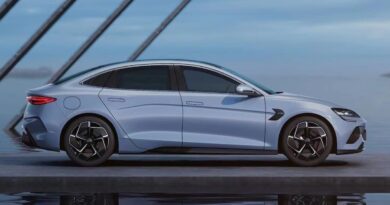
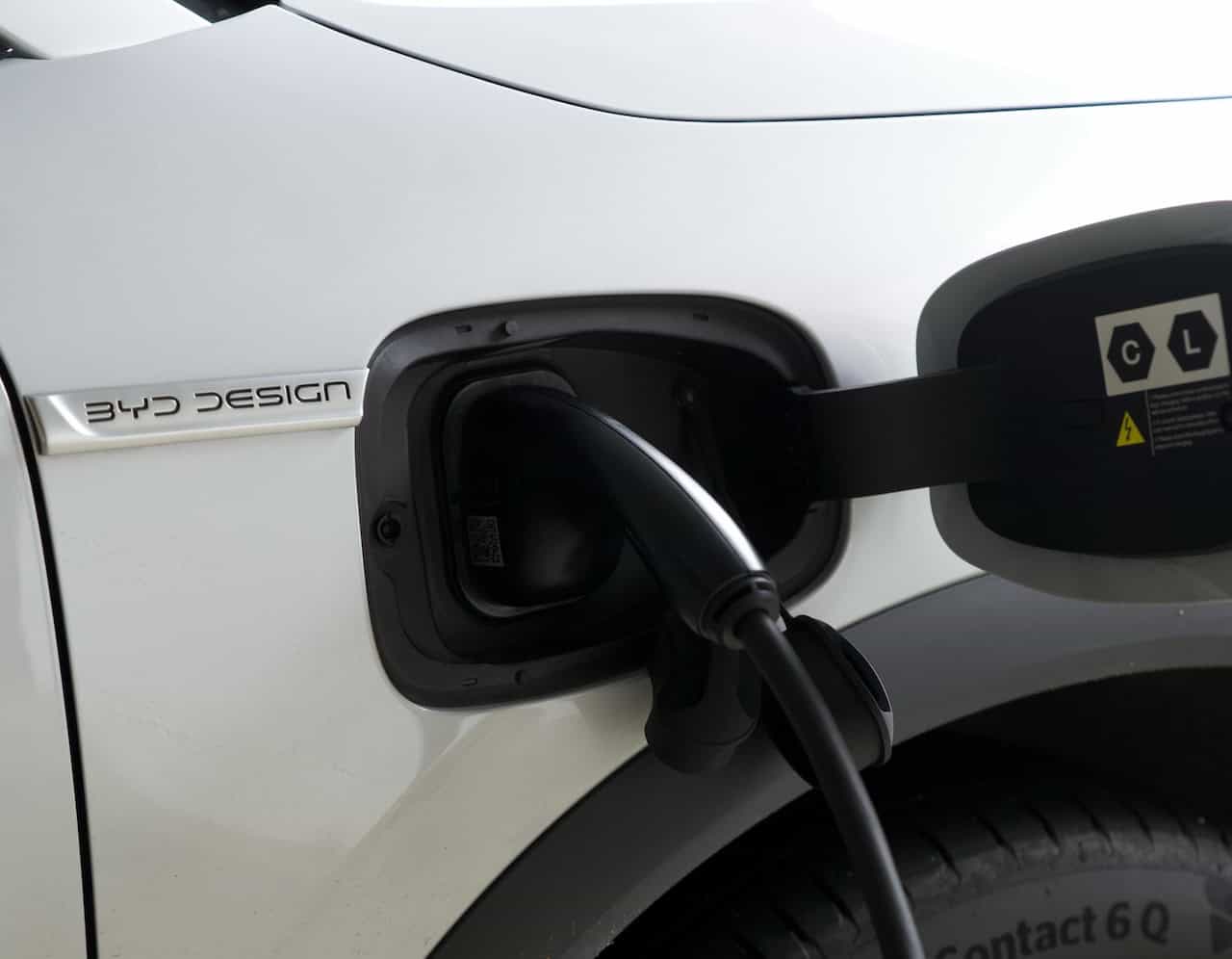
The next phase of the program will initially focus on BYD vehicles, making the Chinese EV giant one of the first mainstream manufacturers to actively support a large-scale residential V2G rollout in Australia.
For EV owners, the appeal is obvious.
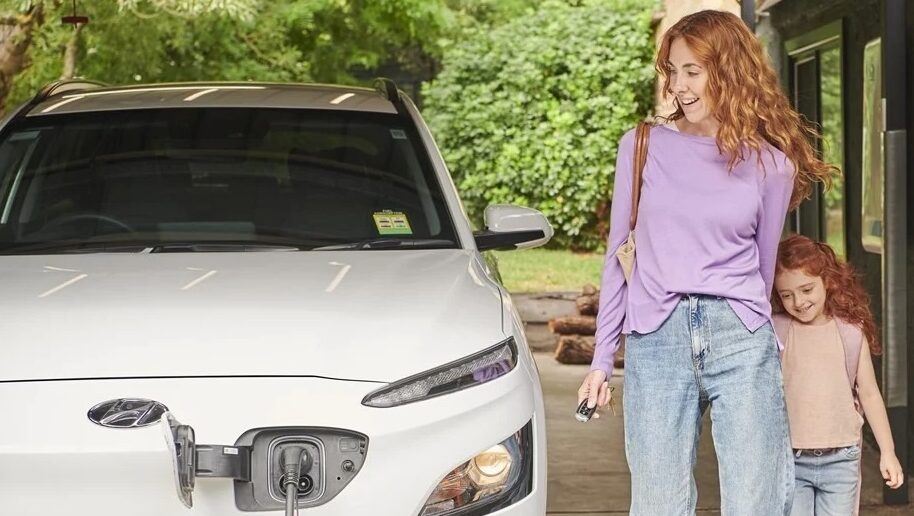
Amber’s software can automatically charge a vehicle when wholesale electricity prices are at their lowest and renewable generation is at its highest. For vehicles equipped with compatible bidirectional charging systems, that stored energy can then be used to power a home or sold back to the grid when electricity is most valuable.
Drivers retain control of the process, including setting minimum battery levels and specifying when their vehicle needs to be fully charged.
According to the Electric Vehicle Council, a typical EV battery stores around five-and-a-half times as much energy as a household battery system, creating the potential for electric vehicles to become valuable household energy assets as well as transport devices.
The council says one Amber customer participating in an earlier trial generated more than $500 during a single high-demand electricity event, although savings and earnings will vary significantly depending on electricity prices, network conditions and individual driving patterns.
The technology should not be confused with vehicle-to-load (V2L), which is already available on many EVs sold in Australia and allows owners to power appliances directly from their vehicle. Vehicle-to-grid takes the concept a step further by enabling electricity exports to homes and the broader electricity network.
The announcement follows a series of major developments in Australia’s bidirectional charging sector, including AGL’s recently announced V2G program and growing industry support for using EV batteries to help stabilise a grid increasingly reliant on renewable energy.
If the expanded Amber project proves successful, it could help unlock wider manufacturer participation and accelerate the commercial rollout of V2G technology across Australia.
With EV sales now running at record levels and battery-equipped vehicles increasingly common in Australian driveways, proponents believe parked electric cars could eventually become one of the country’s largest sources of distributed energy storage, helping households reduce energy costs while supporting the broader electricity network.