2026 Leapmotor B10 Seven-Day Review: A week with the budget-priced SUV that has some hidden surprises
The Leapmotor B10 is one of many small electric SUVs trying to tempt Aussies away from petrol.
We spent a week in the newcomer that slots in below $40,000 to take the fight to traditional players as well as a multitude of newcomer brands from China.
The Chinese made small SUV is distributed globally by Stellantis, the parent of big name brands such as Jeep, Alfa Romeo, Maserati and Peugeot.
Day 1: Getting to know the Leapmotor B10
The Leapmotor B10 arrives in Australia with a pretty simple brief: deliver a well-equipped electric SUV at a sharp price.
READ MORE: Leapmotor C10 grows a set! AWD Sport+ Special Edition has 440kW/760Nm
READ MORE: 2026 Leapmotor B10 Review: This BYD Atto 2, Chery E5, Geely EX5, Jaecoo J5 and MG S5 rival presents a whole new angle on Chinese EVs
READ MORE: Leapmotor C10 gets smarter! OTA update adds dashcam, smoother ADAS and global radio, but still no Apple CarPlay or Android Auto
READ MORE: Renamed! Baby 2026 Leapmotor A10 becomes the B03X for export markets. What about Australia?
It was recently priced from $38,990 drive-away but these days kicks off at $37,888 plus on-road costs.
Either way, it’s positioned right in the heart of the small SUV market and competes with a raft of newcomers, including the Jaecoo J5, BYD Atto 2, MG S5, GAC Aion V and Kia EV3.
The B10 is the company’s second model on sale locally – and is smaller than the C10 SUV – and it’s clearly aimed at buyers looking for a practical EV without spending big money.
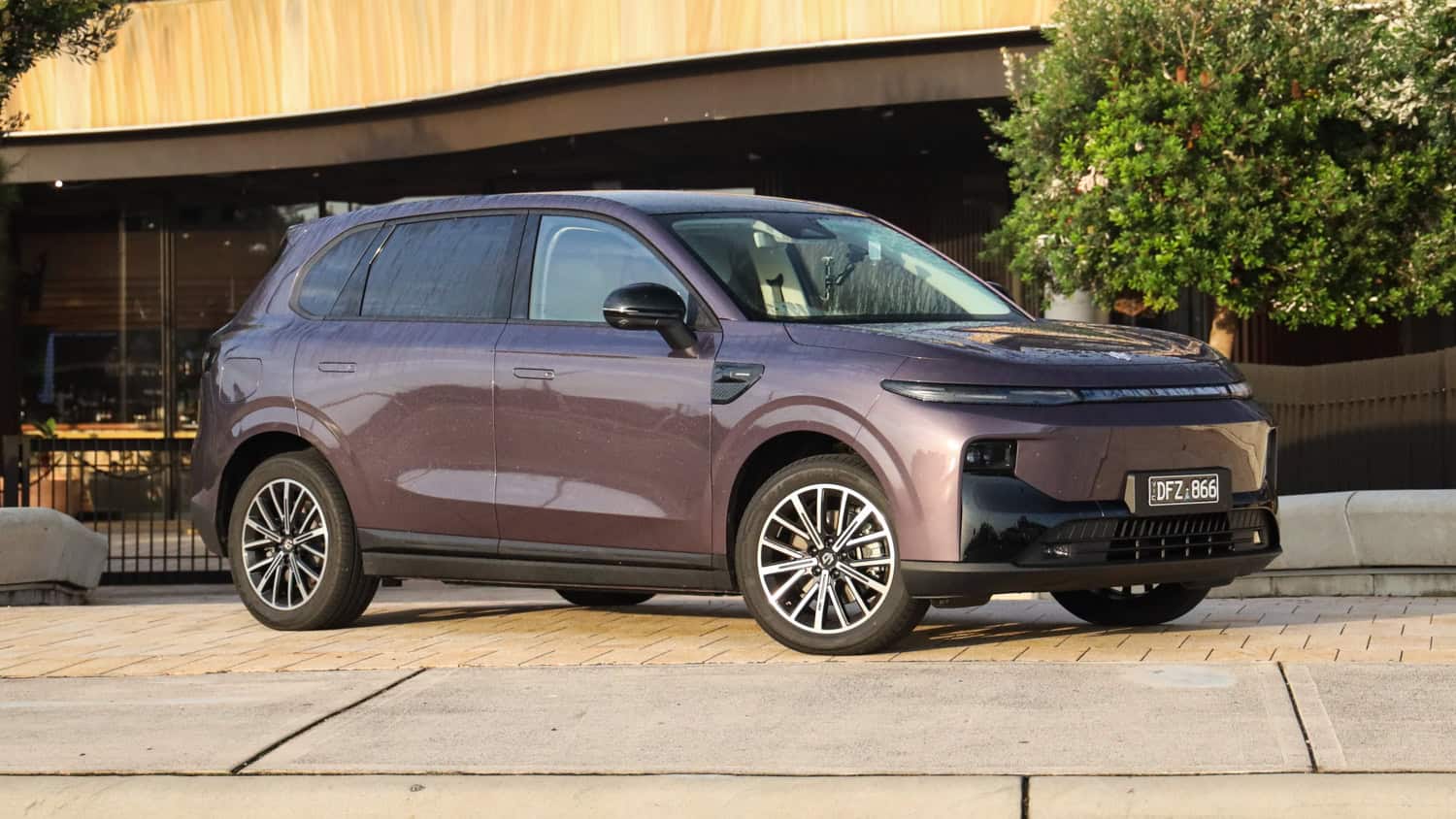
First impressions are positive. The B10 presents well, with a clean, modern cabin and a few thoughtful design touches that lift it above the bargain-basement feel some budget EVs can have. Satin and matte finishes across the dash help break up the interior, while dimpled textures on some surfaces add a bit of visual interest.
The basic Style model still gets a panoramic sunroof, 360-degree camera and wireless phone charger as well as the usual assortment of driver assistance aids.
A 56.2kWh battery offers 361km of range according to the WLTP cycle.
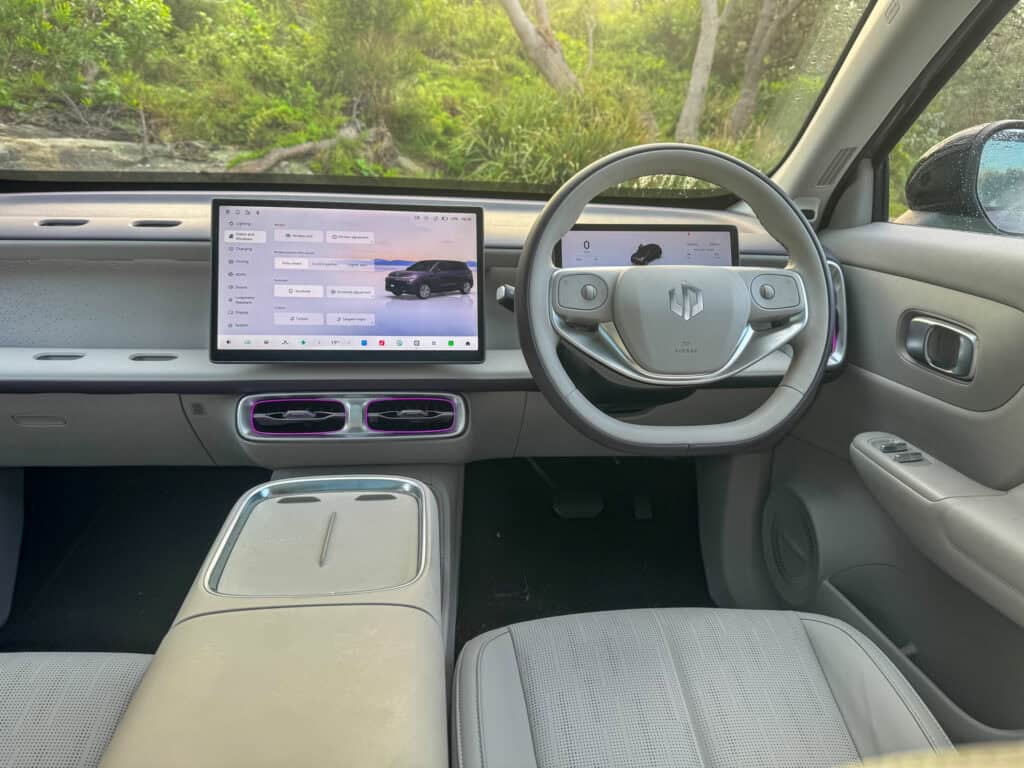
The Design Long Range we spent a week with adds TechnoLeather seats (stuff that looks lie leather), heated steering wheels, heated and ventilated front seats, powered tailgate, ambient lighting and tinted windows.
It also gets a 67.1kWh battery that ups the claimed range to 434km.
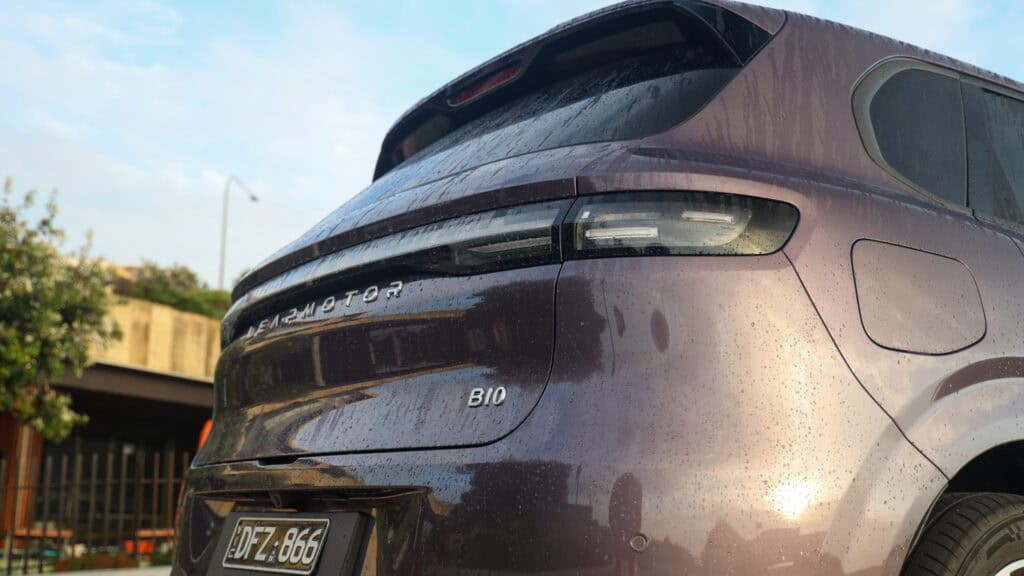
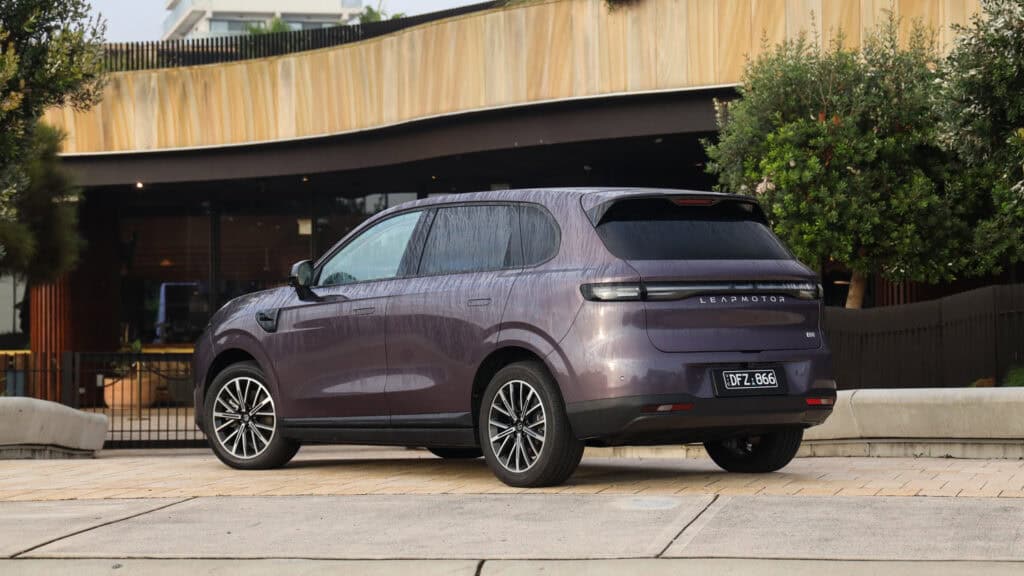
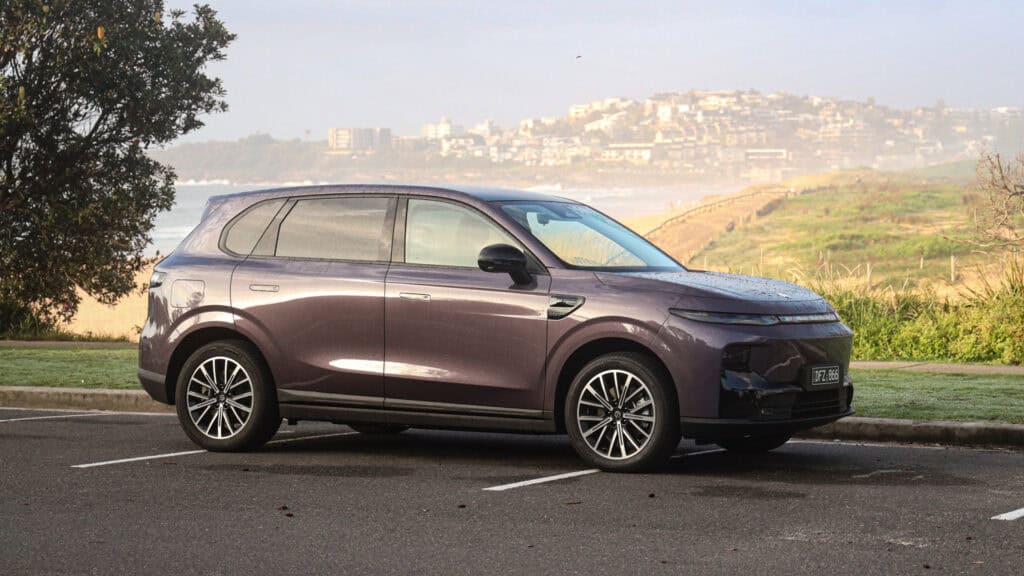
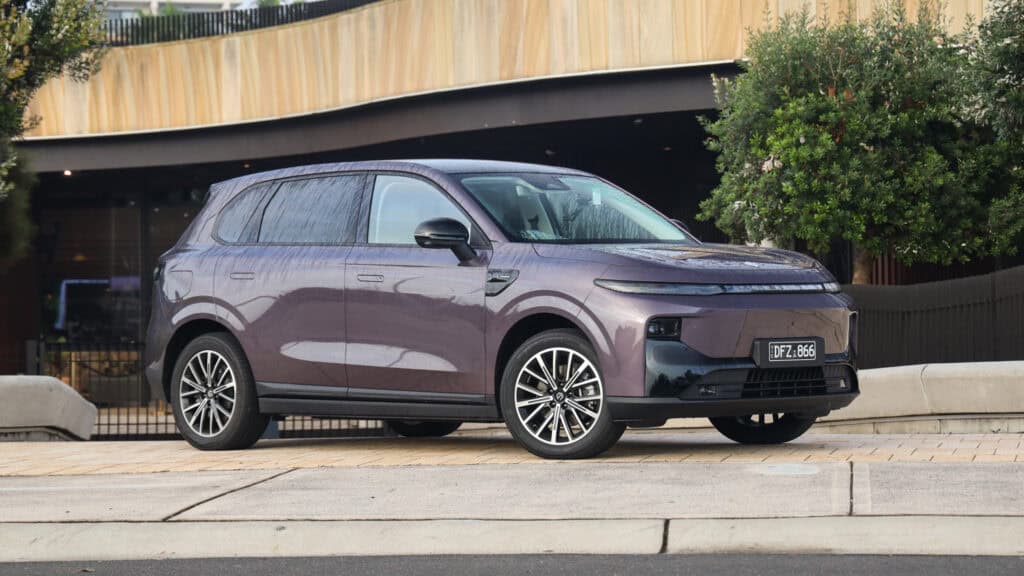
The Dawn Purple hue of our car – one of six available colours – adds $990 to the tally.
For a small SUV, it also looks surprisingly spacious. Over the next week, we’ll see how it stacks up in day-to-day driving.
Driving it home unleashed few complaints. It’s easy going and zippy – even if very few people have heard of the brand; I got used to explaining its origins to people.
In terms of support, Leapmotor backs the car with a six-year/150,000km warranty, while the high-voltage battery is covered for eight years or 160,000km.
The B10 requires a service every 12 months or 20,000km and Leapmotor also offers capped-price servicing for the eight services, with total servicing costs totalling $2954 for the period. Individual visits range from roughly $296 to $441.
Day Two: Delving into the tech
Unsurprisingly the Leapmotor B10 puts most of its functionality into a large central touchscreen.
It’s a clean-looking setup, and the display itself is bright and responsive, but the way everything is organised can take some getting used to.
A lot of vehicle controls are integrated into the screen, including things like audio volume and climate control.
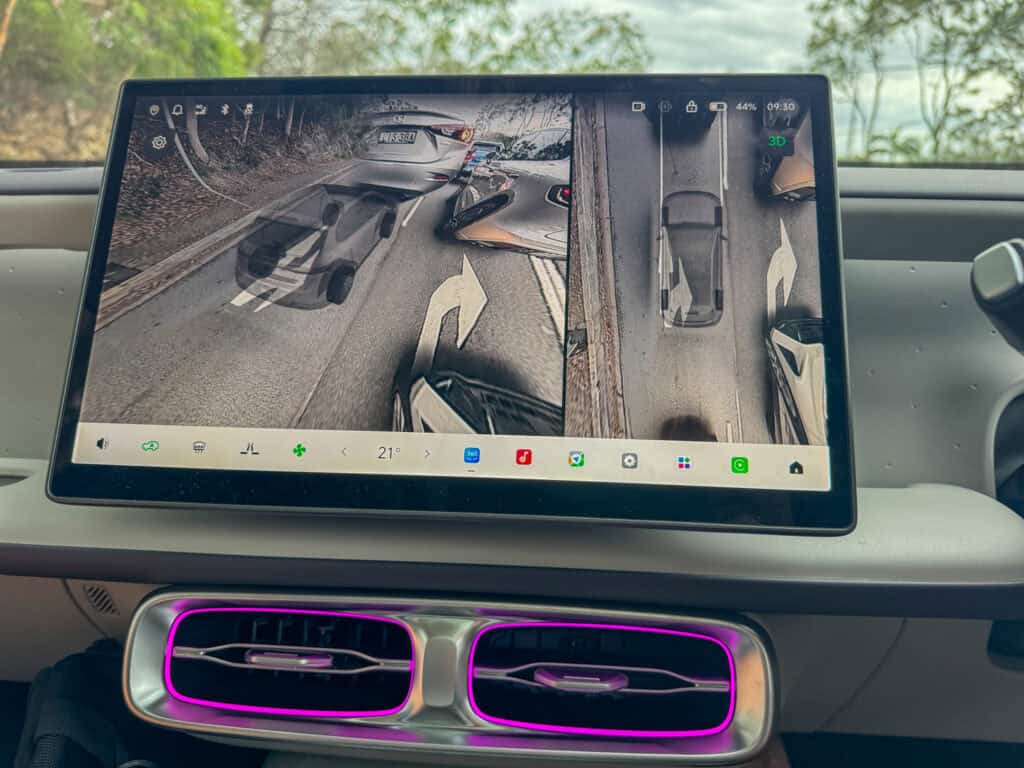
That means simple adjustments can sometimes require multiple taps through menus, which isn’t always ideal while driving.
There’s also a swipe-down shortcut menu accessed from the top of the screen. This reveals additional controls and quick settings, which helps a bit once you get used to the layout.
Along the bottom of the screen are the main menu buttons, allowing access to different functions like vehicle settings and system controls. It’s a fairly typical layout for newer Chinese EVs, and while it packs in plenty of functionality, it does require a bit of familiarisation.
In front of the driver is a slim digital instrument cluster that shows the essentials – speed, battery state of charge and remaining range.
It’s a simple setup overall, but even after two days I was wishing for some plain old buttons.
Day 3: Space and interior design
Loading up for some kid wrangling demonstrated that the Leapmotor B10 has ample cabin space.
Even by small SUV standards, it feels quite open and airy inside, helped by the large glass area and the panoramic roof.
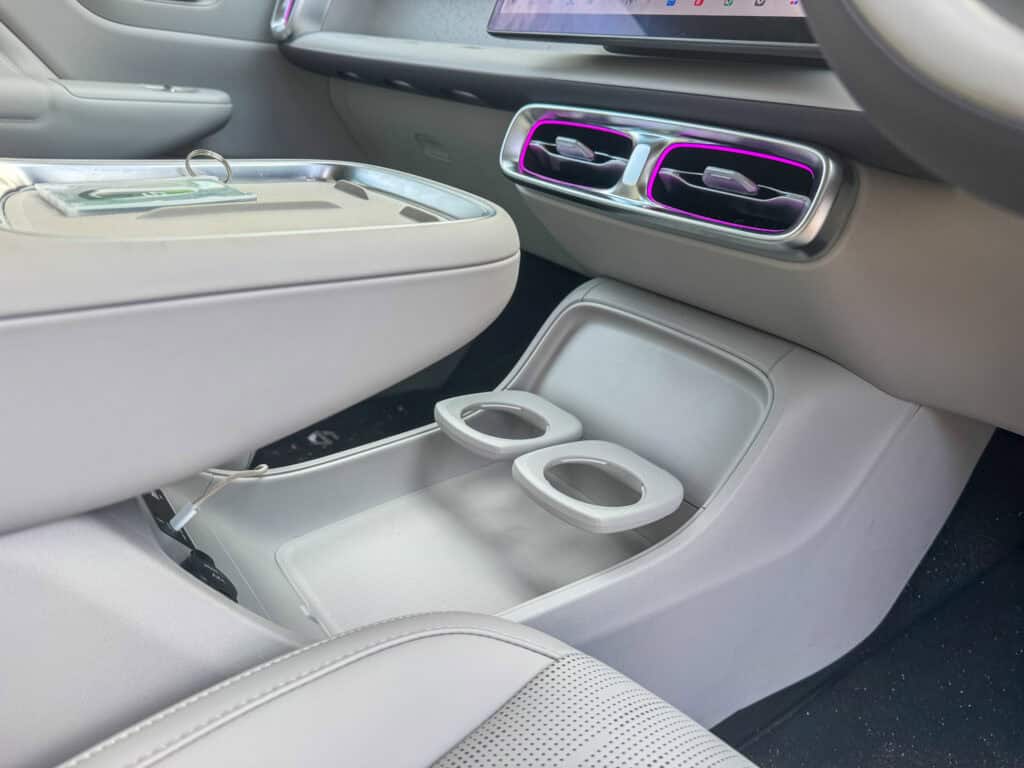
The centre console uses a floating design, which creates a storage area underneath for things like phones and small items. Above that are cupholders and a central storage box with an armrest.
That armrest does have a bit of a downside, though. Lean on it and it tends to creak, which takes a little shine off the sense of quality evident elsewhere.
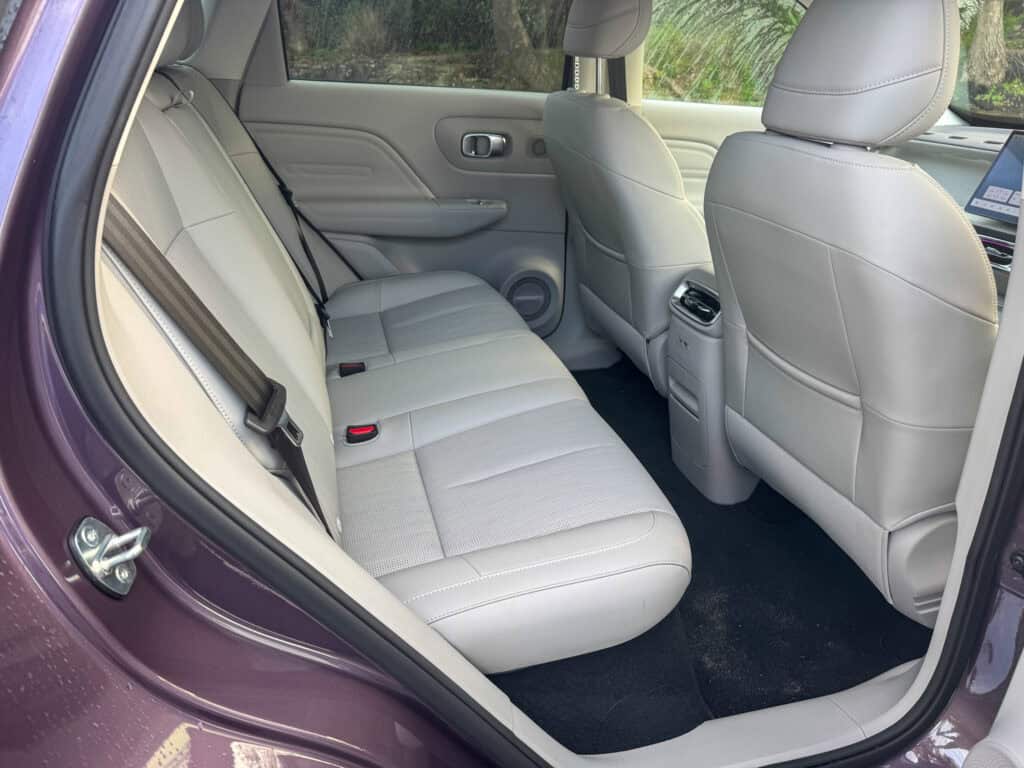
Rear seat space is solid for the segment, with enough room for adults to sit comfortably for shorter trips.
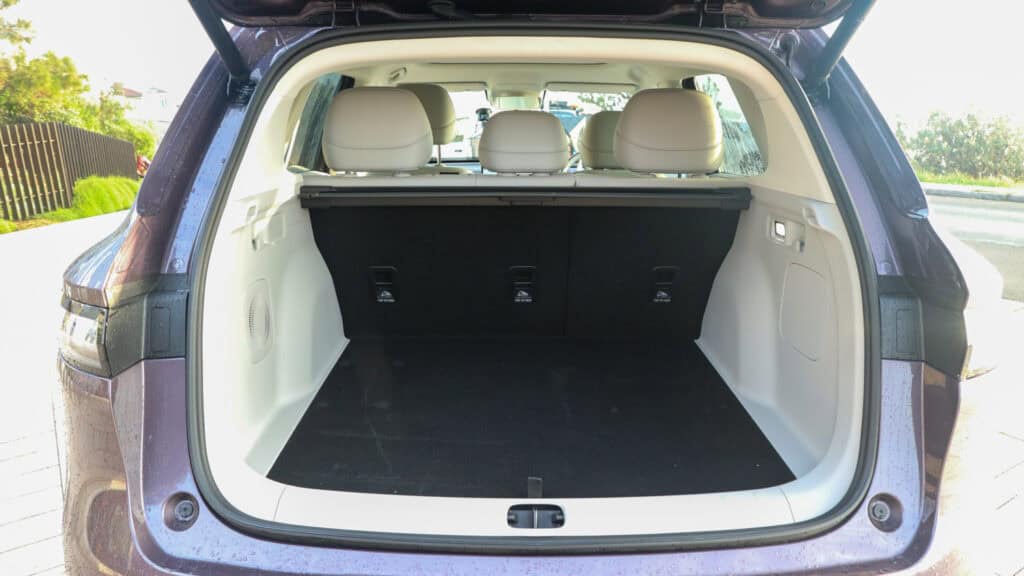
Out the back, the boot is reasonably practical. The floor sits a little higher than you might expect, but there’s a hidden compartment underneath that’s handy for keeping valuables out of sight. A luggage cover is also part of the deal.
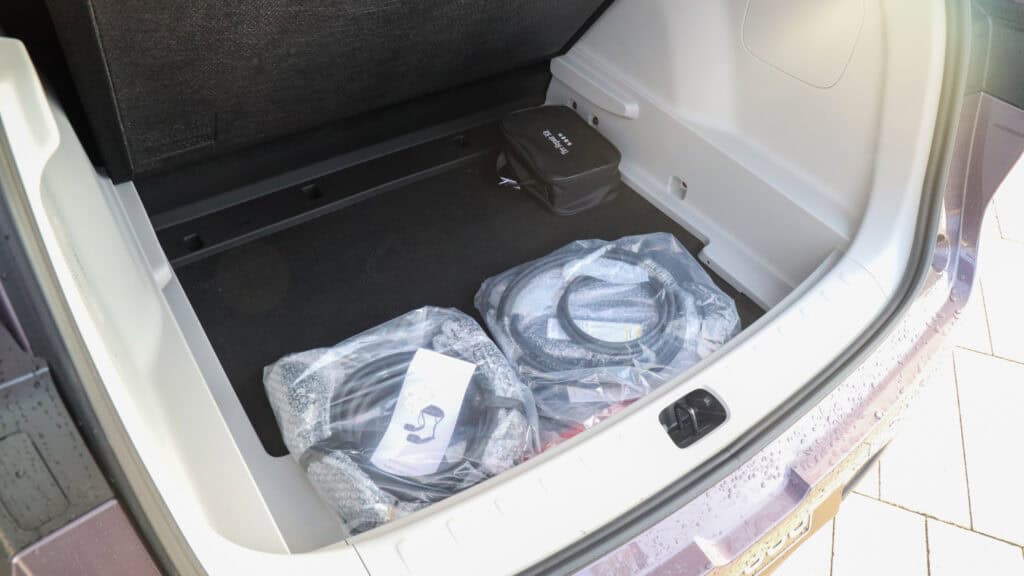
Upfront, there’s no frunk; the space under the bonnet is occupied by electrical hardware instead.
Day 4: More time behind the wheel
The Leapmotor B10 has a single electric motor that makes 160kW and 240Nm.
Those numbers are on par with similarly-priced EVs – and impressively it sends its drive to the rear wheels, which is relatively unusual in this part of the market.
It gives the car a slightly different character compared with the many front-wheel-drive electric SUVs out there.
And it more confidently gets the power to the ground when accelerating out of tight corners or intersections.
Performance is lively enough for everyday driving. Acceleration feels snappy around town and it has no trouble keeping up with traffic.
You can choose between Comfort, Standard and Sport acceleration modes, along with three levels of regenerative braking: Weak, Medium and Strong. Steering weight can also be adjusted between Comfort, Standard and Sport.
One small frustration is that every time the car starts, it defaults back to Comfort acceleration and Strong regenerative braking (I found Weak regen, Sport steering and Standard acceleration to be the best fit). If you prefer different settings, you’ll be changing them every time you jump aboard.
Comfort steering also feels extremely light, with very little feedback through the wheel. Switching to Sport gives it a bit more weight and feels more natural.
At steady speeds around 60-70km/h, the throttle can feel a little sensitive. Small inputs sometimes result in slight surging or “nodding” as the power delivery transitions.
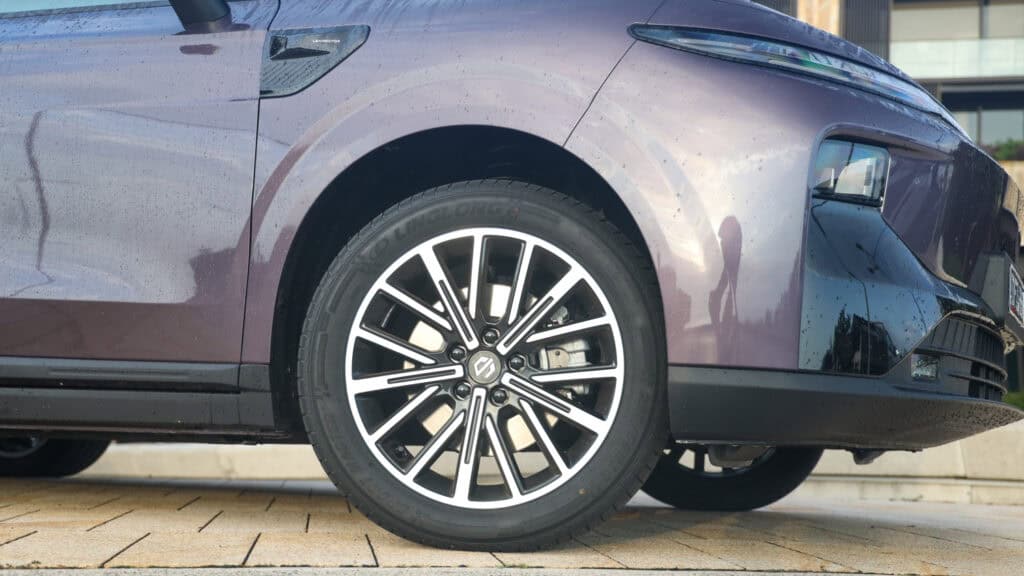
Grip in wet conditions is another area that could improve; the Linglong tyres fitted to the test car can struggle for traction, occasionally triggering the stability control under acceleration.
Day 5: How far will it go?
Efficiency is one of the B10’s stronger points.
Our Long Range model uses a 67.1kWh battery, and over the course of the week it proved to be impressively economical in real-world driving.
Energy consumption generally sat around 12-13kWh per 100km, which is a solid result for a small electric SUV.
Based on our experience, the real-world driving range looks to land somewhere around 380km on a full charge, with the possibility of pushing closer to 400km depending on driving conditions.
The car can display its remaining range in two different ways: Standard or Dynamic.
Standard mode simply calculates range based on the official figure and remaining battery percentage. Leapmotor isn’t alone in such a basic calculation, which is borderline useless.
Dynamic mode is the one you want because it adjusts the remaining range estimate based on how you’ve actually been driving.
After switching to Dynamic mode, the range estimate became noticeably more accurate, making it much easier to judge how far the car could realistically travel.
Charging performance is OK, but not exactly a standout.
The B10 supports DC fast charging at up to 100kW, allowing a 30-80 per cent charge in roughly half an hour under ideal conditions.
AC charging is handled by an onboard charger rated at 11kW.
Day 6: Taking it on the highway
A longer highway run is always a good way to see how a car behaves outside city driving, and that was the task today.
Acceleration for overtaking is strong enough, and the car settles into freeway speeds without much fuss. It feels stable at 100-110km/h and generally rides in a relaxed, comfortable manner.
Where it does show a few rough edges is in the driver assistance systems.
Like a number of newer Chinese vehicles, the B10 can be overly enthusiastic with its alerts. Speed limit warnings, in particular, tend to trigger frequent beeps, which can become intrusive on longer drives.
The lane-centring system also feels slightly aggressive at times, occasionally applying stronger steering inputs than expected when keeping the car within its lane.
On the plus side, once cruising, the B10 proves to be a reasonably comfortable long-distance companion, and the drivetrain has no trouble maintaining highway speeds.
Day 7: Farewell to a small SUV with some hidden surprises
After a week with the Leapmotor B10, it’s clear this small electric SUV has plenty going for it, particularly when you consider the price.
There are also some welcome surprises, such as the playful rear-drive dynamics and cool cabin with its assortment of ambient lighting.
Starting from less than $40K, it offers a lot of equipment and a fairly modern EV package for the money.
The cabin presentation is solid, space is respectable for the segment, and efficiency is genuinely impressive.
Rear-wheel drive is also a nice touch in a segment dominated by front-wheel-drive setups.
That said, it’s not perfect. The infotainment system can be a little menu-heavy and the driver assistance alerts can be overly eager. The tyres are also not great in the wet.
Still, for buyers stepping into their first electric SUV the B10 is worthy of consideraiton.
Of course, some buyers may hesitate about the brand itself.
Leapmotor is still new and relatively unkmown, although the might of an automotive giant behind it gives some confidence.
SCORE: 3.5/5
Leapmotor B10 Design Long Range price and specifications
Price: $37,888 plus on-road costs
Basics: EV, 5 seats, 5 doors, SUV, RWD
Range: 434km (WLTP)
Battery capacity: 67.1kWh
Battery warranty: 8 years/160,000km
Energy consumption: 14.1kWh/100km
Motors: 1 rear 160kW/240Nm
AC charging: 11kW, Type 2 plug
DC charging: 100kW, CCS combo plug type
0-100km/h: 8.0 seconds (claimed)