2026 BYD Sealion 8 Premium PHEV Seven-Day Review: The family car to build our dreams?
It’s the first seven-seater from BYD, this Sealion 8 plug-in hybrid.
A busy playground indeed, as we Aussies are rather partial to a three-row large SUV.
Our family – Mum, Dad and “treasures” in the shape of a 14- and 11-year old – lived with the $70,990-plus-charges Sealion 8 in loaded Premium trim and with claimed (optimistic) 152km EV range. Cheaper Dynamic FWD ($56,990) and Dynamic AWD ($63,990) versions are also offered.
Chinese plug-in rivals include the Jaecoo J8 SHS Summit ($59,990) and Chery Tiggo 9 SHS (from $52,990), while the Omoda 9 SHS ($61,990) is offered for those who need just five seats.
There are numerous plug-in large SUVs on sale, but many lack a third row, like a Skoda Kodiaq PHEV for example.
A key rival which does offer seating for seven is the Kia Sorento PHEV, which starts from $71,190, but our BYD mugs the Korean for EV-only range.
Day 1: Getting to know the Sealion 8
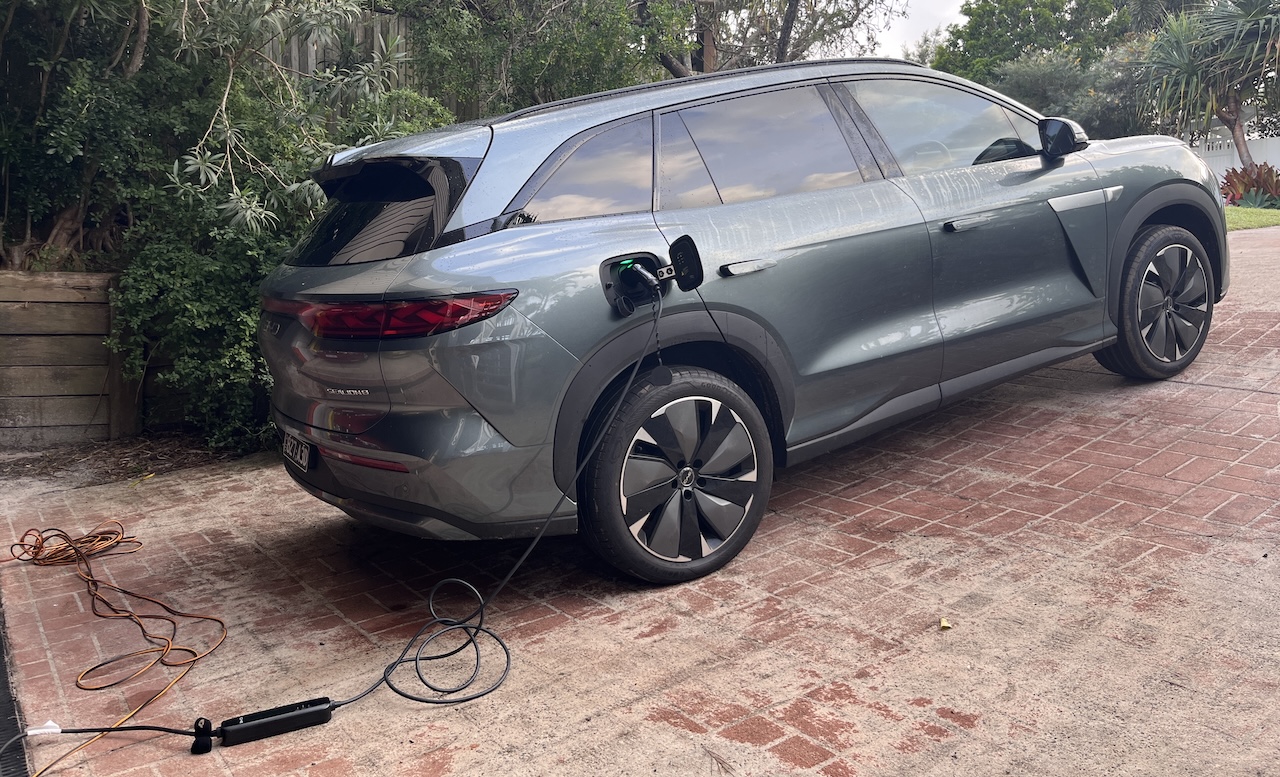
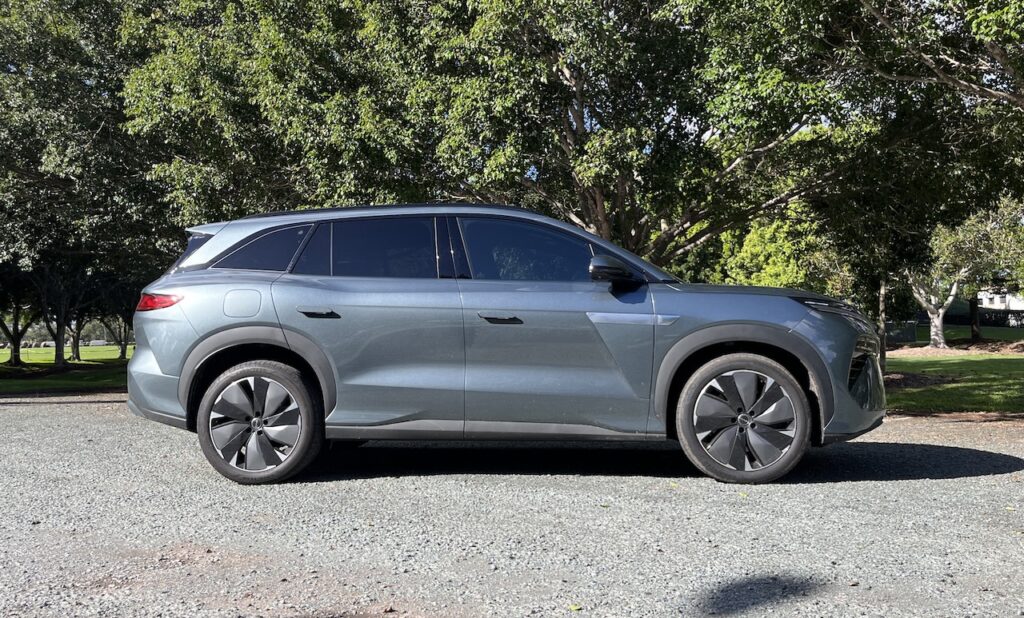
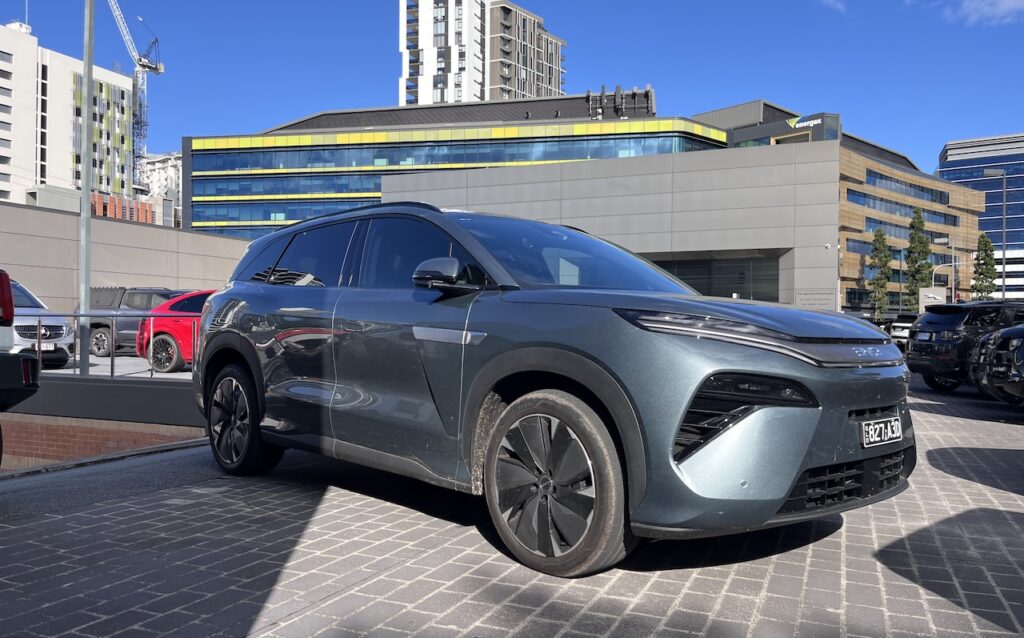
Perhaps it’s the grey paint, or just the generic styling, but our Sealion 8’s hardly a Range Rover Velar in the looks stakes. It’s not unpleasant, has chunky proportions and quite sexy rear lights, but is somewhat forgettable.
READ MORE: BYD Sealion 8 PHEV priced from $56,990: First seven-seat SUV from Chinese giant undercuts most rivals
READ MORE: 2025 BYD Sealion 8 Premium Review: It’s super-fast and handles like a sports car. Does a seven-seat family SUV really need to behave this way?
READ MORE: Plug-in BYD Sealion 8 arrives to conquer large seven-seat segment as Chinese brand aims to pinch sales from Mazda CX-80, Kia Sorento
The cabin’s got game though. Seriously vast and looking fairly plush, it’s here the BYD starts justifying that $70+ tag.
But we get off to a bad start.
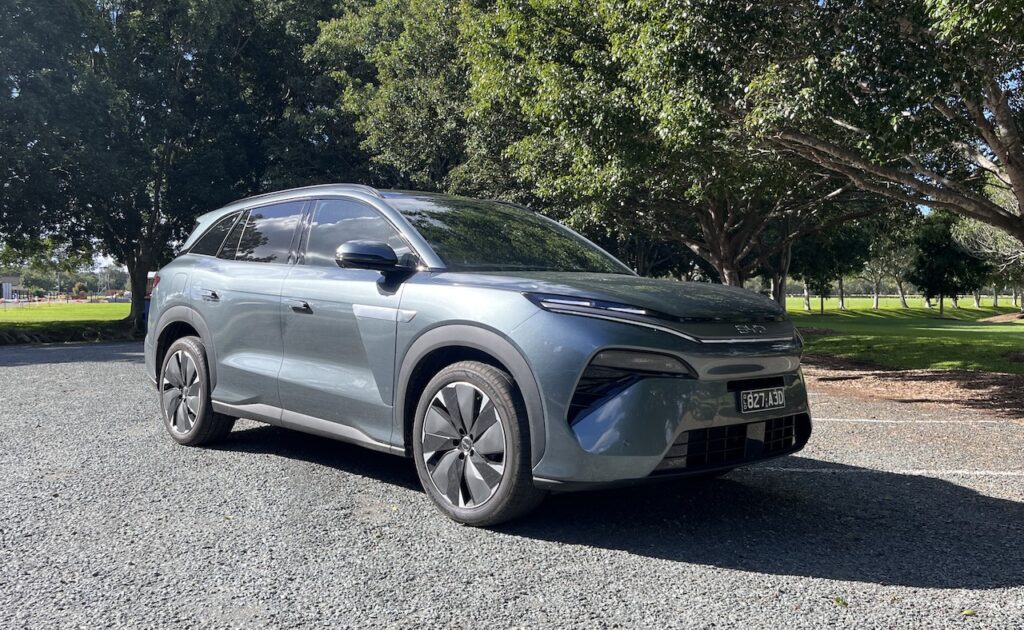
The front doors are rather massive, and when opening, their top edge extends out a long way. I’ll absolutely blame user error here, but the door top is exactly at my eye level, and with it jutting out more than I was expecting, and it being dark and raining, I smacked myself in the eye glasses, cutting open my nose.
My fault. But dammit BYD, that’s not the best first impression, mate.
I sit really high, even at the lowest seat setting. My wife loves this – Queen of the Road and all that – but it reminds this Sealion 8 is a large unit in length and height.
On start-up the car plays a loud and rather obnoxious Chinese-like tune, which is almost ceremonial. It’s not terrible, but it’s too noisy and goes on too long if you’re not in the mood for a pre-drive serenade. I’ll dive into the many menus to switch that off, thanks.
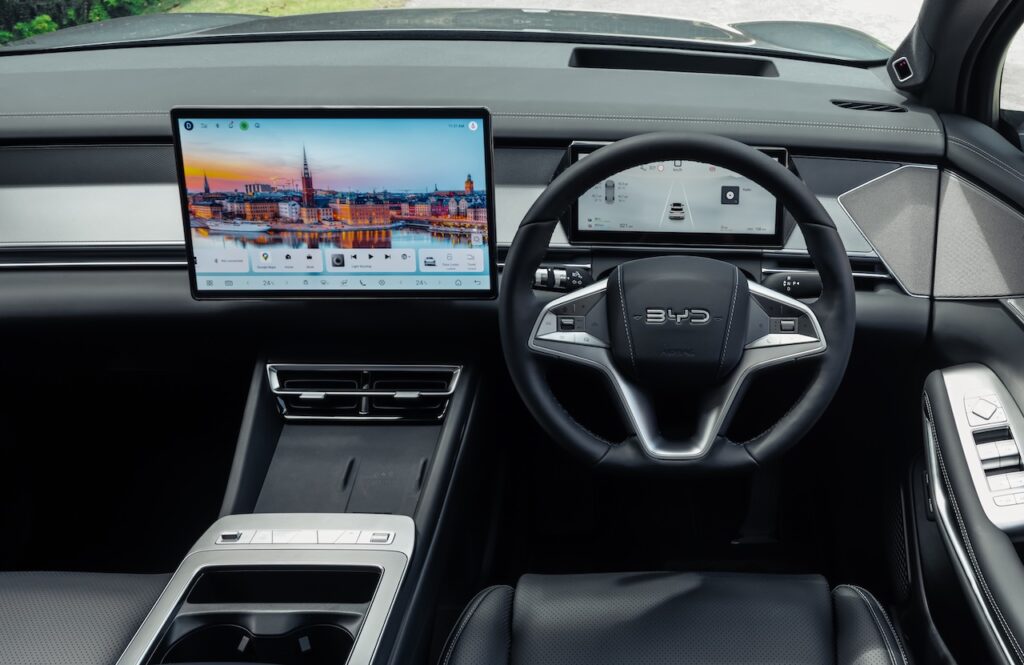
Hop in the cabin and there’s not the wow nor plush theatre found in old-school large SUVs from the likes of BMW, Benz or Audi. The Sealion 8 suggests Tech Bro influence in its rather cold minimalism, with the two dash screens and no proper knobs or buttons to clutter the centre console.
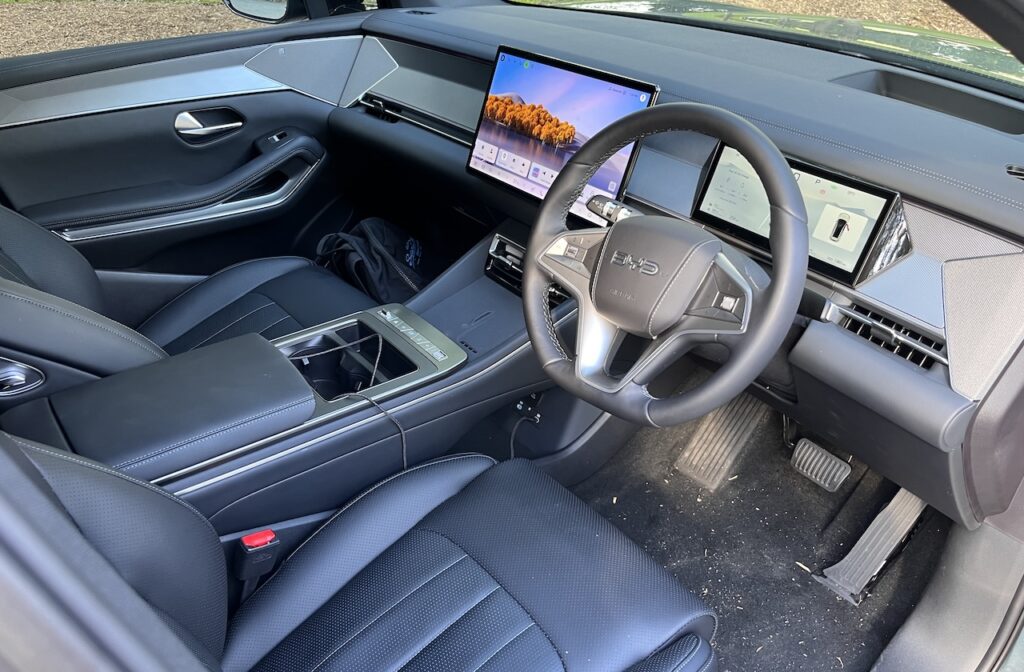
All climate through the screen is a faff, but I’ve definitely tested worse. A prod at the bottom of the monitor adjusts temperature, then a different prod to do fan speed. You’ll never convince me dials and knobs aren’t better.
With a column-mount gear changer there’s massive space for a pair of wireless smartphone chargers (50W), and ample room for drinks up top, then your snacks and clutter in a storage area under the centre console. Good wins.
Day 2: Shutting up Nanny
Before actually getting to the drive experience, the BYD’s nannying driver assist awakens like a dawn chorus for each journey.
The speed limit warning makes the occasional mistake, mis-reading road signs. So the warning beeps begin. That adds to the strict lane keep beep, and the stricter driver attention beep.
The lane keep or lane centring assist can be quite sharp in how it knocks you back into lane, spoiling the otherwise fluid and smooth drive.
It’s all rather tiresome, so into the ADAS (driver assist) menu we must dive.
One menu turns off the lane keep and speed limit, but then I must divert to a different one to get to “cabin perception” to remove the spying driver assist. The whole process should be easier: a simple one-button-all-off on the steering wheel please, BYD.
Each drive, therefore, starts with frustration in sorting all this. Or worse, forgetting to do it before heading off, then pulling over to deal with it a kilometre down the road.
Day 3: On the Road
Good grief this thing’s got some beans. I guess a turbo 1.5-litre petrol backed by a brace of 200kW electric motors (one on each axle) will do that. Hitting 100km/h in a breath under five seconds is as brilliant as it is unnecessary.
I check the specs. It weighs 2580kg, before we climb on board. That acceleration figure looks even more perplexing.
Running in hybrid mode through town and on the highway, the car indicates 4.9L/100km economy from the petrol engine and 4.9kWh/100km the electric.
The car suggests this is equivalent to 6.3L/100km next to a combustion car. Impressive for a large SUV, but nothing a conventional petrol hybrid or a turbo-diesel can’t achieve.
Letting the 8 work in hybrid mode, any shift between petrol and electric is imperceptible. It’s impressively smooth and very much in the background. Only when I stomp on the throttle does the 1.5-litre petrol go all shouty.
Good job, too. The four-cylinder petrol’s used to charge the battery and turn the wheels when asked, so it’s rarely dormant for long.
The infotainment, meanwhile, is top notch. Audio’s by DiSound, and there’s no shortage of impact from the 21-speakers on board.
The centre screen’s huge at 15.6-inches, and unlike some Chinese offerings, when running CarPlay/Android Auto (wireless or wired are available here) you can easily dim the screen at night, or it does so automatically.
You may think this is of little significance, but trust me. If you’re on a dark road and there’s the equivalent of a widescreen TV in your dashboard pumping out solar rays levels of brightness, you really want that dimmer switch.
Day 4: Cabin appreciation
Unlike other Sealion 8 grades, this Premium gets the true moo leather and there’s solid quality to the chairs.
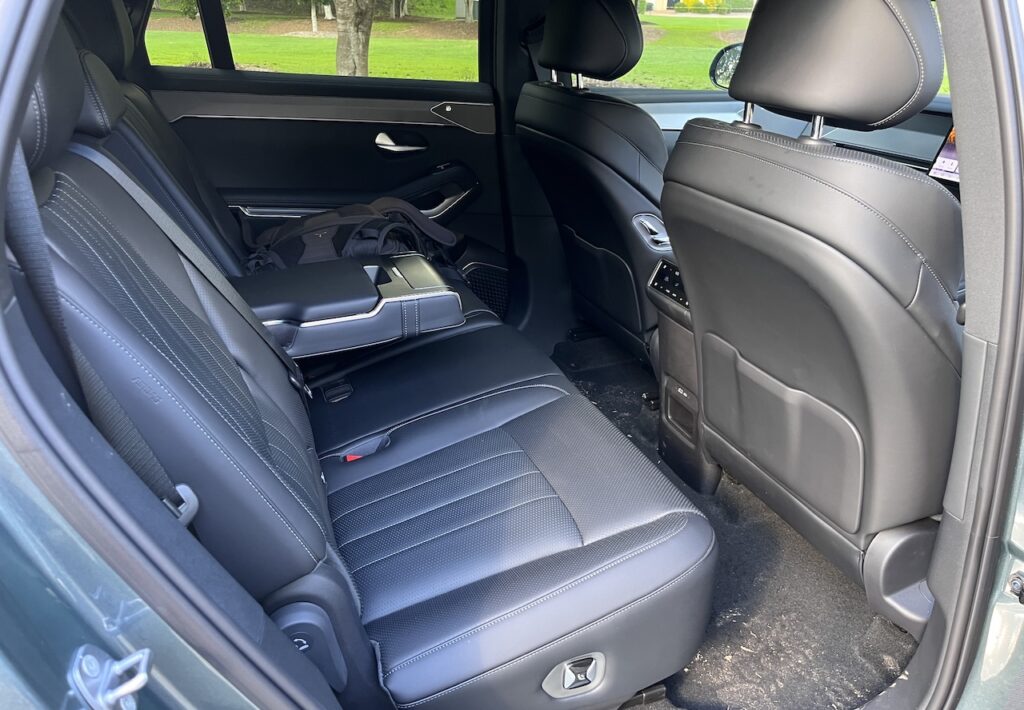
Seats are loaded, too. Heated, ventilated, massage and multi-way power adjust up front, while even the kids’ middle row seats will warm, cool, massage and recline.
Throw in a moonroof, which covers the second row seats too, it was little wonder our kids had trouble getting back into their cloth seat VW Golf after a week of BYD business class.
But there’s only manual control for the steering wheel adjust … feels stingy in this top grade.
The third row seats are okay, but not cavernous. Small kids will be fine, but it’s not really a comfy adult space. Get a Kia Carnival if you want mega third row room while retaining a mighty boot.
But fair play to BYD here. The two rearmost seats have ISOFIX points and airbags extended all the way back. This is far from a given in many seven-seaters.
The middle row seats slide on runners, adding to the practicality. And you’ll need these seats forward if you’re lumbered in the third row, otherwise leg room’s a big challenge.
With all chairs in place there’s 270L boot room to play with, which is enough for the kids to chuck in their schoolbags and basic sports kit. The charge cable, if kept in there, eats into space, sadly.
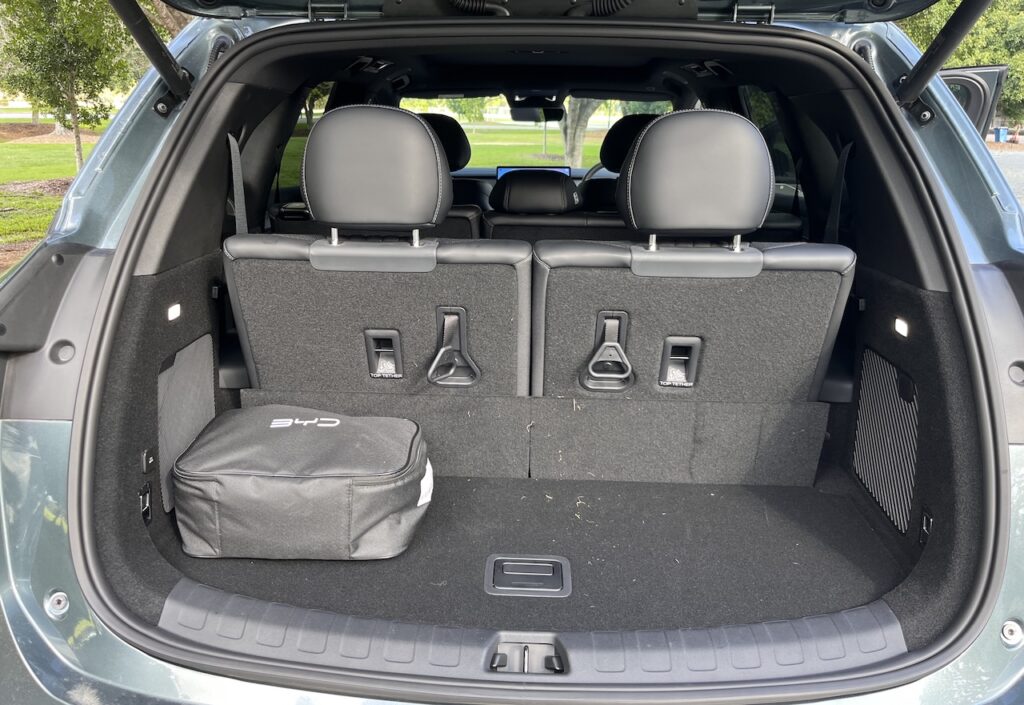
With rear chairs folded there’s a chunky 960L offered (1960L as a two-seater), but as expected in a PHEV large SUV, there’s no spare wheel under the boot floor. Boo.
Day 5: Road trip
With the arrival of the weekend, we’re able to head out on a lengthier adventure.
It’s a plush car to pilot, but it certainly feels heavy. I don’t love the in-town drive experience overall: the suspension feels jittery and fussy, despite BYD’s “Intelligent Damping Suspension”, while the steering feels truly artificial and overly-light.
It’s perfectly serene on the open road however, and through sharper corners or roundabouts, it handles well with plenty of grip, even in the wet. Joyful? No. It still feels lumbering and hardly set up for those favouring a dynamic drive.
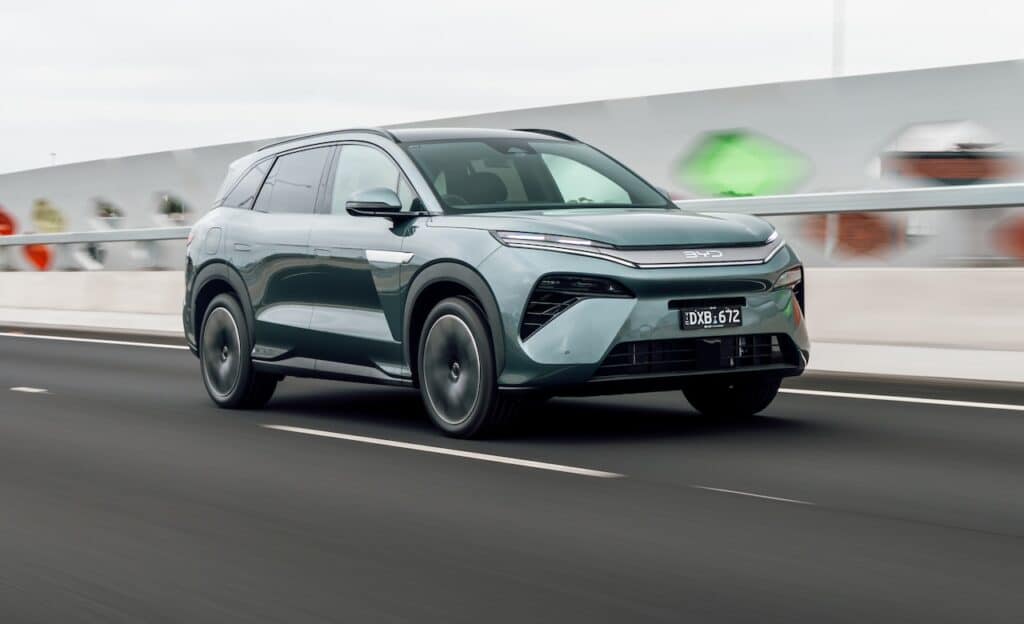
I plump for EV-only mode in town, and it’s a zippy SUV considering its bulk. There’s not daftly ludicrous acceleration (why would you for a family SUV?), but when asked, our Sealion 8 still puts on a surge show without turning a crankshaft.
I’m encouraged by the utility of our SUV, too. The Vehicle-to-Load (V2L) function’s there – it should be with every new EV or PHEV I reckon – while a 2000kg towing capacity’s almost on par with many other monocoque large SUVs.
What’s become more apparent as I’ve driven on a greater range of roads is the road noise at speed.
I thought I was being fussy, but having spent a bit of time earlier the same day in my old BMW 5 Series sedan, the Sealion 8’s cabin isn’t as serene a place as the German four-door. Nowhere near, actually.
Day 6: On charge
Pretty sizeable battery for a plug-in, so on family road trips you’ll be grateful for public DC charging capability (at 40kW max) here.
But for me, the point of PHEVs is you should be home-charging to always top up – zero hassle with a garage or off-street driveway – so it becomes second nature.
I use AC charging from my garage’s domestic socket now the battery’s dipped under 20 per cent life.
With 18 per cent remaining in the 35.6kWh Blade battery, the screen readout gives the confronting news it’ll take 37 hours to reach full. It’s also telling me it’s charging at a woeful 0.8kW rate. Oops. Should have done this sooner.
With 11kW charging potential, I’d absolutely fit a home wallbox (reckon on about $2000 fitted) to improve the charging time.
After 18 hours on the slow charge, it shows 85 per cent the next morning before heading off on the work commute. That’s still well over 100km of electric only driving, which is bloody magnificent.
I do a test over 40km – in the city and then highway – to test how accurate BYD’s 152km full electric range claim is. We drop almost 50km in range over that 40km, so 115km total would seem more likely by my reckoning. But of course it’d do better if I stayed strictly to urban use.
Day 7: Farewell BYD, you’re not bad
Not bad, and certainly roomy, with long range and stuffed with fancy features. But we’ve not quite bonded. There’s like, but no love.
You just seem a dash expensive, my Sealion friend. You drive with competence but not with finesse, and I’d love your cabin to have a few proper buttons to make you feel more user-friendly.
And you cut my nose. Although that was me being a klutz.
The Jaecoo and Chery seven-seat PHEVs are a fair bit cheaper and do similar things still with decent spec, and I feel PHEV-hunting families will lean towards them at roughly $10k less to purchase.
Those seeking a more competent drive experience, or perhaps Chinese brand rejectors (they exist) will spend similar to get the Kia Sorento PHEV, even if the Korean has roughly half the BYD’s electric range.
The Sealion 8 is a car BYD absolutely should have in its range, but is hasn’t blown me away in the same way the game-changer BYD Shark 6 PHEV managed.
Pick the lesser Sealion 8 trims if you can do away with some of the more over-the-top luxe, and things make a lot more sense.
SCORE: 3/5
BYD Sealion 8 Premium PHEV price and specifications
Price: $70,990 plus on-road costs
Basics: PHEV, 7 seats, 5 doors, SUV, AWD
EV Range: 152km (NEDC)
Range: 1017km (WLTP)
Battery capacity: 35.6kWh LFP
Battery warranty: Eight-years/160,000km
Energy consumption: 19.9kWh/100km (ADR)
Fuel consumption: 1.0L/100km (ADR) *SOC above 25%, 6.3L/100km *SOC below 25%
Powertrain: 1.5-litre turbocharged four-cylinder petrol engine; 110kW/220Nm
Motors: 1 front 200kW/315Nm, 1 rear 200kW/360Nm
Combined output: 359kW/675Nm
AC charging: 11kW, Type 2 plug
DC charging: 40kW, CCS2
0-100km/h: 4.9 seconds