GWM Tank 400 Hi4-Z PHEV Brief Drive: Torque monster Denza B5 rival likely for Australia
Are you a numbers kinda person? If so, you’ll want to note the figures claimed by GWM for its Tank 400 Hi4-Z plug-in hybrid large SUV, which we briefly sampled in China.
The electric battery? That’s 59kWh. Yep, larger than you’ll find in many full EVs.
Electric-only range is a claimed 200km (WLTC), but with such massive Duracells on board, perhaps this five-metre long Chinese 4×4 PHEV could actually get close to a double ton.
READ MORE: GWM Tank 500 Ultra PHEV review: 4×4 gets dirty against rival Denza B5.
READ MORE: 2026 GWM Tank 300 Hi4-T PHEV Review: Taking the off-road fight to Denza, Toyota and Ford
READ MORE: Massive 4500kg braked towing from a PHEV for close to $100K! Tank 700 SUV could deliver that to Australia as soon as 2026
There’s more. A Tank 400 Hi4-Z – already in Chinese showrooms and a likely candidate for Australian sale soon – uses a 185kW 2.0-litre turbo-petrol four-cylinder; a 215kW electric motor powering the front axle, and 240kW electric motor for the rear axle.
Combined, GWM claims 635kW and a shape-shifting 1195Nm, meaning a mad dog 0-100km/h sprint of 4.3-seconds. With this big unit likely nudging three tonnes, that’s altogether mind-scrambling.
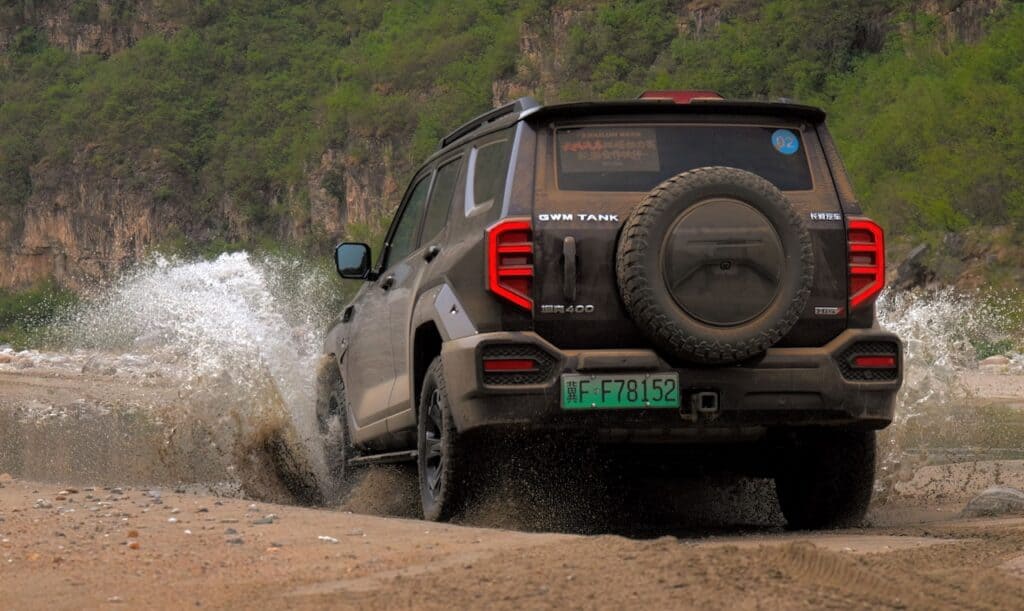
Other brow-raising numbers include an 800V electrical system and combined range of 1128km. A DC fast charge rate of 163kW is chunky for a PHEV.
The 400 Hi4-Z’s smarts are significant. The petrol engine can be used like a range extender to charge the centrally-mounted 59kWh battery, and those two rear wheels are only ever turned by electricity. Much like Denza’s B5 PHEV, this ladder-frame 4×4 does away with a mechanical linkage between front and rear axles: a lack of driveshaft is a boon for cabin packaging.
Unlike the Denza, the Hi4-Z has a three-speed transmission up front, plus a two-speed ratio in the rear.
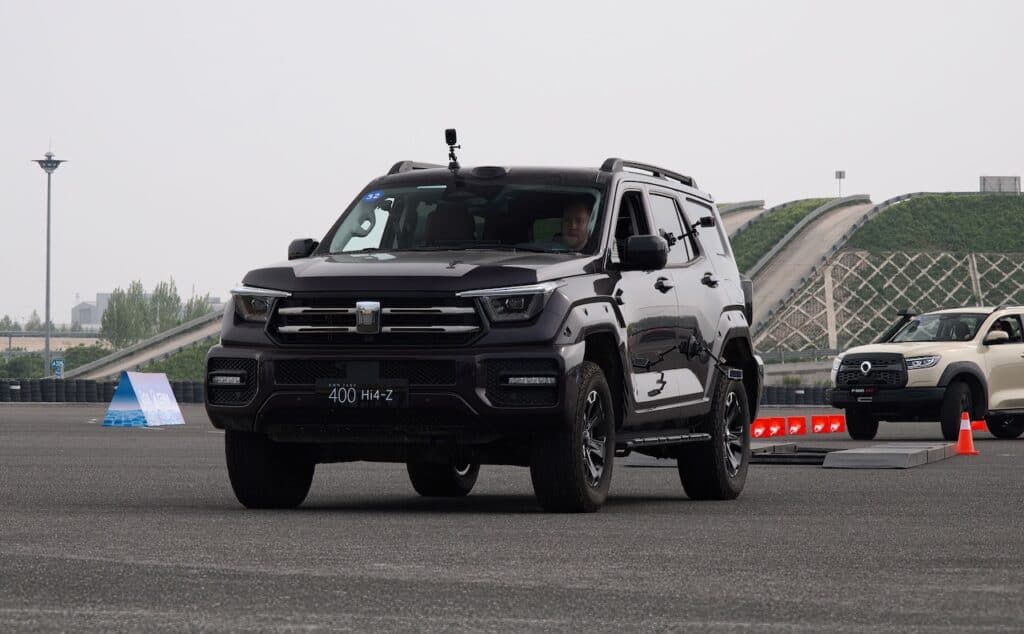
GWM calls the Hi4-Z system an “intelligent electric 4WD” which features low range, and front and rear locking differentials. The idea is these Hi4-Z setups are better suited to occasional off-roaders rather than the hardcore.
If and when the Tank 400 hits Australia, it could be offered with this compelling Hi4-Z setup, but also the more rugged Hi4-T system employed in GWM’s Cannon Alpha PHEV.
The latter has smart triple locking differentials able to send 100 per cent of drive to a single wheel for optimum traction, offer probable 3000-3500kg towing (a Hi4-Z would likely offer a lower 2500kg), but a smaller battery mounted under the boot floor. Choose which suits your needs, basically.
GWM could offer the Tank 400 solely as a Hi4-Z luxury PHEV with mega range, differentiating it from the more off-road suited Tank 300.
This would make sense to better separate the two, as Tanks 400 and 300 share body-on-frame platforms, and are roughly the same size, albeit the 400 has a 100mm longer wheelbase than the 300.
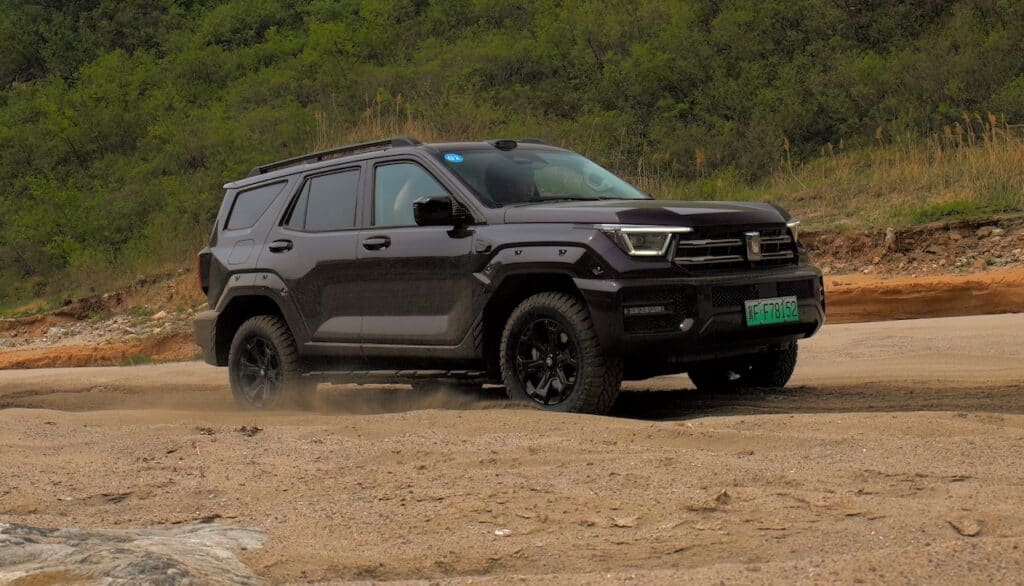
The 400 also has edgier styling next to the 300’s Jeep-like round headlight face, plus looks more sealed-road relevant with body-coloured wheel arches.
On our recent visit to China, GWM staff were keen for Australian journalists to focus on and briefly test the Tank 400, always a solid sign the vehicle’s destined for our shores.
The Tank 400’s main rival would be its stablemate 300, which starts from $50,000 drive-away for a basic petrol version, and $60,000 a plug-in hybrid.
Should the 400 PHEV land as a luxury alternative with sumptuous interior and that bonkers Hi4-Z drivetrain, a price closer to $70,000 would be likely.
That’d place it up against the Denza B5 plug in hybrid, which is $75,000. It’d be a Chinese alternative, perhaps, to the Jeep Grand Cherokee 4xe plug-in hybrid, which costs $77,760.
Hopping inside, our test Tank 400 has a more polished cabin compared to a Tank 300’s. Instead of the 300’s chunky centre gear shift, the 400 has a column shift and wide centre console able to handle a pair of smartphones on wireless charge pads.
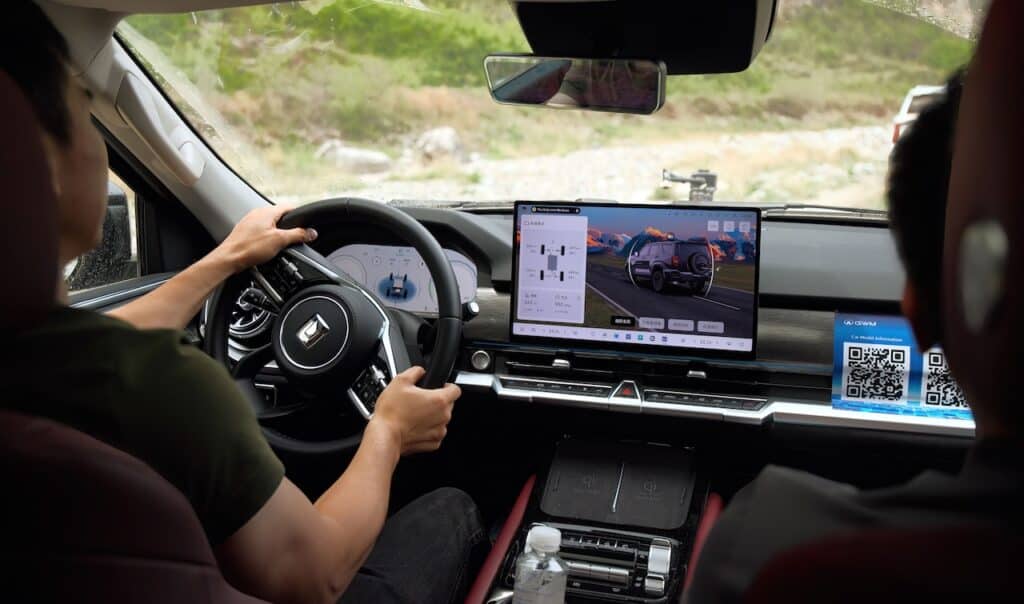
But GWM Australia sources suggest they’d lobby for our market’s Tank 400 to not have a column shift: off-roaders generally much prefer gear shift control in the centre.
A sticking point is the 400 large SUV lacking a third row of seats; unlike its Tank 500 big brother. Even with the Hi4-Z system freeing up better boot space, it appears no seven-seat Tank 400 is forthcoming, losing versatility points.
Our test car was flush with luxe, including power, heated, ventilated and massaging faux leather seats, giant 15.6-inch infotainment, 12.3-inch digital driver display, head-up display, refrigerator with heating mode and three-zone climate control.
Ours also had a 15.6-inch rear entertainment screen, which pops down from the roof. It’s impressive back-seat space with the deleted driveshaft giving a perfectly flat floor.
The cargo space is also more family-friendly in this Hi4-Z when compared to a 400 with Hi4-T drivetrain. GWM’s figures are a 789L boot, rising to 1803L with rear seats folded.
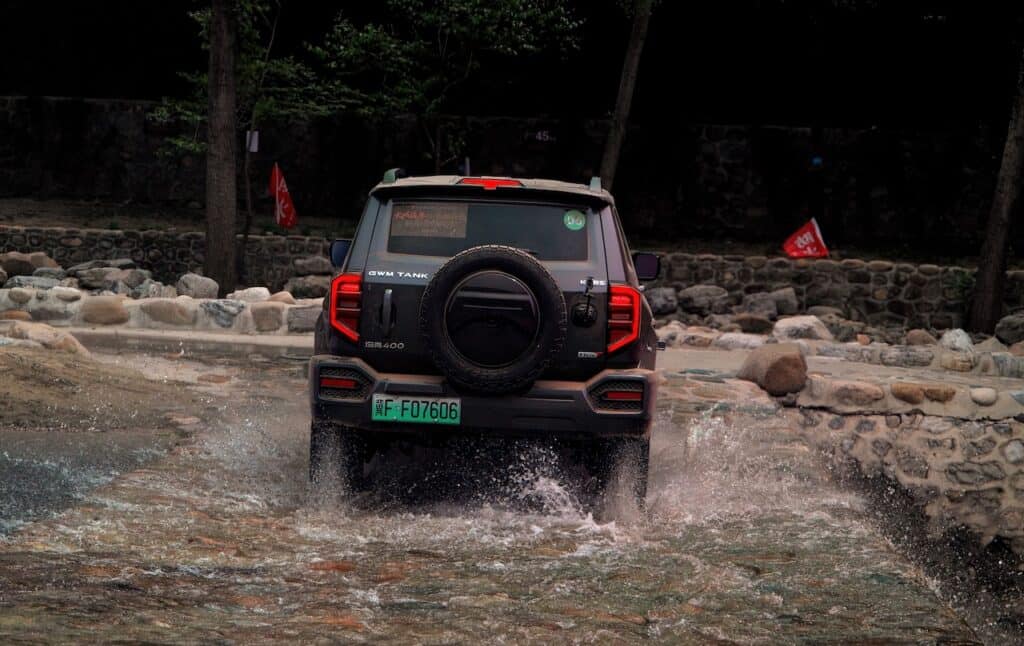
Test drives in China are comically short and controlled, so our drive review here is limited. We took the 400 Hi4-Z over some metal ramps and angles on a test ground (think large car park), and there were no nasty surprises. We left diff-locks off and after some wheelspin, the smarts soon took over and we continued on.
A (slightly) better test was on a sandy river bed, where we could at least stomp on the 400’s throttle. Much like the Denza B5, the 400 Hi4-Z doesn’t feel sportscar-fast, but the swift progress for such a lardy unit was admirable.
The 400’s steering feel was sub-par (too light and void of much feel), but GWM is doing its own Australia-specific ride, handling and steering tuning for Aussie-bound vehicles, so no doubt this would improve if the model’s locked in for us.
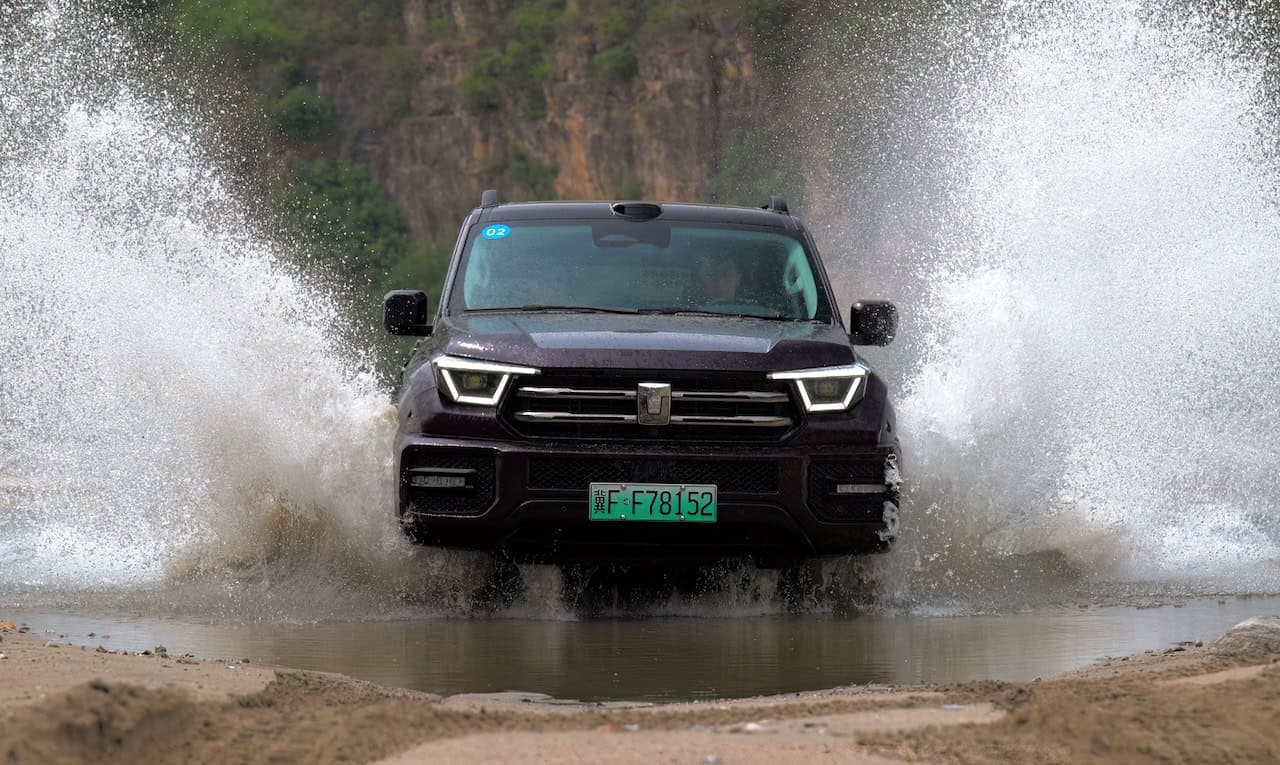
In low range we happily ploughed through some river crossings and in soft sand turns there was decent body control. A “professional” Chinese driver went into Sebastien Loeb mode while we passengered for a rocky road hill climb, but all this proved was how damn uncomfortable and crashy every vehicle is when you show little mechanical sympathy over giant bumps.
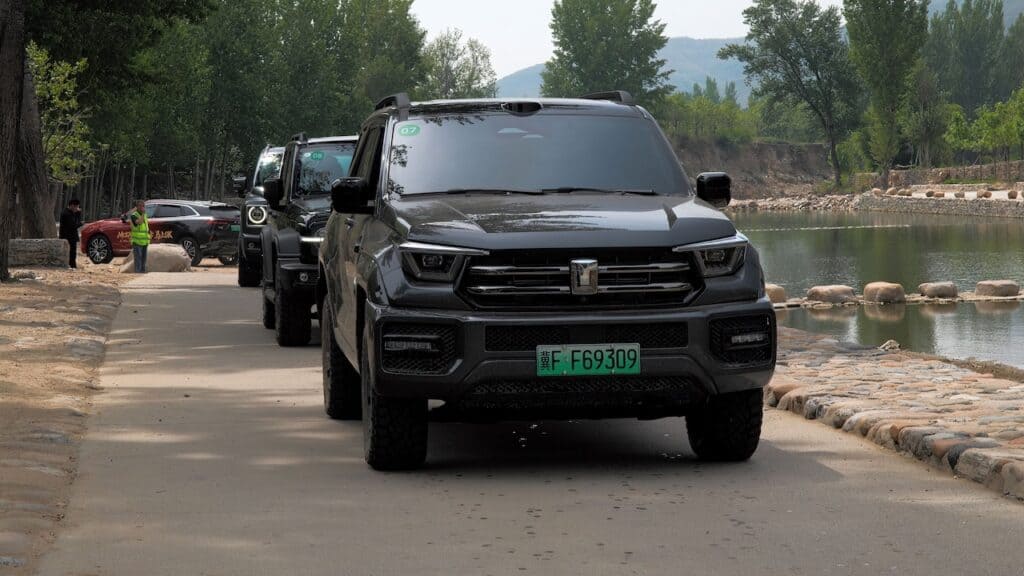
The Tank 400 Hi4-Z is aimed at luxury on-road travel with occasional heavy duty off-road or towing use, so it’s unfortunate we can’t (yet) report on how it’d perform here.
On paper the 400’s a compelling thing with headline-grabbing numbers, and the luxury level, spaciousness and overall desirability for your dollars is what we’ve come to expect from GWM.
Is there a case for it to somehow squeeze in between the Tank 300 and Tank 500? If GWM positions it as a luxury on-road PHEV with mega range then absolutely, and especially if this Hi4-Z can come in with a circa $70k price tag.
2026 Tank 400 Hi4-Z price and specifications
Price: $70,000 (estimate)
Basics: PHEV, 5 seats, 4 doors, SUV, 4WD
EV range: 200km (WLTC)
Battery capacity: 59kWh
Battery warranty: TBA
Energy consumption: TBA
Fuel use: TBA)
Drivetrain: 185kW 2.0-litre turbo-petrol four-cylinder, 215kW front motor, 240kW rear motor 3-speed transmission (front), 3-speed transmission (rear), 635kW/1195Nm claimed combined outputs
AC charging: TBA
DC charging: 163kW
0-100km/h: 4.3 secs