2026 GWM Tank 300 Hi4-T PHEV Review: Plug-in hybrid 4×4 takes the off-road fight to Denza, Toyota and Ford
Aussies are loving plug-in hybrid EVs right now in their heavy-duty off-roaders and utes.
So in some ways the 2026 GWM Tank 300 Hi4-T PHEV looks perfectly timed.
The ICE version has quickly carved out a niche as a sharply priced, no-nonsense off-roader with genuine bush credibility.
Now, with the arrival of the Hi4-T plug-in hybrid, the brand is adding a higher level of electrification to the rugged formula – complete with almost 100km of EV range.
READ MORE: 2026 GWM Tank 500 Ultra PHEV review: plug-in 4×4 gets dirty against rival Denza B5 and old-school Toyota Prado
READ MORE: GWM Tank 500 Ultra review: Is this the electrified 4×4 wagon that signals the end for Toyota’s dirty diesels?
READ MORE: Massive 4500kg braked towing from a PHEV for close to $100K! Tank 700 SUV could deliver that to Australia as soon as 2026
READ MORE: GWM Tank 300 plug-in: Full spec and technical details confirmed, including 115km EV range
The PHEV will eventually see the end of the regular hybrid in the Tank 300 line-up, although for now the Chinese car maker is offering four choices: petrol, diesel, hybrid and PHEV.

The thinking is simple: diesel and PHEV will cover the majority of buyer needs, whether that’s long-distance touring or short-range EV driving with off-road capability.
The question is whether the PHEV can justify its higher price while maintaining the Tank’s core appeal.
2026 GWM Tank 300 price and equipment
The GWM Tank 300 PHEV is available in two model grades: Lux and Ultra.
Unsurprisingly there’s a price premium over non rechargeable Tank models, with the Lux kicking off at $55,990 plus on-road costs and the Ultra at $59,990 plus costs.
That makes it $8000 pricier than the diesel model that some buyers will no doubt also consider.
Comparing the same spec level it’s also $3000 more expensive than the regular hybrid – and a full $10,000 more than the petrol-only model, which is only available as an Ultra.
Despite all that, it’s still Australia’s cheapest PHEV 4×4 serious off-roader.
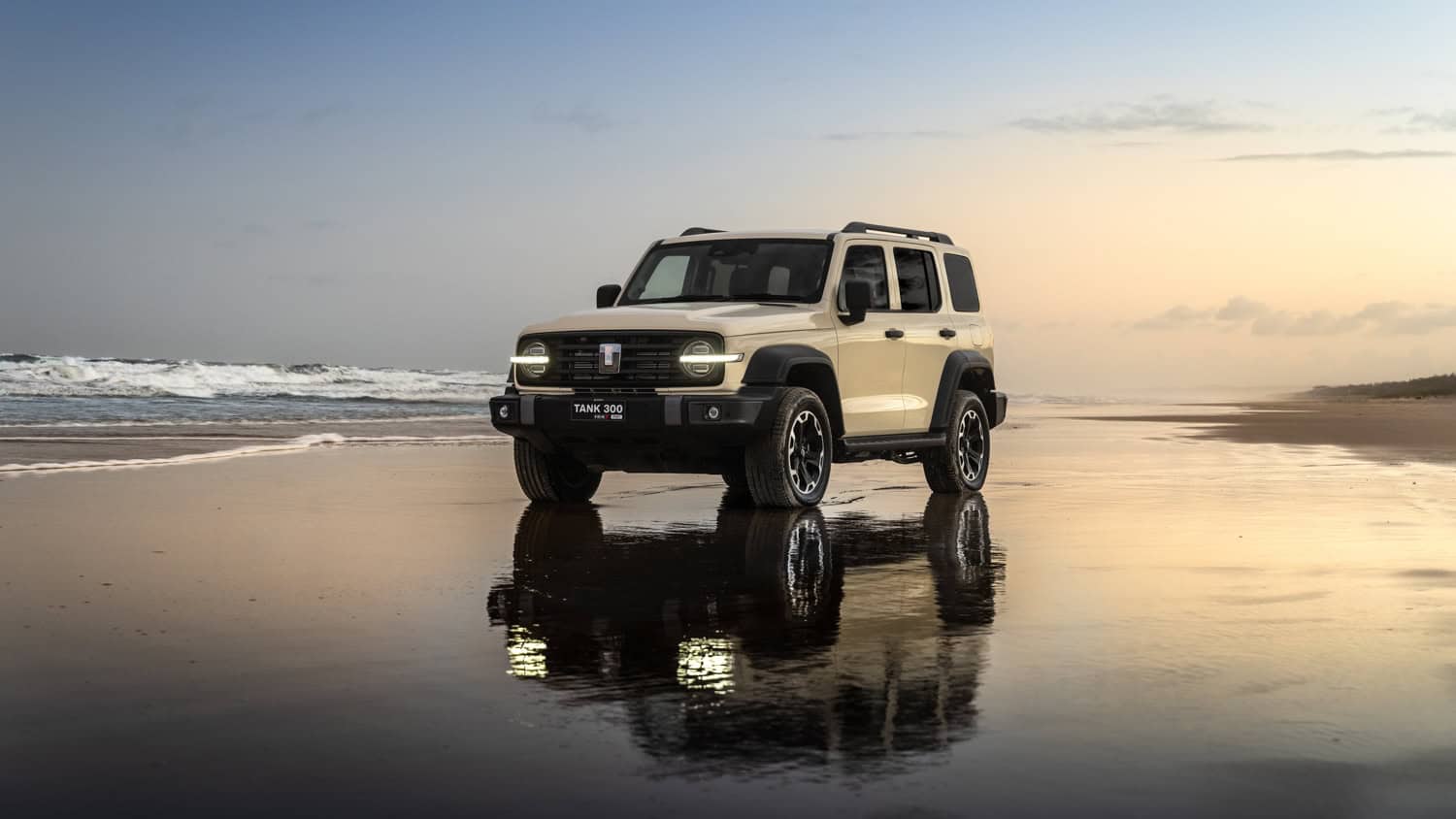
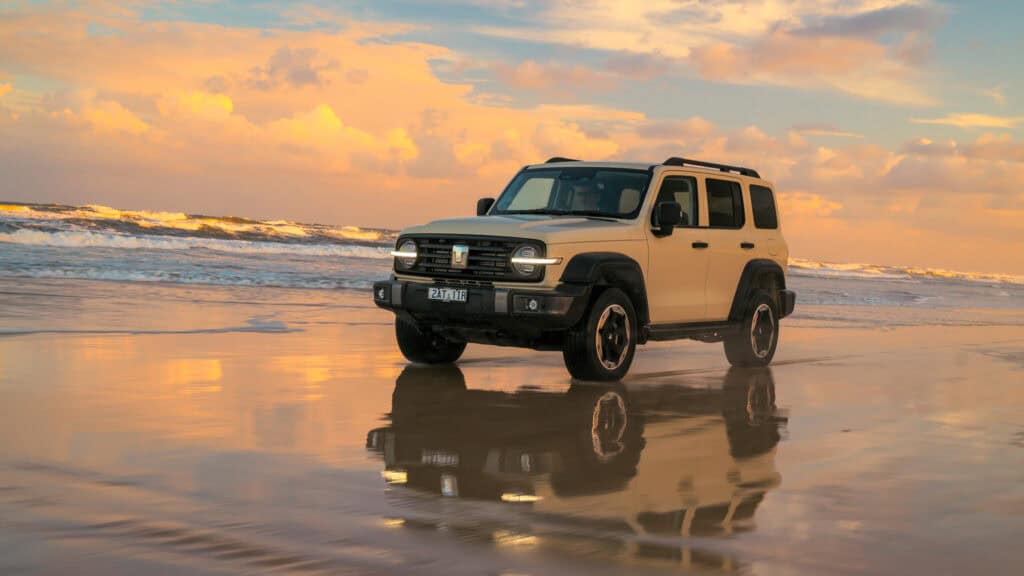
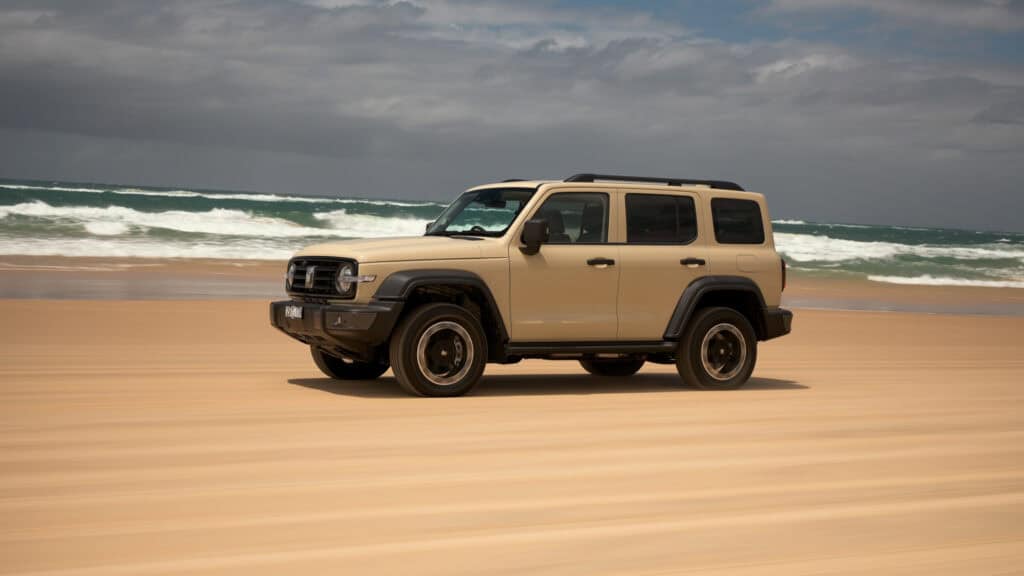
The PHEV also introduces a new colour to the range, Sundrift Sand, exclusive to electrified variants. It’s one of five premium colours that add $595 to the price (the only standard colour is grey).
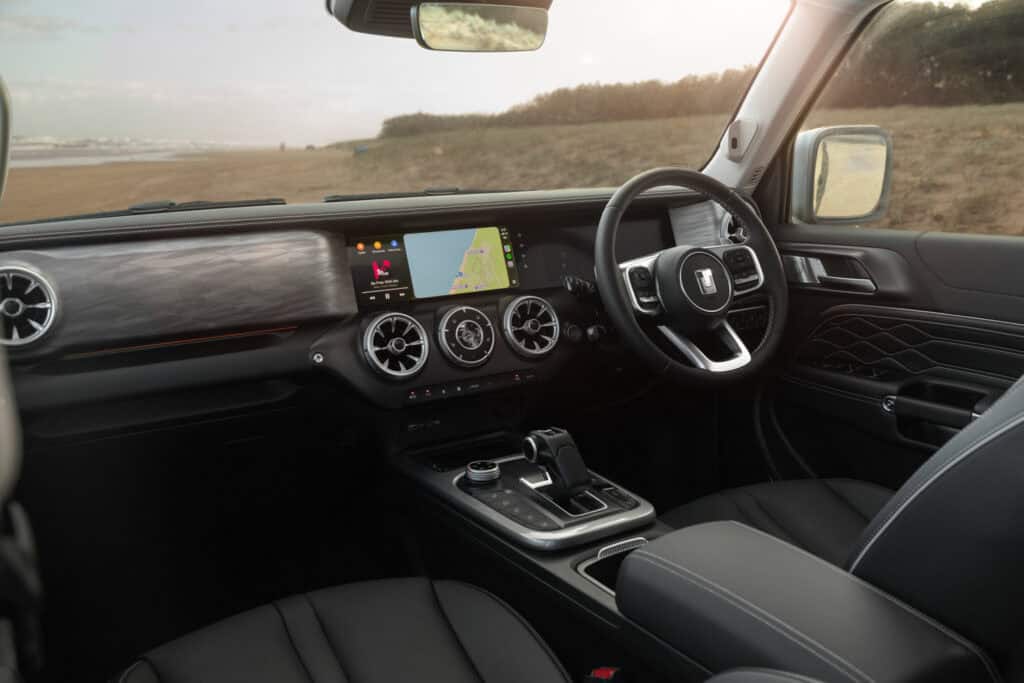
Standard equipment is generous, with dual 12.3-inch screens, wireless Apple CarPlay and Android Auto, adaptive cruise control, a 360-degree camera and a full suite of off-road hardware.
The Ultra adds niceties such as Nappa leather, 64-colour ambient lighting (the Lux allows you to choose between seven hues), a heated steering wheel, heated and cooled front seats and a massaging driver’s seat.
The Ultra also picks up more serious underbody protection and a front locking differential.
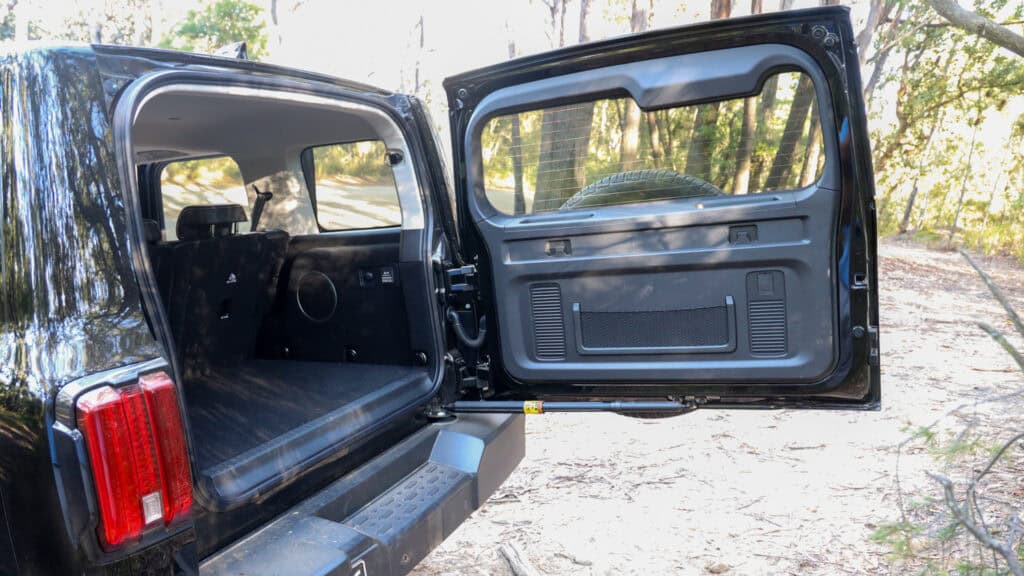
Both ride on 18-inch alloy wheels with a full-size spare wheel, but the Lux runs on Giti tyres while the Ultra upgrades to Michelin.
Impressively, each gets a full-size spare hanging off the swing-out tailgate.
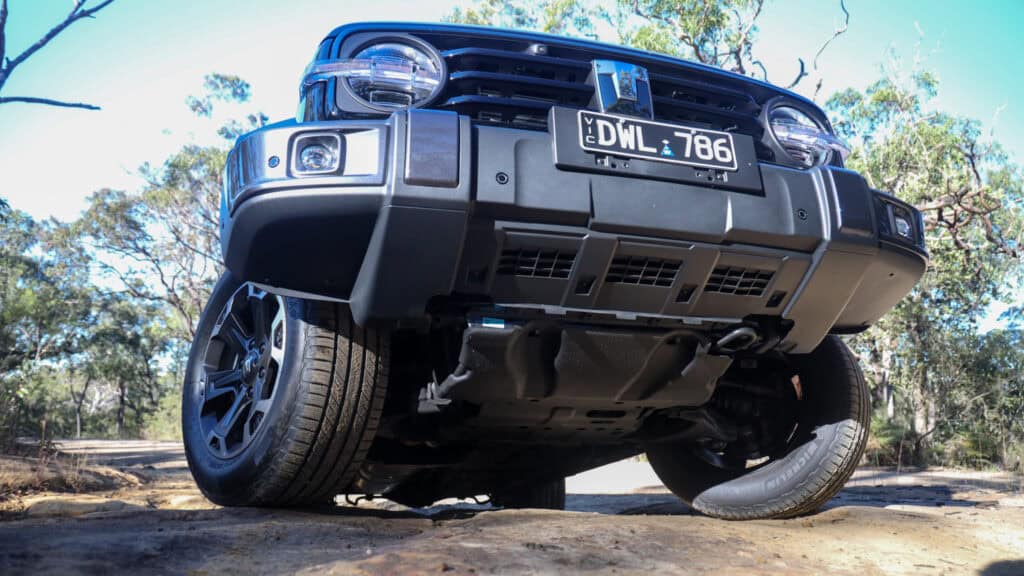
Of course, the big difference with the PHEV over regular Tank 300s is the plug-in hybrid system.
It uses the same 180kW/380Nm 2.0-litre four-cylinder turbo-petrol engine of the regular hybrid but gets a much bigger 37.1kWh battery.
The bigger battery provides a claimed 115km of EV-only driving range, albeit measured using the optimistic NEDC methodology.
It also powers a gruntier electric motor, making 120kW /400Nm.
GWM claims combined outputs of 300kW and 750Nm, although having the engine and motor produce their maximums at the same time seems odd (most hybrids don’t simply add the two outputs, as GWM has).
2026 GWM Tank 300: what we think
The GWM Tank 300 PHEV doesn’t forget one of the primary aims of the Tank line-up: off-road capability.
It’s fair to say it’s a proper off-roader first, electrified SUV second.
A clear rival is the more expensive Denza B5 starting at $74,990 plkus ORCs (which also has a plug-in hybrid system) but it’s also clearly sizing up vehicles such as the Toyota Prado and Ford Everest, both of which offer only diesel power.
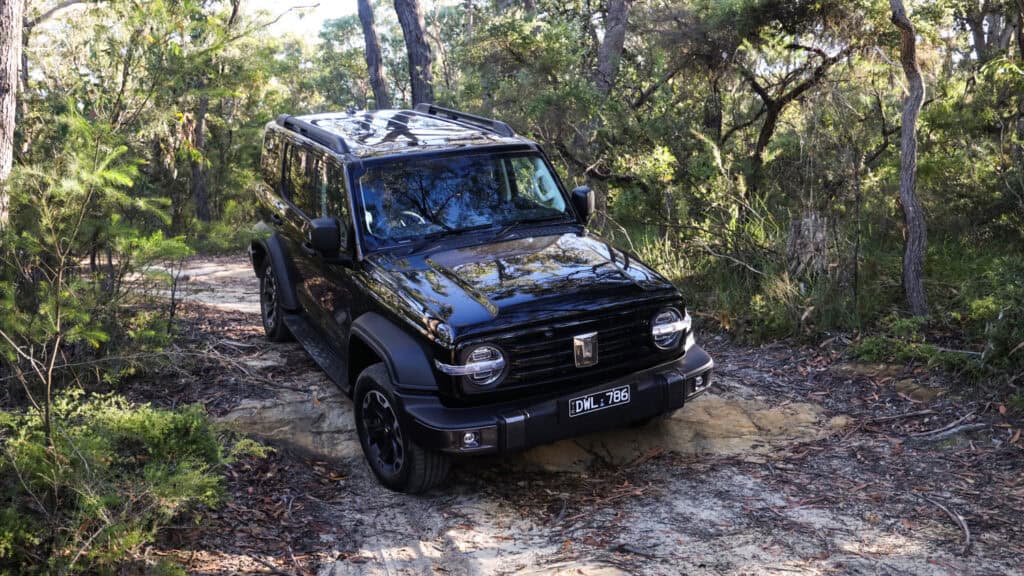
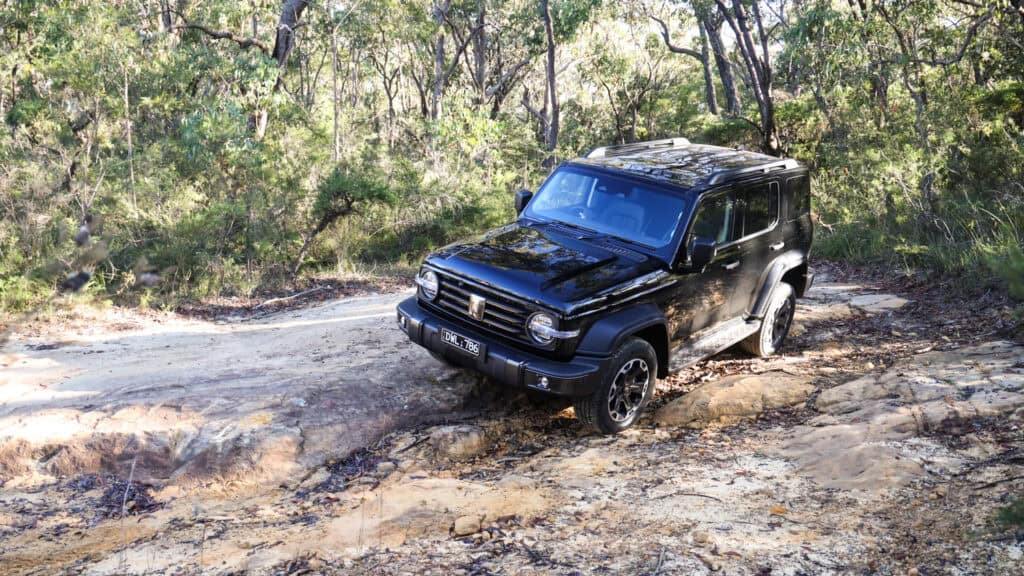
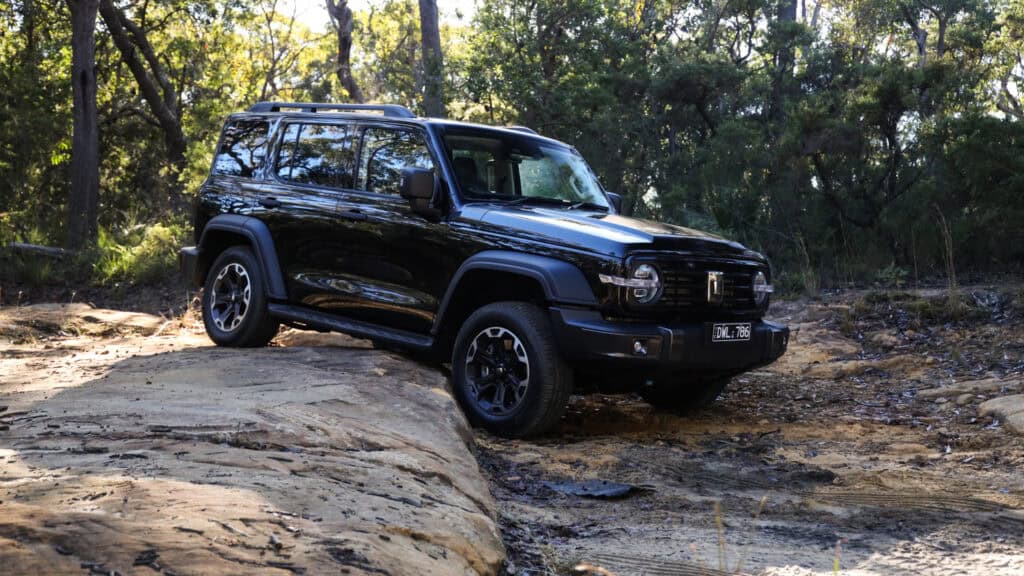
Underneath, the Tank 300 is traditional in its layout, retaining a ladder-frame chassis, live rear axle and a part-time four-wheel drive system with low range and locking differentials.
There’s 222mm of ground clearance, an approach angle of 32 degrees and a departure angle of 33 degrees. And it can wade through 700mm of water.
If you’re wondering about the significance of all that, all you need to know is those numbers are all thoroughly respectable when you venture beyond the black-top.
The electric motor and petrol engine drive through a nine-speed transmission.
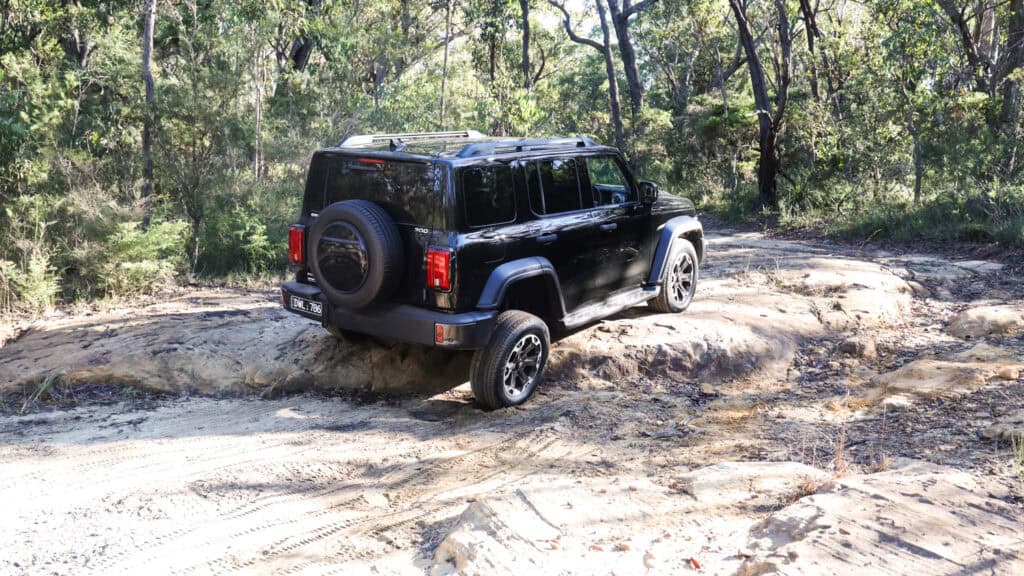
Beyond the everyday ease of bitumen it’s seriously capable off-road. The articulation, traction systems and low-speed control make it one of the more convincing off-roaders in this price bracket.
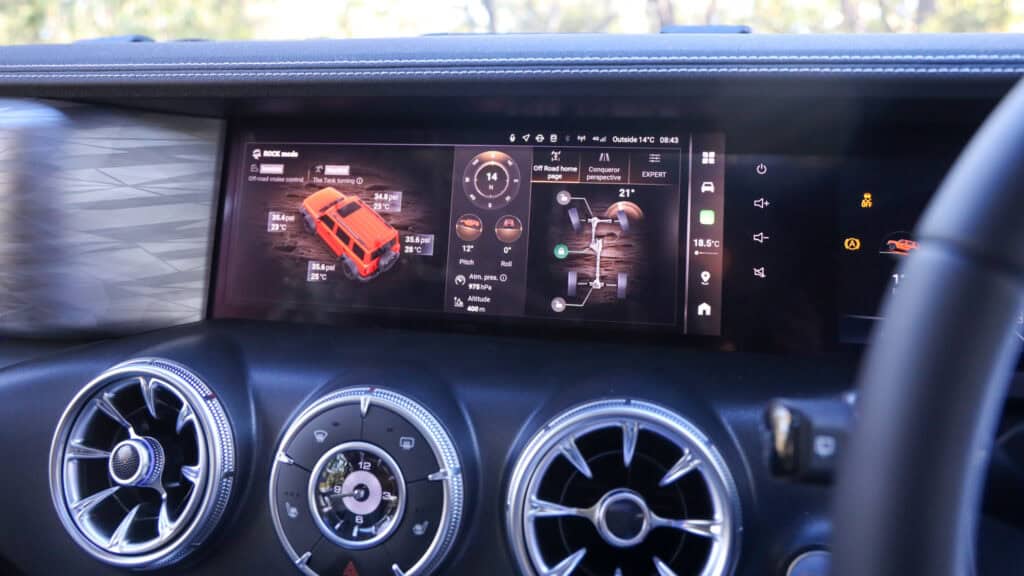
There are various drive modes – Rock. Snow, Mud/Sand, Mountain and Expert (to completely disable some electrical assist systems and allow driver selection of other parameters) – depending on the conditions.
We found the traction control wasn’t always well calibrated, spinning a hanging wheel without the electronics sufficiently sorting things out (that was in Mountain mode).
But lock a differential or two and the traction quickly ramps up.
The hybrid system and low range gearing helps.
Off-road it leans heavily on its petrol engine, something that aids with control and predictability.
And there’s no shortage of thrust.
Engine braking is also impressive, making for controlled descents.
Like a lot of old school four-wheel drives and some utes there’s a part-time 4×4 system.
That means it must be driven in 2H on-road, only engaging 4H or 4L off-road.
That’s because 4H and 4L lock the centre differential, aiding traction but creating issues in bitumen because it doesn’t allow for the speed difference between the front and rear wheels when turning.
That’s fine in the bush, but less ideal on wet bitumen or when towing – especially compared to rivals (admittedly more expensive) such as the Ford Everest and Toyota Prado, which offer full-time four-wheel drive.
The PHEV system itself is a mixed bag.

In EV mode, it can feel a little lethargic and occasionally inconsistent off the line, lacking that immediate response you expect from an electric drivetrain. Call for too much and it’ll fire up the petrol engine, too, whereas I’d prefer it to stay in EV mode.
Switch to hybrid mode and it sharpens and makes for punchier performance.
By off-roader standards it’s a feisty machine – claimed to hit 100km/h in 6.3 seconds – although its pulling power never felt like 750Nm.
The transition between petrol and electric power could also do with some refinement, occasionally hesitating as lots of 1s and 0s worked out what to do.
Our car also had some vibrations and grumbles; in low range it was particularly noticeably, shuddering away when stationary or just off idle.

That’s something GWM is actively working on, with local engineering input that included tweaks to the Tow mode for local conditions (something we haven’t sampled yet).
The suspension and steering are honest but basic due to the truck-like construction.
It confidently brushes away speed humps and potholes but lacks the tactility and agility of more car-focused SUVs.
Throw in an extra few hundred kilos of weight – the PHEV is a nuggety 2615kg – and it’s a car that reinforces its bulk on a pockmarked country road.
The V2L (vehicle-to-load) system provides up to 6kW of AC power, allowing the Tank to power everything from fridges and lights to cooking gear while camping.
There’s a built-in 220V outlet in the boot and an external adapter option via the charge port (only one operates at any time).
You can even use it with the car switched off, and a hold mode keeps battery charge at a pre-set level (between 30 and 80 per cent) for exactly this purpose. It’s one of the most practical features of the car.
Charging via a standard household socket will take roughly 16 hours for a full charge, while a wallbox drops that to about 6.5 hours; it makes a wallbox the most logical option to ensure you’re maximising the EV side of the drivetrain.
DC fast charging is supported at up to 50kW, enabling a 30-80 per cent charge in about 24 minutes .
But in reality, fast charging isn’t especially compelling here. With around 90km of real-world EV range and consumption of roughly 33kWh/100km, using public fast chargers can get expensive — potentially approaching $25 per 100km if you’re utilising the faster chargers.
Fuel consumption tells a similar story. The official 1.9L/100km figure is (as per all PHEVs) fanciful.
In real-world hybrid driving, we found it to hover way higher. Around town we could sneak it below 10L/100km whereas a run of freeway driving increased it above 12L/100k. That’s acceptable for a heavy off-roader, but nothing remarkable. Again, utilising EV mode and charging from home (with cheaper electricity) is the real appeal.
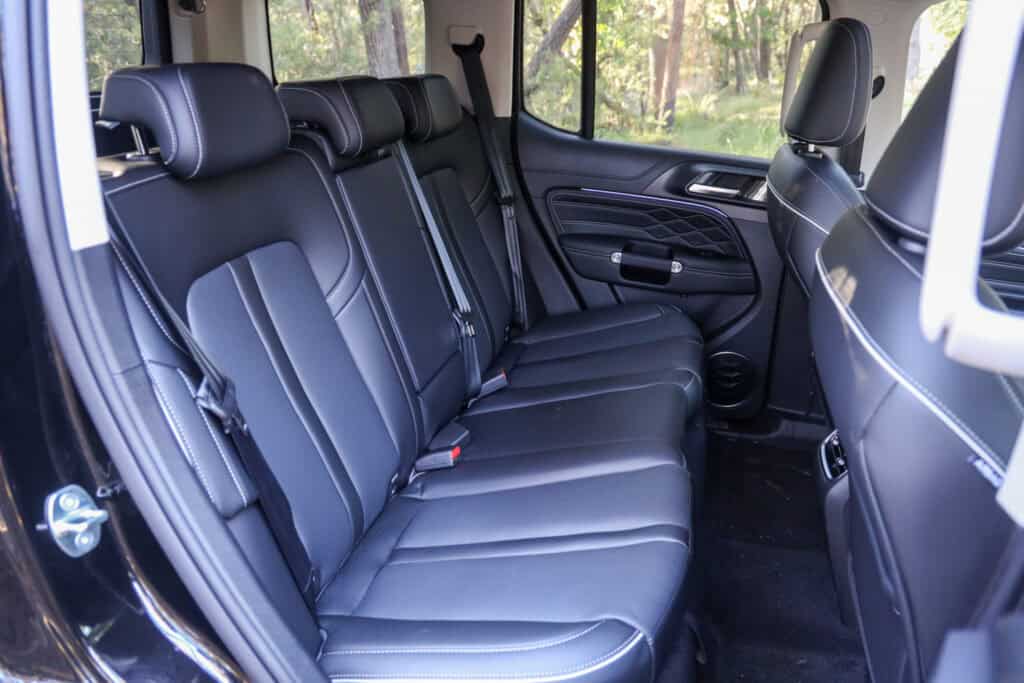
Inside, the Tank seats five people.
Space is OK without being exceptional, although the 610kg of payload is handy for a standard off-roader of this size.
IT can also tow up to 3000kg.
The cabin is nicely presented with some ambient lighting and silver-look splashes across the dash.
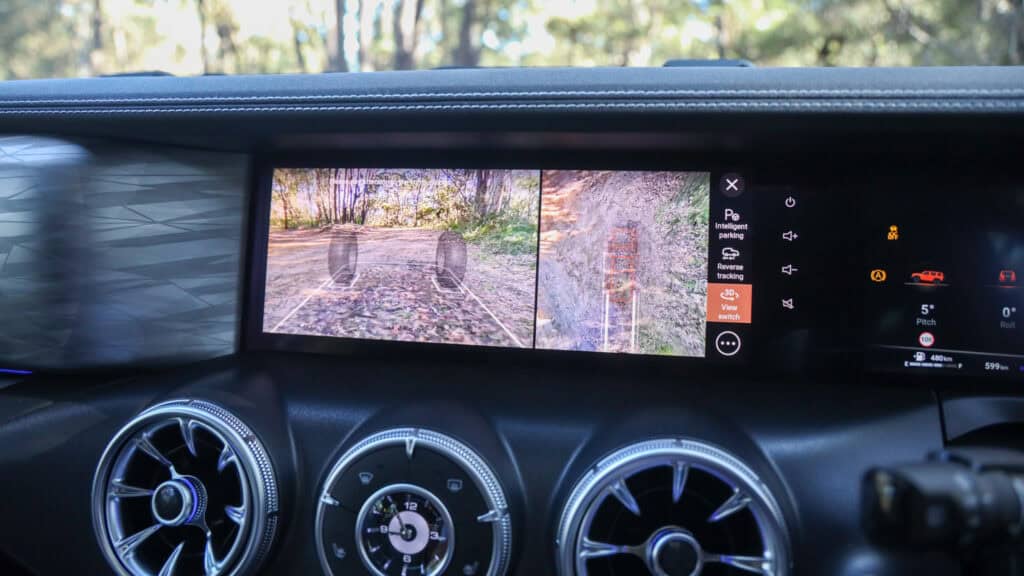
Materials are of an above-average quality, helping create an ambience above its price tag.
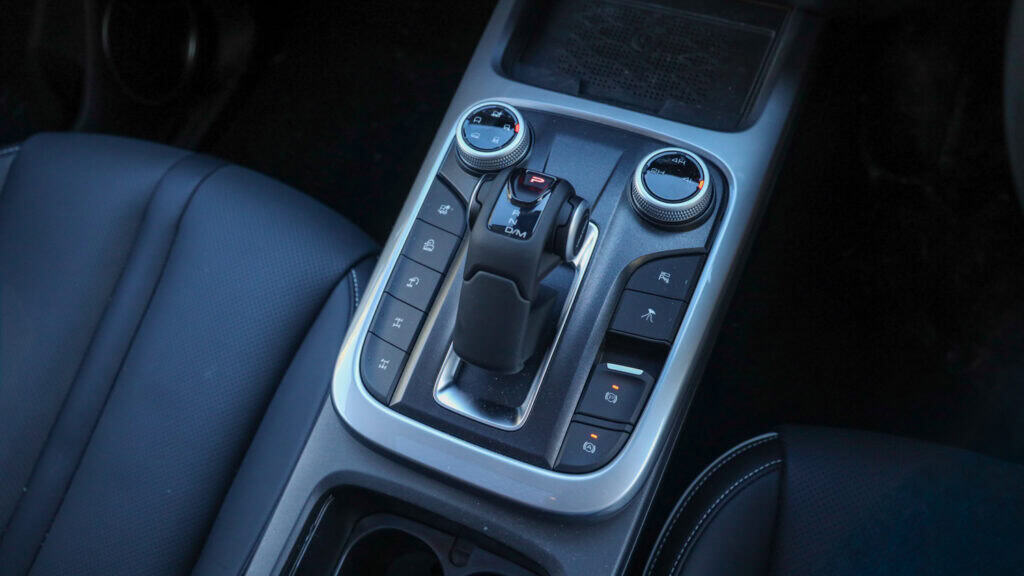
Large circular air vents are easy to adjust and GWM has peppered plenty of physical buttons about to make adjusting the ventilation and off-road systems easy.
We wish they’d done the same with volume adjustability; there are touch pads to the right of the central touchscreen, which is hardly ideal for the front seat passenger. Otherwise it’s multiple presses of buttons on the steering wheel.
2026 GWM Tank 300: The verdict
The Tank 300 Hi4-T PHEV is a worthy evolution of an already capable off-roader.
It doubles down on what the Tank does well – genuine off-road ability, strong hardware and a sense of ruggedness – while adding useful electrification features such as V2L and short-range EV driving.
You’ll need to plug in regularly to get the benefit of the EV system.
Some calibration and tweaks here and there would make it even better.
And, of course, there’s the price premium for the PHEV over the diesel.
But for those who can make use of the EV range and especially the V2L functionality – think campers and adventurers who will also spend plenty of time escaping the suburbs – the PHEV has genuine appeal.
It’s not perfect, but it’s undeniably interesting.
Score: 4/5
GWM Tank 300 Hi4-T PHEV Ultra price and specifications
Price: $59,990 plus on-road costs
Basics: PHEV, 5 seats, 5 doors, SUV, 4WD
Range: 115km (NEDC), more like 90km in the real world
Battery capacity: 37.1kWh
Battery warranty: 8 years/unlimited km
Energy consumption: 1.9L/100km (ADR)
Fuel consumption: 1.9L/100km (ADR)
Powertrain: 180kW/380Nm 2.0-litre four-cylinder turbo engine and 120kW/400Nm electric motor; combined claimed outputs 300kW/750Nm
AC charging: 7kW, Type 2 plug
DC charging: 50kW, CCS combo plug
0-100km/h: 6.3 seconds