Hyundai’s battery breakthrough: Next-gen tech will back massive 100-model global launch program
Hyundai is preparing a new generation of cheaper, faster-charging and longer-lasting batteries to underpin a massive global product offensive that will see more than 100 new or updated vehicles launched by the end of the decade.
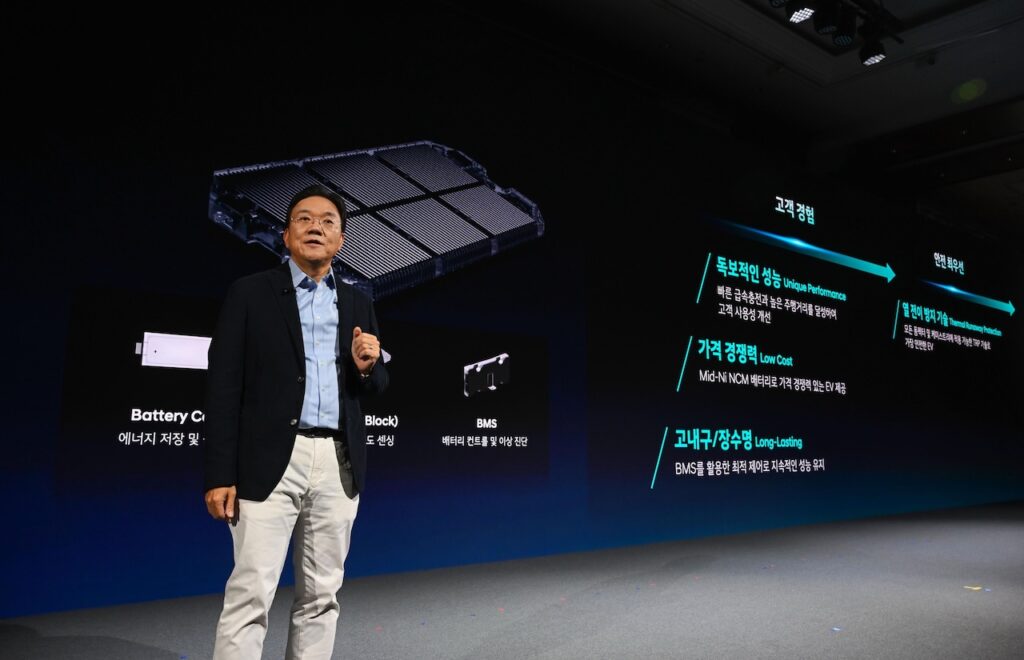
The Korean auto giant has detailed an extensive battery development program that includes new in-house battery cells, a switch to significantly cheaper mid-nickel chemistry for upcoming EVs, smarter battery management and new technology designed to prevent thermal runaway spreading through a battery pack.
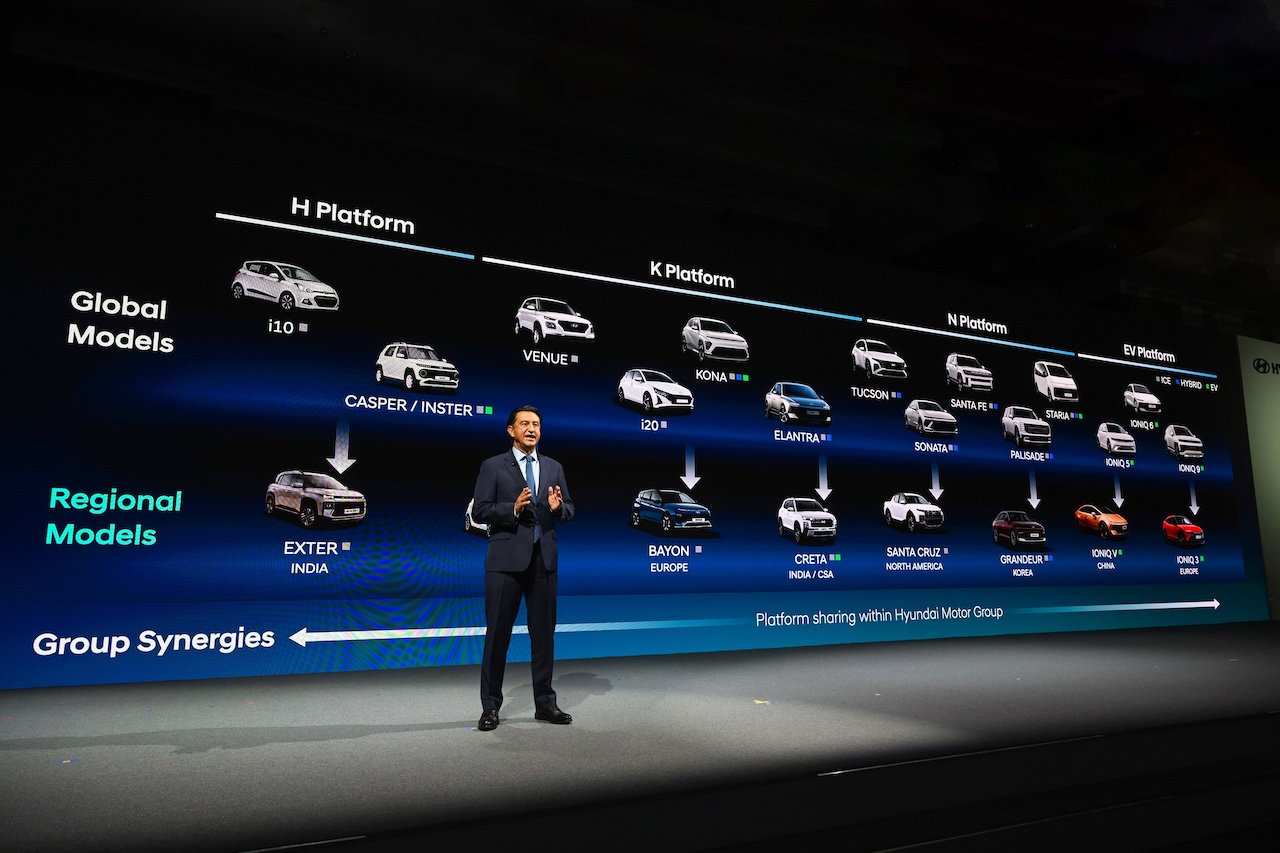
It comes as Hyundai prepares one of the largest product rollouts in its history, with more than 100 global launches and major model updates planned by 2030.
READ MORE: Revealed: Hyundai’s 1000km-plus electric ute tech will debut in Santa Fe SUV range extender
READ MORE: Hyundai Ioniq 3 priced: UK version of new EV rival for BYD and MG starts at $42,500 … that’s promising for Australia
READ MORE: Hyundai’s 1000km-plus electric ute delayed: It’s still coming to Australia but it could take until 2030 to get here
More than 18 will take Hyundai into new products or market segments and seven new vehicles are due within the next eight months alone.
The rollout will include conventional combustion-powered vehicles, hybrids, extended-range electric vehicles (EREVs) and battery-electric vehicles, with electrified models targeted to account for 60 per cent of Hyundai sales by 2030, up from 23 per cent in 2025.
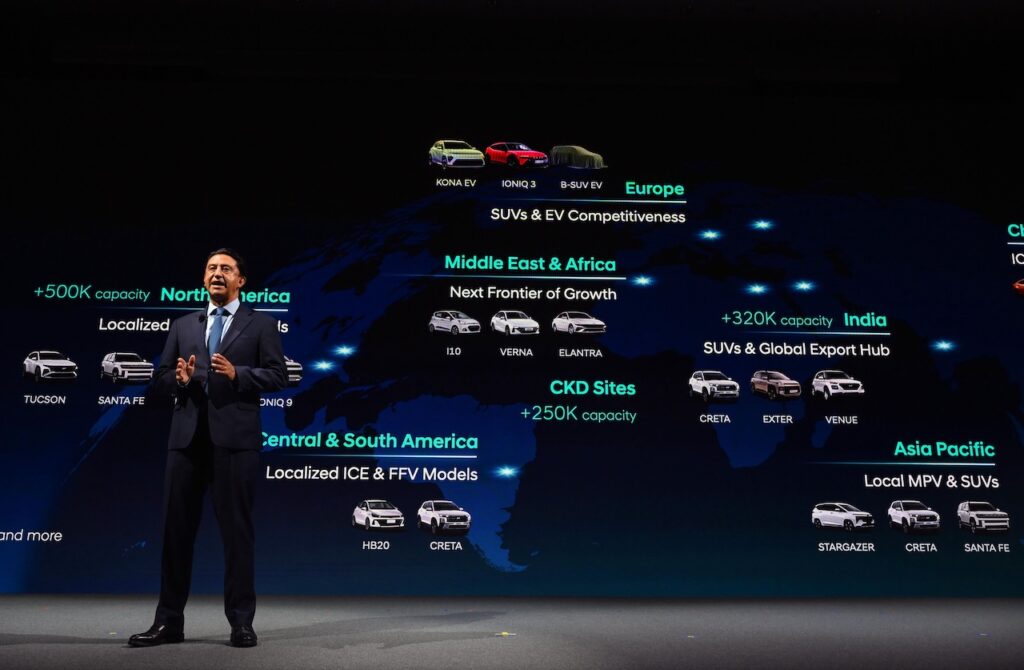
Hyundai is targeting 5.55 million global vehicle sales and a six per cent global market share by the end of the decade.
Central to the technology push is Hyundai’s development of its own battery cells.
The company claims its new high-performance cells can produce more than twice the output of the high-nickel cells it has previously used while reducing charging time by 40 per cent.
The first application will be Hyundai’s new EREV powertrain arriving in the first half of 2027.
That system will initially appear in the new Santa Fe EREV, which Hyundai says will offer more than 600 miles – about 965km – of total driving range.
Hyundai says the EREV requires less than half the battery capacity of a comparable battery-electric vehicle while still providing equivalent battery performance and EV driving characteristics.
The technology is also significant for Australia because EREV is emerging as a leading candidate to power Hyundai’s upcoming body-on-frame midsize ute.
But Hyundai’s battery plans extend well beyond EREVs.
One of the biggest developments for conventional battery-electric vehicles will arrive from 2027.
Hyundai says EVs launching next year will adopt mid-nickel NCM – nickel-cobalt-manganese – battery cells that will reduce battery costs by around 30 per cent compared with the technology they replace.
Importantly, Hyundai claims the cheaper cells will maintain what it describes as “optimal performance” under real-world driving conditions.
The potential significance is substantial because the battery remains one of the most expensive individual components in an electric vehicle.
A 30 per cent reduction in battery cost does not mean the price of an entire Hyundai EV will fall by 30 per cent, but reducing the cost of the pack potentially gives the company much greater scope to lower vehicle prices – or fit larger batteries and more equipment without pushing prices higher.
It should also help Hyundai compete against the rapidly expanding number of lower-cost Chinese EV manufacturers.
The first models using the new mid-nickel batteries have not been identified.
However, they will arrive during an enormous expansion of Hyundai’s electrified range.
In Europe alone Hyundai plans to cover 85 per cent of the market with a fully electrified portfolio, including five new SUVs and light-commercial vehicles, while increasing annual EV sales from 116,000 in 2025 to more than 420,000 by 2030.
Hyundai isn’t concentrating purely on the chemistry inside the battery.
Software will increasingly be used to manage the battery throughout its working life.
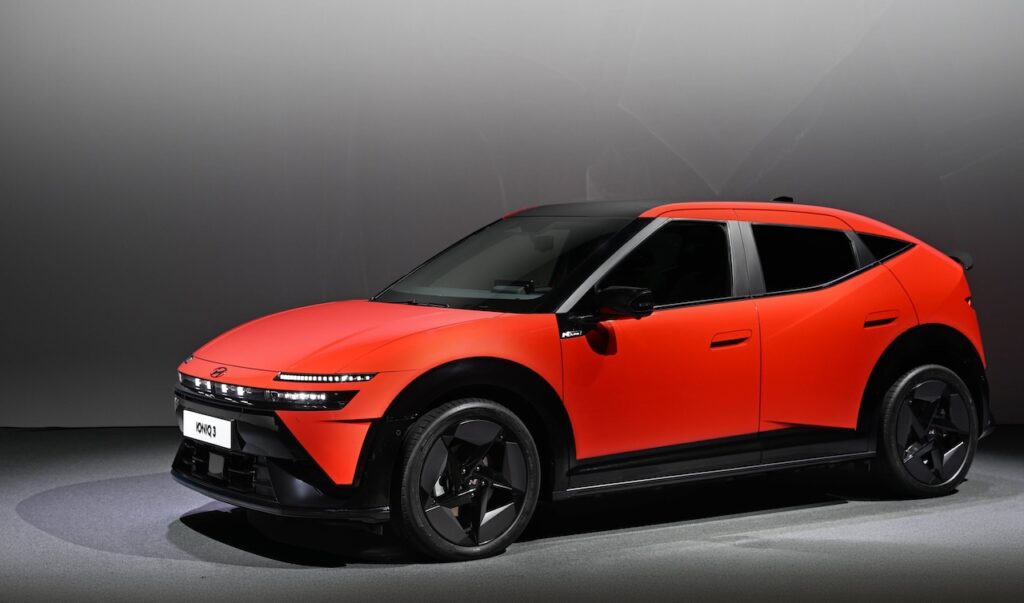
Hyundai says an enhanced cloud-based battery management system (BMS) will extend the average life of its EV batteries by 20 per cent by 2028.
The system will monitor battery condition and use cloud connectivity to detect abnormalities in individual cells in real time.
That could have implications beyond how long owners can keep their cars.
Battery degradation and the cost of replacing an EV battery remain important considerations for used EV buyers, while improved battery longevity potentially increases residual values and extends the useful life of an electric vehicle.
Hyundai hasn’t detailed exactly how it has calculated its claimed 20 per cent average battery-life improvement or translated it into expected kilometres or years of service.
The other major component of Hyundai’s battery strategy is safety.
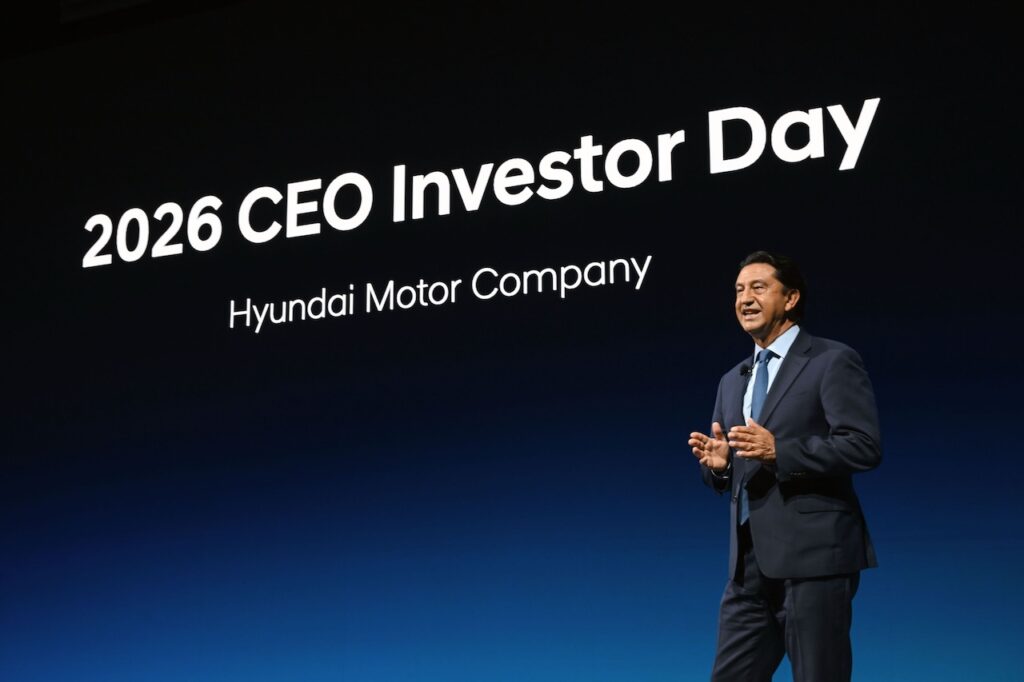
Hyundai has developed what it calls Thermal Runaway Protection (TRP), designed to prevent heat from a failing battery cell spreading into adjacent cells.
Thermal runaway occurs when a battery cell experiences an uncontrolled increase in temperature that can trigger further cells, potentially creating a chain reaction within the battery pack.
Rather than simply delaying the spread of heat, Hyundai claims its TRP system can block it at the source.
It combines a battery design that dissipates heat with barriers between individual cells intended to stop heat transfer.
Hyundai says the technology has been verified through more than 200 repeated tests using both prismatic and pouch-type NCM batteries.
The cloud-based BMS and TRP effectively provide two layers of defence.
The BMS is intended to detect abnormal behaviour early enough for preventative action to be taken, while TRP provides a physical defence against heat spreading if a cell does fail.
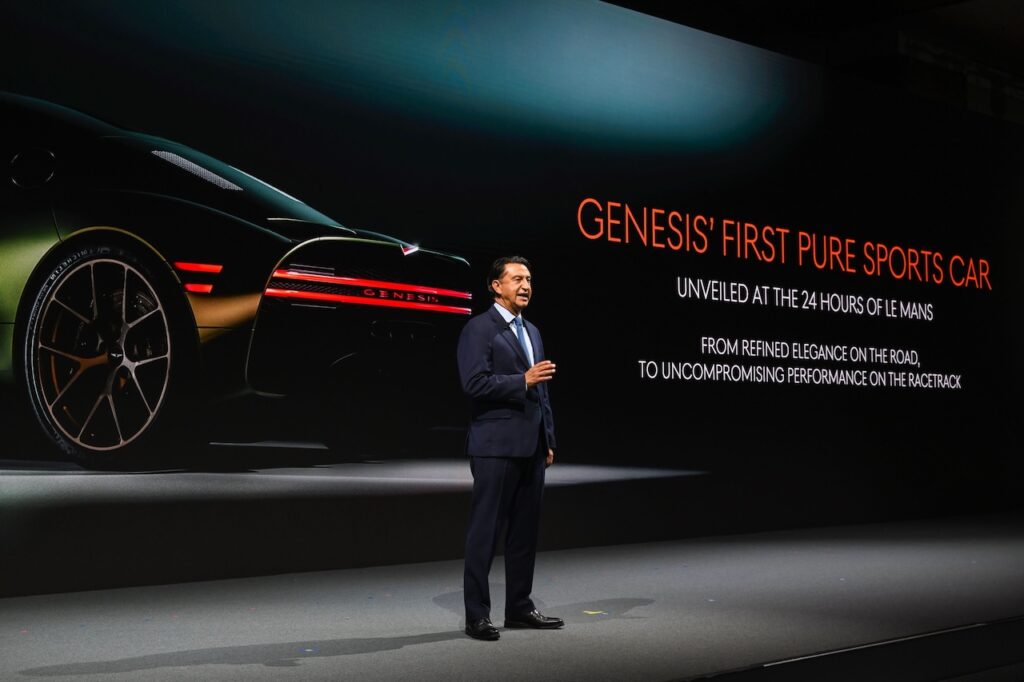
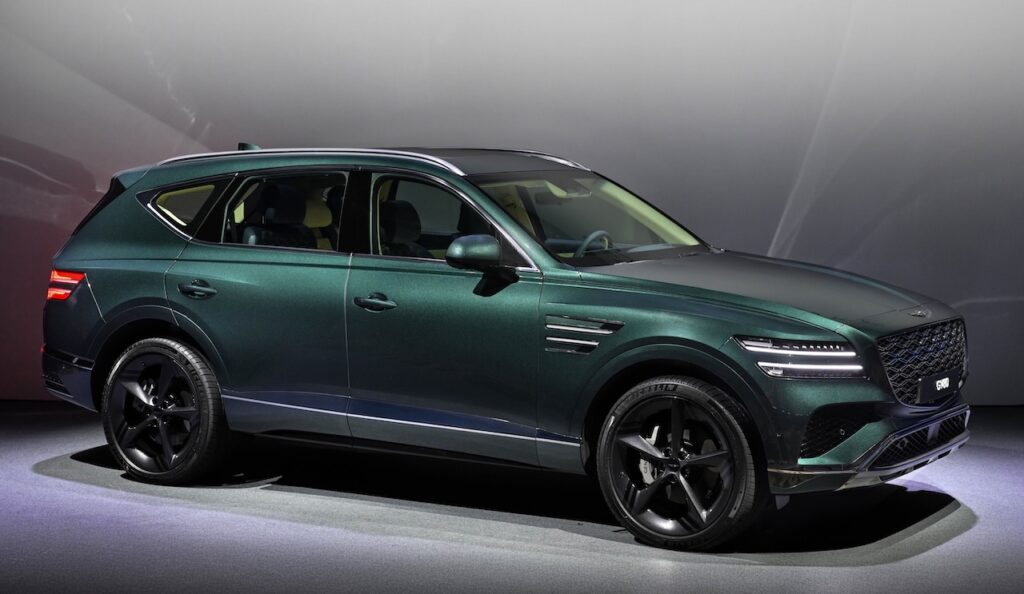
The new thermal-runaway technology will make its production debut with Genesis, with Hyundai’s roadmap identifying the upcoming electric GV90 flagship SUV as its first application.
The battery investment is part of a broader change in Hyundai’s electrification strategy.
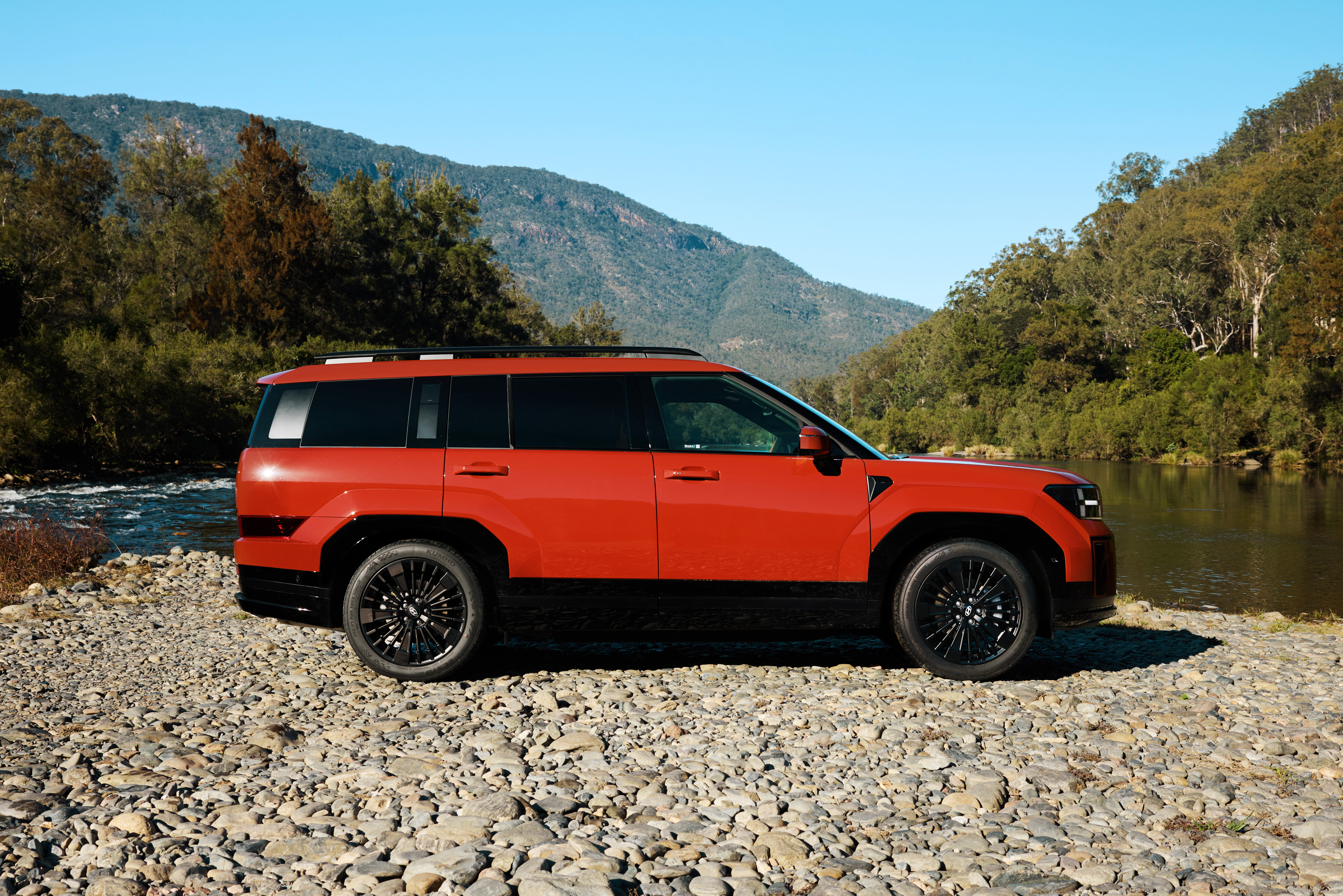
Rather than relying exclusively on battery-electric vehicles, Hyundai is expanding across EVs, hybrids and EREVs as it pushes towards its 5.55-million annual sales target.
Among the models identified in the latest roadmap are the IONIQ 3, new-generation Tucson and Tucson Hybrid, Santa Fe EREV, a new electric SUV for India and new global and European B-segment SUVs.
Genesis will simultaneously expand beyond pure EVs with its first hybrid, the GV80 Hybrid, as well as an EREV SUV targeting more than 640 miles – around 1030km – of total range and the battery-electric GV90 flagship.