GWM plans Aussie model onslaught as it gets the keys to the brand’s entire product portfolio
GWM will double its model range, add another sub-brand and bolster its dealer network as part of its ambitious plan to grow sales and cement itself as a top five brand in Australia.
It comes as the brand gets unprecedented access to the entire GWM product portfolio as part of recognition of it being one of the three most important export markets for the Chinese automotive giant.
As well as all-new models and the arrival of the Wey luxury sub-brand before the end of 2026, GWM is readying for new diesel engine options – including a diesel hybrid – and even an all-new V8 engine designed to tap into the Aussie love affair with the high performance engine configuration.
READ MORE: GWM Ora 5 SUV lands in Australia
READ MORE: GWM Ora 5 SUV Aussie price and spec confirmed: Electric SUV will be one of the cheapest EVs on-sale, undercutting BYD Atto 2
READ MORE: GWM Tank 400 Hi-4Z brief drive: torque monster to take on Denza B5
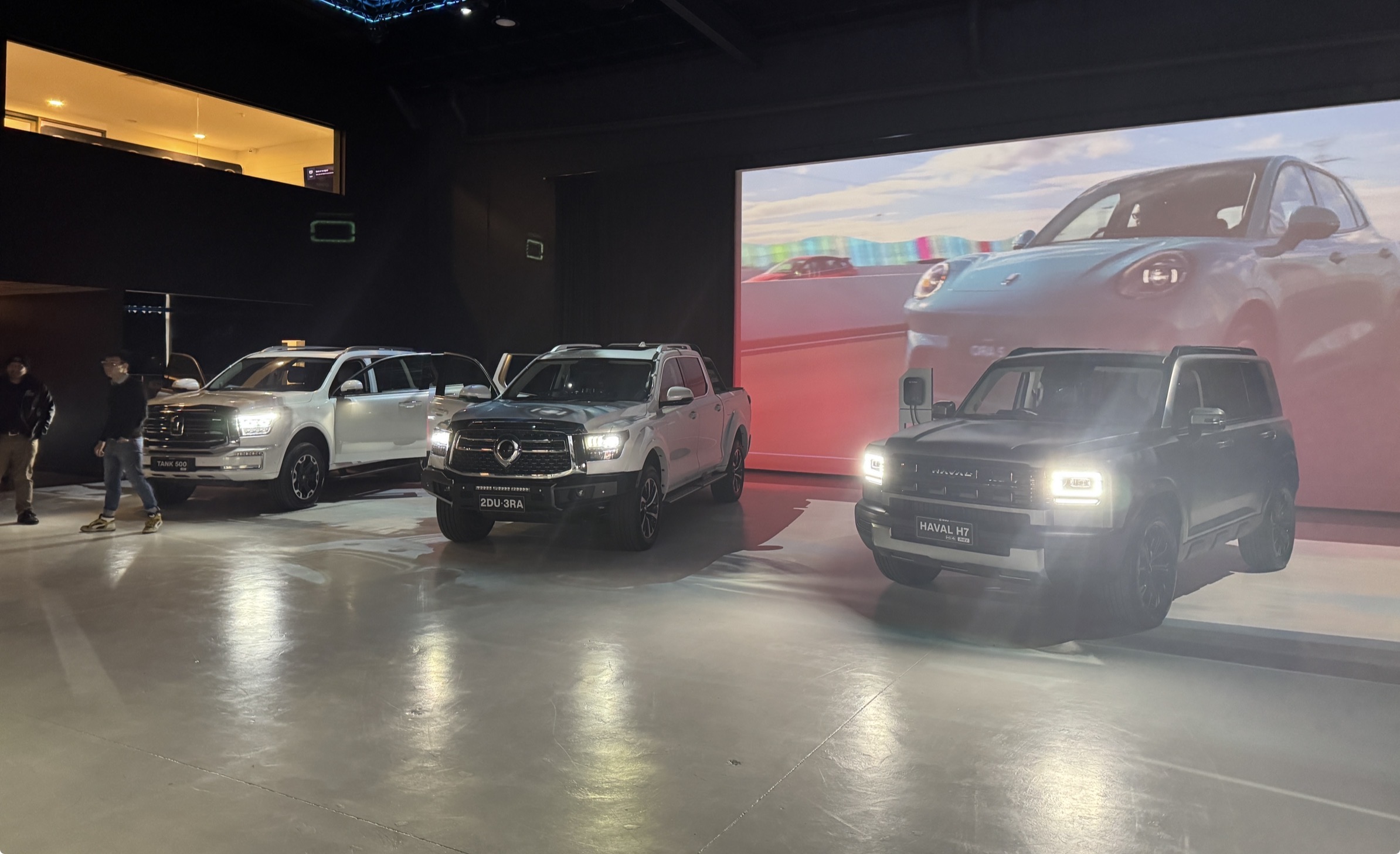
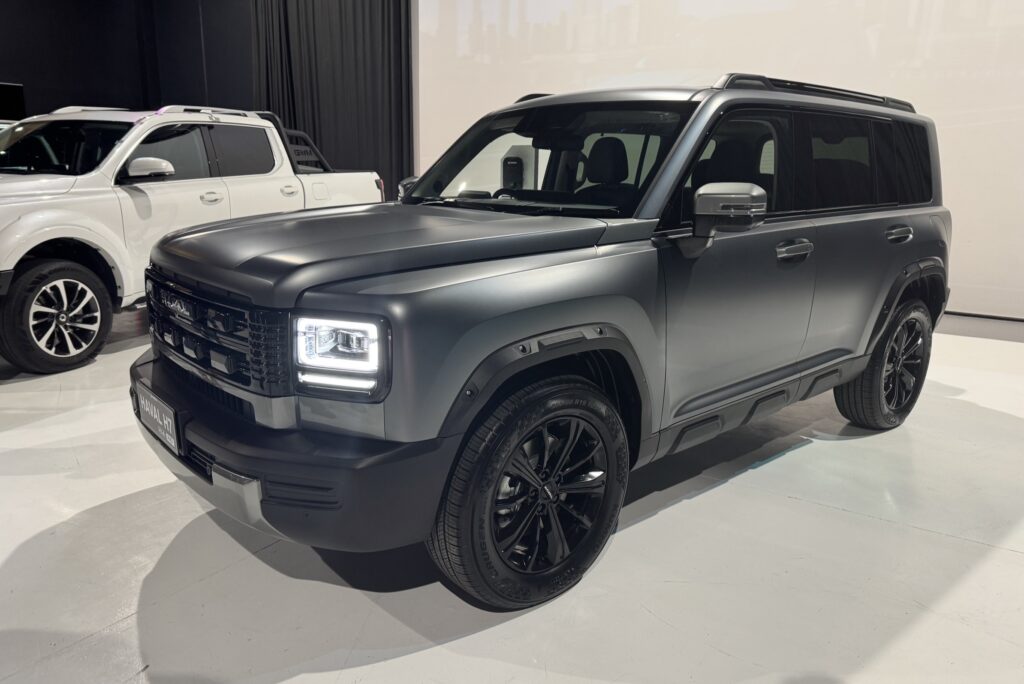
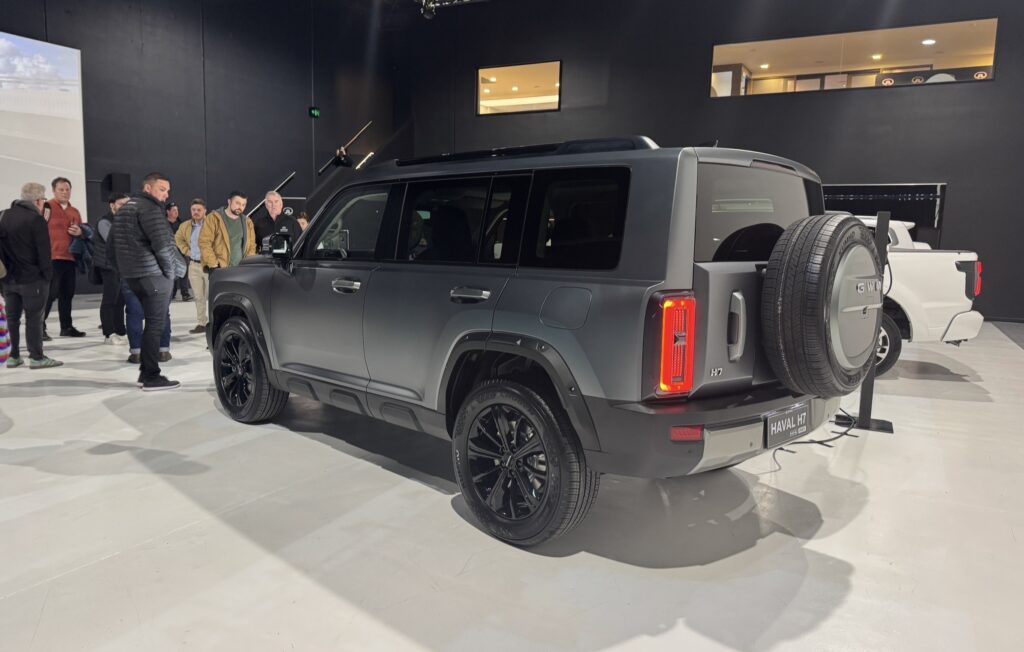
But front and centre for the GWM model explosion is a boxy new Haval H7 – complete with some Land Rover-esque lines – that will be offered as a hybrid and plug-in hybrid.
The brand will also sandwich a Jolion Max in between the slightly smaller Jolion and Haval SUV line-up.
Plus, the Ora sub-brand that is being reinvigorated with the Ora 5 SUV will soon comprise a family incorporating an Ora 5 hatch and mid-sized electric SUV to be known as the Ora 5 Touring.
“We’ve got our eyes fully set on top five … then a drive to top three,” said John Kett, GWM Australia COO.
Kett says GWM is forging its own path rather than trying to mimic another brand and will leverage what he describes as one of the broadest product ranges in the market, incorporating a wide range of powertrains, body styles and price segments.
“We have permission to be GWM … we need to learn from our competitors, but we don’t need to be our competitors.”
Having complete access to the entire GWM product portfolio also allows the brand to more finely tune its local offering, filling niches where possible and choosing ideal powertrain and body combinations to suit anticipated demand.
“It allows us … to build our portfolio around our customers instead of asking our customers to fit our portfolio,” said Kett.
That customer-first thinking extends to electric cars, where GWM admits it has plenty of work to do.
The brand is currently running 15th for EV sales in Australia, something Kett is refreshingly blunt about.
“Outside of BYD and Tesla, to be honest, going from 15th to seventh or eighth isn’t too hard,” he said, before adding the brand won’t be satisfied there.
“I think we’re going to suddenly say, OK, now we’re eighth or seventh, and we’re still unhappy. I think that will be us, because that’s just who we are.”
Part of the EV push is structural.
Kett points out that almost half of all EVs in Australia are sold via novated leases – a channel GWM’s traditional dealer network has historically not played in.
“Almost 50 per cent of EVs are sold under novated lease … the FBT benefit that comes with it means you can never sell dealer finance cheaper,” he said, acknowledging the brand is learning how to sell into those channels.
The other part is product, and that’s where the expanding Ora family comes in.
The Ora 5 SUV will soon be joined by a cheaper hatch – one Kett hinted could dip below $30,000 drive-away, although final pricing and battery sizes are still being worked through – and the larger Ora 5 Touring mid-sized SUV.
The Jolion Max will also be offered as an EV, slotting between them.
“Battery size is still up for discussion; head office and the factory are working through that,” said GWM Australia head of marketing and communications Steve Maciver of the upcoming hatch.
For Kett, it’s about blanketing the heart of the EV market.
“Within a range of $10,000 to $15,000, I have three cars,” he said. “That will cover probably where all the EVs have been sold.”
Maciver says the marketing spend will follow, admitting Ora has to date received “a fraction of the investment” of volume-sellers such as the Haval H6 and Cannon ute.
“Now’s the time for us to accelerate, and we’ve got big ambitions,” he said.
The upcoming new Haval H7 shapes as a key part of those ambitions. The mid-sized SUV steps up its off-road game with an all-wheel drive plug-in hybrid utilising front and rear electric motors, an electric diff lock and up to eight drive modes.
The PHEV runs GWM’s Hi4 hybrid system and makes a claimed 320kW and 620Nm – enough, says GWM, for a sub-5.0-second sprint to 100km/h.
There’s also vehicle-to-load capability to power a campsite or worksite, a rear-mounted spare and 19-inch wheels, while inside there’s a 15.6-inch touchscreen running the brand’s new Coffee OS operating system.
The H7 arrives as a five-seater, although GWM says it “would look to study the introduction of a seven-seater down the track”.
Then there’s the V8, a twin-turbo petrol unit destined for the upper reaches of the Tank family. In an era of downsizing and electrification it’s a genuine outlier – and Kett concedes GWM is being deliberately cautious with volume expectations, in part because of the fines that flow from the New Vehicle Efficiency Standard (NVES), something that would have to be offset with sales of ultra low emissions vehicles such as EVs.
“We’re really conservative in the number, only by virtue of the NVES penalties in Australia and New Zealand,” he said. “All we’re committing to is that you’ll see a V8.”
Crucially for a brand pitching itself as a new energy player, the V8 hasn’t been engineered in isolation.
“That V8 has been developed to be paired with electrification and plug-in as well,” said Maciver, although a non-hybrid version – presumably with the requisite V8 soundtrack – is also on the cards.
Kett is aware of the optics of spruiking a V8 in 2026.
“It’s almost a sin to be talking about V8s … we’re still talking about petrol and diesel at a time most people are talking about owning new energy vehicles,” he said.
“We certainly are [a new energy brand] and we’re going to demonstrate that, but we’re not going to leave anyone else behind, because we think the market’s still going to be significant through 2030.
“You want a new energy vehicle, we’ve got you covered. You want a plug-in hybrid that has all the off-road credentials, we’ve got it. You want an EV, we’ve got one of those.”
Diesel is far from dead in GWM’s thinking, either.
The Tank 500 and Cannon Alpha will pick up a 3.0-litre turbo-diesel four-cylinder from September, bringing 613Nm, 3500kg of towing capacity and claimed fuel use of 7.6 litres per 100km.
A hybrid diesel is in the pipeline – and Kett says a plug-in hybrid diesel is “very much on our radar”.
The new diesels have been subjected to a local testing regime GWM says is unmatched among Chinese brands; one Tank 500 test car has clocked 26,000km in two months, including a towing run to Cairns and back, while the Cannon Alpha is headed to Alice Springs to be punished on corrugations.
GWM is one of the few Chinese brands doing thorough local testing and tuning.
GWM Australia boss Andrew Gao also made it clear GWM won’t be dragged into a price war at the bottom of the market, despite the sharp positioning of the Ora family.
“We are not afraid of competition, but we will never chase the cheapest pricing,” he said. “Once you chase the cheapest pricing, you have to decrease the price month by month or year over year … you have to sacrifice some of the service to our customers.”
As for the growing stable of sub-brands – Haval, Tank, Cannon, Ora and soon Wey – don’t expect them to be spun off into standalone showrooms any time soon.
“We’ve built a brand structure around one GWM,” said Maciver. “Every single one of those sub-brands will continue to lean back into GWM.”
That said, Kett flagged Tank and Wey could eventually occupy a more premium corner of the showroom – and points out that Tank alone, with a 300, 500 and potentially 400, 700 and 800 in the mix, “is probably a top 15 brand in itself”.
Underpinning it all is a dealer network that will grow from 128 outlets today to about 135 by the end of the year, backed by new parts distribution centres in Queensland and Western Australia that GWM claims can get a part almost anywhere in Australia within 24 hours.