Australia’s JAC Hunter PHEV tune goes global: Local engineering adopted for overseas markets
The Australian-developed suspension and steering tune created for the new JAC Hunter PHEV ute is going global, with New Zealand confirmed as the first overseas market to adopt it and other Asia-Pacific countries expected to follow.
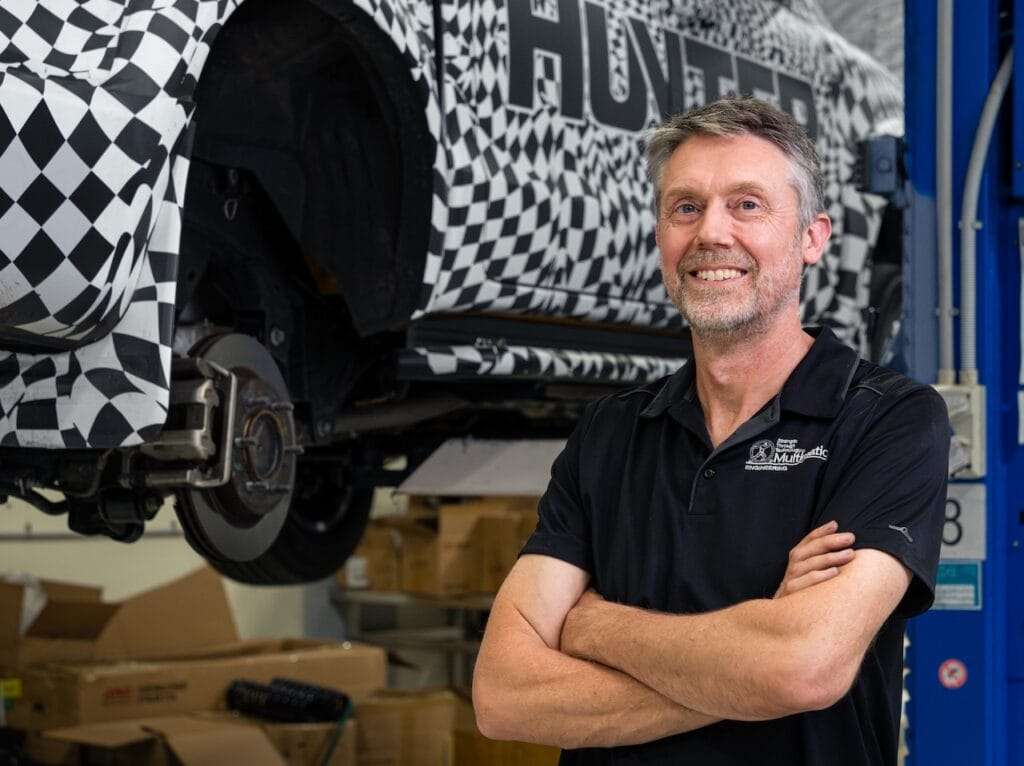
Developed by experienced Australian vehicle dynamics engineer Michael Barber, the tune was initially commissioned to make the plug-in hybrid Hunter better suited to local roads and driving conditions.
But JAC has now confirmed Barber’s complete calibration will also be introduced in New Zealand, while it has been placed on the product roadmap for multiple other international markets.
READ HERE: Australia’s cheapest PHEV ute confirmed from $49,988 as JAC Hunter targets BYD Shark 6 and GWM Cannon Alpha
READ HERE: 2026 JAC Hunter PHEV Review: Australia’s cheapest PHEV ute targets BYD Shark 6, GWM Cannon Alpha
READ HERE: Barber grooms JAC T9 Hunter PHEV ute: Holden hero shapes new BYD Shark 6 rival for Aussie roads
JAC’s commitment is yet another example of Australia ute-tuning expertise. Premcar in Melbourne does work for Nissan, Mitsubishi and Chery, while the Walkinshaw group converts left-hand drive Toyota, Chevrolet and RAM utes to right-hand drive and separately backs a performance version of the VW Amarok.
Australia is the home room for the global Ford Ranger program and Toyota Australia has a strong influence over the HiLux and other 4x4s. Chinese brand GWM has hired former Holden senior engineer Rob Trubiani to tune its new models for local roads.
JAC Motors Australia says every one of Barber’s recommendations has been incorporated into the Hunter PHEV entering Australian showrooms, rather than selected changes being adopted or the complete tune being deferred until a later model update.
“To see an Australian-developed tune adopted internationally is a strong endorsement of Michael’s expertise and JAC’s willingness to listen to local markets,” said JAC Motors Australia managing director Ahmed Mahmoud.
Barber’s involvement with the Hunter began with evaluation and testing in Australia before he travelled to JAC’s engineering facilities in China to work directly with the company’s development team.
His program focused on improving steering response, high-speed stability, body control, ride quality and predictability across changing road surfaces, while balancing everyday comfort with the demands of carrying a load.
More than 50 damper calibrations were reportedly assessed during the development process.
Barber previously held senior engineering positions with defunct Australian brand Holden and currently works for global automotive engineering company Multimatic.
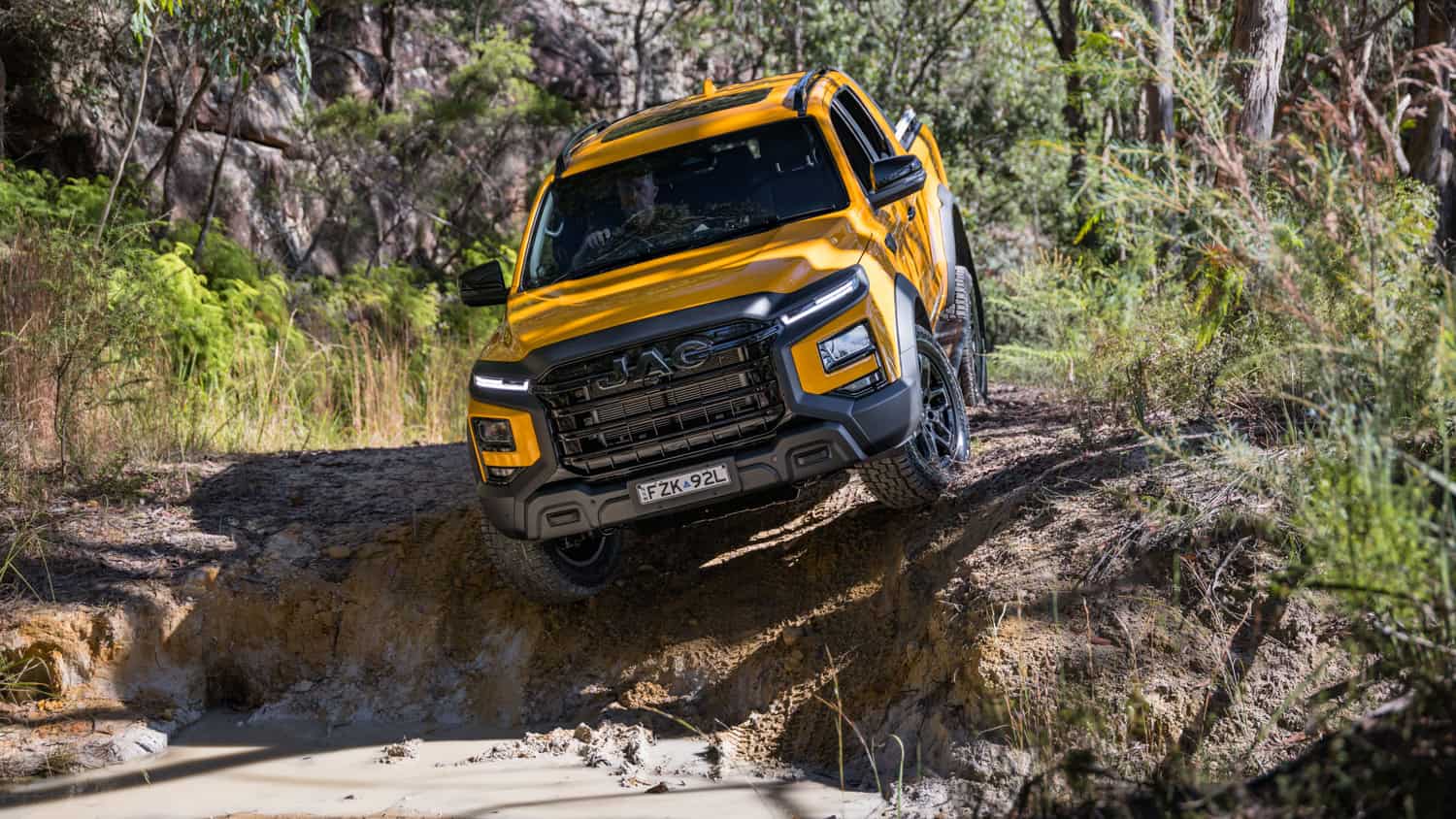
The Hunter program also included more than 100,000km of Australian testing covering durability, towing, payload, hot-weather operation and on- and off-road driving.
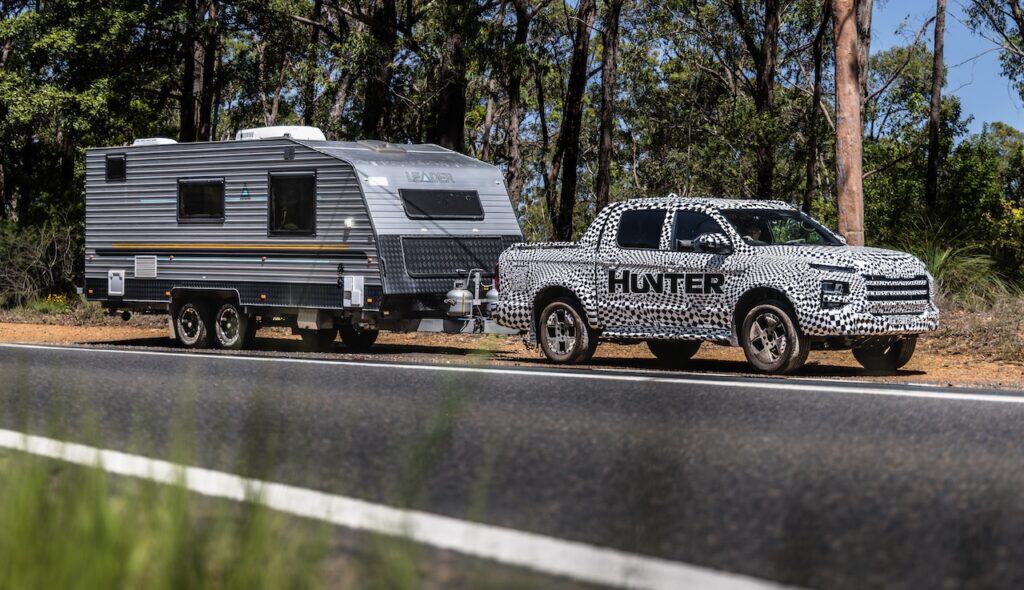
JAC claims it invested multiple millions of dollars in engineering and developing the Hunter for Australia, beyond what would normally be spent adapting an existing global model for another market.
“JAC’s multi-million-dollar engineering and development investment in the Hunter goes well beyond what would ordinarily be expected for a new-market vehicle launch,” said Mahmoud.
“It demonstrates that JAC is not simply bringing a vehicle to Australia and asking customers to accept it as it is.
“We have invested in understanding this market, testing the Hunter locally and making the engineering changes required to deliver the right vehicle for Australian drivers.”
JAC has not detailed all the individual hardware and calibration changes made as part of Barber’s program.
However, it says the production tune delivers more precise and natural steering, better stability at highway speeds, improved body control through corners and over uneven surfaces and a more settled ride.
“We asked Michael to tell us exactly what the Hunter needed to perform at its best on Australian roads,” Mahmoud said.
“JAC listened, acted and implemented every one of his recommendations. Nothing was selectively adopted or deferred to a future update.”
Based on the existing diesel-powered JAC T9, the Hunter PHEV combines a 2.0-litre turbo-petrol engine with an electric motor at each axle.
JAC claims combined outputs of 360kW and 1010Nm, although the torque figure is calculated by adding together the outputs of the engine and two electric motors rather than being a directly measured system figure.
A 31.2kWh battery provides up to 100km of claimed electric driving range, while the total petrol-electric range is listed at 1005km. Both figures are based on the more lenient NEDC testing procedure.
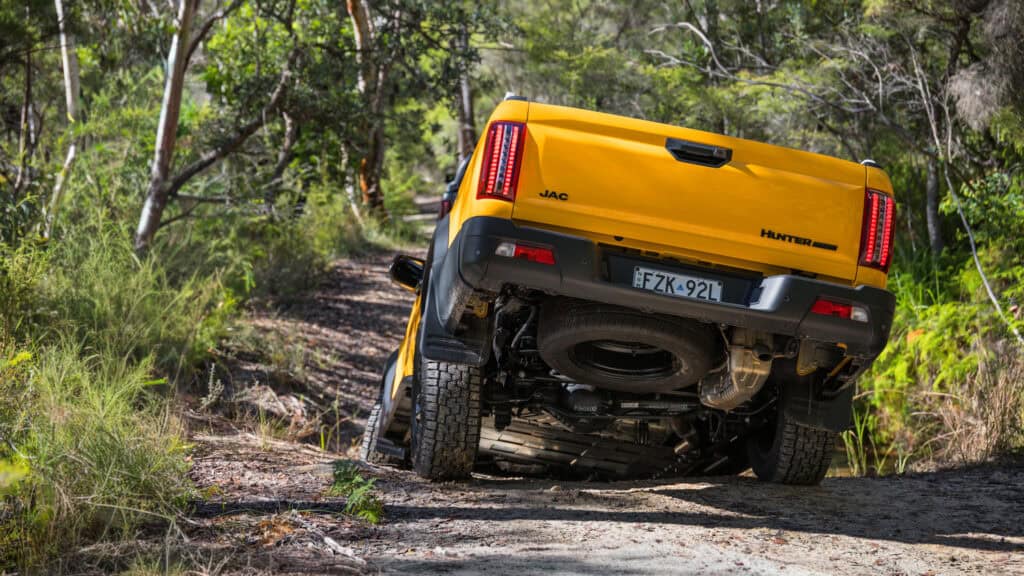
The Hunter is rated to tow up to 3500kg braked and has a maximum payload of 915kg.
It is offered in two variants, with the Hunter Pro priced from $49,988 plus on-road costs and the better-equipped Hunter X starting at $54,844 plus on-road costs.
That makes it Australia’s cheapest PHEV ute, undercutting the BYD Shark 6, GWM Cannon Alpha PHEV and Ford Ranger PHEV.
JAC says the Hunter is the beginning of a broader commitment to Australian development rather than a one-off program.
“Our ambition is for every future JAC vehicle launch to demonstrate this same level of Australian testing, engineering rigour and responsiveness,” said Mahmoud.
“The Hunter is the beginning of that commitment, not the end.”