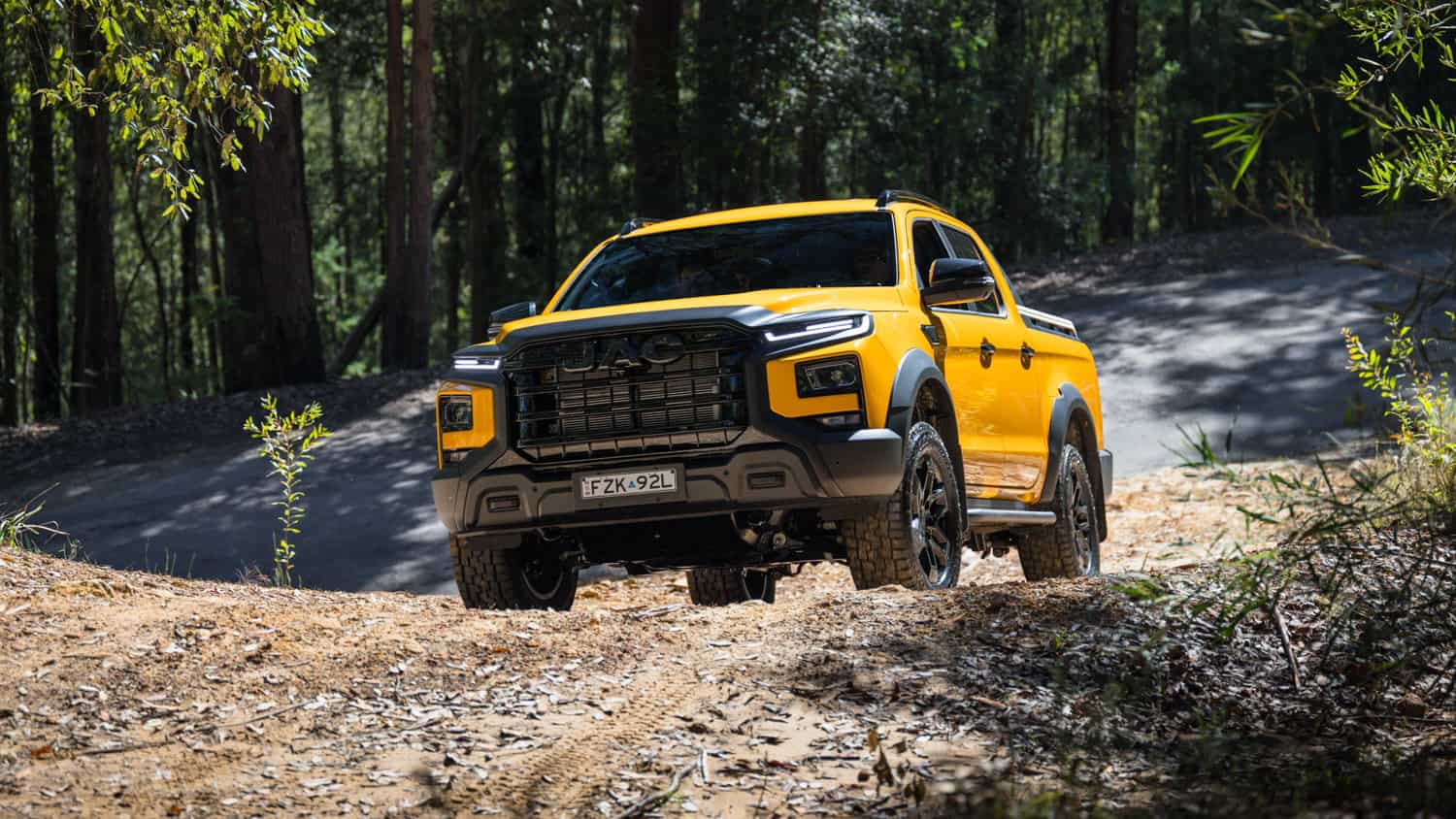
2026 JAC Hunter PHEV Review: Australia’s cheapest PHEV ute targets BYD Shark 6, GWM Cannon Alpha
The JAC Hunter PHEV is shaping us as Australia’s most affordable plug-in hybrid ute – and we’ve driven it. Or, at least, we’ve driven some pre-production versions ahead of first deliveries in mid-2026.
In an era when Aussies are embracing more fuel efficient utes that’s kind of a big deal.
Like the BYD Shark 6 which is arguably the Hunter PHEV’s biggest rival, it gets a petrol engine and two electric motors as well as a battery pack that can be recharged externally to provide EV-only driving.
But the big appeal with the Hunter PHEV is the price tag – or, at least, what we’re expecting the price tag to be.
READ MORE: Australia has a new PHE ute price-leader: JAC Hunter kicks off with sub-$50K price tag
READ MORE: Barber grooms JAC T9 Hunter PHEV ute: Holden hero shapes new BYD Shark 6 rival for Aussie roads
READ MORE: Hunter gets honed: New JAC T9 plug-in hybrid ute retuned for Aussie conditions at Holden’s old home
READ MORE: Spy pics reveal latest Chinese plug-in ute: JAC T9 Hunter is in Australia testing ahead of 2026 launch
JAC hasn’t announced final pricing yet, other than to say it will cost less than $50,000.
That makes it cheaper than entry-level dual-cab 4×4 versions of big brand utes such as the Toyota Hilux and Ford Ranger.
First, though some background.
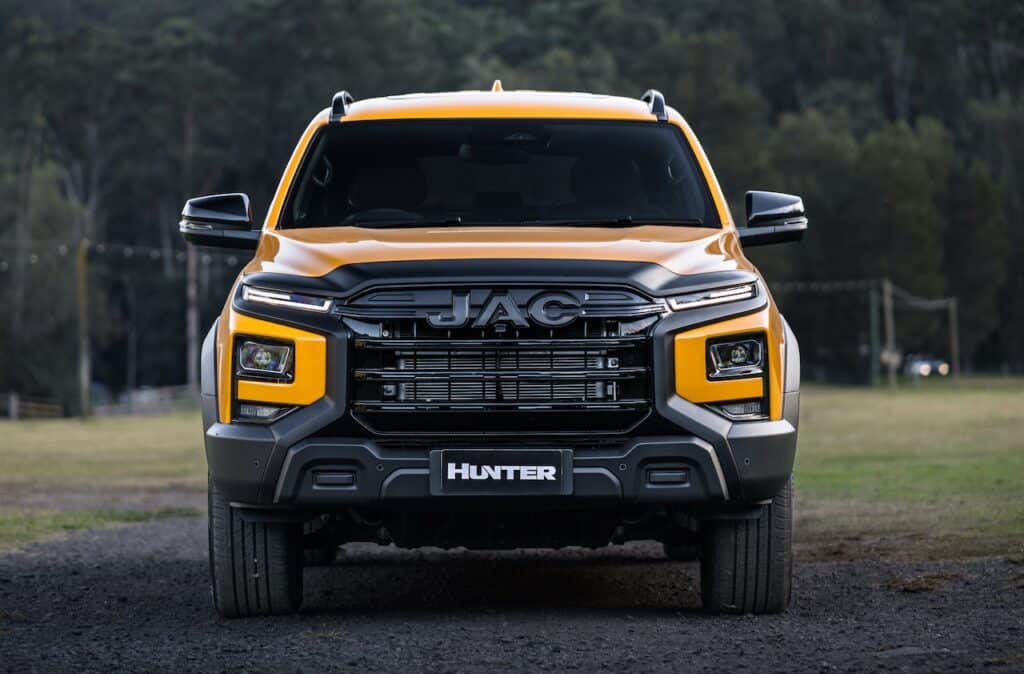
JAC is a relative minnow in the Chinese automotive space but it does have a long history in trucks and, more recently, utes.
That specialisation puts it in good stead in a market segment that demands plenty.
As for the Hunter PHEV, it’s essentially the hybrid version of the T9 ute that’s been on sale in Australia for a while now with diesel power.
Yes, there are differences beneath the skin – including, obviously, how it’s powered – but there are also plenty of similarities.
One thing that is very different with the Hunter PHEV is how it’s been set up for Australia.
JAC says it’s completed 50,000km of local validation testing, including about 3000km of chassis tuning by former Holden engineer Michael Barber.
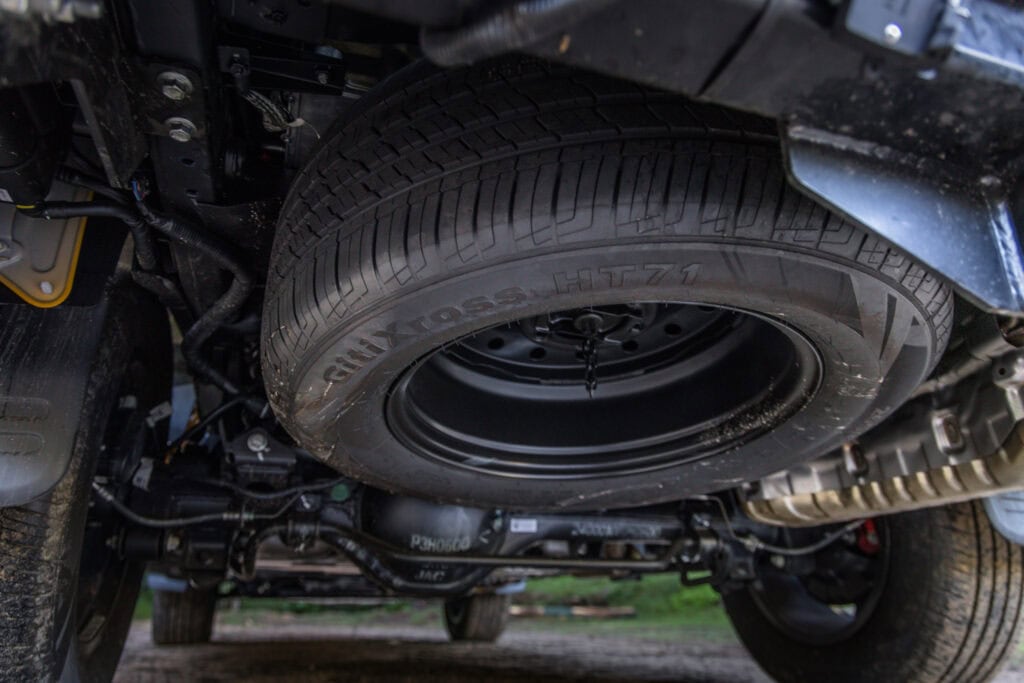
Along with dozens of damper tunes there were changes throughout the suspension system to optimise the car to local conditions, all while keeping in mind its aim of being a proper workhorse ute with a payload of up to 915kg and 3.5-tonne towing capability.
2026 JAC Hunter price and equipment
So, yep, we’re still awaiting final pricing for the JAC Hunter PHEV.
But JAC says it will start from below $50,000 before on-road costs for the entry-level Pro model.
There will be a better equipped Hunter X PHEV which is expected to add about $3000 for a sunroof and locking front and rear differentials.
Those prices make the PHEV around $10,000 more than a similar T9 diesel (it has different model grades).
So it’s a decent price premium, but it’s still sharp by PHEV ute standards.
Key to the sales pitch is a 31.2kWh battery claimed to provide about 100km of EV-only range.
Like the Shark and Cannon Alpha it’s not designed to be drained to zero, with the computer firing the engine up by the time you get to 15 per cent state of charge to keep some electrons flowing.
It can be charged at up to 11kW using a home AC charger. The more common 7.4kW chargers should top it up in something like 4.5 hours.
Or you can plug it into a home powerpoint for a full charge in about 15 hours.
The Hunter PHEV can also be DC fast charged at up to 45kW. So best case scenario is a full charge in around 40 minutes.
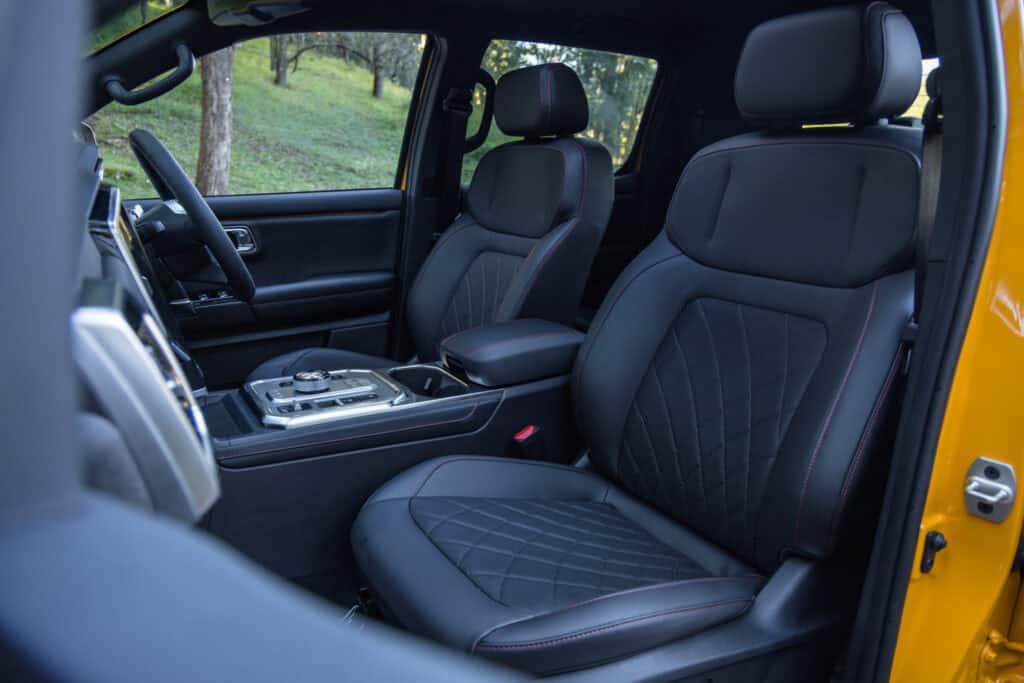
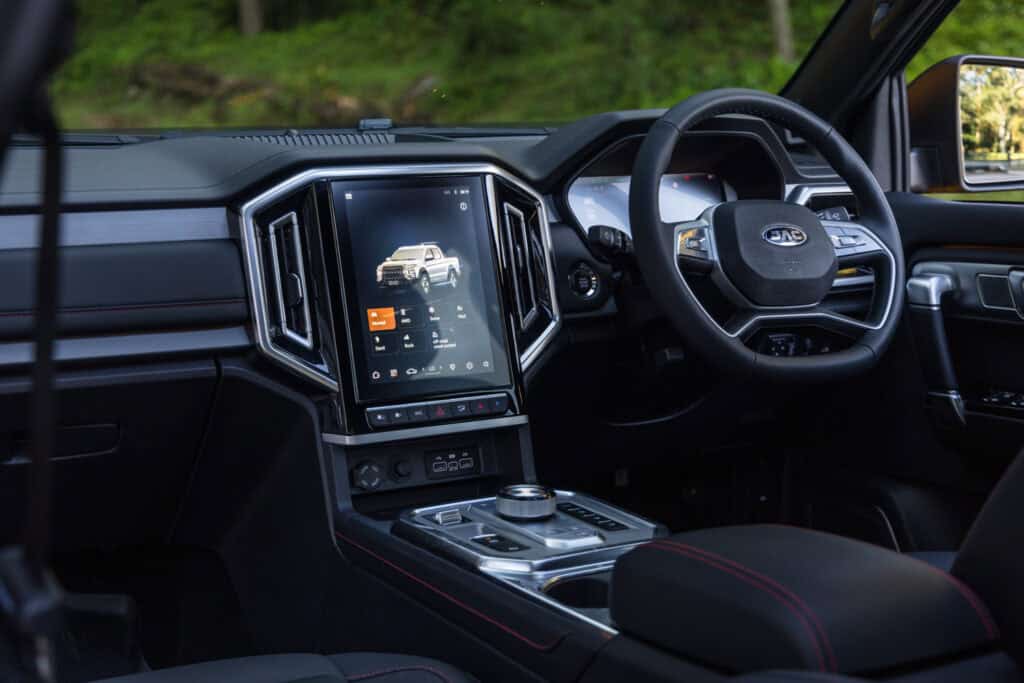
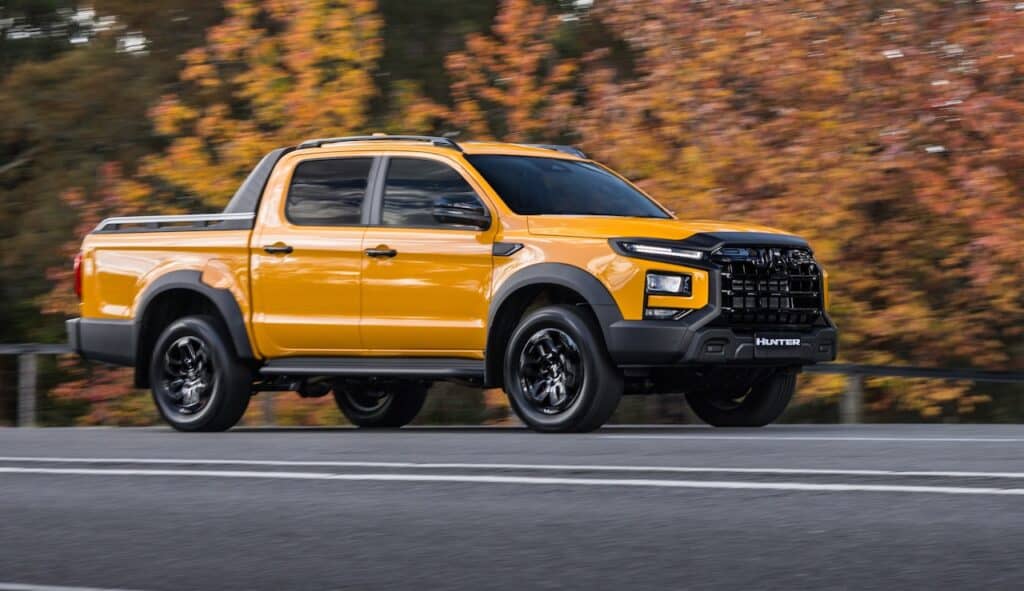
Exact specification levels are also TBC, but our test car came with 18-inch alloy wheels, leather-look trim, power-adjustable driver’s seat and a wireless phone charger.
There’s also a 10.4-inch central infotainment screen and a digital instrument cluster.
It’s a decent smattering of gear, but there are also hints of penny pinching: the climate control system is only a single zone, for example, and the passenger seat is manually adjustable.
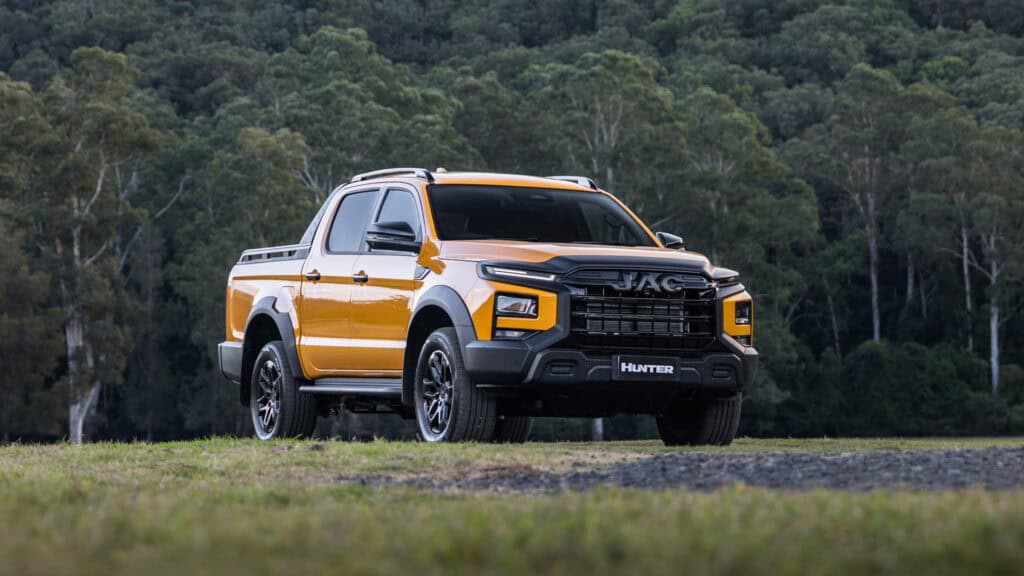
The Hunter PHEV is also towards the smaller end of the ute spectrum.
It doesn’t have the sprawling space of the Shark 6, for example, or other recent new ute arrivals, including the GWM Cannon Alpha PHEV and diesel-only Kia Tasman.
2026 JAC Hunter: What we think
Our time with the JAC Hunter PHEV was brief and limited to pre-production cars.
The suspension tune wasn’t finalised, for example, and there were some software tweaks yet to be made.
But it was enough to learn the basics.
The Hunter PHEV gets a 120kW/370Nm 2.0-litre four-cylinder turbo petrol engine.
That engine can drive only the front wheels (there’s no driveshaft between the front and rear wheels) and only at speeds above about 45km/h.
That leaves two electric motors doing the bulk of the work.
Up front there’s a 130kW/300Nm motor integrated into the four-speed transmission.
Out back there’s a 150kW/340Nm motor as the only thing driving the rear axle.
JAC says the combination can make up to 360kW and 1000Nm.
But… it never felt like that to us.
They’re big numbers, but even with 2.5 tonnes of ute (2512kg to be precise) you’d expect something with that much grunt to leap with real enthusiasm.
Sure, the JAC Hunter PHEV is peppier than a Hilux in many situations. But it’s a tad lethargic off the line, especially if you leave it to EV mode, or EV Max, as it’s called.
Dial up Fuel Priority and it brings the petrol engine in sooner, giving you more oomph.
It’s like it gets a second wind around 70 or 80km/h. Aand it’s at those country road speeds where it feels most energetic.
All of which bodes well for towing; JAC says it’ll comfortably haul 3500kg, something we didn’t get to test.
We didn’t test the claimed EV range, nor the overall driving range, which once you bring the 77-litre fuel tank into the equation stretches to a claimed 1005km.
Claimed fuel use is 1.6 litres per 100km, but like all PHEVs it’s a fanciful number due to the quirks of the laboratory testing.
Expect something like 10L/100km when running in hybrid mode.
Like all ladder frame utes there’s some truckiness to the way it drives.
There are coil springs all around and the local development work seems to have calmed the way it deals with bumps.
That said, the final tune is changing by the time cars roll into customer hands around the middle of the year, so there should be further improvements.
Driver monitoring systems are overly eager to beep, so it pays to know the menus to dive into to deactivate them.
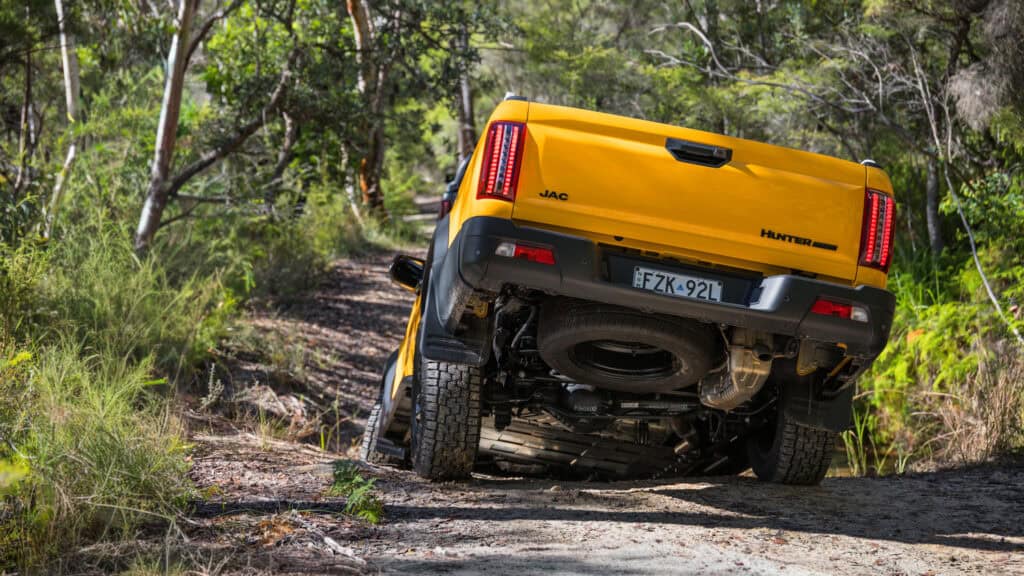
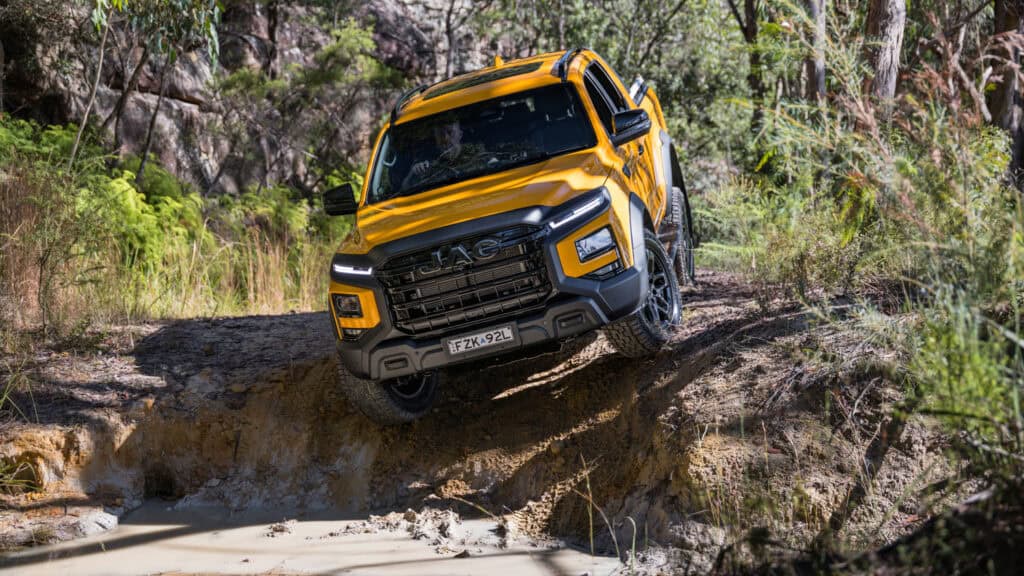
Off-road, we only sampled a brief mildly challenging uphill section, which it handled with ease (our off-road test cars were running on optional Pirelli all-terrain tyres).
There are various drive modes – Normal, AWD (a sort of auto mode), Snow, Mud, Sand, Rock and Off-road crawl (like off-road cruise control).
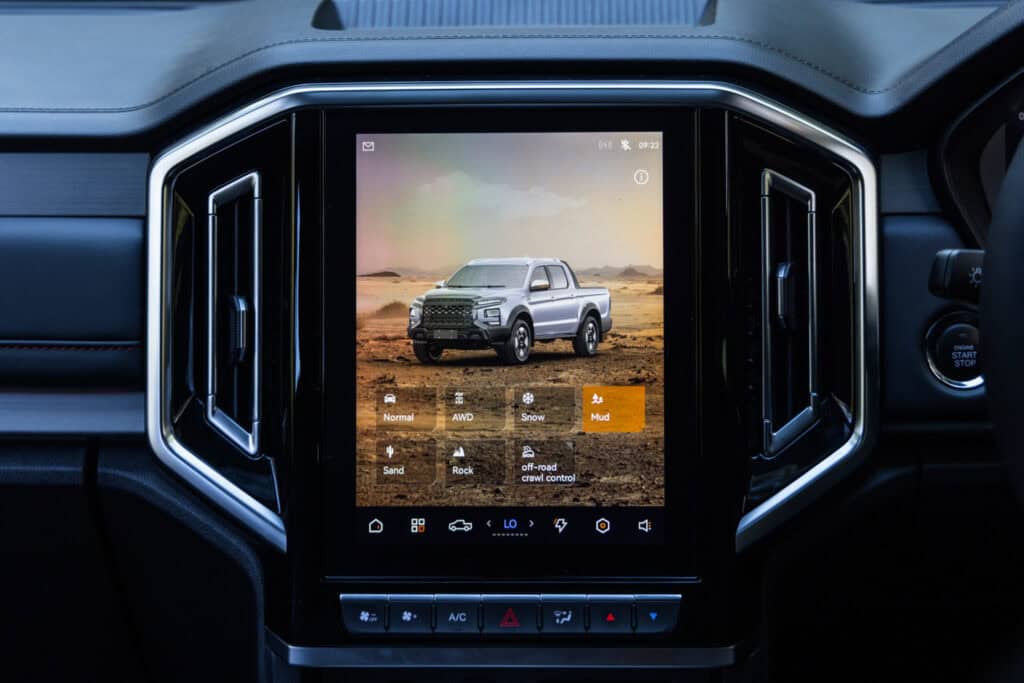
There’s no low range gearing, with the torque of the e-motors instead used for torquey response.
And like other PHEV utes, the throttle response can feel inconsistent at lower speeds when you need to get up a steep pinch or over an obstacle; whereas a diesel ute typically ambles up easily, the Hunter needed a fair bit of right foot to coax it up and over.
Locking front and rear diffs add to the traction talent, making for an impressively capable ute.
Inside, the Hunter PHEV feels smaller than many of the latest breed of utes.
Legroom in the rear is on the snug side if those up front are demanding plenty of space.
But it otherwise presents well, with some quilting on the seats, bright silver finishes here and there and decent quality materials.
2026 JAC Hunter: Verdict
The JAC Hunter PHEV arrives with a compelling hook: sub-$50,000 pricing for a plug-in hybrid ute with claimed 3.5-tonne towing and 100km of electric range.
That combo is hard to argue with on paper.
In the metal, it’s a mixed bag.
The powertrain never quite delivers on its headline figures and the cabin and features feel modest against more established Chinese rivals.
But the local chassis tuning work is evident, the off-road credentials are real, and the price gap to the competition is significant.
2026 JAC Hunter PHEV price and specifications
Price: Less than $50,000 before on-road costs
Basics: PHEV, 5 seats, 4 doors, ute, 4WD
EV range: About 100km
Battery capacity: 31.2kWh
Battery warranty: TBA
Energy consumption: TBA
Fuel use: 1.6L/100km (ADR)
Drivetrain: 2.0-litre 120kW/370Nm 2.0-litre 4-cylinder turbo, 130kW/300Nm front motor, 150kW/340Nm rear motor, 4-speed transmission, 360kW/1000Nm claimed combined outputs
AC charging: 11kW, Type 2 plug
DC charging: 45kW, CCS combo plug
0-100km/h: NA