New price leader! Kia PV5 Passenger electric people mover incoming with seven seats and long range battery
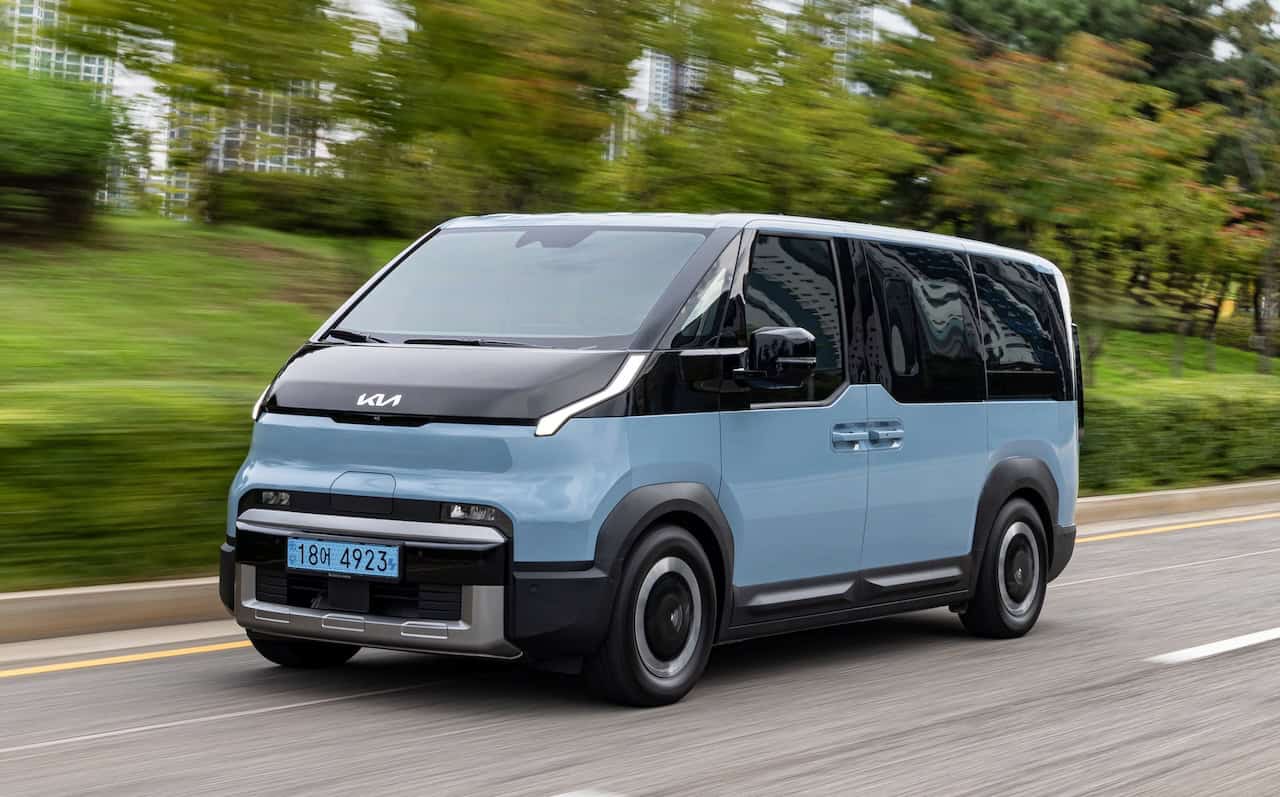
Kia’s seven-seat PV5 Passenger is set to become Australia’s cheapest electric people-mover, receiving federal approval ahead of its Australian arrival in the final quarter of 2026.
The boxy battery-electric PV5 will join the larger Carnival in Kia’s Australian people-mover line-up, giving the Korean brand a dedicated EV alternative to its established petrol, diesel and hybrid people mover.
New Road Vehicle Descriptor (RVD) documents published by the federal government confirm Australia will receive a single “Long Range 7P” version of the PV5 Passenger, equipped with a 71.2kWh battery and seating for seven.
READ MORE: 2026 Kia PV5 Cargo Review: Funky van takes on Toyota Hiace, Hyundai Staria Load and Ford Transit with compelling EV drivetrain
READ MORE: Kia PV5 pricing confirmed: Cheapest EV van yet achieves price parity with Toyota HiAce and other dirty diesels
READ MORE: Confirmed: Radical electric Kia PV5 people mover and cargo van coming to Australia. Ford Transit and Toyota HiAce fighter will make local debut this month
Pricing has yet to be announced, but the PV5 Passenger is expected to cost between $60,000 and $70,000 when it reaches Kia showrooms.
If that pans out, Australia would have a new benchmark for electric people-mover pricing, with the PV5 Passenger undercutting the $75,990 (plus ORCs) Volkswagen ID. Buzz.
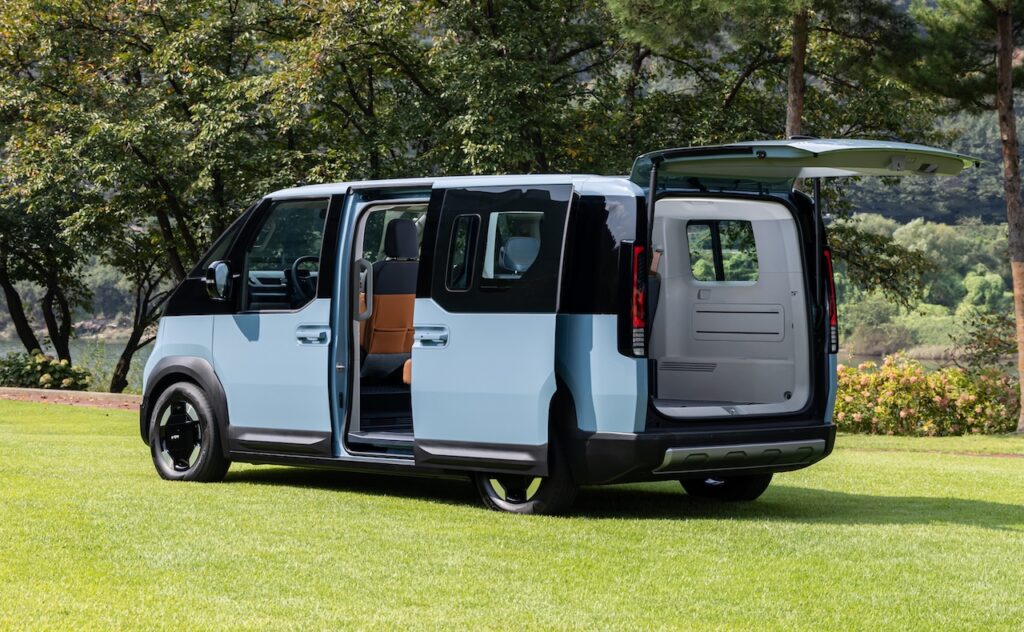
The PV5 Passenger follows the two-seat PV5 Cargo electric van, which launched locally earlier this year priced from $55,990 plus on-road costs.
The new PV5 Passenger has been granted Vehicle Type Approval VTA-066521, with the RVD classifying it as an M-category passenger vehicle with an AF MPV body rather than as a commercial vehicle.
Only one variant appears in the approval documents. The Long Range 7P has a 2200kg tare mass and 2750kg gross vehicle mass, while both its braked and unbraked towing capacities are listed at 750kg.
It measures 4695mm long, 1895mm wide and 1899mm high on a 2995mm wheelbase – the same basic exterior dimensions as the standard-roof PV5 Cargo already on sale in Australia.
Running clearance is a relatively modest 143mm, while the Australian-approved model rides on 16-inch wheels with 215/65 R16 tyres.
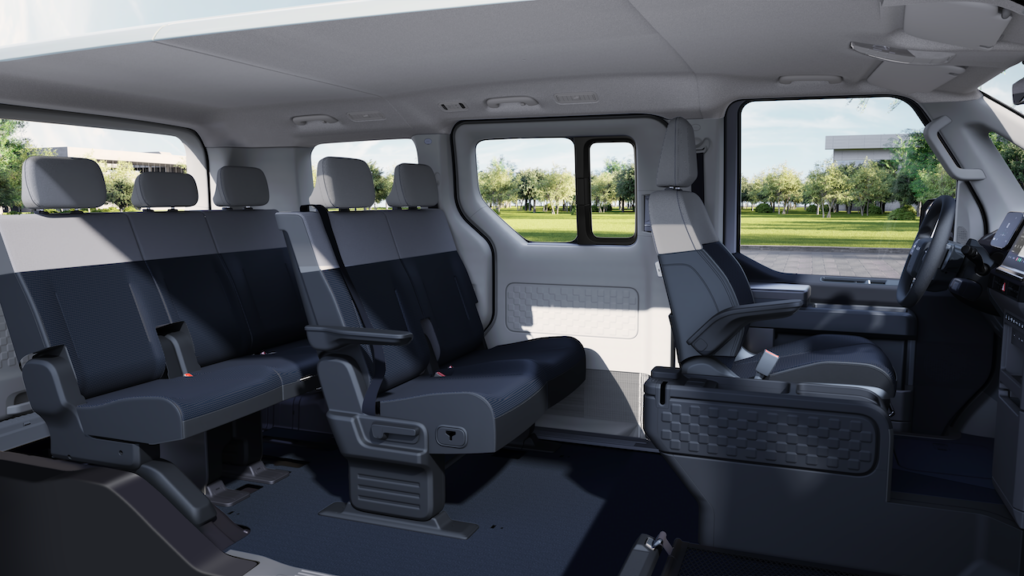
Most importantly, the RVD confirms the Australian PV5 Passenger will use the larger 71.2kWh CATL battery and an electric motor producing 120kW.
Torque isn’t specified in the federal documentation, but the mechanically related PV5 Cargo combines the same 120kW output and 71.2kWh battery with 250Nm and front-wheel drive.
The Cargo has a claimed WLTP range of 416km, but Kia has yet to announce an Australian driving range for the heavier Passenger.
At 2200kg, the seven-seater has a tare mass 190kg greater than the 2010kg Cargo, meaning its extra seats, glazing and interior trim could have an impact on range.
The Cargo can DC fast-charge at up to 128kW, with Kia claiming a 10-80 per cent battery recharge takes about 30 minutes.
The homologation documents also offer an early indication of Australian PV5 Passenger equipment.
Air-conditioning, cruise control, power windows, autonomous emergency braking, lane keeping assistance, lane following assistance and vehicle stability management are all listed as standard.
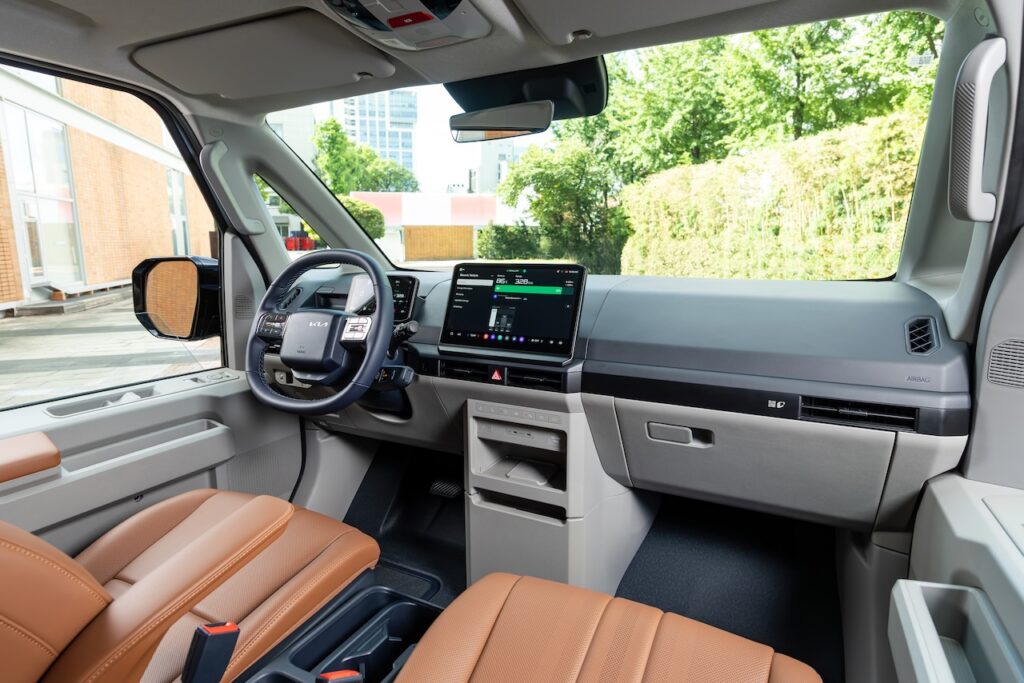
Driver, front-passenger, curtain and centre airbags are also standard according to the RVD.
Highway Driving Assist and power mirrors are listed as optional in the homologation documentation, although that doesn’t necessarily mean they will be optional on the final Australian showroom specification.
The PV5 Passenger is part of Kia’s new Platform Beyond Vehicle (PBV) family and shares its dedicated E-GMP.S electric architecture with the Cargo.
Unlike the Cargo’s two-seat cabin and large rear load area, the Passenger uses the PV5’s upright body to accommodate three rows of seats and seven occupants.
As a zero-emissions vehicle, the PV5 Passenger will also help lower Kia’s fleet-average CO2 emissions under Australia’s New Vehicle Efficiency Standard (NVES).
Kia Australia has also confirmed a high-roof version of the PV5 Cargo is due to join the range before the end of 2026.