Mercedes-Benz GLA EV deep-dive: Just how much does it share with the new Mercedes-Benz CLA EV
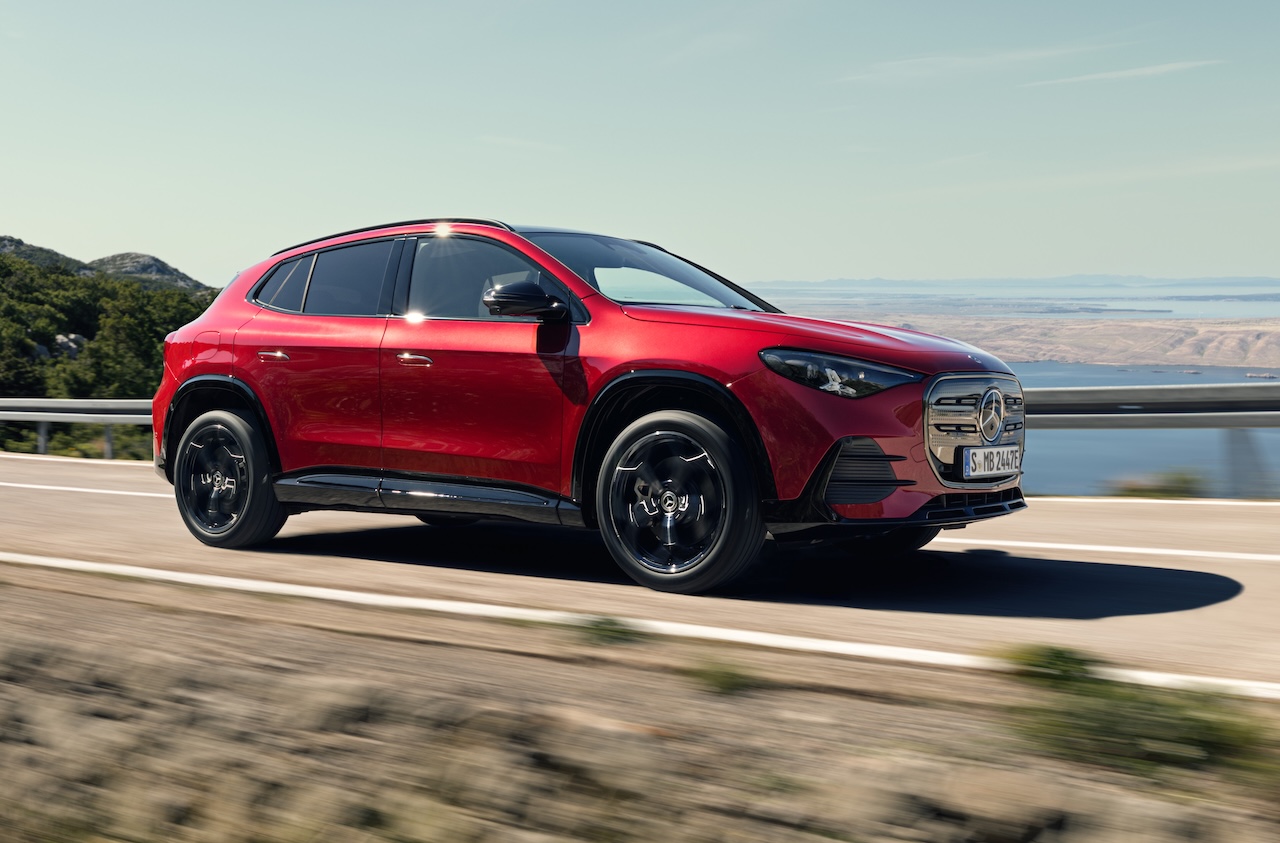
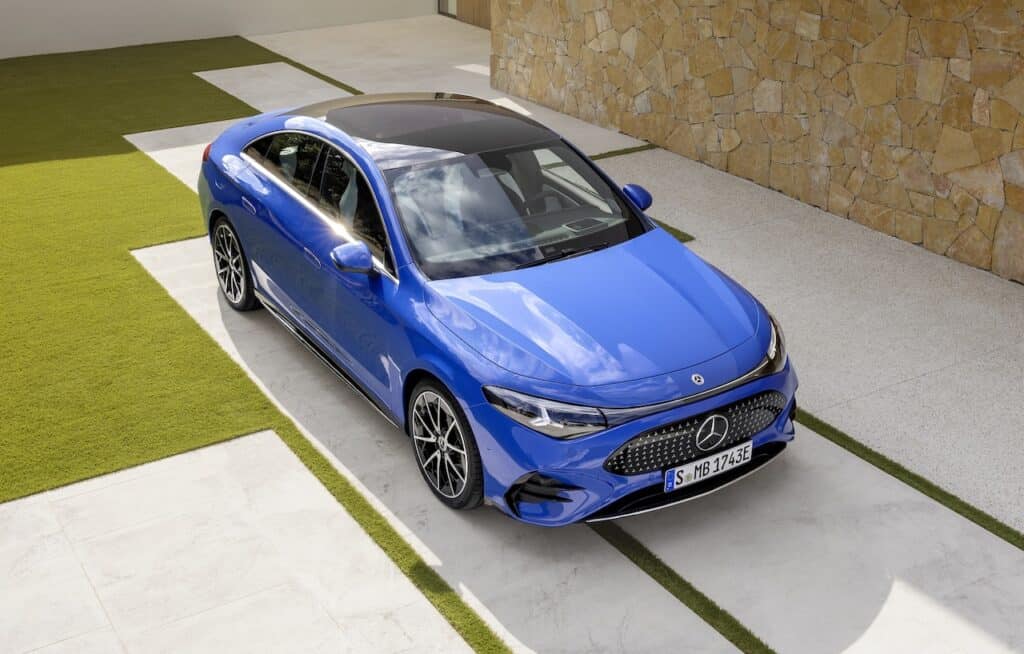
Mercedes-Benz’s all-new GLA may wear SUV bodywork, but beneath the skin it is effectively the high-riding sibling to the recently revealed CLA EV.
Rather than developing an entirely separate electric vehicle, Mercedes-Benz has transferred almost every major piece of technology from the CLA into its new compact SUV, giving the GLA one of the most advanced electric powertrains yet seen in the premium small SUV segment.
The result is an electric SUV that promises up to 657km of WLTP driving range, ultra-fast 320kW charging and significantly greater efficiency than the EQA it replaces.
READ MORE: Mercedes-Benz GLA EV revealed: Up to 657km range, 320kW charging and next-gen 800V tech. BMW iX1 and Audi Q4 e-tron beware!
READ MORE: Is this the best electric people-mover on the planet? Full 2027 Mercedes-Benz VLE specs confirmed
READ MORE: Mercedes-Benz CLA EV detailed for Australia: Pricing, equipment and range for all-new award winner revealed
The most obvious carryover is the new Mercedes Modular Architecture (MMA), which underpins both vehicles and has been designed from the outset to accommodate battery-electric and electrified combustion powertrains.
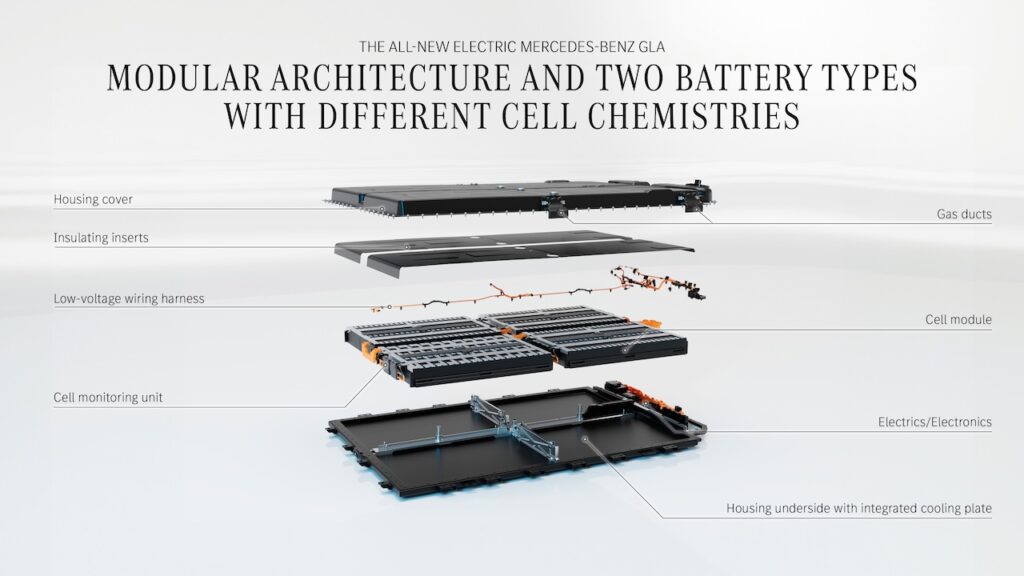
Like the CLA EV, every electric GLA uses Mercedes-Benz’s new 800-volt electrical architecture, replacing the older 400-volt systems used by most current premium electric SUVs.
That enables the GLA 250+ and GLA 350 4MATIC to accept DC charging at up to 320kW, allowing between 240km and 270km of WLTP driving range to be added in around 10 minutes under ideal conditions.
Mercedes-Benz has also fitted an optional DC converter so owners can still use older 400-volt fast chargers when necessary rather than limiting charging to the latest ultra-rapid infrastructure.
The electric drivetrain itself is also shared almost entirely with the CLA.
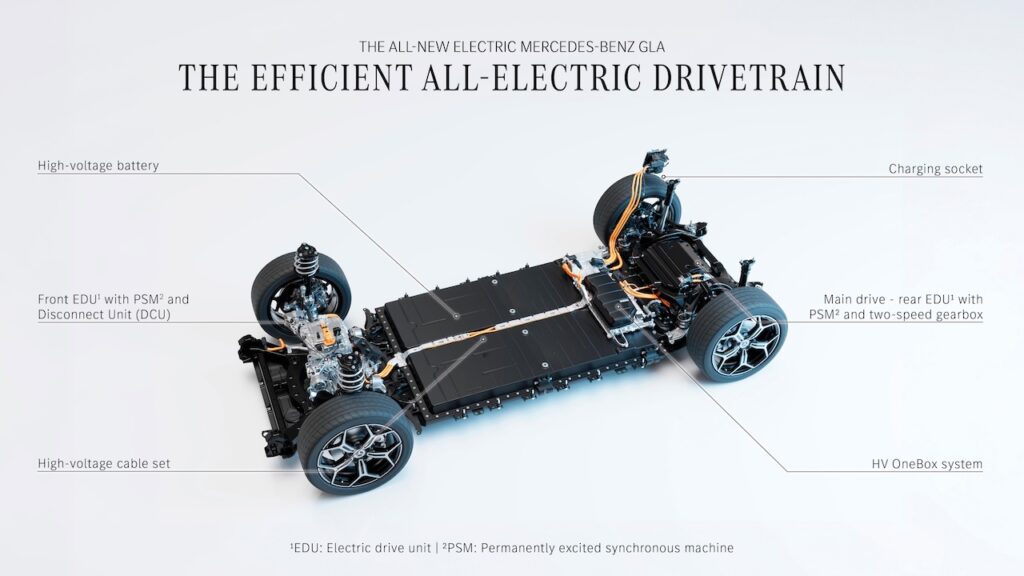
The rear axle uses a Mercedes-Benz-developed permanently excited synchronous motor (PSM) rather than buying an off-the-shelf unit from a supplier.
According to Mercedes-Benz, the motor combines a double-V magnet arrangement with hairpin stator windings to improve efficiency while also reducing operating noise.
Power electronics use a silicon-carbide (SiC) inverter, a technology increasingly adopted by premium EV manufacturers because it generates less heat and wastes less electrical energy than conventional silicon components.
Perhaps the most unusual feature inherited from the CLA is the two-speed transmission.
While most electric vehicles use a single reduction gear, Mercedes-Benz has opted for a two-speed gearbox that serves two distinct purposes.
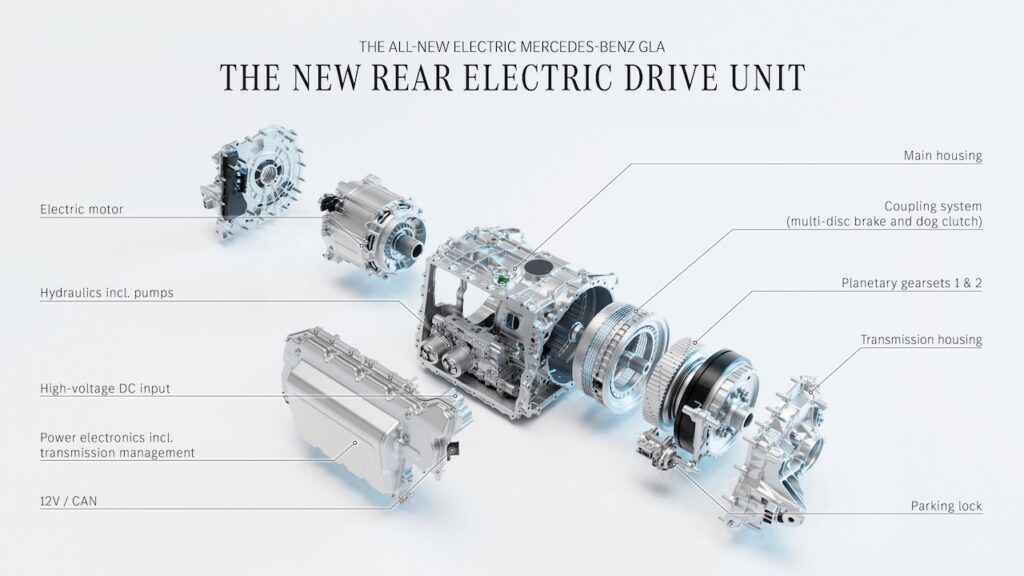
The lower first gear delivers stronger acceleration from rest, improves towing performance and increases efficiency in urban driving, while the taller second gear reduces motor speeds at highway cruising to improve long-distance efficiency and maximise driving range.
Gear changes are managed automatically depending on battery charge, power demand and the selected driving mode.
Mercedes-Benz has also carried across another of the CLA’s efficiency innovations for dual-motor models.
The GLA 350 4MATIC uses a second permanently excited synchronous motor on the front axle, but unlike conventional dual-motor electric vehicles, it is not permanently connected.
Instead, a Disconnect Unit physically decouples the front motor whenever additional traction or performance is unnecessary.
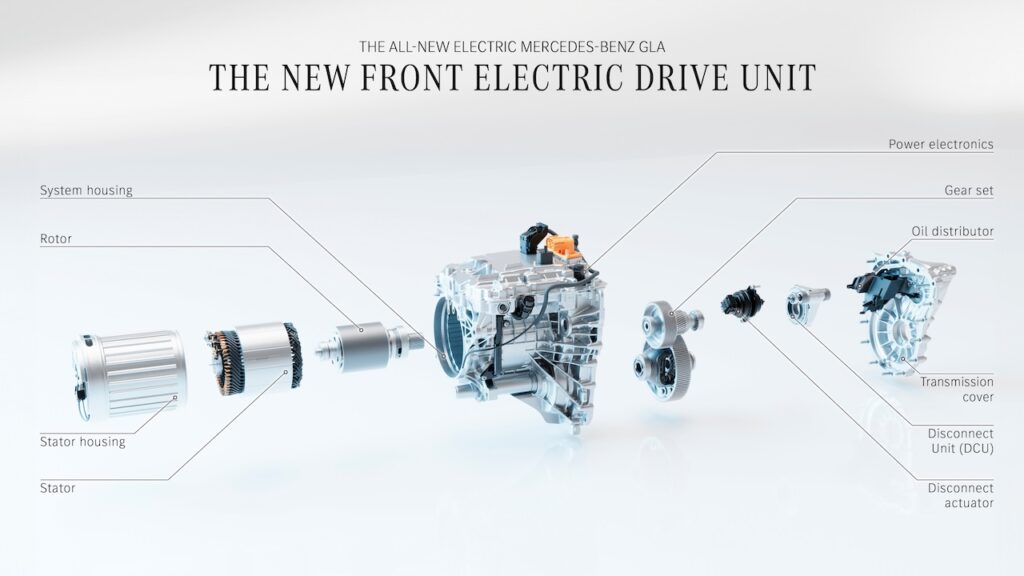
Mercedes-Benz says eliminating those mechanical drag losses can reduce front axle losses by up to 90 per cent, helping maximise driving range while allowing all-wheel drive to be re-engaged almost instantly whenever conditions demand.
Energy recovery has also been extensively redesigned.
The new One-Box braking system blends regenerative and friction braking into a single, consistent brake pedal feel while allowing almost all routine deceleration to be handled electrically.
Maximum recuperation reaches 200kW, with the system capable of continuing to recover energy even during ABS intervention or on slippery surfaces.
Drivers can select between four regeneration modes, ranging from free-wheeling through to strong regenerative braking, while an intelligent Auto mode uses navigation data together with camera and sensor inputs to determine the most efficient level of energy recovery for the road ahead.
Battery technology is likewise shared with the CLA.
The entry-level GLA 200 Electric pairs a 58kWh lithium iron phosphate battery with a 165kW rear motor, while the GLA 250+ and GLA 350 4MATIC receive an 85kWh nickel manganese cobalt battery delivering up to 657km of WLTP driving range.
Mercedes-Benz has also confirmed another electric variant using a 71kWh battery will join the range during 2027.
Despite the shared hardware, Mercedes-Benz has adapted the package for SUV buyers.
Compared with the CLA, the GLA offers substantially greater practicality through a larger luggage compartment, a 107-litre front boot and towing capacity of up to two tonnes for all-wheel-drive models.
Four-wheel-drive versions also gain a dedicated TERRAIN driving mode and a “Transparent Bonnet” function, which uses cameras to create a virtual view beneath the vehicle to assist when driving on rough tracks or positioning the SUV over obstacles.
The new GLA arrives in Australia in 2027.