What’s the deal with 800V? Why the EV tech that only matters some of the time should not be at the top of your shopping list
Read a press kit for many new electric cars revealed recently and you could find a reference to 800 volts in it somewhere.
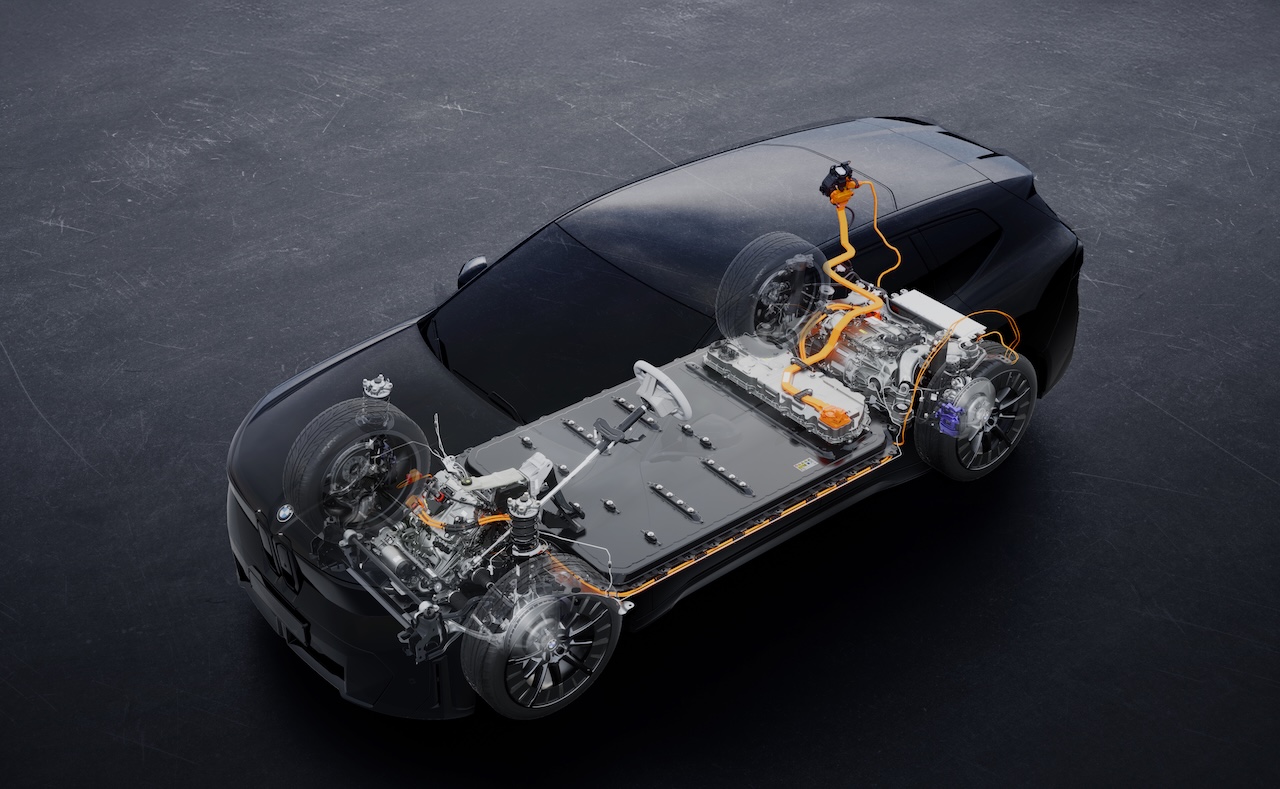
BMW’s new iX3 (pictured above). The Mercedes-Benz CLA. Porsche’s soon-to-arrive Cayenne Electric. Various cars from Zeekr, XPeng, Lotus and more.
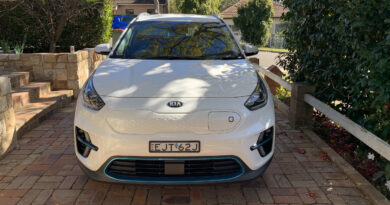
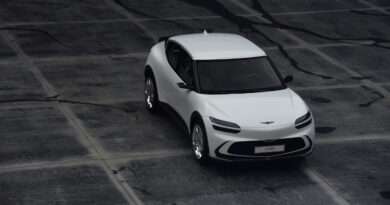
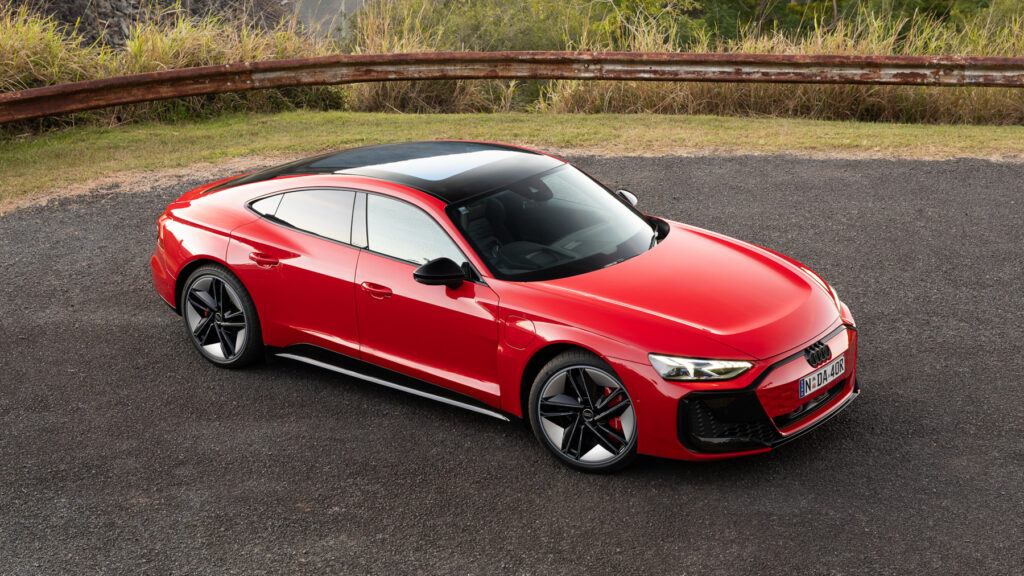
Of course, the Porsche Taycan, Audi e-tron GT and various Kias and Hyundais have been using 800V architectures for years.
But recently the default is very much turning to the higher voltage.
Eight hundred volts is presented as a leap forward, and in one sense it is.
But it’s also arguably a tad over-hyped, at least for the vast majority of the time for most EV owners.
What 800V really means
An EV battery is a stack of individual cells wired together.
Each cell typically puts out somewhere around 3.6 volts for NMC (nickel manganese cobalt) batteries, or around 3.2V for LFP (lithium ferrous phosphate) batteries.
Wire them in series and the voltages add up; wire them in parallel and the capacity adds up.
They’ll still have the same amount of energy, but how they absorb and disperse it can be different.
Arrange them one way and you get a pack of around 400V, which is what most EVs have utilised until recently.
Arrange them another way and you can step the voltage up to 800 or more.
Even then, the voltage an EV puts out varies depending on how much charge is in the battery.
And the voltage is rarely 800V.
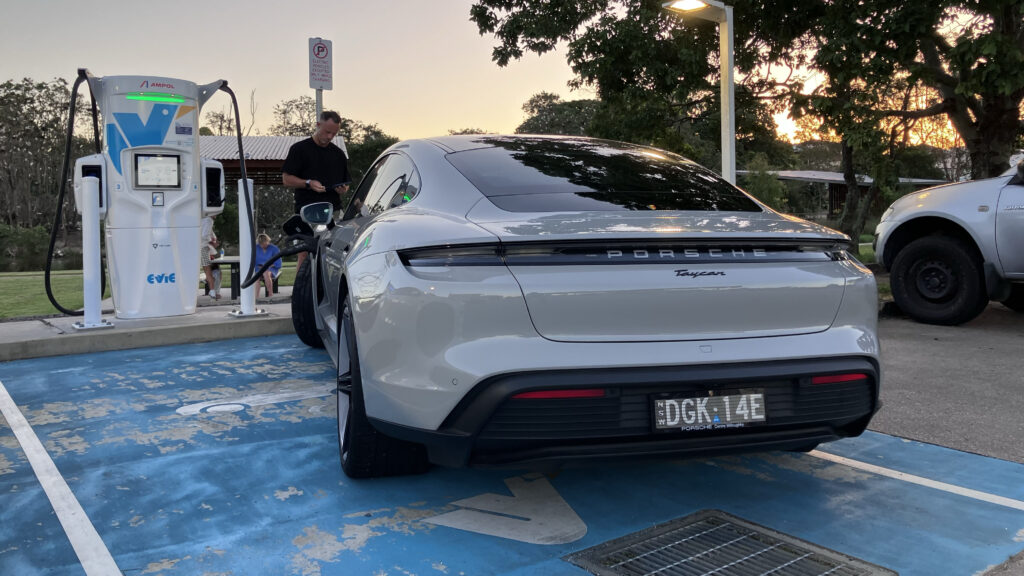
The Porsche Taycan is the car that started it all, yet even though it’s badged as an 800-volt system the original cars had a nominal voltage of 613V for the smaller battery and 723V for the larger battery.
And for that larger battery the voltage can swing from about 610 volts when flat to about 835 volts when full.
Voltage rises as state of charge rises, which is how the car monitors how much charge is left.
So an 800V system is not so much a hard and fast measurement, in the same way the 12V batteries used in all cars rarely put out 12 volts; they usually hover around 12.6 volts and get pushed to 14V or higher when the car is running.
When you see claims of how fast a car can charge it will often be relying on a high voltage – in the case of the upcoming Porsche Cayenne that’s 850V – and a lot of current (the amps required to get the power up).
Voltage ain’t power, but it helps achieve it
Anyone who remembers their high school physics will know that electrical power equals voltage multiplied by amps.
Ultimately, it’s the power that determines how fast the car will charge – but a higher voltage makes it easier to produce more power.
If you want to push 350kW into a battery at 400V, you need 875 amps. That’s a lot.
Push the same 350kW at 800V and you need less than 440 amps.
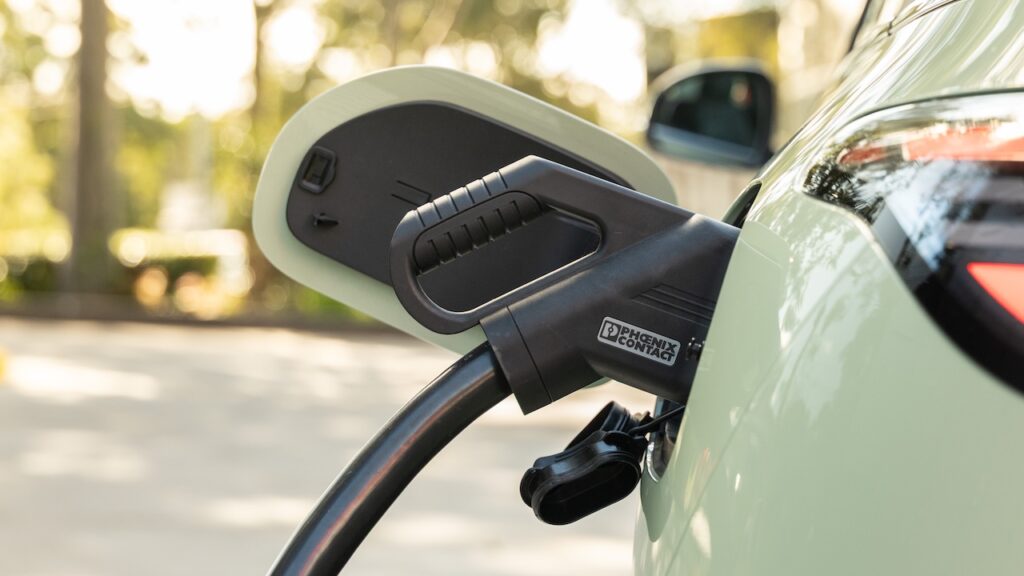
Compare that with the 10A maximum that a home powerpoint can put out and you can see we’re talking about big hits of electricity.
And those amps – the current – is the problem.
Current generates heat, and heat is the enemy of everything in the charging chain: including the cables and various connectors.
That’s why high-power charging cables can be liquid-cooled and very thick (and, therefore, heavy).
Double the current and you quadruple the resistive losses. Halve it and those losses drop off a cliff.
So doubling the voltage lets you move a lot more energy through the same hardware.
The main benefit with 800V is DC fast charging
An 800V architecture is almost entirely about public DC fast charging.
It affects almost nothing else with your ownership experience.
Charging at home on AC is identical no matter what the voltage of the battery pack.
Your home powerpoint – or EV charger – puts out about 230V, which is a whole heap less than what the battery is rated at.
It also goes through the car’s onboard charger to convert it from AC electricity coming out of the wall to DC electricity to be stored in the battery pack.
That onboard charger is typically 7kW, 11kW or 22kW, regardless of pack voltage.
An 800V Hyundai Ioniq 5 and a 400V Tesla Model Y plugged into the same wallbox overnight will do exactly the same thing at exactly the same rate.
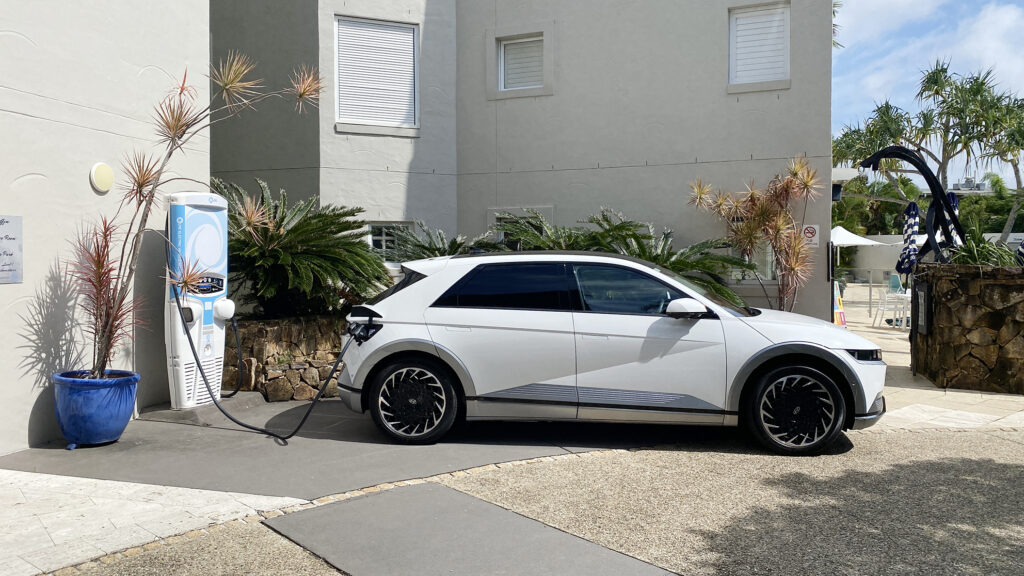
For anyone charging predominantly at home – which is most EV owners, most of the time – 800V is a number on a brochure.
However, there are some secondary benefits.
Lower current means thinner cables and less copper inside the car, which saves a few kilograms and some cost.
For Porsche, the lower weight is important.
It’s a company that has built its reputation on performance, so every little bit counts.
Higher voltages also mean slightly lower losses under sustained high load.
That’s one reason electricity is transported at extremely high voltages (sometimes 500,000V) over big distances.
For Porsche and others chasing big performance, the higher voltage can help with repeatable track performance rather than just charging.
Really, though, the headline is faster charging.
Are there downsides to an 800V electrical system?
Higher voltage is harder and more expensive to engineer.
Every high-voltage component – inverters, DC-DC converters, compressors, contactors, insulation, connectors – has to be rated for the extra stress.
Silicon carbide semiconductors rated to 1200V are one solution, but they cost more than those used in a 400V EV.
Higher voltages also mean greater insulation to ensure safety.
And the big one: if the charger you’re using is limited to 400V then there’s zero benefit.
In some instances there could be negatives.
Roll up to the latest 300kW Tesla Supercharger, for example, and the limiting factor could be the current (amp) limit on the car.
The Hyundai Ioniq 5/6/9 are a good example.
Their DC charging typically tops out at about 320kW, which is 400A of current.
The cabling in the car, therefore, is limited to 400A, which at 400V is 160kW.
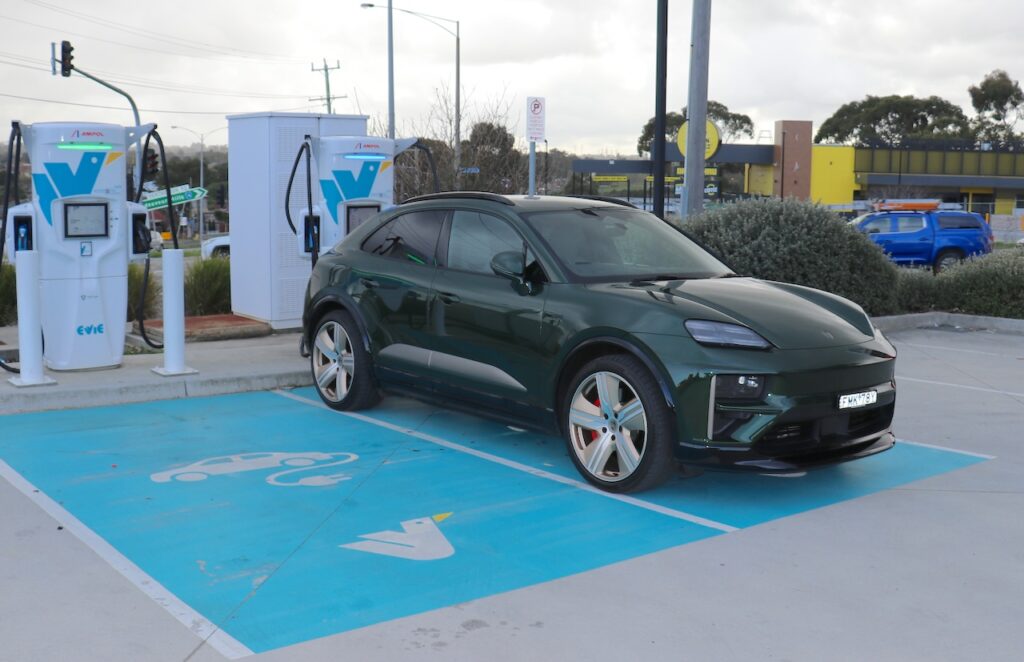
Similarly, the Porsche Macan is rated at up to 270kW of fast charging, but only on 800V. At 400V it’s limited to 135kW, again due to those current limits.
So even though the cars are capable of higher-powered charging, it relies on the 800V system to achieve that.
Can an 800V EV use a 400V charger?
All EVs can use all fast chargers, no matter what the voltage of the charger or what voltage the car is rated at.
That’s thanks to some simple but clever designs that allow the electrons to sort themselves out and everything to work as intended.
But there are different ways of achieving it.
The simplest way – and the way used by the Porsche Taycan, Audi e-tron and latest Mercedes-Benz CLA – is to use a DC-to-DC booster.
It steps the voltage up so that the battery sees 800V.
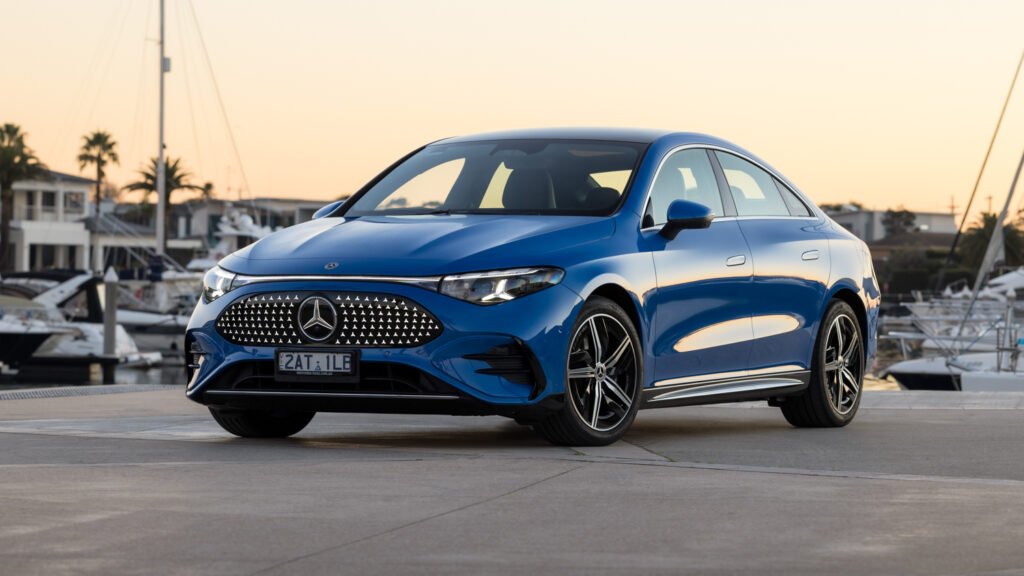
With its latest Macan, Porsche did without the need for that booster, instead essentially splitting the battery into two 400V banks and charging them concurrently when it sees a 400V load.
Hyundai and Kia used something quite clever, employing the motor as an inverter.
The rear inverter is reconfigured to act as a boost converter and the rear motor’s windings do the job of the inductor.
So there’s no additional hardware, no extra weight, although presumably there’s some tricky software to ensure it all works the way it should.
800V charging is limited, for now
Here’s where the enthusiasm needs tempering.
Australia’s ultra-rapid network – the 350kW and 450kW units from the likes of Evie, Chargefox, NRMA, Ampol and BP – will generally deliver above 800V and let an 800V EV maximise its charging speed.
But the far bigger slice of Australia’s public charging infrastructure is 400V, often limited to 50kW and 75kW hardware.
That includes the vast Tesla Supercharger network, much of it now open to all EVs.
That’s because all Teslas sold in Australia run a 400V system (the Cybertruck is the brand’s first 800V EV).
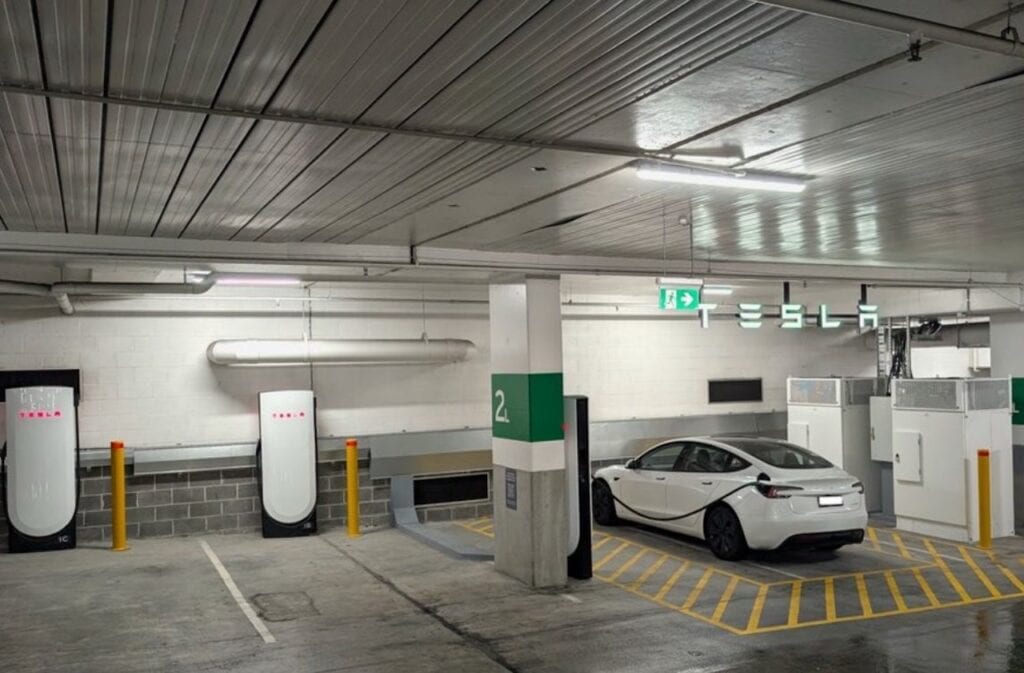
Tesla’s reasoning is that bigger, higher-draw vehicles benefit, smaller EVs with smaller batteries less so.
The other half of the answer is that Tesla built its way around the problem. Rather than raising voltage, it went hard on current: Model 3 and Model Y peak at 250kW on a 400V system.
Tesla owns its charging network, so it had the advantage of being able to optimise both ends of the equation.
Is it inevitable Tesla changes? Probably, but it’ll likely happen when a new platform demands it.
Why not go to 1000V or 2000V?
Higher voltage is generally better, right?
In many instances, yes, but it also creates challenges.
BYD’s Super e-Platform is a full 1000V architecture, paired with a battery capable of charging at up to 1000A, for a peak of 1000kW.
That’s the tech behind the “flash charging” sites Denza has committed to installing at Australian dealerships.
So, if 800 is better than 400, why isn’t everyone at 1500V or higher?
Essentially it comes down to safety.
We’ve all seen lightning, which is a high voltage burst of electricity travelling through thin air.
Air is an insulator, but only up to a point.
Push enough voltage across a gap and the air itself ionises and becomes conductive – you get an arc.
The higher the voltage, the wider the gap it can jump.
No amount of clever software gets around it.
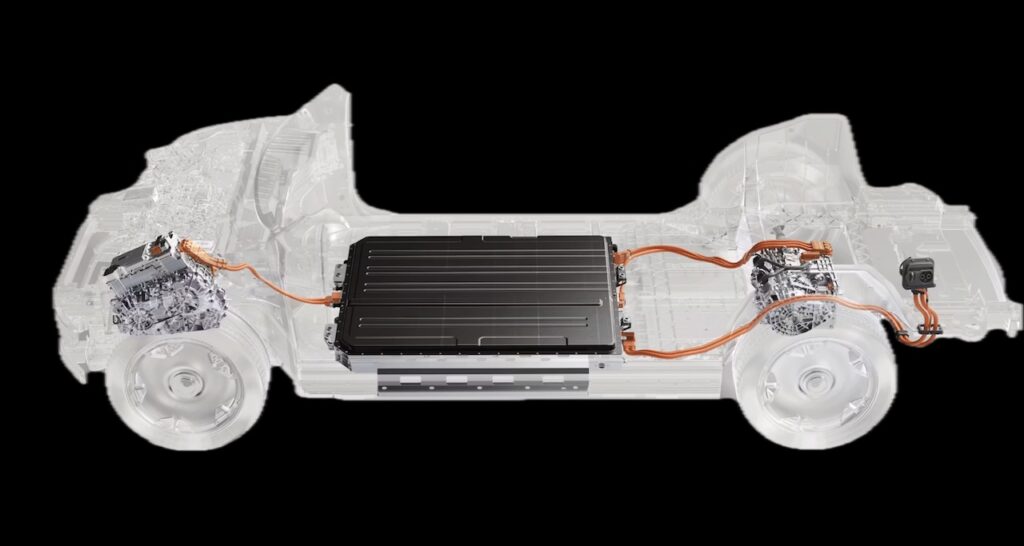
Engineers solve the issue by providing more clearance – distance – between high voltage components where you don’t want a spark.
Go higher in voltage and components have to physically move further apart, in a car where nobody has spare room.
There’s also the issue of the plug.
The CCS2 Combo plug fitted to every EV now sold in Australia – including Teslas – tops out at 1000V.
Anything beyond means a new connector standard, which the EV world (rightly) is not in a rush to adopt.
Components dealing with higher voltages can also get expensive.
Besides, with circa-300km charging now down to 10 minutes or less – and BYD/Denza’s flash charging to halve that – it’s getting to the point where the gains are minimal.
Will all brands end up on 800V?
More and more cars are embracing 800V electrical systems, but not because 800V is magic.
It’ll happen because new platforms get designed once and live for a decade, because silicon carbide is getting cheaper every year, and because no car maker wants to be the one whose spec sheet says 400 when the rival’s says 800.
With bigger and more luxurious EVs it’s a no-brainer to head to 800V.
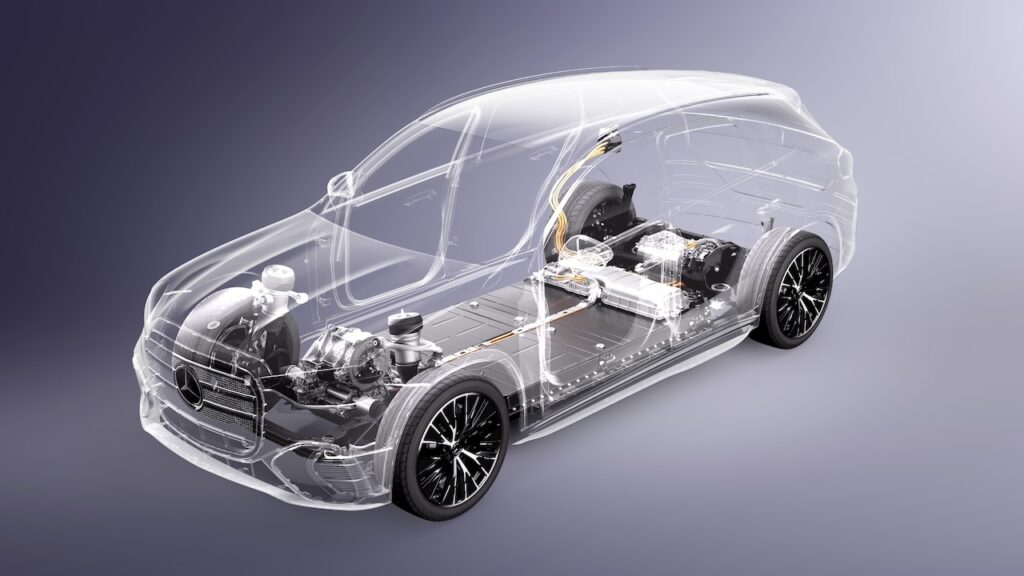
But we’d still expect cheaper city-focussed cars to stay 400V for a while yet, because an LFP hatchback with a 50kWh battery charging at 80kW has nothing to gain.
One point worth making is :don’t go buying an EV based on the voltage.
Buy it because of how it suits your needs and if the charging achieves what you need it to in terms of time taken.
A car that hits 350kW for 90 seconds and then falls off a cliff is not as good as one that sits at 180kW from 10 to 70 per cent.