
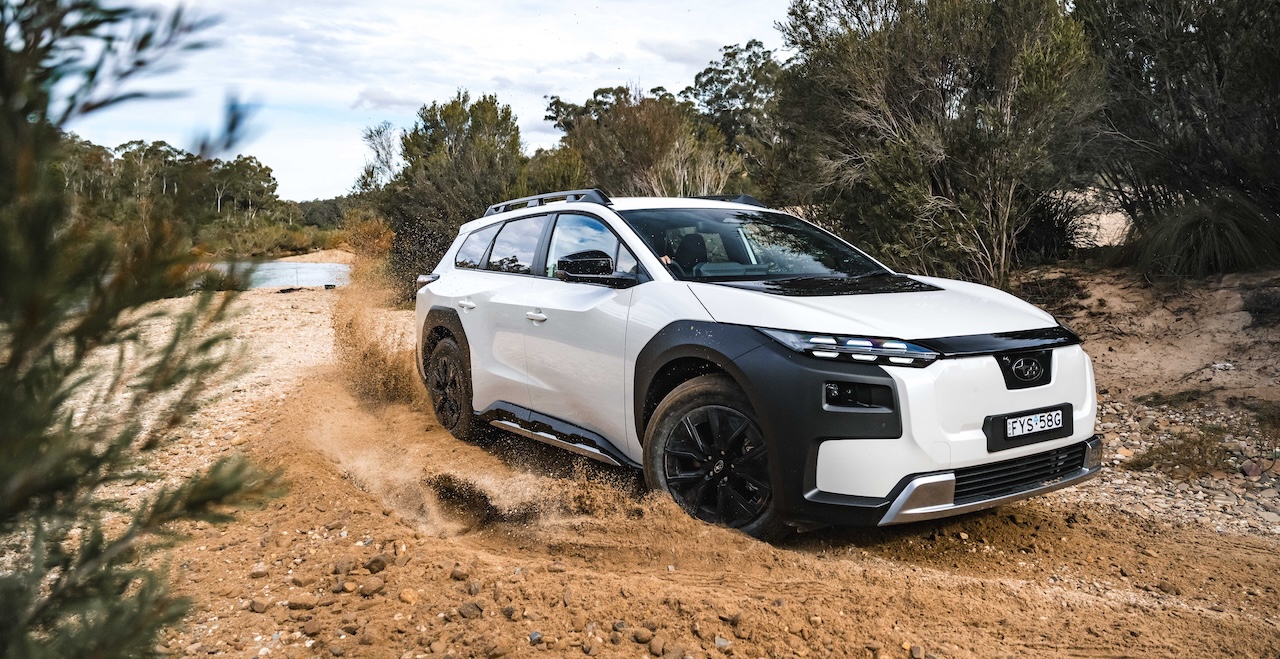
2026 Subaru Trailseeker Brief Drive: Is this the new all-terrain EV benchmark?
“Truly unique multi-terrain capability in an all-electric vehicle,” says Subaru Australia’s product engineer Brad Hickin of the new Trailseeker SUV/wagon.
Sounds ideal for the EV-curious with a taste for adventure, but this new model – basically an electric alternative to the brand’s popular Outback petrol large SUV – has some question marks against it.
No spare wheel. Towing just 1500kg next to an Outback’s 2100kg. The latter has 220-240mm ground clearance beside the Trailseeker’s 211mm, while the Subaru EV’s range of 533km (or 488km in higher spec Touring grade) is roughly 300km down on what an Outback manages between fills.
Comparing apples with oranges? Yes and no.
READ MORE: 2026 Subaru Solterra AWD Review: It’s now cheaper, faster and more efficient. This medium SUV has turned from pretender to contender
READ MORE: Subaru Trailseeker Aussie price and equipment detailed: EV flagship is an AWD SUV with a starting price under $70K
READ MORE: Subaru Uncharted electric SUV confirmed for Australia
Subaru buyers are a loyal and particular lot. Compromises and range anxiety when it comes to their all-wheel-drives doesn’t sit well, especially as many are used over unsealed roads, sandy or muddy tracks and for family bush trips.
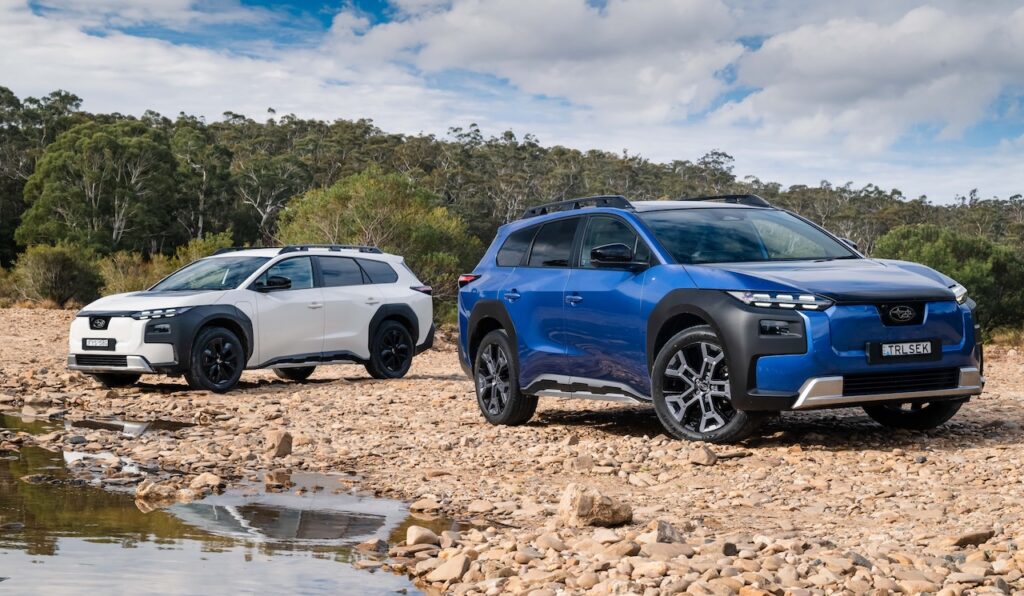
But while the Trailseeker objectively offers less “multi-terrain capability” than an Outback, trade off is a beautifully smooth drive experience from a brace of electric motors. And phenomenal performance.
A 74.7kWh battery feeds the twin motors which combine to offer 280kW, while there’s mighty 268Nm at each axle. With Subaru’s famed symmetrical all-wheel-drive employed, there’s no wheelspin to speak off as this 2100kg wagon-like SUV hauls to 100km/h in only 4.5 seconds.
Marvellously, it’s the most powerful and fastest accelerating production Subaru yet offered, holding two fingers up to the fan-favourite WRX STIs. It feels devilishly fast in a straight line, without any uncomfy pinning of driver to the seat-back.
Question is, do shoppers really want this from their Subarus? And are they prepared to pay such a significant premium for the privilege?
Ah yes. The price.
A Trailseeker AWD is some $69,600 on the road, while a more salubrious Touring grade’s around $75,900 in the traffic. An all-new petrol-power Outback can be had from $16,000 less, and that buys a lot of unleaded.
Subaru’s banking on a market for full electric all-terrain SUVs. Its Solterra medium SUV (which hasn’t been a sales winner) is now priced from $61,990, and the soon-arriving Uncharted small SUV EV drops at $59,990.
A couple of grand between each EV – all twin motor AWDs – feels too tightly packed for comfort. But at least it makes the largest (but still only five-seater) Trailseeker appear the value pick.
Our dirt road test was more limited than we’d have hoped, but the Trailseeker displayed impressive and familiar Subaru traits. Sure-footed and safe-feeling on loose terrain, it also handled some sizeable dirt pot holes without any spine crashing.
But it feels its weight next to something like an Outback when doing daily on-road driving duties, riding firmer than most Subaru owners would be used to. And perhaps like.
On smooth roads and highways it’s rather delightful, cruising well and in serene silence. But so many SUVs achieve this too – and offer rapid performance – for less money.
A Tesla Model Y (from $58,900) is a space and tech powerhouse, while a Zeekr 7X (from $57,900) is heavy on premium (feel not fuel) for less coin.
A Trailseeker’s trump card over these and others is its all-terrain bent, plus Subaru’s always excellent X-Mode traction management system, which allows these vehicles to be driven on inclines and loose surfaces (snow, soft sand, etc.) with surprising competence and ease.
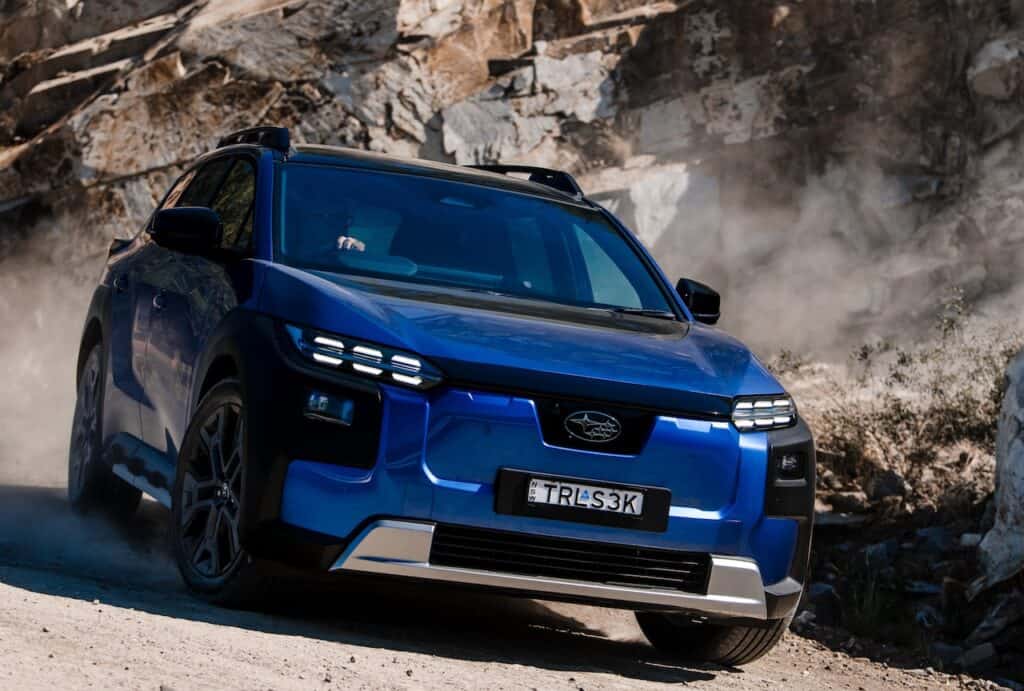
Our brief drive meant we couldn’t explore the Trailseeker’s X-Mode over any relevant terrain (we searched, but could not find), but have no doubt it’s as impressive as the X-Mode found in Subaru’s smaller Solterra EV.
While steering and braking hits the mark, it’s a shame the numerous and not terribly strong regen modes exclude one bringing one-pedal drive.
Other misses are no over-the-air updates or connected services, V2L is available only in the pricier Touring, while along with the not-superb range, charging is up to 150kW DC, which is fairly average these days.
Subaru claims 10-80 per cent public charging in 30 minutes. For those lucky enough to have 3 phase power, AC charging can be done at 22kW. That drops the 0-100 per cent charge time to roughly 4 hours; it’s 12 hours at 7kW using Single Phase.
Helping justify the price, these Trailseekers are well equipped and have classy but not premium cabins.
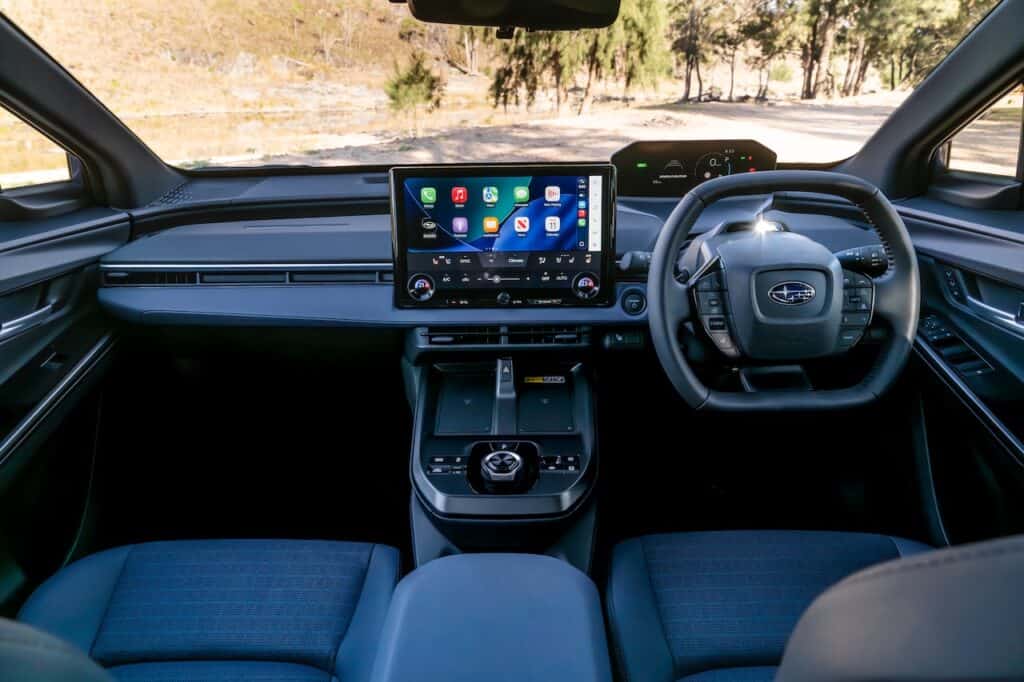
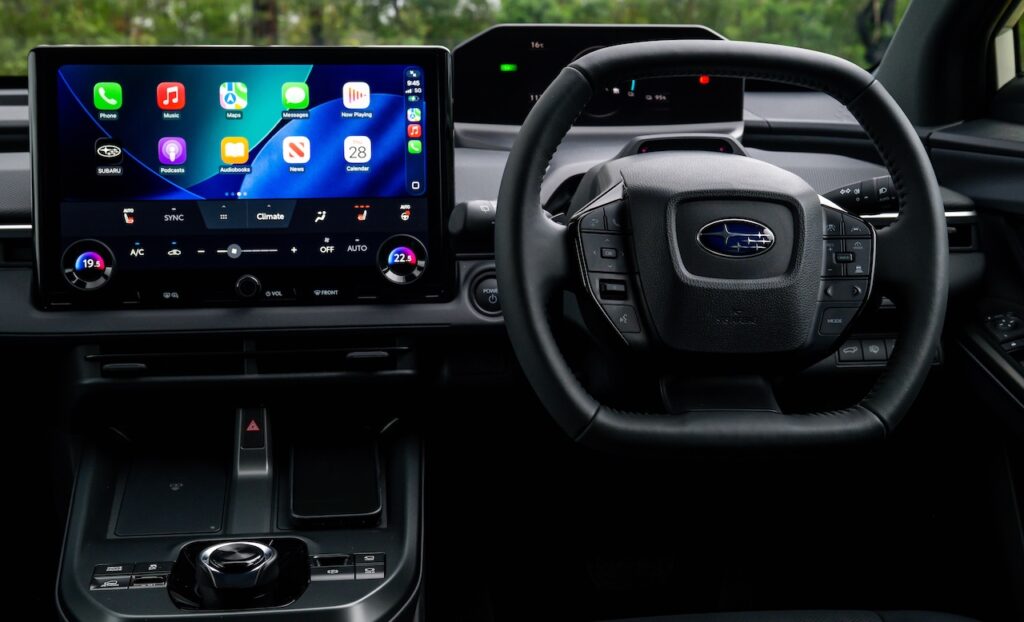
Both grades use synthetic or part-leather, have four heated seats, 14-inch infotainment, duo of wireless chargers and a hands-free tailgate.
The Touring adds memory and ventilated chairs, panoramic glass roof and Harman Kardon audio, but its 20-inch alloy wheels punish EV range to the tune of 50km: the AWD’s 18-inch wheels help aerodynamics, and would be the pick, you’d say, for those wanting to go more all-terrain travelling.
The infotainment is lifted from Lexus (no bad thing) and the Toyota bZ4X Touring – sister car to this Trailseeker – although Subaru’s done bespoke suspension work to its offering to ensure it’s more Subaru-ey.
There are proper buttons for climate control which is a huge win; there’s decent rear space with reclining seats, and the boot trumps Subaru’s Outback’s: 633L versus 522L.
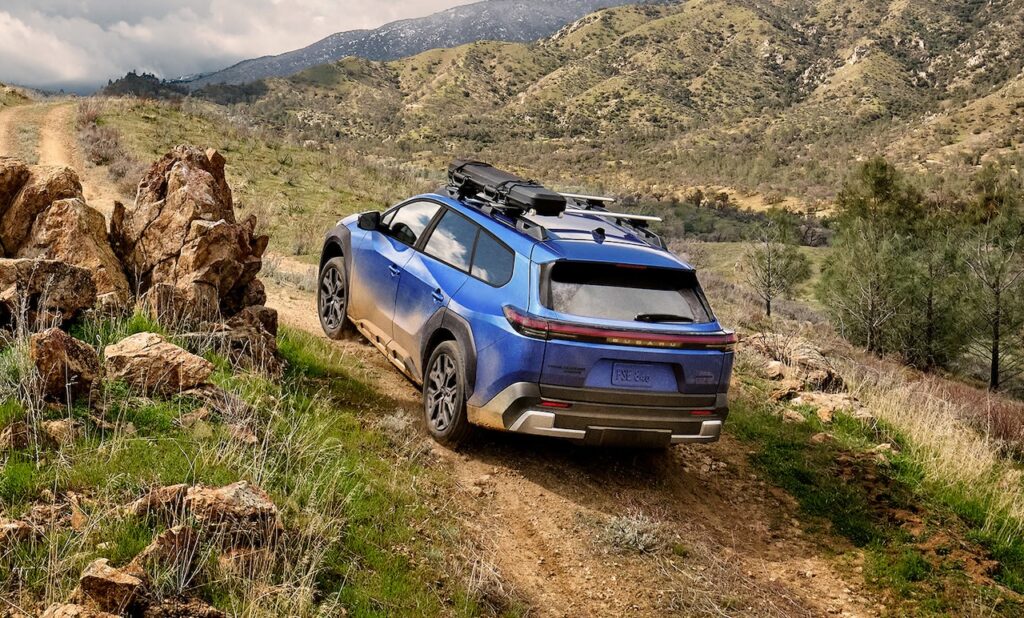
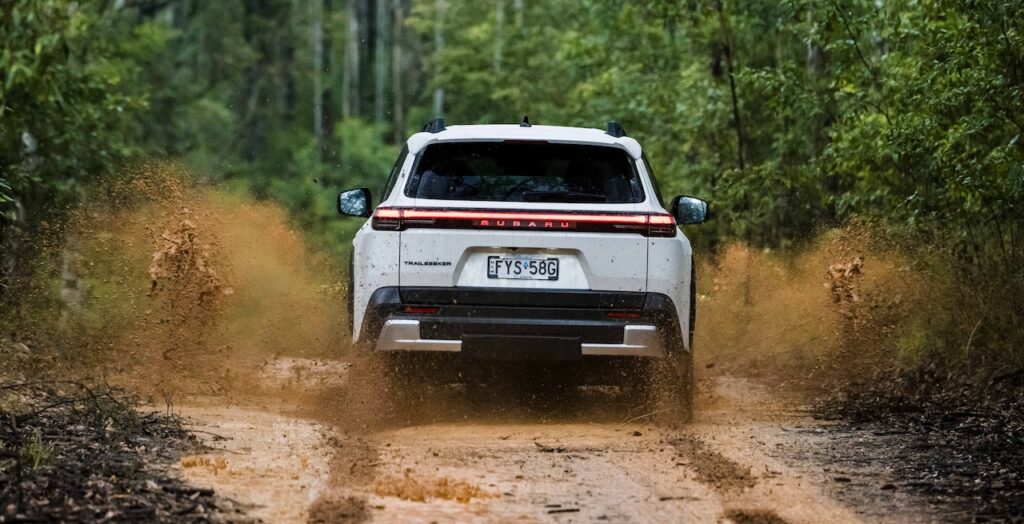
But no spare (just a repair kit) under the Trailseeker’s boot floor will rule it out for some. I asked Subaru about this significant omission and was told: “We’re investigating options.”
Clearly, some potential Trailseeker customers have been sounding the alarm about the no-spare situation.
For the Subaru faithful, such a barrier to purchase may be the Trailseeker’s undoing. Not least when the brand has a popular, competent (and cheaper) line-up of petrol-powered SUVs with fewer compromises. Even if they lack the obvious appeal of EV motoring.
I’d have loved Subaru to have been bolder with the Trailseeker, as there’s not much to truly set it apart from other electric SUVs.
Yes it’ll do more of the all-terrain stuff than most electrics, but how about a Wilderness+ version from the get-go to really tap into an EV niche barely catered for?
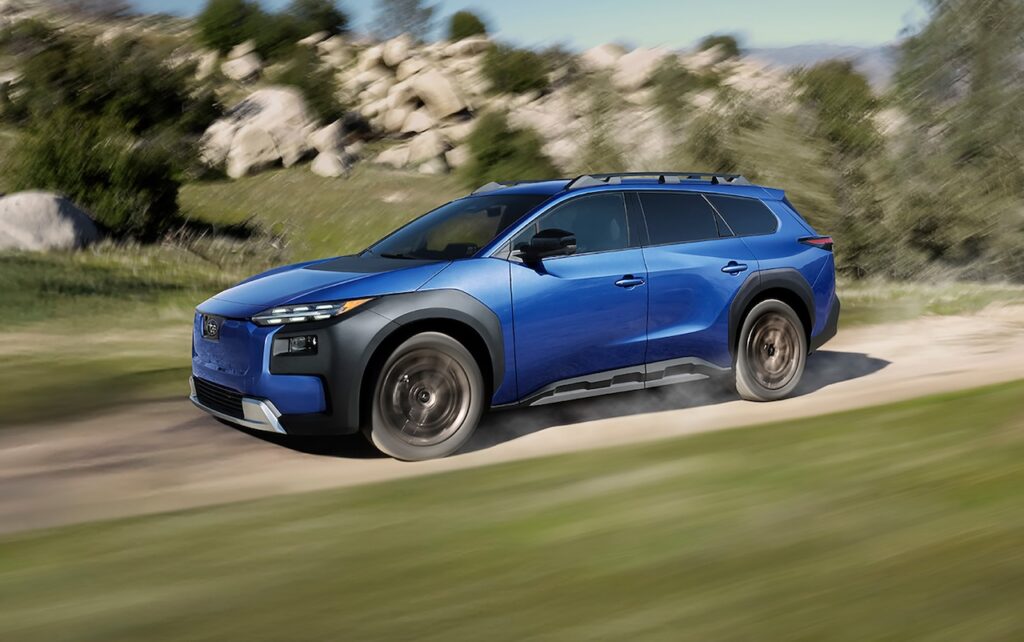
I’m talking adaptive suspension, higher ground clearance, all-terrain tyres over smaller wheels, and a full-size spare wheel. Such things in the Trailseeker would help justify the cost of entry and open up adventuring to the EV-curious.
Then it’d feel like something truly different for the market. We have plenty of rapidly accelerating EVs like this Trailseeker already to choose from… what we need is a true bush-ready electric SUV with rugged looks to match.
Subaru Trailseeker AWD price and specifications
Price: $63,990 (AWD) and $69,990 (AWD Touring) plus on-roads
Basics: EV, 5 seats, 5 doors, large SUV/wagon, AWD
Electric Range: 533km (AWD) or 488km (AWD Touring)
Battery capacity: 74.7kWh
Energy consumption: 15.4kWh/100km (AWD); 16.8kWh/100km (AWD Touring)
Powertrain: Twin electric motors, combined 280kW with 268Nm at each axle
AC charging: 22kW
DC charging: 150kW
0-100km/h: 4.5 seconds

Sadly, it’s just another city car. Lack of spare wheel is an instant deal breaker for a car meant to go off the tarmac. A family going camping with this is very likely to have a load on the roof, that means a hefty 30% less range, making it not fit for purpose in Australia unless you just want for take the kids camping down the local park.
Gotta love the misleading marketing photos. 100% the car was not driven to those places, but carried on a flatbed.
I love EVs and I own one. If you want to go seek trails in Australia, diesel is your best option. Sadly. For all other commuters EVs are a no brainer though.
The spare is something that’s available standard in Columbia/Peru and other Latin American markets. Likely Subaru weighed the weight and costs and opted to leave it out for now.
https://youtu.be/6r3qHphgeKk?si=0cNYNdikQhUlYej2&t=936