
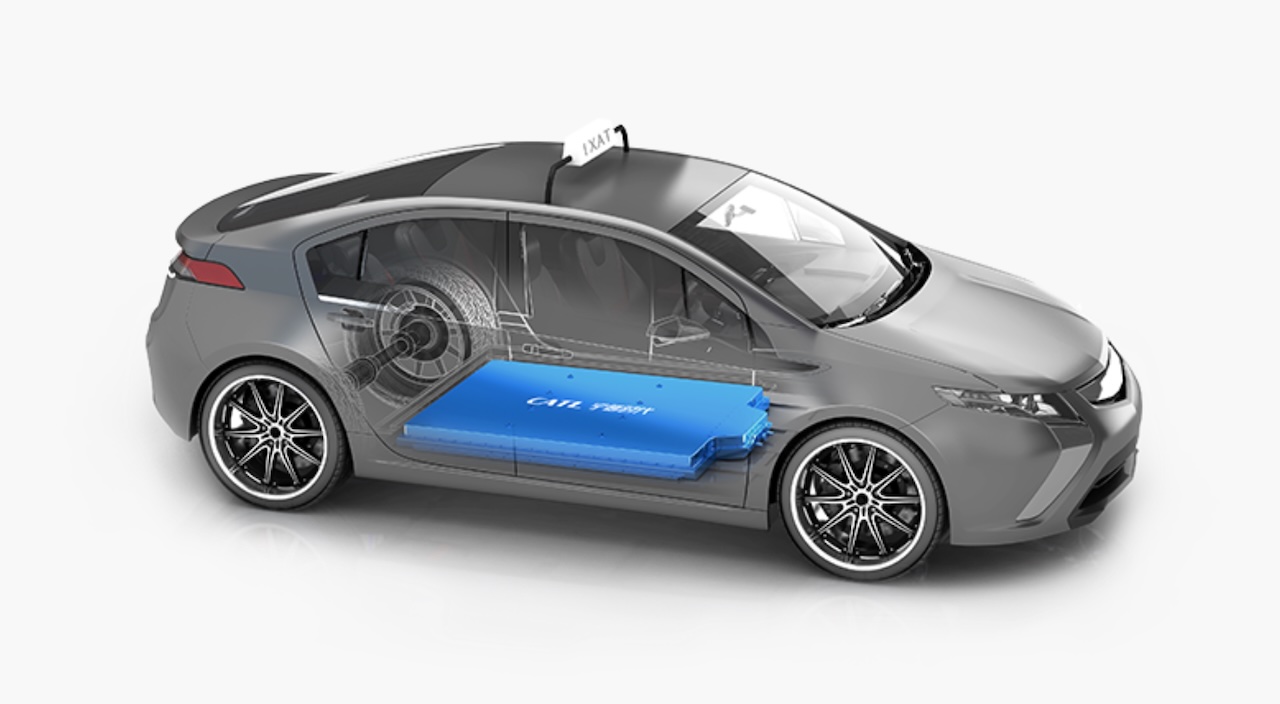
Has solid state been surpassed already?
Battery mahufacturing giant CATL has revealed more details about the pioneering lithium-air battery technology it is developing, which offers an energy density almost 50 times that of the most powerful lithium-ion batteries and could give even small cars a range of more than 1600km.
The radical technology does away with the usual heavy metal compounds such as nickel, cobalt and manganese – minerals not used in LFP batteries common in many value-focussed EVs – that house lithium ions, instead using lithium metal for the anode and oxygen from the air as the cathode.
The ‘breathable’ battery slashes weight, complexity and cost – but that’s not the chief reason attracting the world’s largest high-voltage battery producer. Rather, it is lithium-air’s potentially unmatched energy density.
READ MORE: Highly charged: Geely challenges BYD fast-charging supremacy with battery taking 4 minutes for a 10-70 per cent top-up
READ MORE: BYD’s radical breakthrough! Next-gen Blade battery 2.0 is as fast to top up as petrol: 10-70 per cent charge will take just five minutes!
In early laboratory testing carried out by the Argonne National Laboratory in the United States, researchers achieved an energy density of around 1200Wh/kg, more than four times that of current lithium-ion batteries (250-270Wh/kg) and well beyond the 500Wh/kg expected from solid-state cells.
Incredibly, scientists have calculated that, with further development, CATL could one day extract an astonishing 12,000Wh/kg from the technology, a figure that approaches the 13,000Wh/kg energy density of petrol.
At that level, CATL claims electric vehicles fitted with lithium-air cells could offer a driving range well beyond 1600km on a single charge.
The hurdles to overcome remain largely the same as when battery developers first began experimenting with the technology in the 1970s, with moisture and carbon dioxide both affecting performance.
CATL confirmed that both stability and lifespan remain major challenges.
Current prototypes are said to be capable of only 1000 recharge cycles. That may not sound like much but with a potential range of 1600km per charge that equates to 1.6 million kilometres. More than enough for most drivers.
CATL has not provided a timetable for commercialisation, but some analysts suggest the first lithium-air batteries will not enter mass production until after 2030.
That said, the battery giant, which produced more than 55 per cent of the world’s high-voltage batteries last year, took just six years to bring sodium-ion batteries into mass production and has already signed supply agreements with GAC, Changan, Geely, Chery and FAW.

This is pretty much clickbait. Just like solid state batteries, these are perpetually 5 years away.
Why not write about CATL’s previous battery announcements like the M3P with 20% more density than LFP that had to be in Teslas 3 years ago.