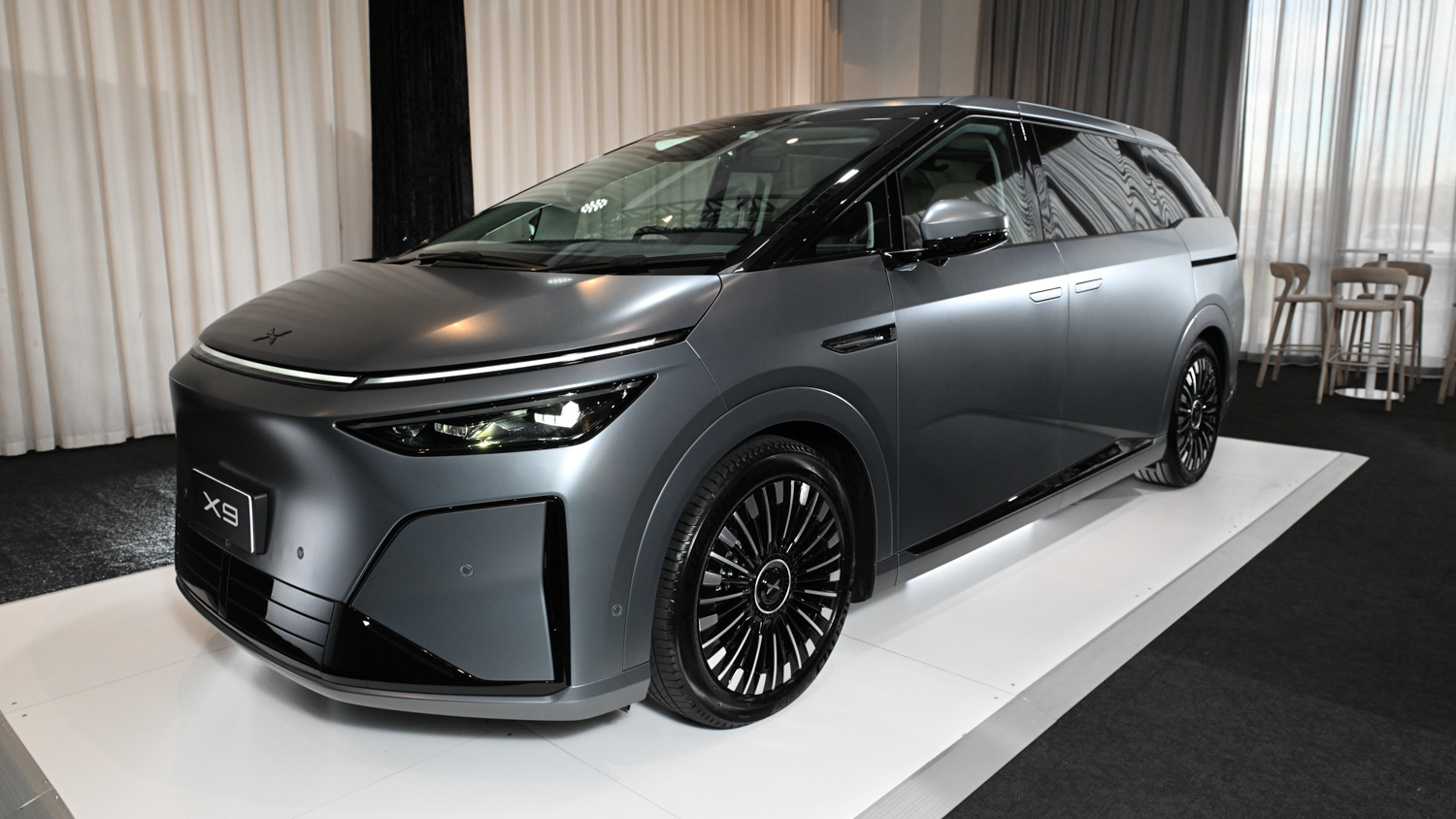
XPeng X9 Aussie price and equipment: Super-smart electric seven-seater arrives to take on luxury SUVs and a new wave of high-tech people-movers
XPeng has priced its X9 electric people mover from $89,900 plus on-road costs, with orders open now ahead of imminent deliveries.
The flagship seven-seater is the second of five new models the relaunched Chinese brand has promised Australia by the end of 2026 – and it arrives into a growing niche: the luxury people mover.
Along with the Zeekr 009, GAC M8, Denza D9 and Lexus LM, the X9 is part of a wave of premium people movers giving buyers a more spacious alternative to the luxury SUVs that have effectively taken over the role of limousines.
READ MORE: Forget BYD! XPeng relaunches in Australia with five new models and the German luxury brands in its crosshairs
READ MORE: Updated XPeng G6 announced – including AWD Performance variant
READ MORE: Electric full-size XPeng GX revealed: But is its styling just too close to Range Rover for comfort
READ MORE: Space invader: Upgraded luxury seven-seat XPeng X9 is now world’s longest-range pure-electric seven-seater vehicle. In Australia soon
On price it undercuts the Zeekr 009 and comes in at a fraction of the Lexus LM, with two variants: the front-wheel-drive Standard Range at $89,900 with a claimed 535km of WLTP range from a 94.8kWh LFP battery, and the all-wheel-drive Performance at $109,900 with 580km from a 110kWh NMC battery pack.
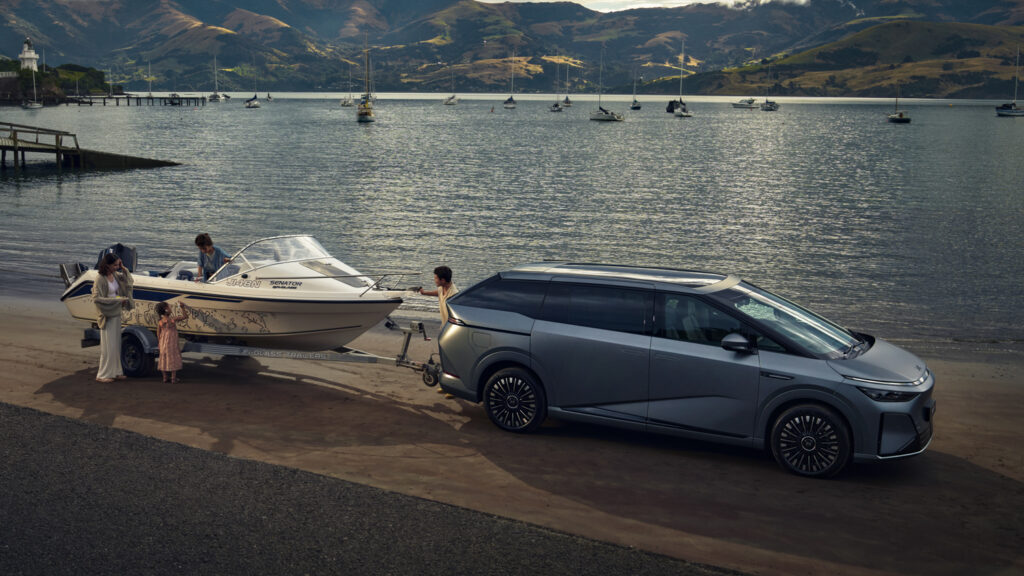
The AWD Performance makes 370kW and 640Nm, enough to shift the big MPV from 0-100km/h in a claimed 5.9 seconds.
The luxury boxes are ticked: Nappa leather, second-row Zero Gravity seats with 14-way electric adjustment, heating, ventilation and massage, a heated third row, 21.4-inch rear entertainment display, 27-speaker sound system (from little known brand Xopera), panoramic glass roof, five-zone climate control and a voice-controlled fridge/warmer that runs from 0 to 50 degrees C.
But XPeng wants buyers to see the X9 as something very different to other three-row vehicles: a tech play.
It’s the first XPeng sold in Australia with the company’s fully self-developed Turing AI chip, delivering a claimed 750 TOPS (that’s 750 trillion operations per second, or roughly triple that of the Nvidia Drive Orin chip) of computing power to run everything from voice interaction to the XPILOT Assist driver assistance suite.
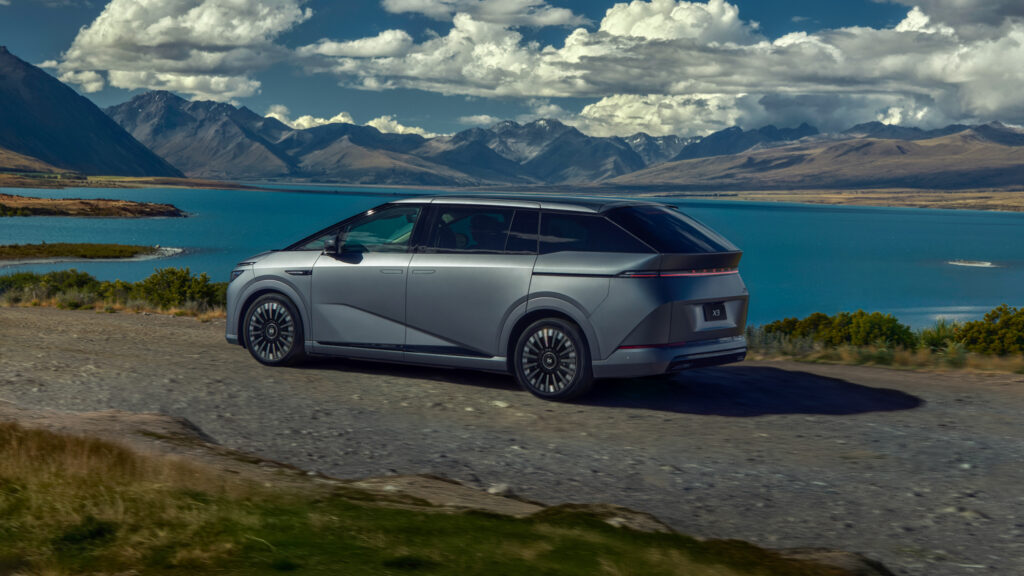
The X9 also shares its brains with the sportier G6 SUV.
“To look at, they couldn’t be any more different,” XPeng ANZ head of marketing Damian Royce said at the brand’s Melbourne relaunch. “One is a sleek coupe SUV, the other is a seven-seater. But here’s the thing – they’re the same car. Not in shape – it’s with the intelligence.”
“If the sporty G6 is the car you want to drive, the X9 is the car you want to be driven in … Same mind, same promise.”
Helping that case is standard equipment rare at the price: rear-wheel steering to tighten the turning circle and dual-chamber air suspension working with what XPeng calls its AI chassis system (adjustable dampers).
The X9 rides on XPeng’s 800V electrical architecture.
Peak DC charging of up to 542kW on the AWD Performance enables a claimed 10-80 per cent recharge in as little as 12 minutes ,while there’s 11kW AC charging and 6kW vehicle-to-load capability.
There’s also 721 litres of boot space with all seven seats in use, expanding to 2554 litres with the 60/40 split second and third rows folded.
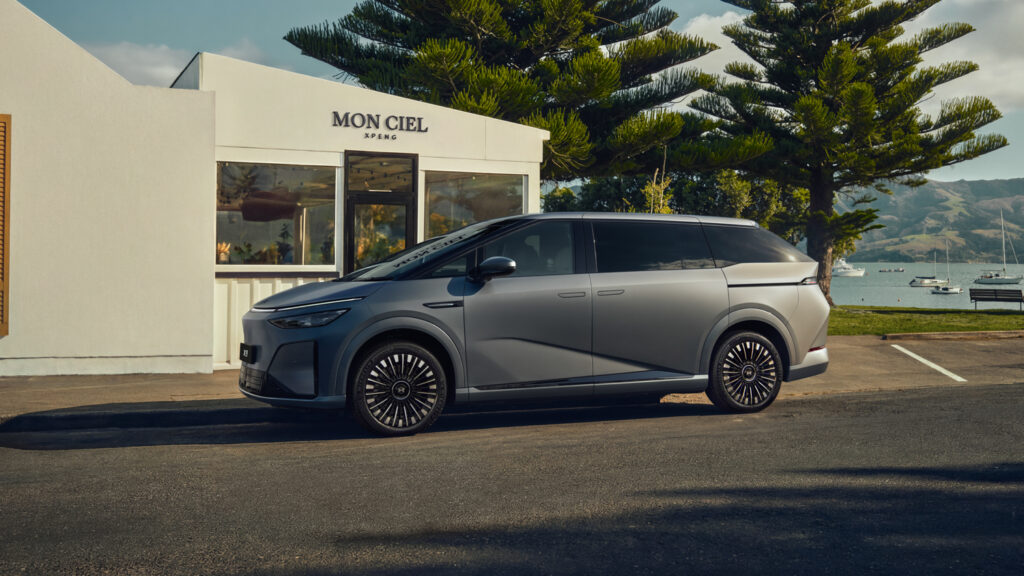
XPILOT Assist bundles adaptive cruise, lane centring, AEB and blind-spot detection, along with an extensive parking suite including remote parking and a see-through view.
The X9 crystallises XPeng’s Australian positioning: prestige and luxury territory, with technology as the differentiator.
Referencing the experience overseas – particularly some European markets – the brand says its customers will come from Mercedes-Benz, BMW, Audi and Tesla rather than mainstream Chinese marques.
It’s covered by XPeng’s seven-year, unlimited-kilometre warranty for private buyers (seven years/160,000km for commercial use), with an eight-year/160,000km warranty on the battery and drive units. Service intervals are 12 months or 20,000km.