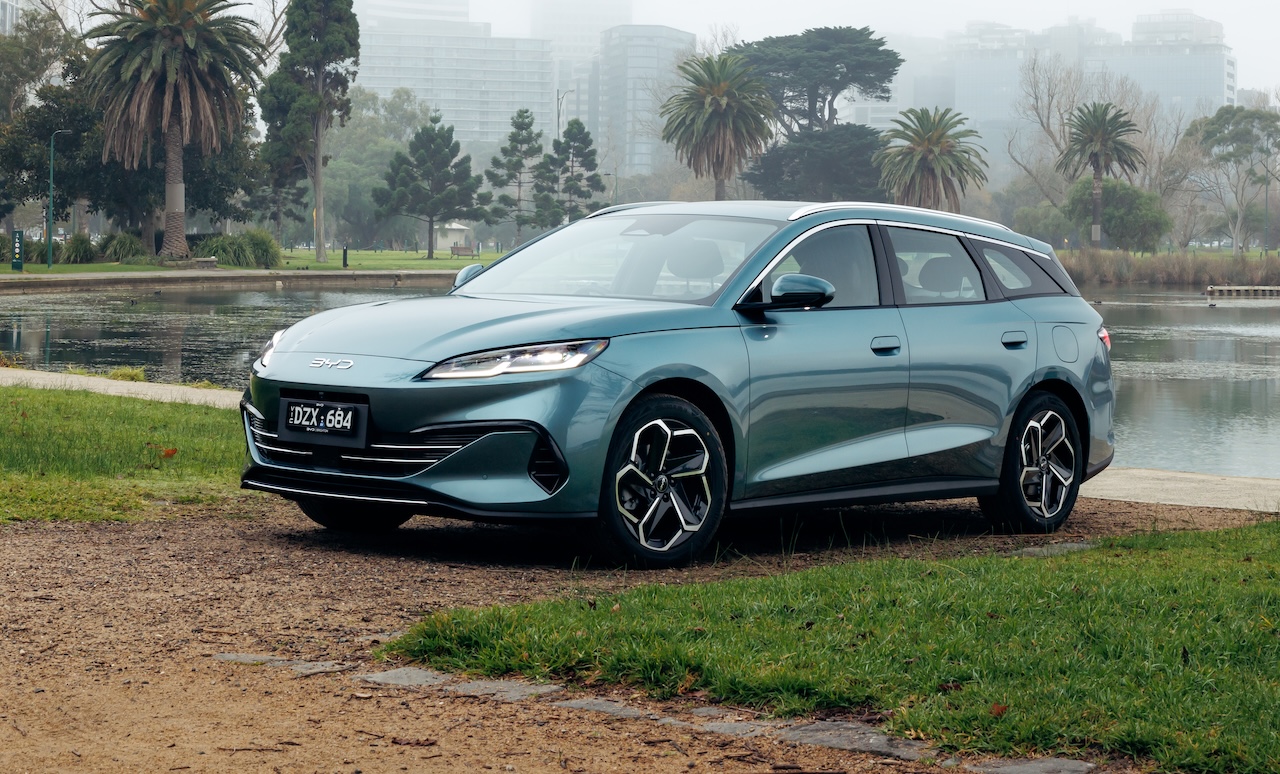
2026 BYD Seal 6 Touring Premium Review: Has BYD brought the affordable family wagon back from the dead?
Affordable station wagons have virtually disappeared from Australian roads as SUVs have taken over.
Which makes the new $39,990 BYD Seal 6 Touring an unusually interesting arrival.
It combines a big 670-litre boot, plenty of passenger space and traditional low-riding wagon proportions with plug-in hybrid power, a 19kWh battery and 125km of claimed electric range.
And if you’re worried about what happens when the battery runs down, our first meaningful drive provided a pretty convincing answer.
We drove the Seal 6 Touring 1012km from Sydney to Melbourne, including a diversion through the Victorian Alpine region, without stopping for fuel or electricity.
READ MORE: BYD Seal 6 price and spec revealed
READ MORE: The rebirth of the passenger wagon? High hopes for low-riding BYD Seal 6 Touring in Australia
READ MORE: 2026 BYD Sealion 8 Premium PHEV Seven-Day Review: The family car to build our dreams?
2026 BYD Seal 6 Touring Premium price and equipment
The BYD Seal 6 Touring is priced at $39,990 plus on-road costs and is offered in Australia in a single Premium specification.
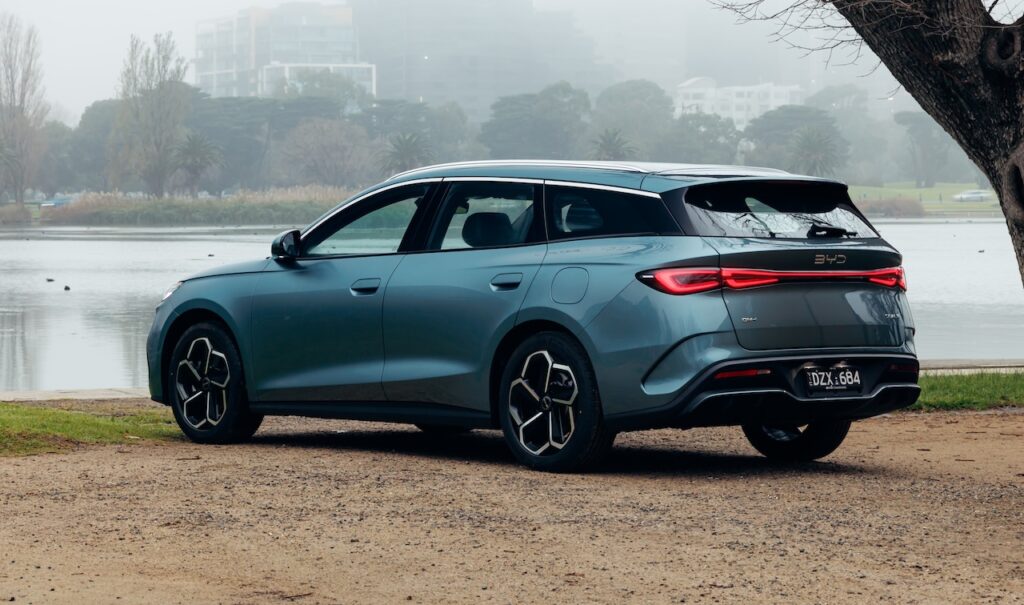
It arrives alongside the Seal 6 sedan, which starts lower at $35,990 plus on-road costs, but the Touring is mechanically more powerful as well as significantly more practical.
Both use BYD’s fifth-generation DM-i plug-in hybrid technology, but the Touring combines a naturally aspirated 1.5-litre four-cylinder petrol engine with a more powerful front-mounted electric motor and larger battery.
Combined output is 163kW and 260Nm, all sent to the front wheels, and BYD claims 0-100km/h in 8.1 seconds.
The 19kWh BYD Blade lithium iron phosphate battery provides a claimed 125km electric driving range on the NEDC cycle. BYD’s Australian specification sheet also lists a 100km WLTP electric range.
Official fuel consumption is 0.8L/100km on the NEDC combined cycle with sufficient battery state of charge, rising to 4.1L/100km when the battery is considered depleted.
As with every PHEV, those official fuel figures need context because what an owner actually uses will depend heavily on how regularly the car is charged and the sort of driving it does.
Charging is unusually useful for a PHEV because the Touring accepts both 6.6kW AC charging and up to 26kW DC fast charging.
There’s also vehicle-to-load capability for powering external electrical equipment.
The Touring is 4840mm long, 1875mm wide and 1505mm tall on a 2790mm wheelbase, so this is a substantial family car despite its relatively low roofline.
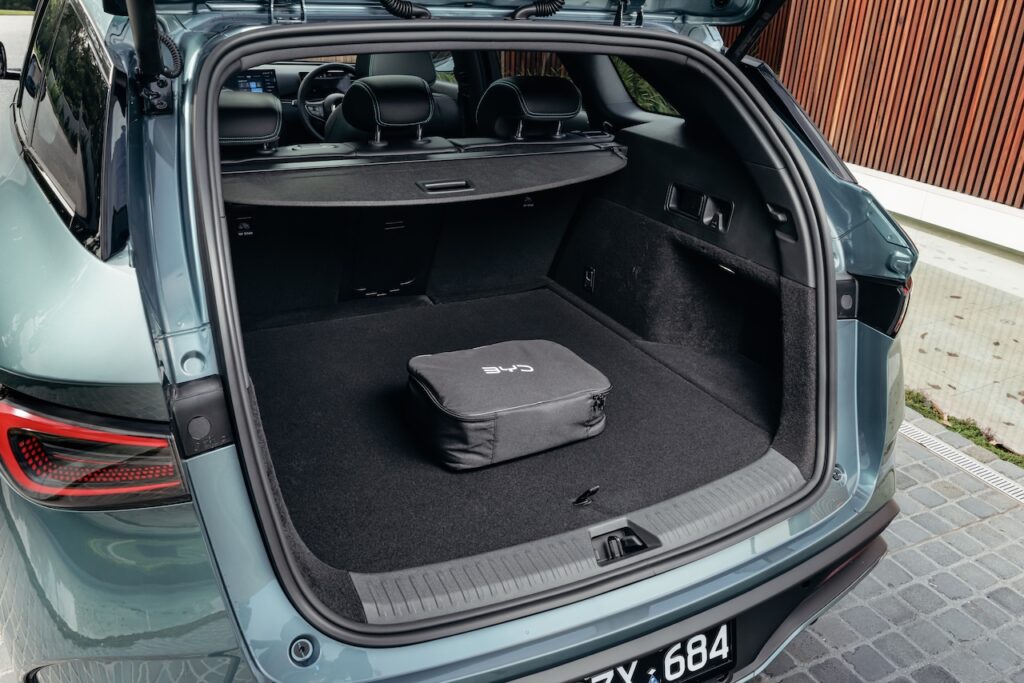
Boot capacity is 670 litres with the rear seats upright and 1535 litres with them folded, which gives the Seal 6 considerably more luggage space than many similarly priced SUVs.
Standard features include 18-inch alloy wheels, LED lighting, a panoramic sunroof, powered tailgate, electrically adjustable and folding exterior mirrors, synthetic leather trim, power-adjustable front seats, heated and ventilated front seats, wireless phone charging and rear air vents.
There’s an 8.8-inch digital instrument display and BYD’s familiar 12.8-inch central infotainment touchscreen with Apple CarPlay and Android Auto.
A 360-degree camera, front and rear parking sensors, adaptive cruise control, blind-spot monitoring, lane keeping assistance, rear cross-traffic alert and driver monitoring are also included.
The Seal 6 has a five-star ANCAP safety rating covering both sedan and Touring versions.
2026 BYD Seal 6 Touring Premium: What we think
The first thing you notice about the Seal 6 Touring is just how naturally it settles into the role of long-distance family transport.
Our route took us from Sydney along the Hume Highway to Albury, then into the Victorian Alpine region before eventually arriving in Melbourne.
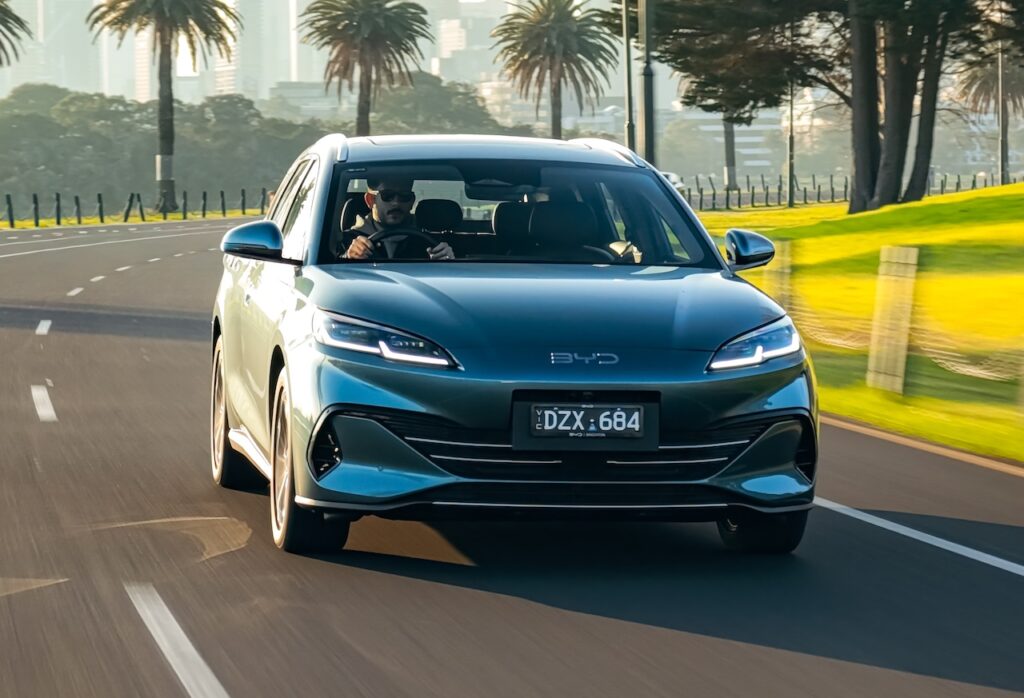
We left Sydney with a fully charged battery and drove 1012km without stopping for petrol or plugging the car in.
On arrival the trip computer was still displaying 22km of electric range and 115km of petrol range, or 137km combined.
That doesn’t mean we independently verified a 1149km or 1300km total range – the final 137km was an estimate generated by the vehicle rather than distance actually driven. But completing more than 1000km across a mixture of freeway and mountain roads without refuelling is nevertheless an impressive result.
The way the DM-i system goes about it is equally convincing. This is an electric-first hybrid system, so with sufficient charge the electric motor does most of the propulsion work while the petrol engine can generate electricity or contribute directly to driving the front wheels depending on conditions.
Around town it consequently feels much more like an EV than a conventional hybrid. That remains largely true on the freeway.
At 110km/h the 1.5-litre engine cuts in and out without drawing much attention to itself and the transition between electric and petrol-assisted running is often difficult to detect from inside the cabin.
The powertrain also avoids the strained engine note that can afflict some hybrids when they’re asked to maintain high speeds or climb hills.
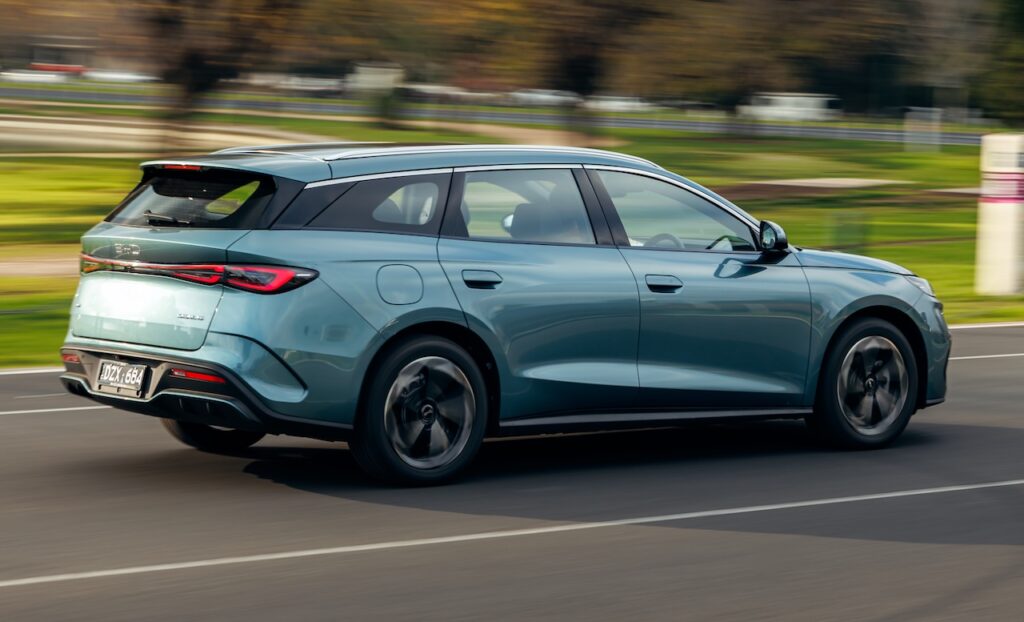
Highway refinement is generally good. Wind noise is well contained and tyre noise is reasonable on smooth asphalt, although coarser and concrete surfaces generate more road noise, particularly in the front of the cabin.
The safety systems also deserve a mention because the various warnings and driver-monitoring alerts are relatively restrained compared with some other recent Chinese cars.
Through the twisting roads of the Victorian Alpine region there’s plenty of front-end grip, steering response is reasonably sharp and body roll is well controlled for something designed primarily as a comfortable family wagon.
The electric motor’s immediate torque also helps it accelerate neatly out of tighter bends.
But this isn’t a sports wagon. The suspension can become unsettled by sharp bumps and potholes, particularly when they arrive mid-corner, and there’s some secondary body movement before the car regains its composure.
Some additional local chassis tuning would help on rougher Australian roads.
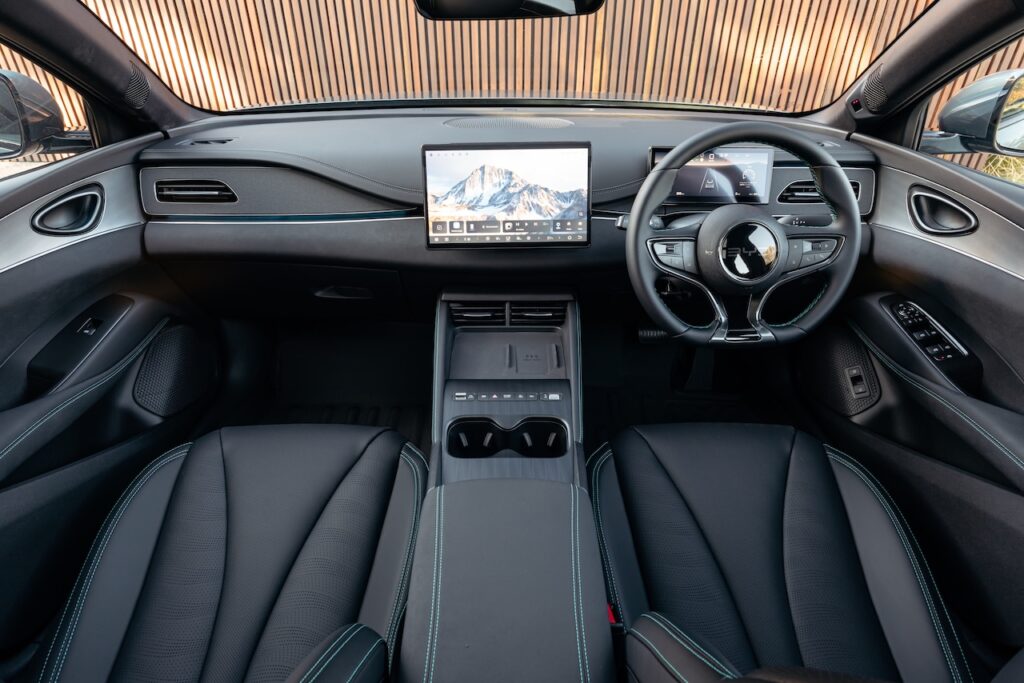
Driven at a more relaxed pace, though, the Seal 6 makes much more sense. It is comfortable, stable and very easy to cover big distances in.
The cabin reinforces that impression. The front seats remained comfortable and supportive during our long interstate run and there is generous room in the rear, including plenty of headroom despite the relatively sleek roofline.
Presentation is also impressive considering the price, with plenty of soft-touch surfaces and enough variation in textures to avoid the cabin feeling cheap.
The 12.8-inch centre screen looks familiar if you’ve driven any recent BYD and handles most infotainment and vehicle functions, while the 8.8-inch instrument display is functional rather than especially lavish.
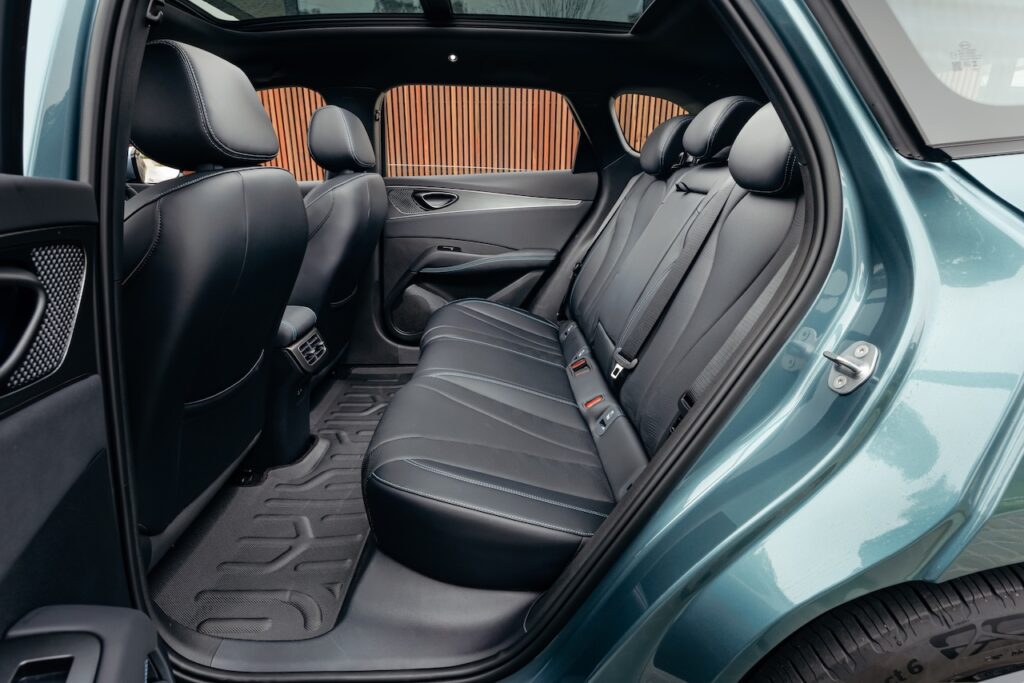
The 670-litre luggage compartment easily swallowed the suitcases and bags carried on our interstate trip with space remaining.
2026 BYD Seal 6 Touring Premium: Verdict
The BYD Seal 6 Touring’s biggest achievement might simply be that it has made an affordable family wagon relevant again.
It isn’t a great sports wagon and its suspension could use some refinement over rougher Australian roads.
But $39,990 buys a roomy five-seat PHEV with a huge boot, strong standard equipment, a useful 125km claimed electric range and a drivetrain capable of covering very serious distances once petrol and electricity are combined.
Our 1012km Sydney-to-Melbourne run without a fuel or charging stop showed just how effective that combination can be.
And in a market overflowing with SUVs, the fact the Seal 6 Touring does all that in a conventional wagon body might be one of its greatest attractions.
SCORE: 4/5
2026 BYD Seal 6 Premium Touring specifications
Price: $39,990 plus on-road costs
Basics: PHEV, 5 seats, 5 doors, wagon, FWD
EV range: 125km (NEDC); 100km (WLTP)
Battery capacity: 19.0kWh BYD Blade LFP
Battery warranty: Eight years/160,000km
Fuel consumption: 0.8L/100km with sufficient battery SOC; 4.1L/100km with insufficient SOC (NEDC)
Powertrain: 1.5-litre naturally aspirated four-cylinder petrol, 74kW/126Nm
Motor: Front-mounted permanent-magnet synchronous motor, 160kW/260Nm
Combined output: 163kW/260Nm
Transmission: BYD DM-i Super Hybrid system
AC charging: 6.6kW
DC charging: 26kW
V2L: Yes
0-100km/h: 8.1 seconds