Everything you need to know before buying your first EV
Buying your first electric vehicle is a big move, and one that can seem a tad daunting.
And there are a few things worth getting your head around before making the switch.
An EV is still a car, of course – and likely to be what most people consider a regular car within a few years – but living with one is a little different to owning a petrol or diesel vehicle.
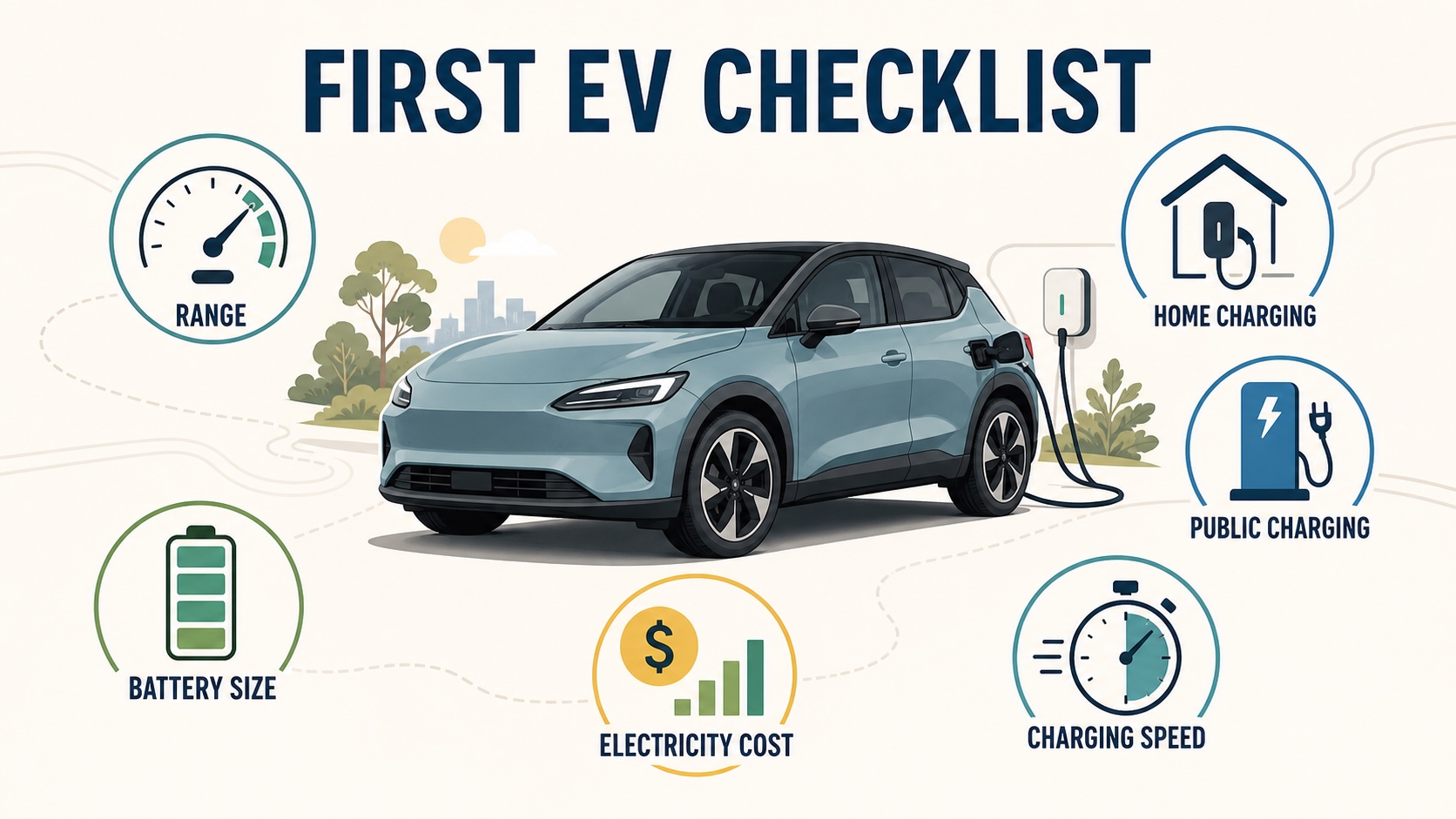
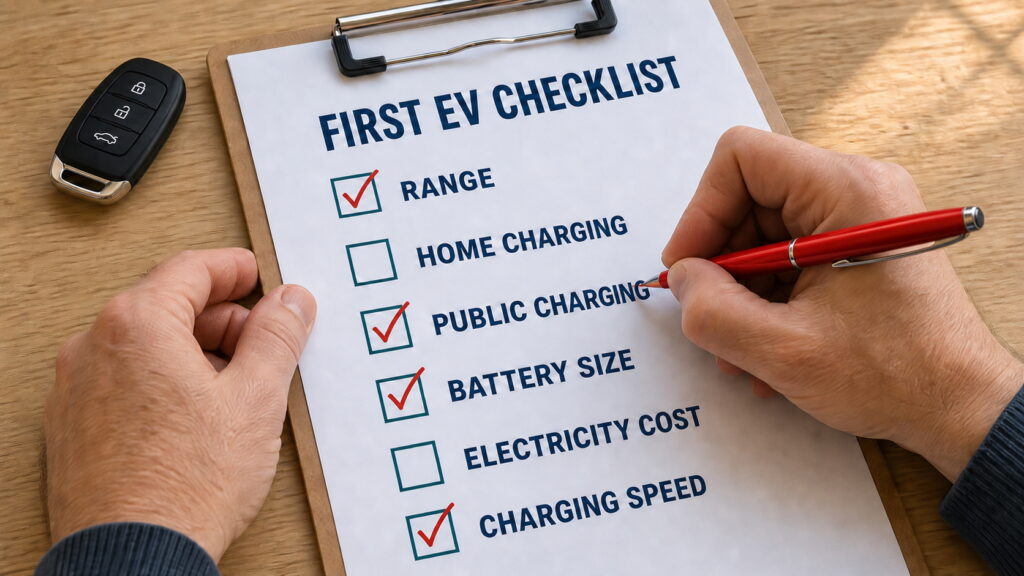
Range, charging and electricity costs become part of the buying decision, while things such as battery size and charging speed suddenly matter.
The good news is that for many Australians, owning an EV can be simpler than they expect.
Here are some of the big things to consider before buying your first EV.
Work out how much range you actually need
It’s easy to assume more range is always better, but a bigger battery generally adds cost and weight.
Start by thinking about how you actually use your car.
How far do you drive on a typical day? How often do you travel hundreds of kilometres? And where would you normally charge?
Someone who mostly drives around town and can charge at home may be perfectly comfortable with an EV offering only a few hundred kilometres of real-world range.
Someone regularly travelling long distances may place more importance on a larger battery and faster charging capabiltiy.
Also remember that an EV’s claimed range isn’t necessarily what you’ll achieve in everyday driving. Speed, temperature, terrain, driving style and use of heating or air-conditioning can all affect how far the car travels.
READ MORE: How far will my EV drive on a charge?
Think about where you’ll charge
For many people, this is one of the biggest advantages of owning an EV.
If you have off-street parking and access to electricity, you may be able to start most mornings with plenty of charge without visiting a service station.
You don’t necessarily need an expensive charger, either. A regular household powerpoint can be enough for drivers who don’t travel huge distances each day.
A dedicated home wallbox provides much faster charging and can be more convenient for higher-mileage drivers.
Apartment dwellers and people without off-street parking need to think more carefully about where they’ll charge and what public or workplace charging is available nearby.
READ MORE: Home EV charging explained
Don’t assume you need the fastest home charger
A more powerful charger isn’t automatically a better charger.
A typical single-phase wallbox can provide around 7kW, which is enough to add a substantial amount of energy during an overnight charge.
Three-phase installations can provide more power, but many owners simply don’t need it. The car will often be parked for eight or more hours overnight anyway.
Your EV also determines how much AC power it can accept, so there’s little benefit paying for charging capability the car can’t use.
Understand your battery
EV battery capacity is generally expressed in kilowatt-hours, or kWh.
Think of that number roughly as you would the size of a fuel tank. A larger battery can generally store more energy and therefore provide more driving range, although vehicle efficiency is also important.
It’s also worth checking the manufacturer’s recommendations around charging.
Some EVs recommend limiting everyday charging to around 80 or 90 percent to help look after the battery, while vehicles using some battery chemistries – particularly LFP – recommend regularly charging to 100 percent.
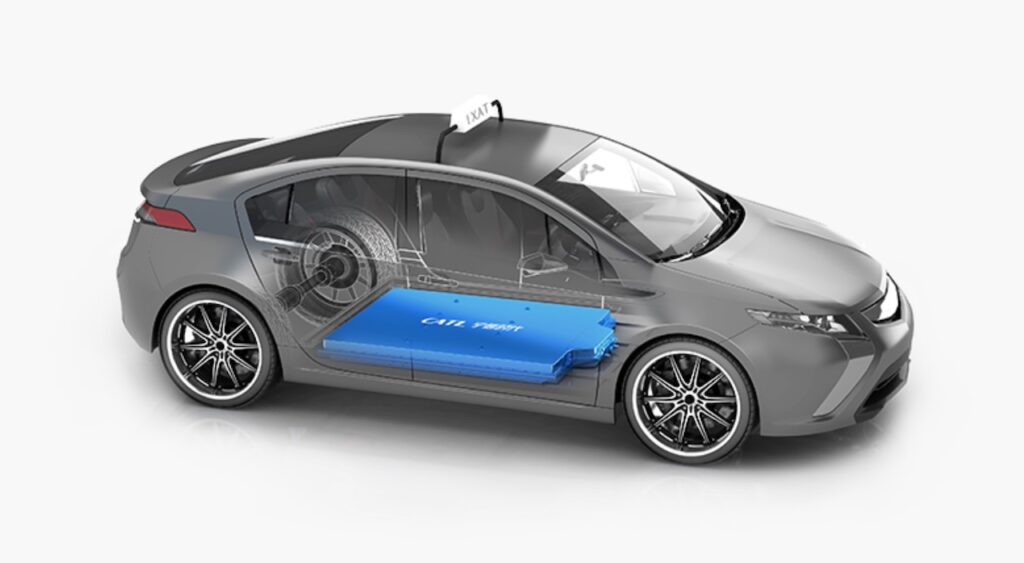
Check the recommendations for the specific EV you’re considering rather than assuming every battery should be treated the same way.
Look beyond the headline charging number
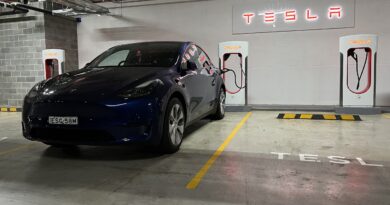
Manufacturers often promote a maximum DC fast-charging rate, but that’s only part of the story.
The vehicle determines how much power it accepts, and charging speed changes as the battery fills. An EV capable of a very high peak charging rate won’t necessarily maintain that rate throughout a charging session.
If you’re planning regular long-distance trips, look at real-world charging performance and how quickly the vehicle can get from around 10 to 80 percent, rather than concentrating only on the maximum kW figure.
READ MORE: What’s the difference between AC and DC charging?
Work out what charging will cost you
Charging at home will generally be the cheapest and most convenient option.
How much it costs depends on the size of the battery and your electricity tariff. Off-peak or EV-specific electricity plans can significantly reduce the cost.
If you’re buying an EV, it’s worth reviewing your home electricity plan rather than simply continuing with whatever tariff you already have.
Solar can make the equation even more attractive, particularly if the vehicle is at home during the day.
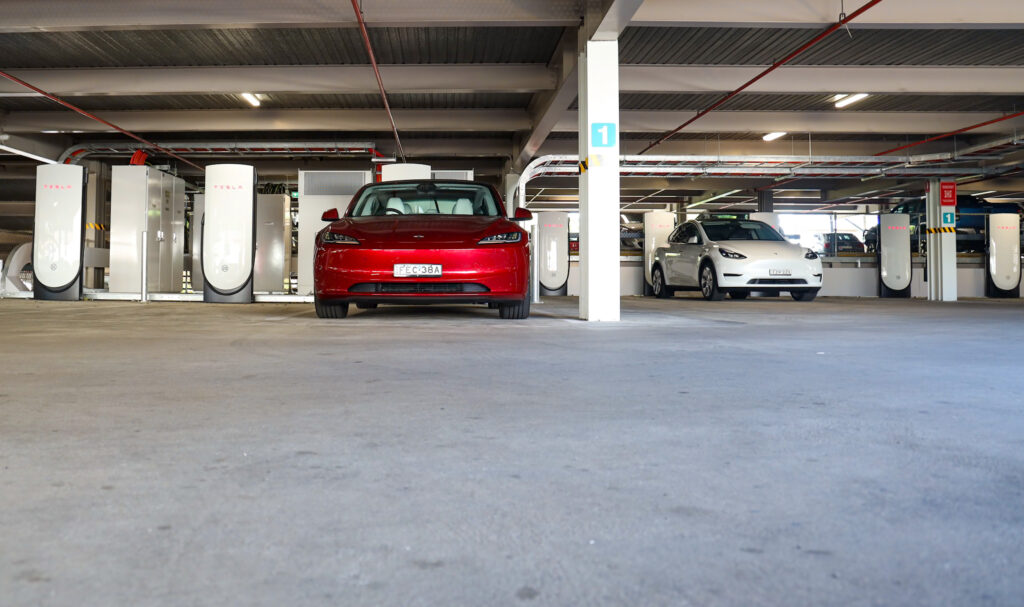
Public DC fast charging generally costs more than home charging, so someone relying heavily on the public network will have different running costs from someone doing most of their charging at home.
Check insurance before buying
Don’t wait until you’ve signed the contract to get an insurance quote.
Insurance premiums can vary significantly between EVs, even when their purchase prices appear similar. Repair costs, parts availability and the insurer’s experience with particular vehicles can all influence premiums.
Get quotes on the cars you’re seriously considering and factor them into the overall cost of ownership.
Consider your longer trips
You don’t need a public fast charger for everyday EV driving if you’re charging at home, but road trips are different.
Before buying, think about the longer journeys you regularly make and check the charging infrastructure along those routes.
Charging networks are continuing to expand, and modern EVs increasingly include route planning that incorporates charging stops. Apps such as PlugShare can also help you see where chargers are located.
If your regular weekend trip takes you somewhere with limited charging infrastructure, that may influence which EV is best for you.
Drive the cars you’re considering
Specifications only tell part of the story.
Two EVs with similar prices, battery sizes and claimed ranges can feel very different on the road.
Pay attention to ride comfort, visibility, interior space, infotainment, regenerative braking, boot space and how intuitive the controls are.
And don’t assume you need to stick with familiar brands. The Australian EV market has expanded rapidly, with plenty of new manufacturers competing with established car makers.
READ MORE: Best EVs to buy in Australia right now: The ultimate guide to affordable electric cars
The bottom line with buying your first EV
For most first-time EV buyers, the key questions are relatively simple:
- Does it have enough real-world range for the way I drive?
- Can I conveniently charge it?
- Does it fit my budget and lifestyle?
- And do I actually like the car?
Get those fundamentals right and the transition to an EV can be surprisingly straightforward.
For a much deeper dive into charging, batteries, range, running costs and preparing for EV ownership, read our complete guide below.
READ MORE: The ultimate guide to buying an EV in Australia: Everything you need to know