Australia’s EV divide revealed: Outer-suburban solar households dominate tax discount uptake
Australia’s Electric Car Discount is proving especially popular in the outer suburbs, with new data showing households in areas with high levels of rooftop solar dominating uptake of the federal EV tax incentive.
But the figures also highlight an emerging divide in Australia’s transition to electric cars, with people who own or have access to a home where they can install solar and charge an EV appearing particularly well placed to take advantage of the financial benefits.
New data from the National Automotive Leasing and Salary Packaging Association (NALSPA) shows outer-suburban and growth-area postcodes dominated the top 10 locations for battery-electric vehicles acquired through novated leasing and the Electric Car Discount during the second quarter of 2026.
READ MORE: EV drivers take a bow: Emissions are falling and the government says you’re largely responsible
READ MORE: Unplugged! EV buying incentives to be reduced as sales spiral. Not everyone is happy
READ MORE: Revealed: The most popular postcodes for buying EVs
Every postcode in the top 10 also had a higher rooftop solar penetration rate than the average for its state or territory.
Melbourne’s fast-growing western suburbs led the country, with postcode 3029, including Tarneit, recording the highest BEV uptake through novated leasing and the tax discount.
Werribee’s 3030 was second, followed by Kellyville in Sydney’s north-west and Marsden Park in western Sydney.
The ACT’s Coombs ranked fifth, followed by Clyde North in Melbourne, Springfield Lakes in Queensland, Craigieburn and Cranbourne in Melbourne and Baulkham Hills in Sydney.
Victoria was particularly prominent, accounting for five of the national top 10 postcodes.
The data reinforces a trend identified by NALSPA earlier this year, when its full-year 2025 figures also showed Tarneit and Werribee leading EV uptake through novated leasing.
But the latest numbers add another dimension by linking the areas of strongest uptake with rooftop solar.
Solar PV penetration in the leading postcode of Tarneit is 49 per cent, compared with a Victorian average of 32 per cent. It reaches 59 per cent in fourth-ranked Marsden Park, compared with a NSW average of 40 per cent.
Springfield Lakes records 57 per cent solar penetration compared with Queensland’s already-high 55 per cent average.
The national average is 41 per cent.
That makes the economics of an EV potentially more attractive for households able to charge at home using their own solar generation, particularly when combined with the tax savings available through an eligible novated lease.
It also exposes one of the challenges of Australia’s EV transition.
Renters, apartment dwellers and households without off-street parking or rooftop solar have fewer opportunities to combine the Electric Car Discount with cheap home-generated electricity.
The figures therefore suggest the financial equation can be particularly attractive for working households with access to a salary-packaged vehicle, a driveway or garage and rooftop solar – circumstances more commonly associated with established homeowners than renters.
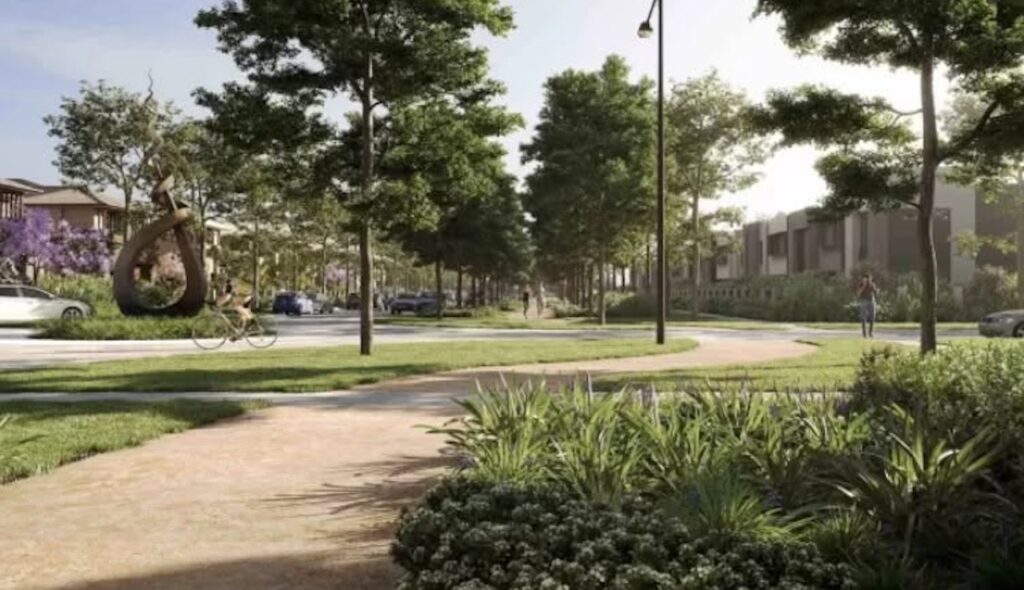
NALSPA chief executive Rohan Martin said the results demonstrated that outer-suburban families were increasingly doing the sums on electric cars.
“Working Australians and their families living in the outer suburbs where rooftop solar is widespread are making the switch to EVs in record numbers and they’re turning to the Electric Car Discount to help make it a reality,” Martin said.
“During the second quarter of 2026, the federal government’s Electric Car Discount was most popular with everyday working Australians living in the outer suburbs of Melbourne, Sydney and Brisbane.
“If you live in the outer suburbs and have rooftop solar, it makes financial sense in the midst of unprecedented cost-of-living pressures to have an EV in your driveway too.”
There is also a political dimension to the geographic spread.
Outer-metropolitan growth corridors are important electoral battlegrounds, making the concentration of Electric Car Discount recipients outside traditional inner-city EV strongholds noteworthy as the Federal Government promotes the policy as a cost-of-living measure rather than simply an environmental incentive.
Climate Change and Energy Minister Chris Bowen has previously highlighted the strong uptake of the discount outside Australia’s inner cities.
The Electric Car Discount provides a Fringe Benefits Tax concession for eligible EVs provided by employers, including vehicles acquired through salary-sacrifice and novated leasing arrangements.
Introduced in 2022, it has become an important component of Australia’s EV market and was the subject of a statutory government review this year.
The Federal Government subsequently announced the full FBT exemption would remain until March 31, 2027 before being progressively wound back.
From April 1, 2027, the full discount will apply to eligible EVs costing $75,000 or less, while vehicles above $75,000 but below the relevant luxury car tax threshold receive reduced assistance.
From April 2029, eligible EVs below the luxury car tax threshold will receive a 25 per cent discount on payable FBT.
The government estimates the changes will save the federal budget $1.7 billion over five years.
NALSPA had campaigned strongly against reducing the incentive, arguing the discount has played a significant role in Australia’s accelerating EV adoption.
Martin said the latest data showed the policy remained important for households trying to reduce transport costs.
“Together, rooftop solar, home batteries and the Electric Car Discount are giving working families greater control over two of their largest household expenses – energy and transport,” he said.
“EVs are becoming more affordable thanks to government policies and a range of new models released to the market. But they still command a price premium compared with a petrol equivalent, and this remains a major hurdle for Australians to switch to cheaper-to-run zero emissions vehicles.”
Top 10 postcodes for BEV uptake through novated leasing and the Electric Car Discount, Q2 2026
| Rank | State | Postcode | Suburb | Solar PV density |
|---|---|---|---|---|
| 1 | VIC | 3029 | Tarneit | 49% |
| 2 | VIC | 3030 | Werribee | 36% |
| 3 | NSW | 2155 | Kellyville | 53% |
| 4 | NSW | 2765 | Marsden Park | 59% |
| 5 | ACT | 2611 | Coombs | 46% |
| 6 | VIC | 3978 | Clyde North | 47% |
| 7 | QLD | 4300 | Springfield Lakes | 57% |
| 8 | VIC | 3064 | Craigieburn | 40% |
| 9 | VIC | 3977 | Cranbourne | 43% |
| 10 | NSW | 2153 | Baulkham Hills | 43% |
Source: NALSPA; solar data Australian PV Institute