
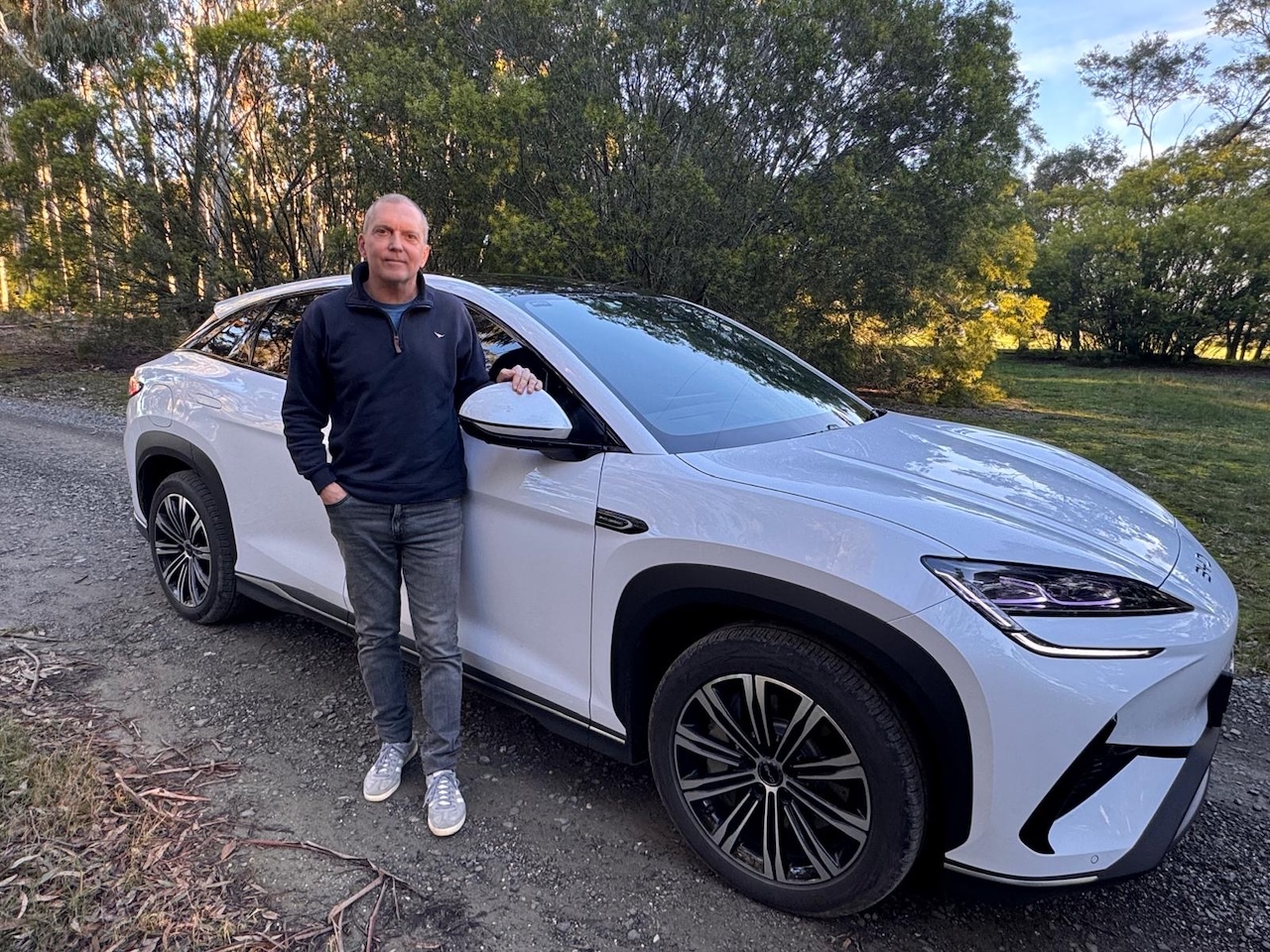
2025 BYD Sealion 7 Premium Owner Review: After 30,000km in 12 months here’s the real world verdict on one of Australia’s most popular EVs.
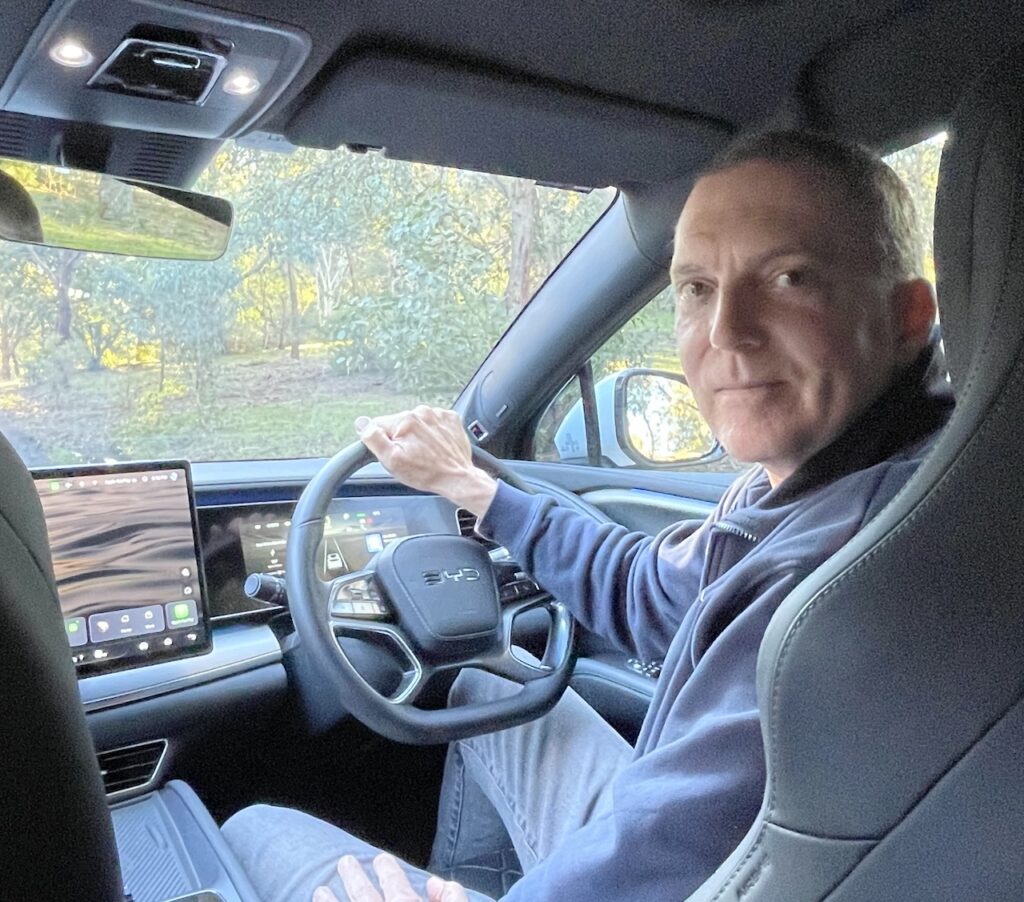
Alastair Doak is a veteran of the Australian automotive industry who retired as marketing director of Mazda Australia in December 2024. When he needed a new car last year he chose the BYD Sealion 7. Here, Alastair explains why he made that purchase and what he found over the next 12 months. It’s a revealing look inside EV ownership from a bona fide car expert.*
We signed up for a BYD Sealion 7 in May 2025 when far fewer electric vehicle options were available.
The Sealion 7’s combination of size, performance and outstanding value put it at the top of our short list.
A year later – even with more competition – it still makes a compelling case.
READ MORE: 2026 BYD Sealion 7 Premium Review: We slept on this super-solid electric SUV. We were wrong
READ MORE: 2025 BYD Sealion 7 Performance Review: Plenty of surprises as Chinese attempt to bloody Tesla Model Y’s nose
READ MORE: 2025 BYD Sealion 7 Review: Chinese giant unleashes its alternative to the Tesla Model Y Juniper in Australia
With more than 12,500 sales to the end of June, the Sealion 7 is BYD’s best seller and Australia’s second best-selling electric vehicle. Tesla Model Y takes top spot.
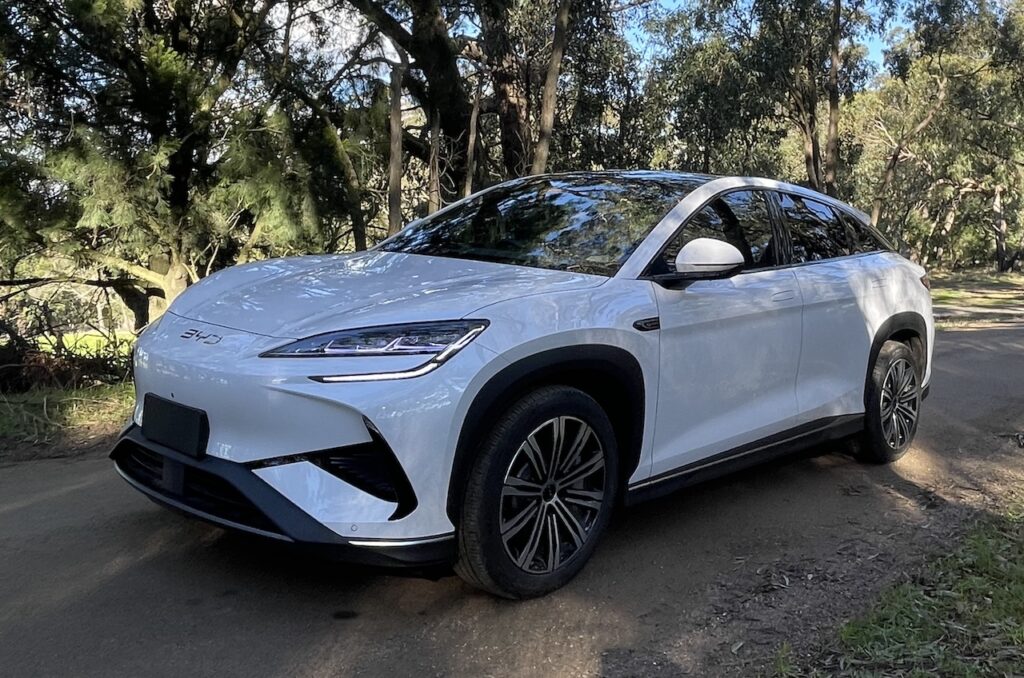
2025 BYD Sealion 7 Premium: Why buy it?
We bought the Premium rear-drive model to maximise range. It cost $55,990 driveaway.
We considered the Performance model but the extra $9000 seemed rather steep when the only extra feature we really wanted was the heated steering wheel.
With 230kW, 380Nm of torque and a claimed 0-100km/h time of 6.7 seconds, the smooth, quiet, instant punch has proven to be more than enough.
Averaging 2500km a month is easy when living in regional Victoria, as the nearest city is 30km away and Melbourne is close to a two hour drive.
So lots of highway and 100km/h signed country roads and little stop/start commuting. This is not EV-friendly driving.
2025 BYD Sealion 7 Premium: Charging and efficiency
Over 30,000km, the Sealion 7 has returned an average energy use of 18.1kWh/100km.
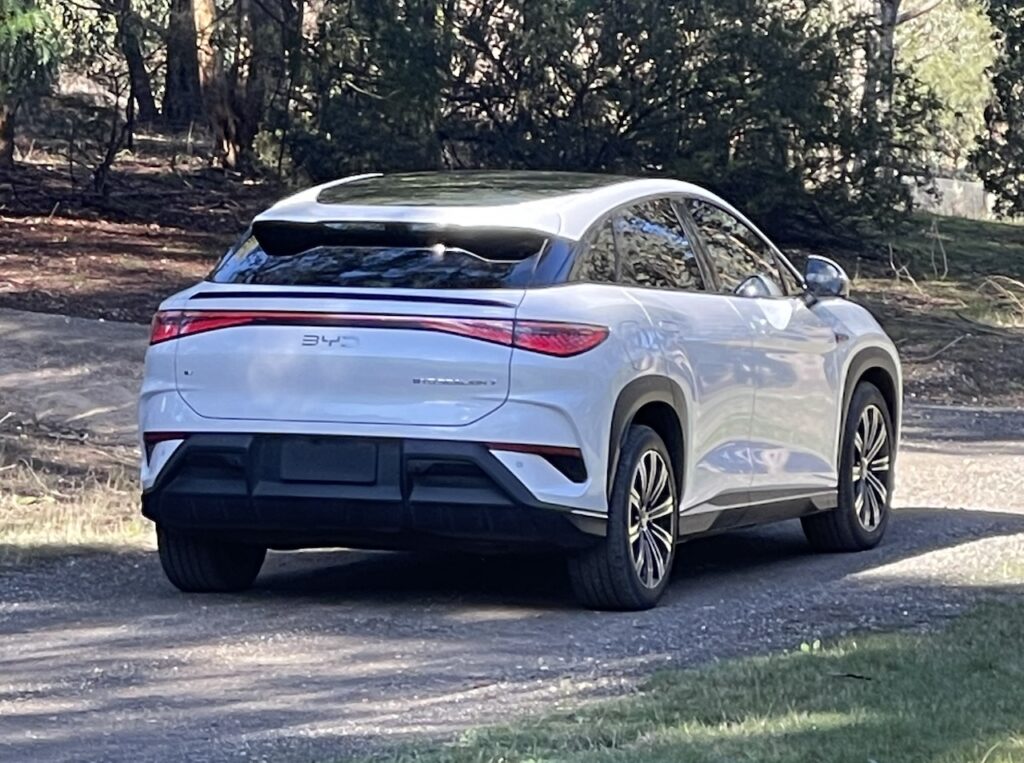
This doesn’t match BYD’s 17kWh consumption promise using the lab-based NEDC standard, but it’s better than the 19.9kWh recorded using the more realistic WLTP test. So an OK result.
The car displays total energy use during the past 50km. The lowest consumption rate we’ve seen was about 13kWh while the highest was about 30kWh – a consequence of hilly, 110km/h highway driving in poor, windy weather.
Our 18.1kWh average provides a realistic 450km range – 500km would be better – and that has met our needs for point-to-point travel and day trips to Melbourne’s outer eastern and bayside suburbs.
Charging at home has been straightforward even without a wall box; however, we do have a 32-amp outlet so we can add energy and fill the battery at around 6kW.
It’s an easy overnight exercise or a daytime top-up from our solar panels.
The Sealion enables you to set the charge start time to take advantage of off-peak rates and also allows you to choose a battery percentage to reach or go to 100 per cent.
Given the 82kWh battery is LFP (Lithium Iron Phosphate), a 100 per cent top-up is preferable and won’t damage the battery’s long-term health.
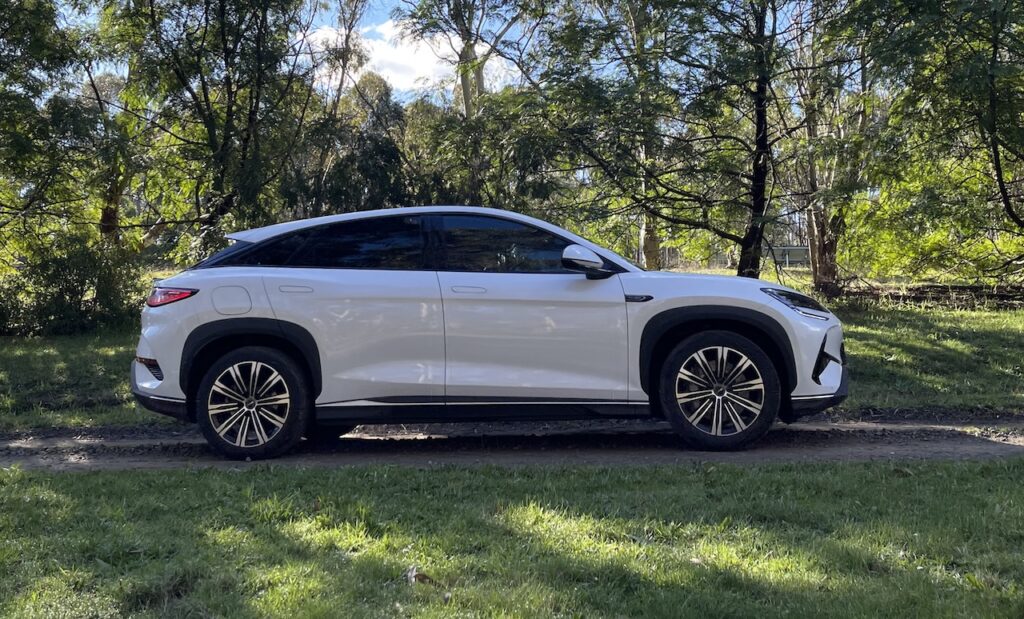
Despite the kays travelled, public charging hasn’t been needed very much, perhaps five or six times during the year and most of those were convenience top-ups rather than range panic.
Only one ‘fill’ in a regional town was needed to ensure we got home.
A quick look on the Plug Share app showed an empty 60kW charger just a few hundred metres away, and about an hour later the battery was full ($44). Easy.
So far, the car’s max charge rate of 150kW hasn’t been tested as we haven’t used a public charger with anywhere near that amount of grunt.
2025 BYD Sealion 7 Premium: Plusses and minuses
One area that needs improving is the dust sealing around the car’s charge point. While the DC port has a cover, the AC inlet does not and living at the end of four kays of dirt road ensures the charge port gets filled with dust.
Why no cover BYD when the other cars (including cheaper ones like the Atto 3) get one?
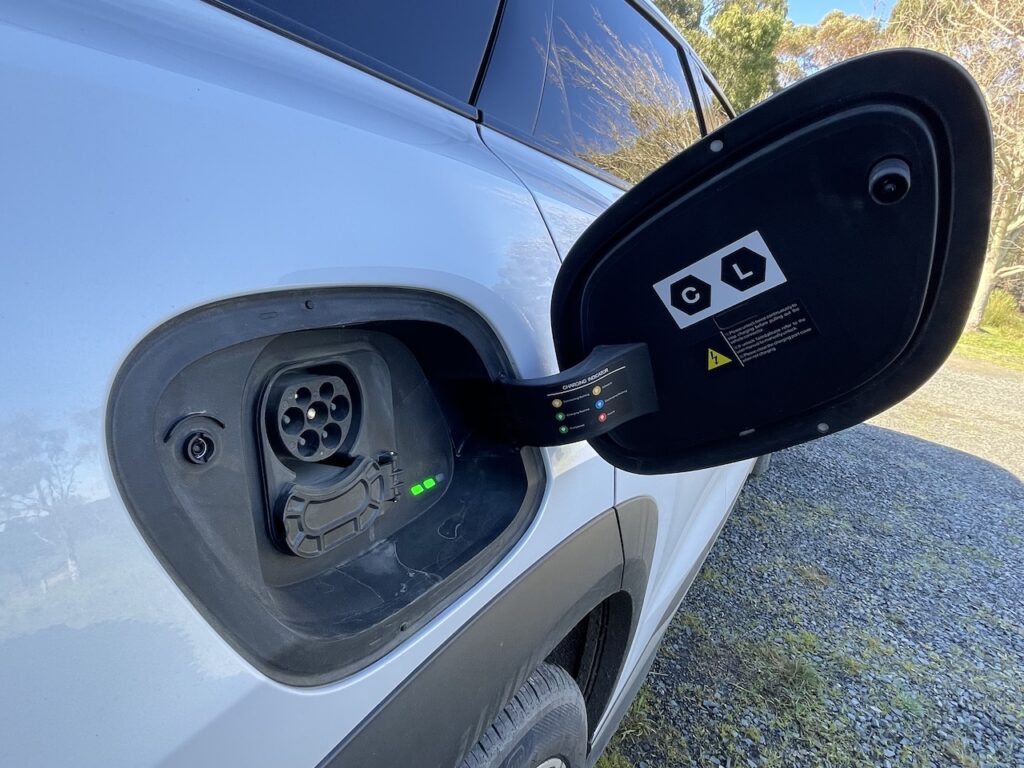
To help fix the dust issue we have added an aftermarket seal to the door. It has certainly helped, but it makes opening the door — which requires a push in the correct spot — a bit hit and miss.
Charging can be scheduled through the handy BYD app which also displays range, tyre pressures, if the car is locked/unlocked and allows the air con to be switched on remotely.
The digital key stored on your phone is also a great feature. Shame then it took six weeks and several phone calls after purchase for BYD to give access to the app.
2025 BYD Sealion 7 Premium: On the road
If you have read road tests of the Sealion 7 you will know it feels its 2.2 tonnes and it’s not sporty. The suspension could certainly do with a recalibration of the soft springs and dampers to reduce body heave and float, which is ever-present on fast, lumpy country roads.
The soft suspension provides a generally plush ride at more typical suburban speeds; only more challenging surfaces upset it to an annoying degree. The comfortable, supportive seats also help here.
The steering (on the sport setting) lacks feel but has reasonable weight and gets the BYD pointing where you want it.
The large brake package (drilled at the front for max heat dispersion) offer impressive stopping power. At low speed they work best on the comfort setting, making them less sensitive and grabby.
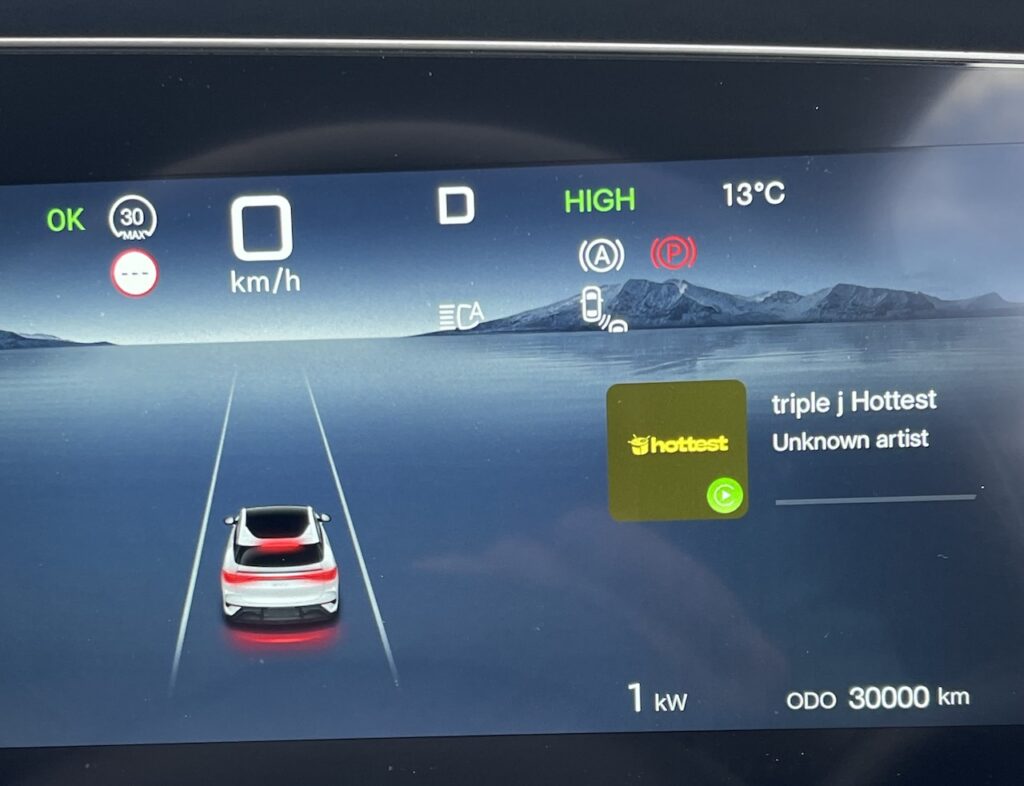
One pedal driving is not an option, and that’s fine by me. Leaving the regen mode on high, rather than standard, gives a familiar if slightly stronger, traditional car-like ‘engine braking’ feel. It could be more aggressive if the trade-off meant more range.
The Advanced Driver Assistance Systems are typically a bit annoying and the Intelligent Cruise Control – which offers steering assist in radar cruise mode – works poorly and has been switched off.
Otherwise the driver attention monitor (too sensitive) is a bit irritating, lane keep isn’t particularly well calibrated for country driving and the auto headlight switch between high and low beam can be slow to react and therefore quick to annoy other drivers.
Good headlights are a must for country driving and generally the light spread from the Sealion 7’s LEDs is good enough but they’re not adaptive so it’s either high or low beam with no fancy light function in-between.
EV’s are heavy and therefore not tyre friendly. It pays to check that your tyres are inflated to the recommended pressure to maximise driving range (42psi in this case). A readout of tyre pressures on the dash display helps keep on top of that.
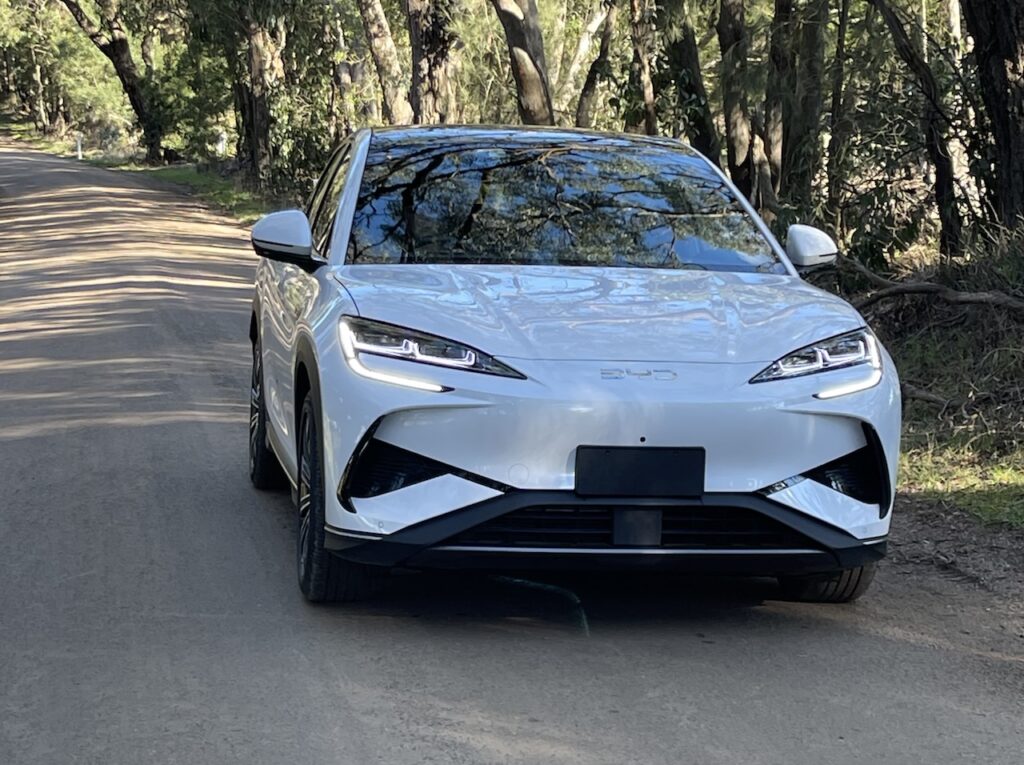
Alarmingly we have already replaced the rear tyres. One had a puncture that could not be repaired and the other only had a few thousand km of tread left after just 25,000km. This could prove rather costly if it keeps eating tyres this quickly.
2025 BYD Sealion 7 Premium: Inside the cabin
The driving position is good although I have had to raise the wheel up a little to help keep the steering column away from my knees.
Physical buttons for volume, fast demist and air vent control, together with reliable ‘Hey BYD’ voice control for many functions, take the focus away from the features buried within the large 15.6-inch centre touchscreen.
So overall the Sealion 7’s spacious, comfortable, well equipped cabin gets a big tick.
Not so good stuff includes some wind noise around the A pillars/side mirrors and an intermittent rattle/buzz from the perspex cover for the heads-up display (HUD).
Fortunately it doesn’t do it often as the car needs to hit the ‘correct’ road surface to generate the frequency to get it buzzing. But it’s annoying when it gets going.
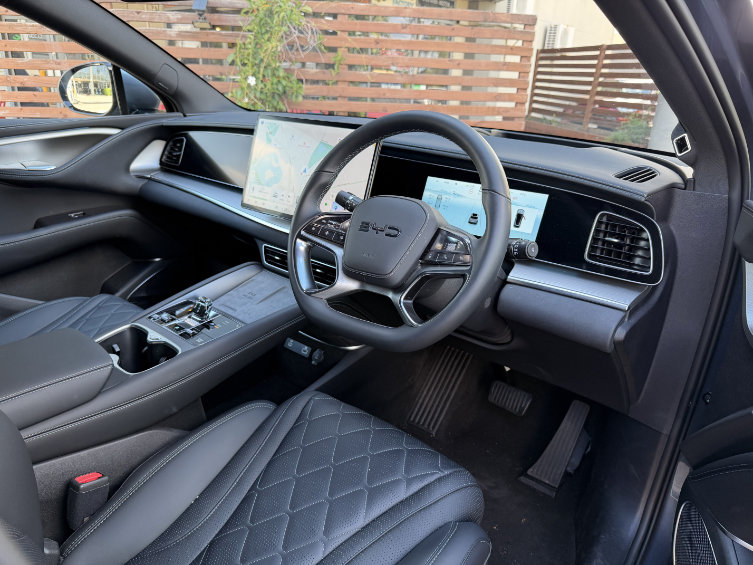
The windscreen wipers are also below par. The wiper motor is noisy and no, not because the rest of the car is quiet, which for the most part it is.
The blades occasionally judder across the screen, and the washer fluid sprays in only one direction and releases very little fluid, making clearing the screen difficult.
These issues have been checked by the BYD dealer and confirmed they are working perfectly.
Vision out the back of the car is very limited so the high-quality cameras are essential. Given the rear camera is exposed to the elements, it needs a daily finger wipe to keep it clean.
The Sealion 7 does not have a rear window wiper. This was a concern when buying the car but in reality, it hasn’t been missed as the small rear window – top and tailed by spoilers – stays remarkably clear.
Radio reception is disappointing. Forget AM, and FM drops out frequently. Listening through radio station apps is required.
CarPlay also has an irritating issue where it fails to read back a text before sending it. It usually gets the first word out and then stops. The heads up display disappears when you use polarised sunnies.
2025 BYD Sealion 7 Premium: Dealer experience
One of the reasons for choosing BYD was their dealer network. Our closest city has a new, bright, shiny outlet in the middle of town. However, the dealership experience has been so-so.
At 20,000km the car went in for a service and the wipers, rattle and CarPlay were all highlighted as needing attention. Disappointingly, none of these issues were fixed.
A road test failed to generate the rattle (a video demonstrating it was rejected), so, according to the service staff, as they could not hear it, it does not exist. And, despite having the car all day, the software update was not done as they had run out of time.
A second visit to the dealer was more successful with the CarPlay fixed (the software upgrade is a known issue) and after much discussion, some foam was added around the HUD cover to stop the rattle. So far it has behaved itself. Fingers crossed.
2025 BYD Sealion 7 Premium: Verdict
So a year with a Sealion 7 has delivered a few niggles but overall we have been happy with the car, perhaps in part as we’ve experienced electric vehicle ownership for the first time and have been impressed by how easy that transition from internal combustion to EV has been.
The niggles have been annoying, realistically the post-sale customer care needs improving if the brand wants to cement itself as a leader in the Australian market.
And it would be nice to have features like a heated steering wheel available outside of a $9K upgrade to another, less energy efficient model. More colour options inside and out would also have been welcome.
Would we buy another one? Maybe. Next time we would be looking for better efficiency and more range, sharper handling and improved ADAS systems – all of which could be delivered by an upgraded Sealion 7. Over to you BYD.
*About the author
Alastair Doak has been part of the local car industry for more than 35 years. With a life-long passion for cars he was motoring editor for The Australian (Automotive Business) and then The Age before joining Mazda as the head of public relations. Jumping into the marketing role in 2007 he was responsible for steering Mazda’s product line-up for 18 years. Last year he swapped his corporate role for farm life where the portfolio now includes Highland cows, ponies, chickens, peacocks, bees and a sugar gum plantation.
Score: 3.5/5
BYD Sealion 7 Premium: Price and specifications
Price: From $55,990 (drive-away)
Basics: EV, five seats, five doors, mid-size SUV, RWD or AWD
Range: 482km (WLTP)
Battery capacity: 82.56kWh lithium-ion
Battery warranty: Eight years/160,000km
Motor: Single rear permanent-magnet synchronous motor, 230kW/380Nm
AC charging: Up to 11kW, Type 2
DC charging: Up to 150kW, CCS Combo
0–100km/h: 6.7 seconds
Seems like a pretty honest review overall.
On the tyre‑wear point, though, I’d be interested to know whether the recommended 10,000 km tyre rotation was done, and how close the wheel alignment was to factory settings.
Both have a big impact on wear patterns in EVs, especially with the extra weight and torque, so it’d be useful context for interpreting the tyre results.