2026 Toyota bZ4X Seven-Day Review: Has Toyota finally done EV right?
Toyota and electric cars have always had a slightly awkward relationship. The world’s biggest car company spent years championing hybrids while remaining lukewarm, if not colder, on the idea that battery-electric cars were a fit for Australia.
Then to make matters worse, it kind of fumbled its first EV launch. The bZ4X that touched down was a solid effort – and I liked it when I drove it at its launch – but it underwhelmed against the competition (read: Tesla) on things like range, price and cabin tech.
READ MORE: 2026 BYD Seal 6 Touring Premium Review
READ MORE: Safety shock for new electric ute:
READ MORE: Used EVs from $8000 to $40,000: Electric tempters you should consider
Which makes this updated version so interesting. The price has fallen dramatically, the battery is bigger, the driving range has climbed to a super-impressive 591km and the cabin technology has been given an overhaul.
Day one: Now we’re talking
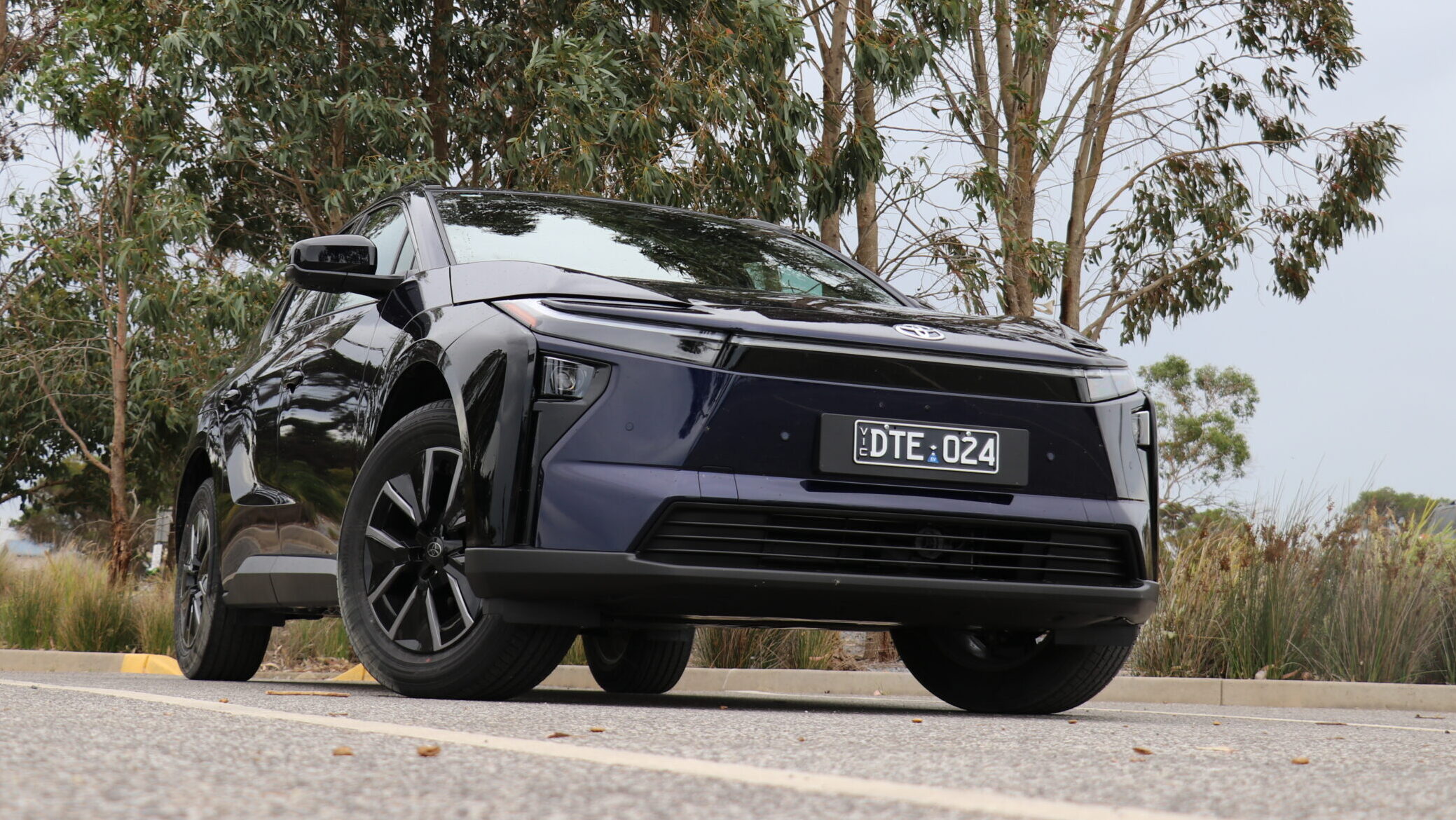
The biggest and arguably most important improvement happens before you even get in. This front-drive bZ4X now costs $55,990 before on-road costs, which is around $10,000 less than Toyota wanted when the model first landed in Australia.
My car lands at $61,320 drive-away, putting it smack-bang in the conversation with models like the Tesla Model Y and BYD Sealion 7.
And while the price has gone down, the range has gone up. The new 74.7kWh battery delivers a claimed 591km on the WLTP cycle. That outshines both the BYD and the Tesla, and I have to say it’s massively comforting to climb into an EV and see close to 600km on the dash.
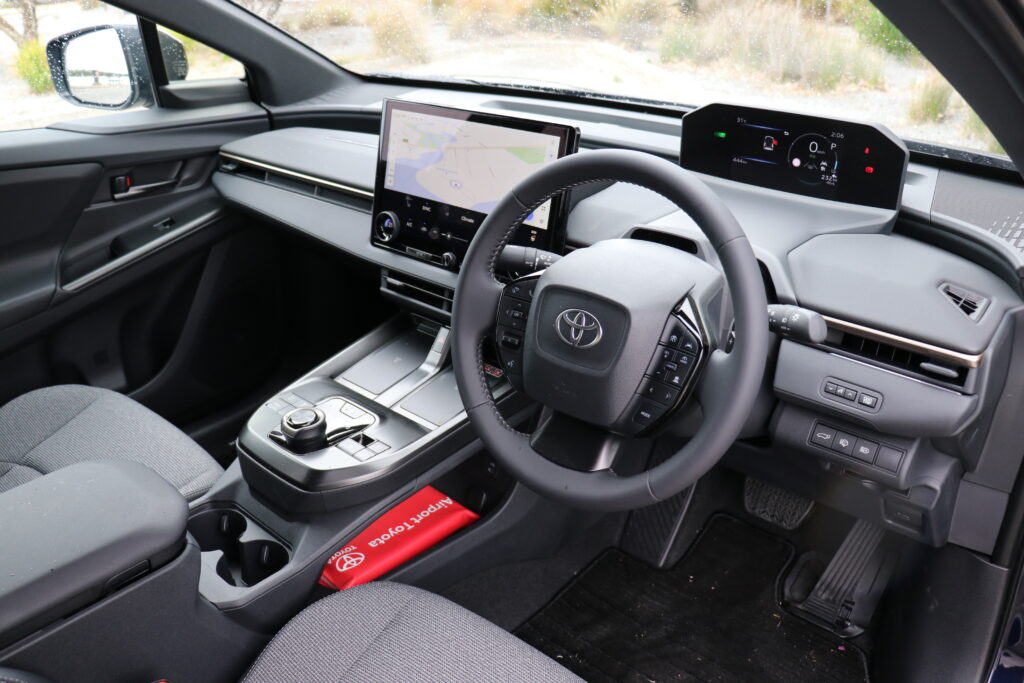
On the subject of climbing in, the other welcome change is in the cabin, where the old-school-feeling driver display has been modernised, and the tech feels clean, modern and functional.
Good first impressions, then. Let’s get driving.
Day two: What happened to the boot space?
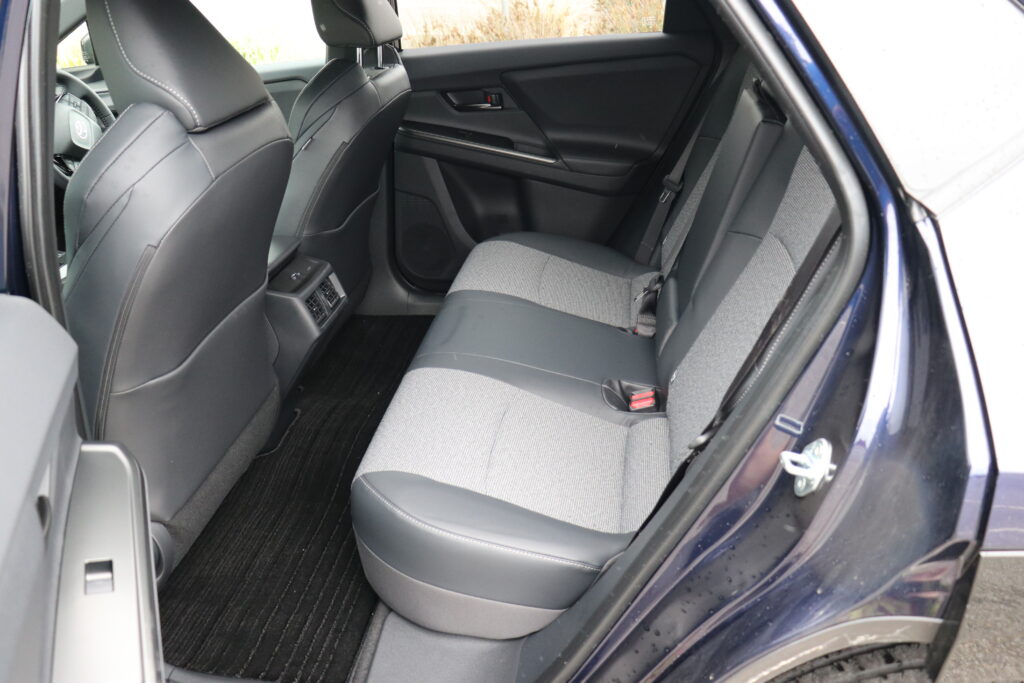
Today is family duty, which means installing a child seat, loading a pram and discovering just how quickly an SUV of this size can fill with the endless crap required (actually, demanded) by one very small human.
The good news is the bZ4X has plenty of rear-seat space. Our baby seat goes in easily and doesn’t turn the front passenger seat into some horrible knees-under-chin torture device.
The not-so-good news is behind it.
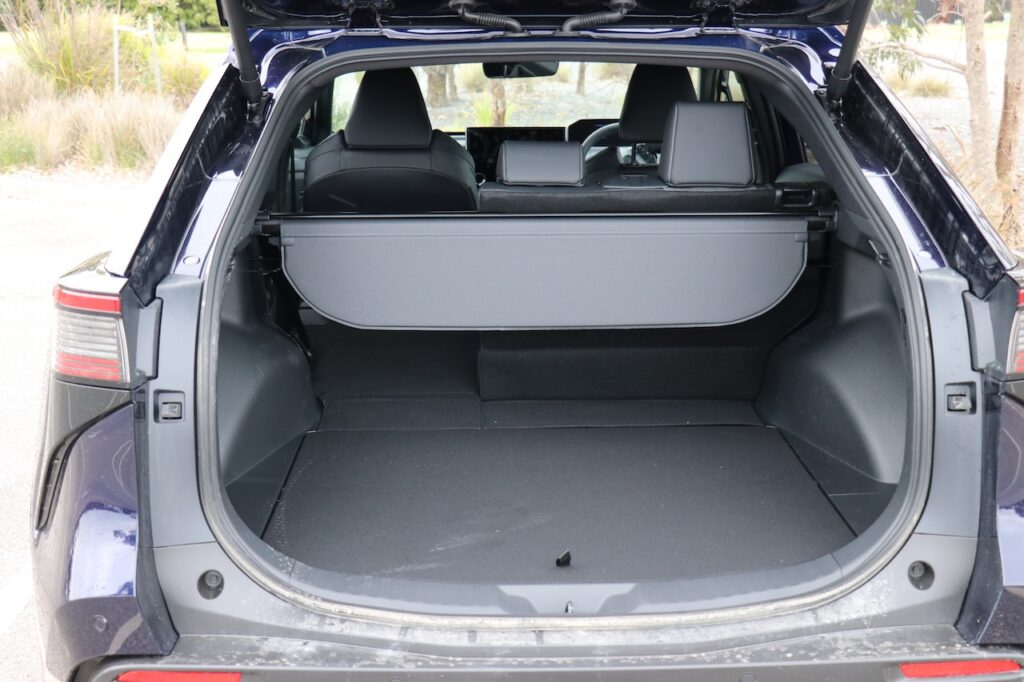
Toyota quotes 452 litres of boot space. Our two-piece pram fits, but once it’s aboard there’s not a huge amount of useful space left over. Toyota’s own RAV4 Hybrid offers more than 500 litres of luggage capacity despite not occupying the real estate of the hulking bZ4X.
For our one-child household it’s definitely workable, but the boot was smaller than I expected.
The bZ4X passes the family test, then. But it doesn’t ace it.
Day three: An EV designed by people who like buttons
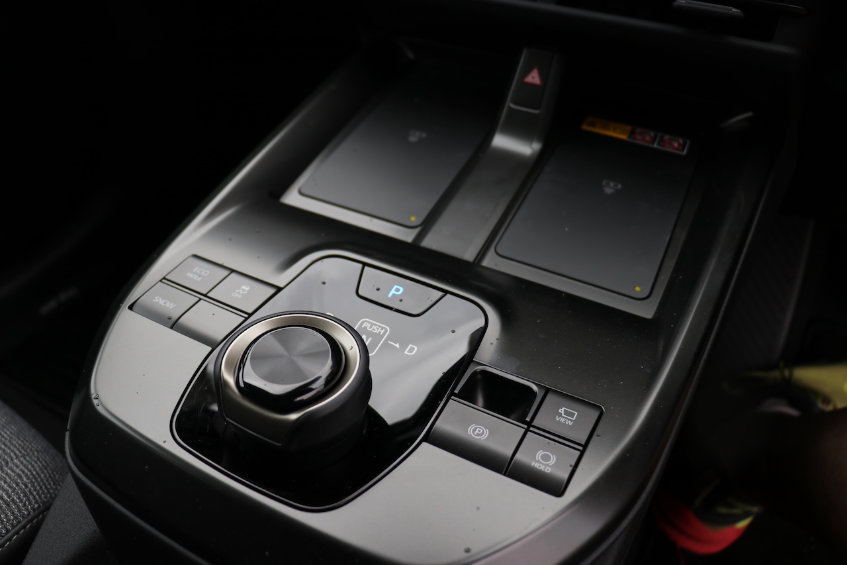
I have found something I increasingly treasure in modern cars. A button.
Actually, several of them.
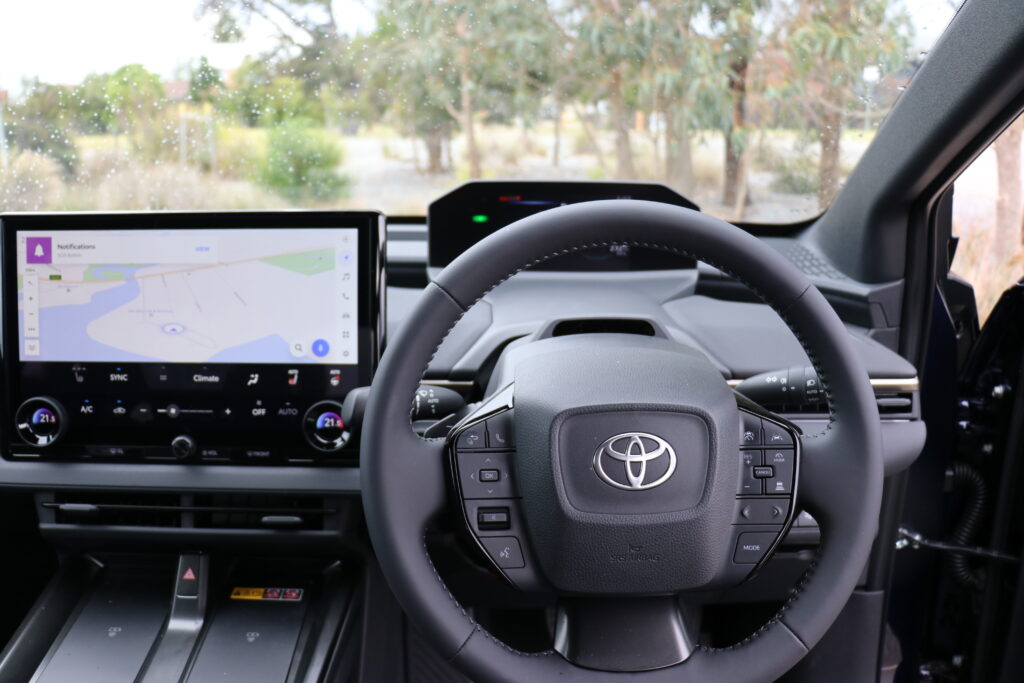
Plenty of EV makers seem determined to make you control absolutely everything through a giant central tablet. Want to adjust a mirror? Screen. Change the ventilation? Screen. Alter a safety setting? Screen, screen and more screen.
Toyota thankfully hasn’t gone down that path. In fact, it’s on the record as saying “people want technology, not annoying technology”. And I have to say the bZ4X delivers.
There’s a big touchscreen and plenty of digital stuff happening, but the things you regularly need to touch still largely have physical controls, or at least locked-out positions on the screen.
The rest of the cabin is similarly straightforward. It’s not as over-the-top dramatic as some Chinese rivals and it doesn’t have the minimalist edge of a Tesla, but I can climb into it and immediately understand how everything works.
For the person moving from a RAV4, Corolla Cross or Camry Hybrid into their first EV, there’s not much to figure out here.
Day four: More than enough, but definitely not a performance car
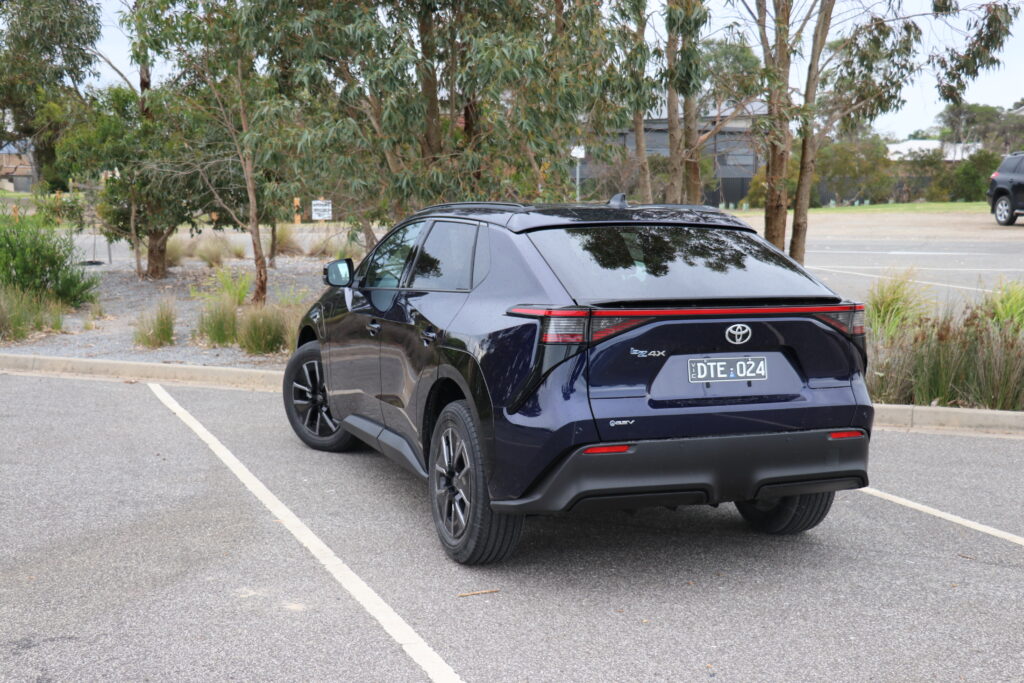
The bZ4X 2WD has one electric motor making 167kW and around 269Nm, driving the front wheels. Yes, front-wheel drive. That still feels like an odd choice for a reasonably powerful EV, because electric motors deliver their torque instantly and front tyres already have enough to do without being asked to deal with steering and a sudden wallop of electric grunt.
Press the accelerator hard enough and you can sometimes get the front tyres scrabbling for purchase, but that’s about as wild as things get.
Toyota claims 0-100km/h in around 7.5 seconds, and that feels about right. It’s brisk away from the lights and there’s more than enough performance for overtaking or merging, but there’s none of the stomach-lurching acceleration some EVs use as their party trick.
The ride can feel firmer and more abrupt than I’d like over broken surfaces. It never becomes unbearable, but there are moments the weight of this EV makes itself known.
Otherwise it is very easy to drive.
The steering is light, the power delivery is predictable and the silence around town suits its personality perfectly.
Day five: Home charging is the answer
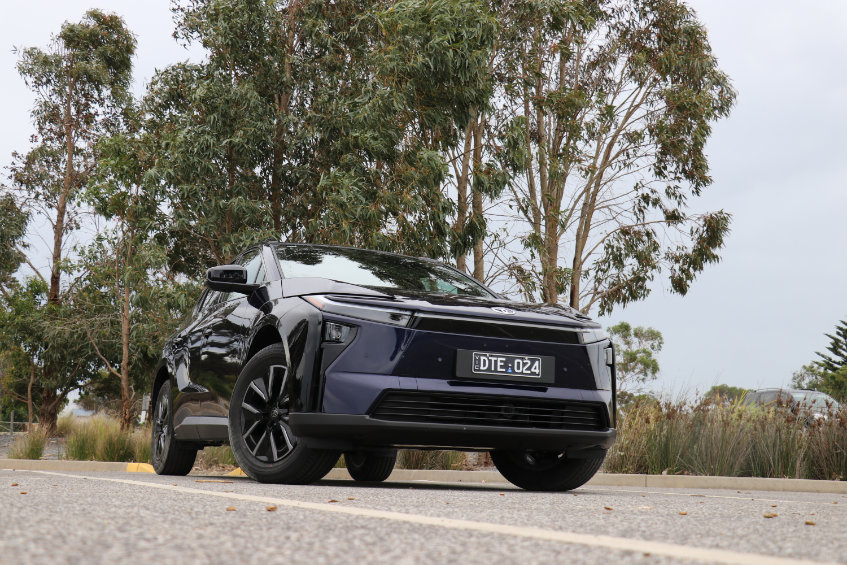
I’ve got a 7kW wallbox at home – literally the cheapest I could find, which happened to be from Tesla – and that is the true EV game changer. I rarely, if ever, public charge, I just get home, plug in, and go inside.
And with a claimed 591km available, I don’t even need to plug the bZ4X in every night. For our normal weekly driving, charging is an afterthought, rather than a must. We could honestly go one, or even two, weeks without charging sometimes. And even on this test – with more driving than we usually do – I’m plugging in on day five, and only for a little top up.
I’ll add the same caveat I always do, though: if I couldn’t charge at home, my enthusiasm for owning a full EV would drop significantly.
Day six: The 29.8km journey of terror
Ok, I have done something stupid. Maybe I should have plugged it in a little longer.
I’m at my parents’ place and need to travel exactly 29.8km home. The bZ4X reckons I have around 45km of range remaining. No drama. At least, that’s what I think when I leave.
Instead, the remaining range starts falling faster than the actual kilometres. Not smoothly, either. It disappears in chunks.
There’s nothing quite like trying to calculate whether you’re going to strand your wife and child on the side of the road to inject a little tension into an otherwise ordinary drive home.
Eventually we made it.
The battery is showing about three per cent and the bZ4X has begun limiting power, presumably because it has recognised its driver as an idiot and taken matters into its own hands.
The indicated remaining range is useful information, but I wouldn’t treat its final kilometres as money in the bank.
Fortunately, with close to 600km of official range to begin with, most owners should rarely find themselves playing this game.
Day seven: Maybe Toyota was right to wait
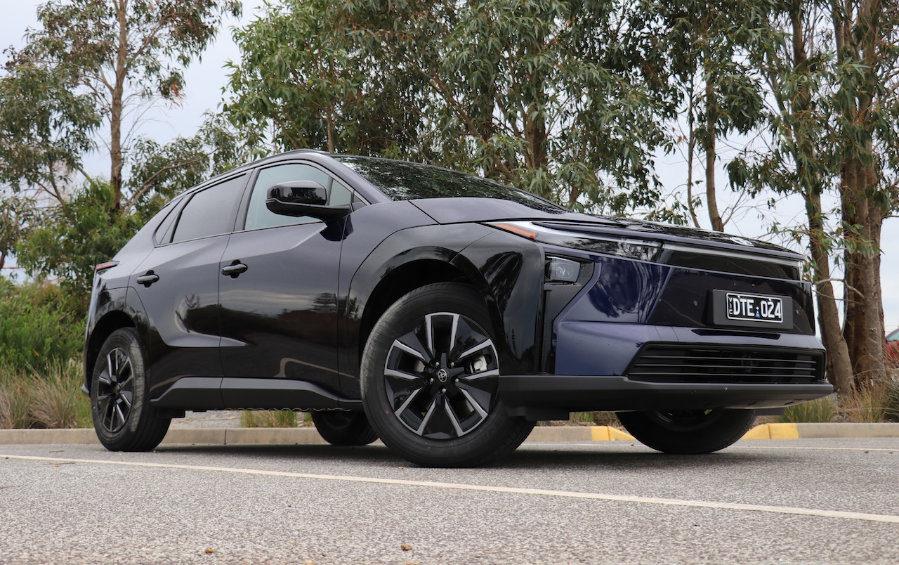
After seven days, the strangest thing about the bZ4X is just how little there is to explain about it: it’s an electric Toyota.
At $55,990 before on-road costs it is genuinely competitive. A 591km WLTP range removes one of the biggest objections people have to EV ownership. Energy use during my driving has settled at a strong 13.5kWh/100km, and charging at home makes running it laughably easy.
There are things I don’t like. The boot should be bigger. The ride needs another layer of polish. The front-drive layout can occasionally struggle with the instant torque. And Toyota’s driver-monitoring technology remains far too enthusiastic about telling me where it thinks I should be looking.
Toyota has spent much of the EV era arguing that battery-electric vehicles won’t work for every Australian. After a week with this one, I suspect the new bZ4X could work for more of us than Toyota might think.
SCORE: 4/5
Toyota bZ4X specifications
Price: $55,990 plus on-road costs
Basics: EV, 5 seats, 5 doors, medium SUV, FWD
Range: 591km (WLTP)
Battery capacity: 74.7kWh
Energy consumption: 13.5kWh/100km as tested
Motor: Single electric motor, 167kW/269Nm
Drive: Front-wheel drive
Boot capacity: 452 litres
0-100km/h: 7.5 seconds