Kia plots Tasman rescue: New look and electrified powertrains part of its plan to fight back in the ute wars
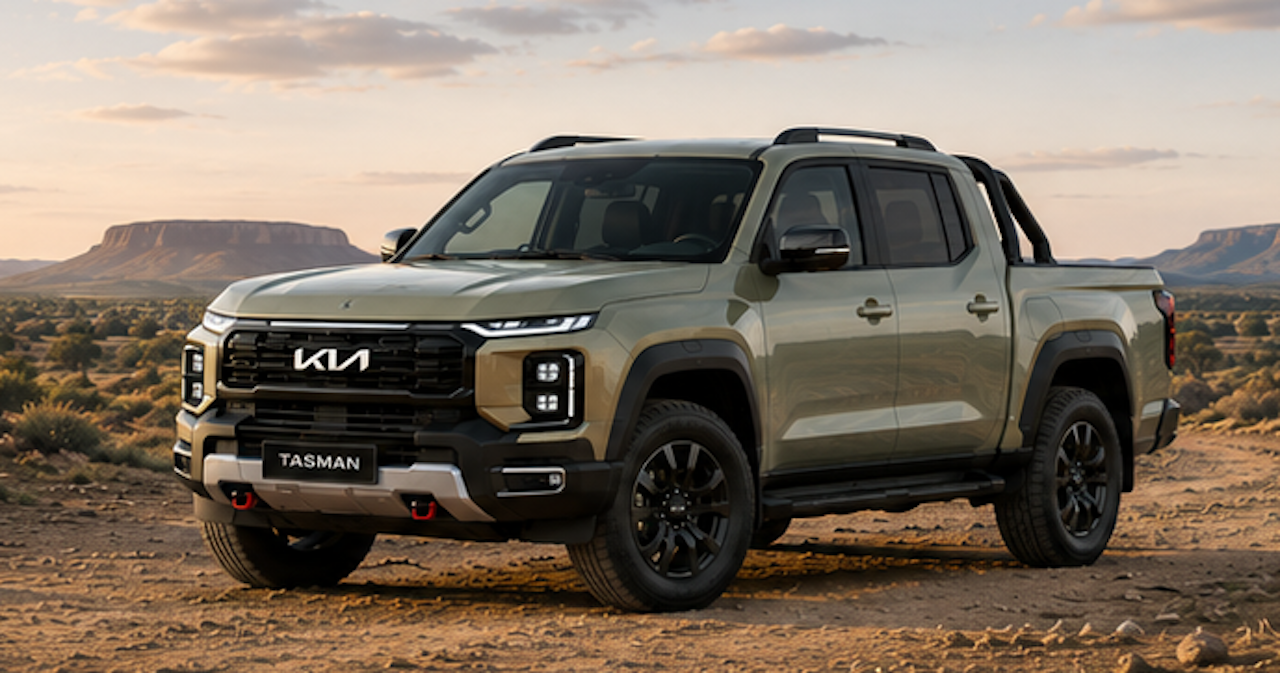
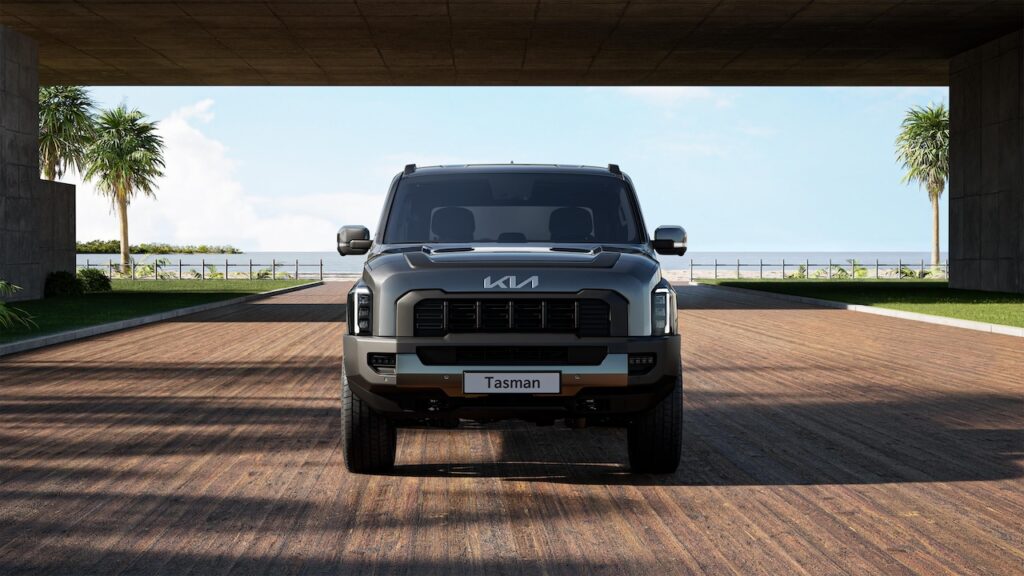
Kia is working on a broad overhaul of its struggling Tasman ute, with design changes, new technology and alternative powertrains all forming part of a fightback aimed particularly at the Australian market.
And while unofficial renders imagining a more conventional-looking Tasman are now circulating online, what eventually goes under the bonnet could prove just as important as what Kia does to its controversial styling.
Kia has already been investigating hybrid, plug-in hybrid and ultimately battery-electric power for the Tasman as the BYD Shark 6 and other electrified utes reshape the local dual-cab market.
READ MORE: As BYD Shark 6 sales soar, Kia eyes plug-in and EV power for struggling Tasman ute
READ MORE: All-new flagship Hyundai Palisade SUV switches to hybrid power: New drivetrain also expected to land in Kia Tasman ute
READ MORE: Dual-cab game-changer? New Kia Tasman ute eyes potent turbo-hybrid to battle Ford Ranger and Toyota HiLux – but promised EV a no-show for now
Now Kia’s global management has made it clear that alternative powertrains to the launch 154kW/440Nm 2.2-litre turbo-diesel form part of a wider plan to improve the Tasman following its disappointing start in Australia.
Forecast to sell 20,000-25,000 here per annum, it will likely manage around 5000 sales in Australia in 2026.
“The reactions and early disappointment we have in the Australian market, that gave us a lot of good lessons, then we will provide the counter measures for the coming years,” Kia Senior Vice President and Head of the Global Business Planning Subdivision Spencer Cho said.
“We will have other powertrain choices, if we can, and also other design changes or improvements, or any other offerings for new features and content and technology.
“Currently we are working on every area in which we can improve the performance of the Tasman, especially in the Australian market.”
That could ultimately mean a substantially different Tasman from the one launched in Australia in 2025.
EV Central has previously reported the first electrified option under consideration has been a conventional petrol-electric hybrid based around Hyundai Motor Group’s new 2.5-litre turbocharged system.
The drivetrain made its Australian debut in the new Hyundai Palisade, where it produces 245kW and 460Nm and drives all four wheels through a six-speed automatic transmission.
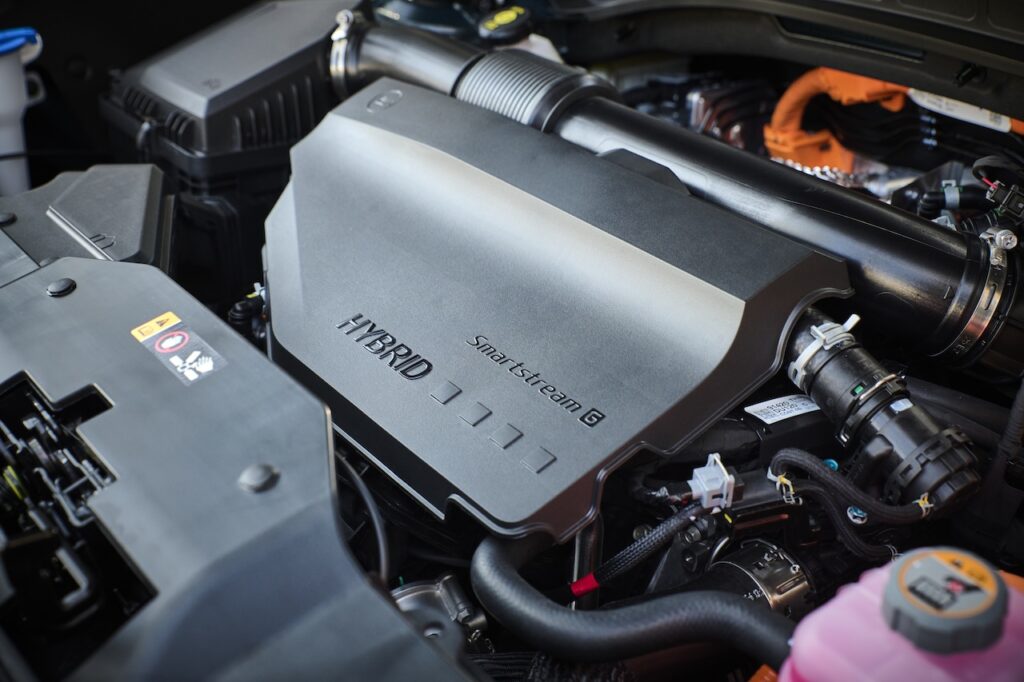
However, simply transplanting that system into the Tasman is not straightforward. In the Palisade it is rated to tow only 2000kg, well short of the 3500kg benchmark expected of serious Australian dual-cab utes.
More recently, former Kia Australia CEO Damien Meredith made it clear before his retirement that he wanted the Tasman to go further down the electrification path.
“I would like a plug-in, and I would like an EV,” Meredith said earlier this year. “So if I’m being greedy, so be it. But that’s what I’d like to help with the success of Tasman.”
A conventional hybrid remains under consideration, but the success of the BYD Shark 6 has strengthened the argument for Kia to leap directly to a PHEV.
Either a hybrid or plug-in hybrid could potentially arrive around late 2027 or into 2028, which would neatly coincide with the timing expected for significant styling changes.
A battery-electric Tasman appears to be further away, with the demands of towing, range and off-road use making a viable electric dual-cab a more difficult and expensive proposition.
But Kia can hardly ignore what is happening around it.
The BYD Shark 6 has demonstrated substantial Australian demand for a plug-in hybrid ute, while the GWM Cannon Alpha PHEV, JAC Hunter PHEV and Ford Ranger PHEV have broadened the electrified choice.
More are coming, including the GWM Cannon annd the Chery Stockman with its claimed world-first diesel-electric plug-in hybrid drivetrain.
Meanwhile, Hyundai is developing its own ute and has identified extended-range electric technology as its preferred solution. This vehicle has been delayed.
By the time an electrified Tasman arrives, diesel could therefore be facing an even broader range of PHEV, hybrid and range-extender competitors.
Kia’s other problem is considerably easier to see.
The Tasman’s unconventional styling has divided opinion since it was revealed, and Kia Australia has been unusually open about telling its Korean headquarters it believes the design could be hampering sales.
When previously asked when the Australian operation would request a redesign, a Kia spokesperson responded: “You’re assuming we haven’t already.”
“We’ve been quite vocal, and we always have been with this car in particular,” the spokesperson said.
“We’re very vocal with our superiors, and up front. We’re definitely being very deliberate in what we think might be hampering its sales performance.
“If we want to be a third of the total production volume, they’ve got to be receptive. But it’s not necessarily going to happen at the speed at which you might feel the market might be thinking.
“Because a major redesign; it’s not simple. And when you’ve already invested in tooling for sheet metal and tooling for plastics, it’s a multi-million-dollar process.”
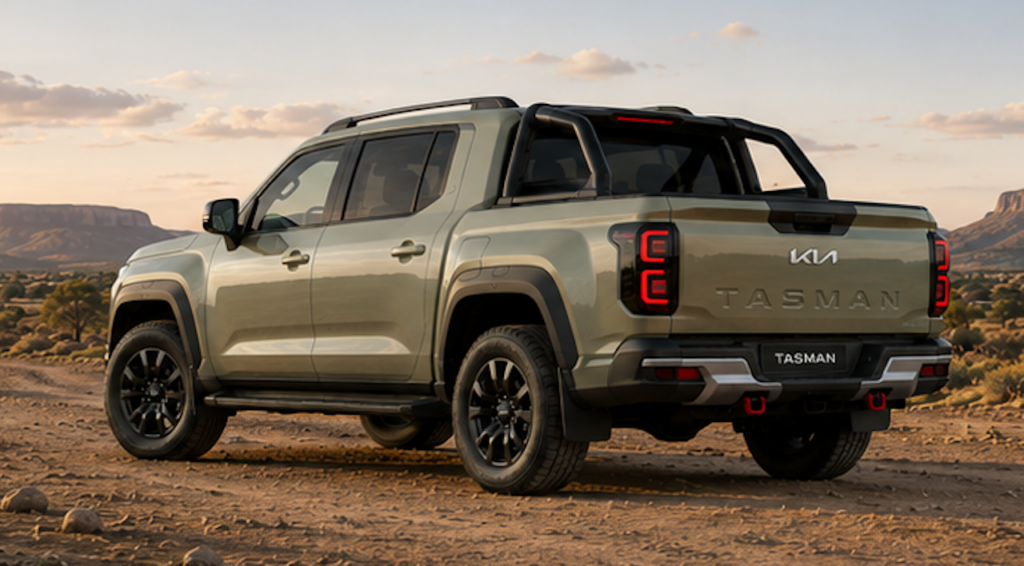
Unofficial digital renders have now begun appearing that imagine how Kia might address the issue, generally retaining the Tasman’s square proportions while replacing some of its more divisive details with a more conventional dual-cab treatment.
They shouldn’t be mistaken for previews from Kia itself.
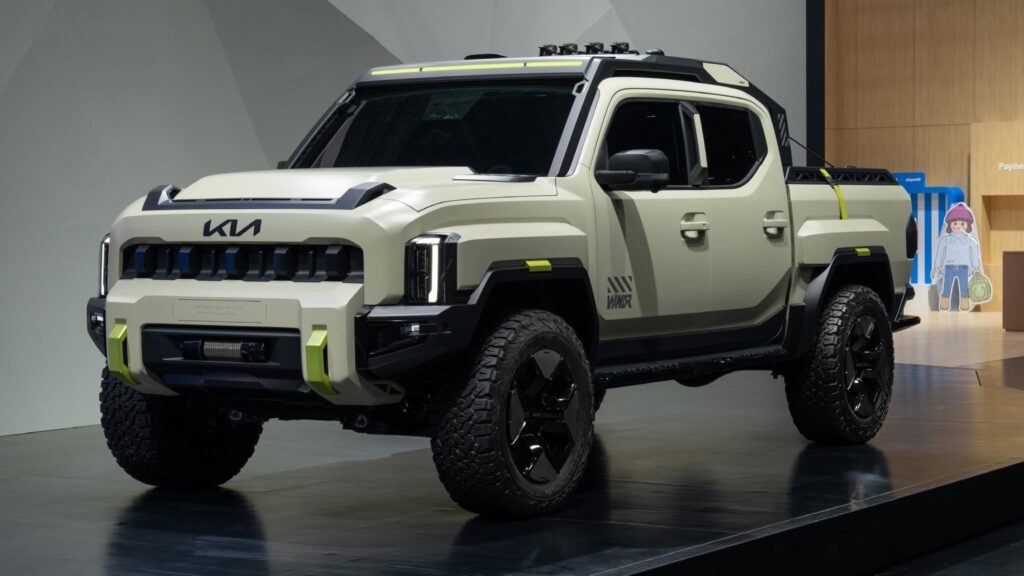
The official Wkndr concept released in 2025 is not about to launch into production either.
Nor is a major redesign likely to happen overnight, with late 2027 or 2028 shaping as a more realistic timeframe for substantial changes.