
Japan finds our interest in EVs bemusing: How sticking with ICE is slowing the electric transition
I love Japan, and the Japanese people, indeed, I bet they taste like particularly good sashimi, but on my most recent visit there – to drive a new diesel-powered version of Mazda’s CX-60 SUV – I became concerned, disturbed even, at how pitiful their attitude is towards electric cars, and what a large problem that is for the rest of us.
Indeed, at a time when some of the world’s largest cities are less than two years out from banning all diesel cars from their roads to reduce pollution, senior Japanese execs told me they still think diesel has a big future, as do all combustion engines, and then they looked at me with pity in their eyes – like I was some dribbling simpleton – and explained that electric cars were a bit pointless.
And trust me, it’s not just the car companies. I’m sure you can buy a Tesla in Japan, but over three days of driving, past thousands of tiny little cars and funny-looking vans, plus a few Porsches and a Ferrari 296 GTB, I didn’t see one. Not one.
Try and recall, if you will, the last time you drove a whole day without seeing a Tesla? Perhaps it’s because I live in a large city, Sydney, with zillions of people who can afford a $70K-plus car, but I rarely go an hour without seeing one, and I’d usually spot a few other EVs during any given day on the road.
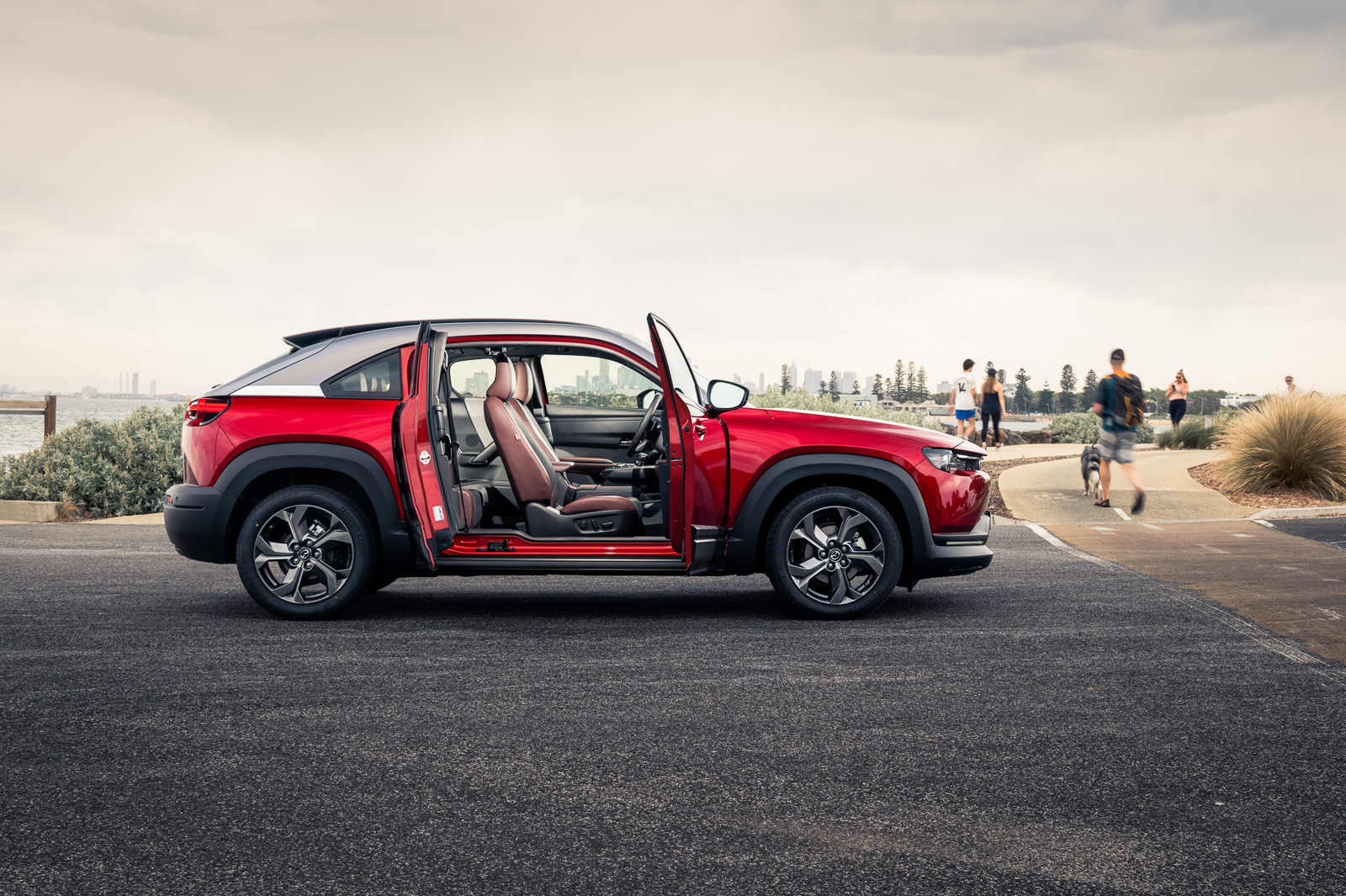
And yet, in Japan, not one, nor a single Nissan Leaf. And they don’t seem to buy any Korean cars, let alone Kia EV6s or Hyundai Ioniqs. I saw some Mazda MX-30s, but they were sitting unloved in a Mazda storage yard, not on the road. Nor did I see a single charging station for EVs, not on the roads, not in my hotel car park, or any car park. I’m talking even fewer than Australia.
Speaking of which, in Japan the percentage of sales made up by full BEVs is around 1 percent, which, astonishingly, is even less than here. In 2022 in Australia EVs made up 3.1 percent of all sales and for the first two months of 2023 EVs are accounting for more than 6 percent of sales.
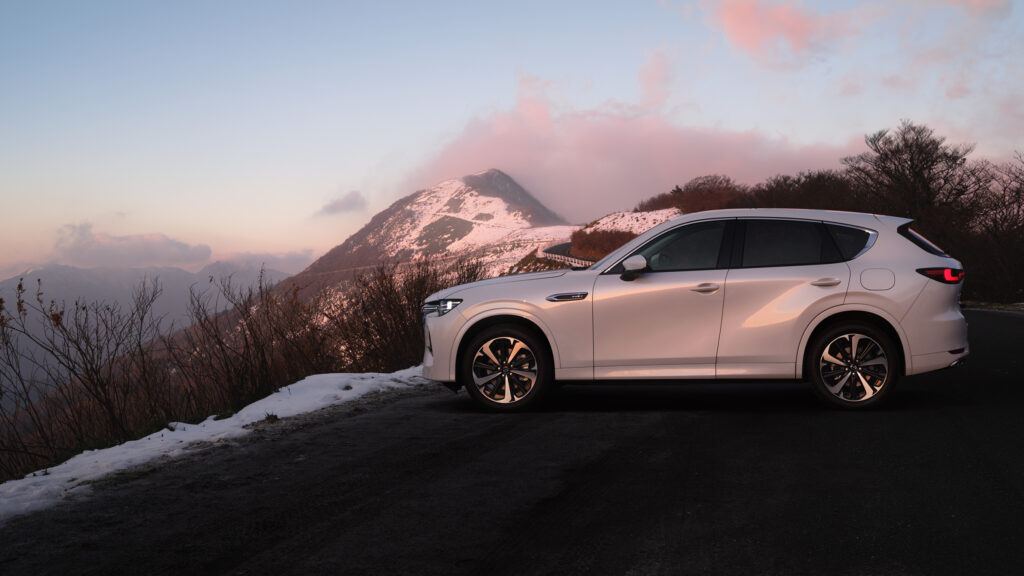
Mazda’s program director for the CX-60, Kohei Shibata, told me that Mazda never considered giving its large SUV a full electric set up, as some competitors, like Genesis, are doing. He believes diesel, with all of its very special particulates and nitrous oxides, is a better option.
“My personal view that if you look around there are many people who don’t have any charging equipment, there’s no charging stations, and given that, maybe a diesel is very practical, because it can drive a long distance,” Shibata said.
“We still very much believe that combustions engines have a future, in those countries where electricity is generated using fossil fuels, like here in Japan and in Australia, because an EV is not particularly friendly to the environment in those places.”
This is Mazda’s wheel-to-well theory of EVs, which posits that a combustion-engined car driven in Japan would – when the total impact of a vehicle is considered, from construction to end-of-life recycling – produce less CO2 than an EV, up to distances of 110,000km.
And it’s obviously a theory shared, at least in part, by other Japanese car companies, which haven’t exactly been in a mad hurry to join the global rush to electric vehicles.
Speaking to Japanese locals, it quickly becomes clear that, as is often the case, they are mildly amused by what the rest of the world is doing, if they’re aware of it at all. They are too polite to say it, but they clearly think we are fools and that, eventually, we’ll realise they were right all along. As usual.
The problem is, we buy a lot of Japanese cars – everyone does. The world’s biggest car company is either Toyota or Volkswagen, depending on who you believe, but considering how many brands make up the VW Group, let’s give it to Toyota.
If the Japanese don’t believe in EVs, or really take them seriously, it’s going to leave a bit of a hole in the market, at least as long as they continue to drag their heels (yes, Toyota and Lexus EVs are coming, but how many?).
Japan believes it was right about hybrids being the way forward and that the global success of the Toyota Prius proved it, but now that we really need to be going full EV, buying Japanese is going to get more and more difficult, creating a space that the Chinese brands, and others, will try to fill.
If only someone could convince the Japanese they’re on the wrong track. Good luck with that.

Comments are closed.