Would this work in Australia? GAC swaps dumpy electric SUVs for sleek 700km Ray 7 Tesla Model 3 fighter
We’re getting used to GAC serving up a collection of relatively dumpy SUVs and people-movers in Australia, but now check this out.
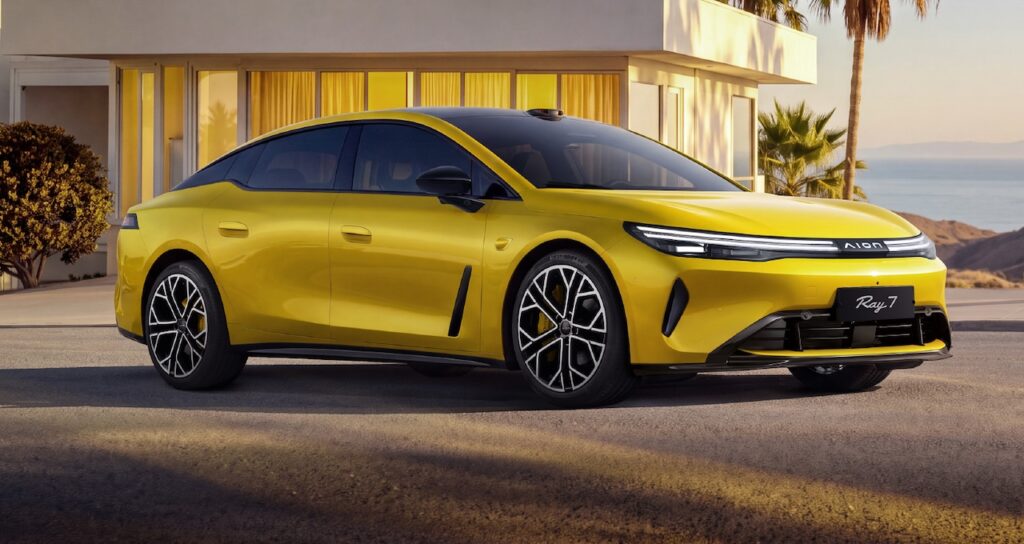
The Chinese giant’s Aion electric brand has revealed the sleek Ray 7, a near-five-metre-long electric fastback packing up to 700km of claimed range and an extraordinary amount of Huawei technology.
Fresh from its online unveiling on August 19, the Ray 7 has made its first major public motor show appearance at Chengdu and looks dramatically different to the upright Aion V SUV, compact Aion UT hatch and big-face M8 people-mover already sold in Australia.
READ MORE: Australia’s EV price war heats up! Cheaper GAC Aion UT coming to take on BYD Atto 1 and Geely EX2
READ MORE: 2026 GAC Aion UT Review: Cheap electric city car brings big space and solid driving manners, but what about the ownership experience?
READ MORE: Radical GAC electrified dual cab ute confirmed and detailed for Australia
And unlike plenty of eye-catching Chinese-market EVs, there is at least a plausible route to Australian showrooms.
GAC launched here late in 2025 and Aion is currently its core Australian brands, although there is no confirmation yet that the Ray 7 will be built in right-hand drive or offered locally.
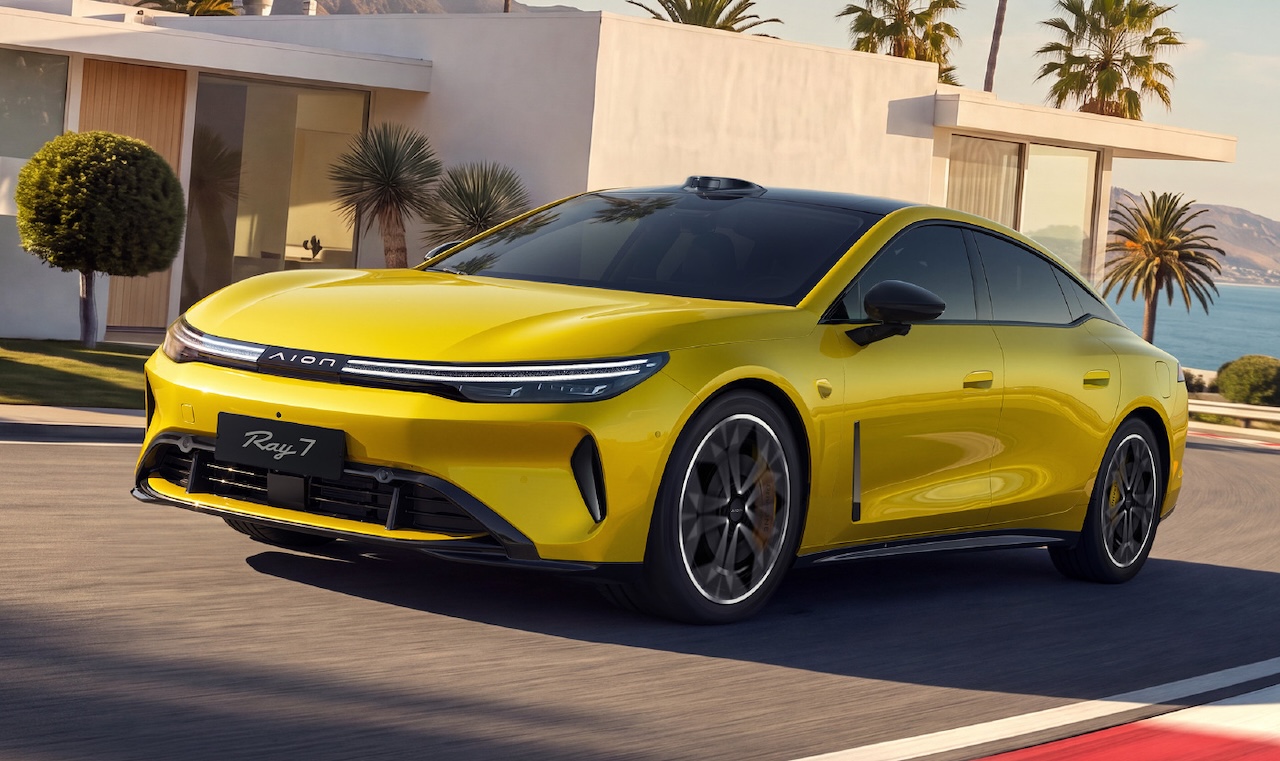
The five-seat Ray 7 is the first member of Aion’s new Ray family and measures 4960mm long, 1900mm wide and just 1455mm high, with a 2920mm wheelbase.
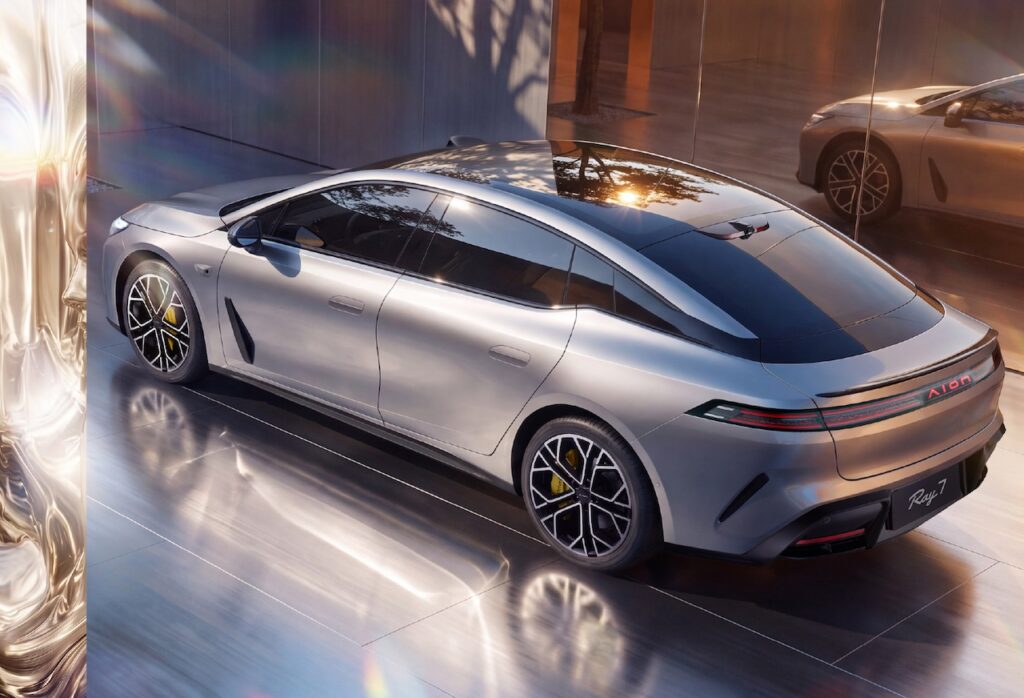
Its low-slung proportions, fastback roofline and full-width front lighting give it a dramatically sportier appearance than the Aion models we’ve seen so far, while 14 separate aerodynamic measures help deliver a claimed drag coefficient of just 0.22Cd.
GAC is pitching the Ray 7 at younger buyers and obvious Chinese-market competition includes the hugely successful Xiaomi SU7, Zeekr 007 and Tesla Model 3.
For now, there’s just one motor specification confirmed.
The Ray 7 uses Huawei’s DriveONE integrated electric drive system, with a rear-mounted permanent-magnet motor developing 180kW.
That’s not a headline-grabbing output by modern Chinese EV standards, but efficiency is a bigger part of the pitch.
GAC claims energy consumption as low as an extraordinary 9.7kWh/100km under the Chinese CLTC test, helping deliver up to 700km of claimed range.
Lithium iron phosphate battery cells are supplied by CATL and incorporated into GAC’s Magazine Battery 2.0 technology. Chinese regulatory filings have also detailed another version using cells supplied by GAC-owned Yinpai Battery.
GAC hasn’t yet published battery capacity.
There’s more interesting technology beneath the Ray 7.
It rides on a dedicated rear-wheel-drive EV platform and uses aluminium-intensive double-wishbone front suspension and a five-link rear end, backed by front and rear anti-roll bars and FSD adaptive dampers.
Chinese reports from the launch also claim Alfa Romeo chassis-tuning expertise has been employed during the Ray 7’s development.
But it’s the braking system that is potentially the Ray 7’s most significant piece of technology.
GAC says it is the first production vehicle to use Huawei’s EMB – or electromechanical braking – technology as part of a new chip-level integrated drive-and-control architecture.
Rather than using a conventional hydraulic connection between the brake pedal and the wheel brakes, the Huawei system uses electrical signals and electromechanical actuators at the wheels.
GAC claims the Ray 7 can stop from 100km/h in 33 metres and says the architecture incorporates redundancy to maintain braking capability in the event of system failures.
Huawei’s iTRACK intelligent torque-control technology is also employed to rapidly manage wheel slip on low-grip surfaces.
The Huawei involvement extends into the Ray 7’s extensive driver-assistance hardware.
There are 27 sensors, including a 192-channel roof-mounted LiDAR unit and three 4D millimetre-wave radars.
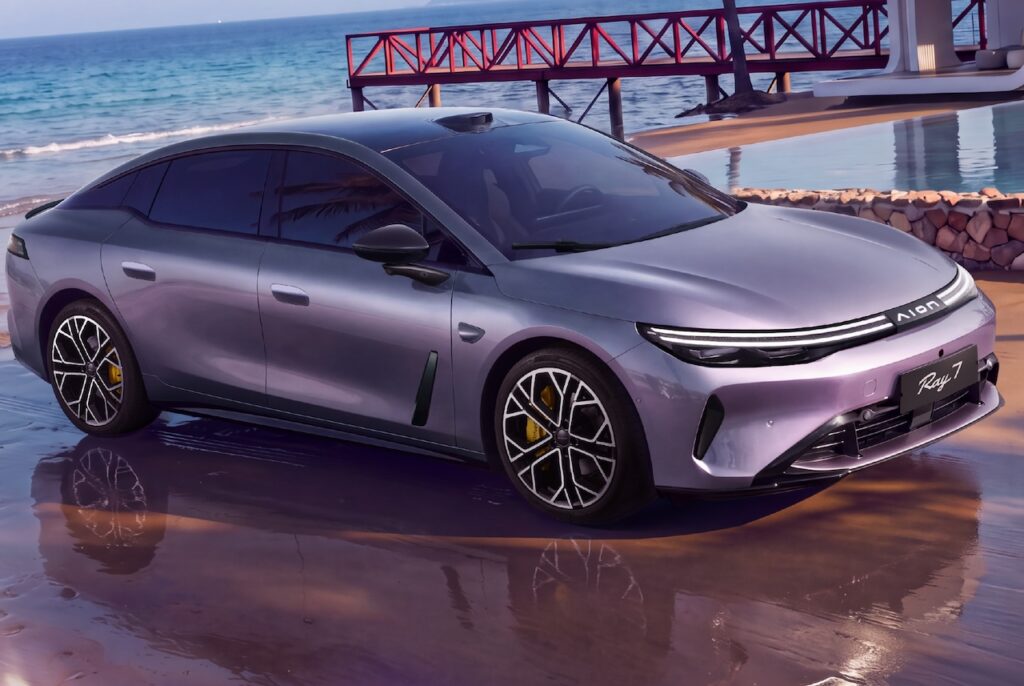
GAC says the assistance software shares its technology base with WeRide’s Level 4 robotaxi development, although that does not make the Ray 7 a Level 4 autonomous car.
Instead, the production system is claimed to support functions including assisted urban driving, navigating from parking space to parking space, searching for available parking spaces and automated parking.
So could the Ray 7 come to Australia?
There’s no confirmation, and the traditional sedan market here is vastly smaller than the market for SUVs.
But GAC is already established locally, giving the Ray 7 a much clearer potential pathway to Australia than many of the Chinese EVs unveiled at Chengdu.
It could also give Aion something its current Australian range lacks – a low, sleek and overtly desirable electric flagship rather than another SUV or people-mover.