
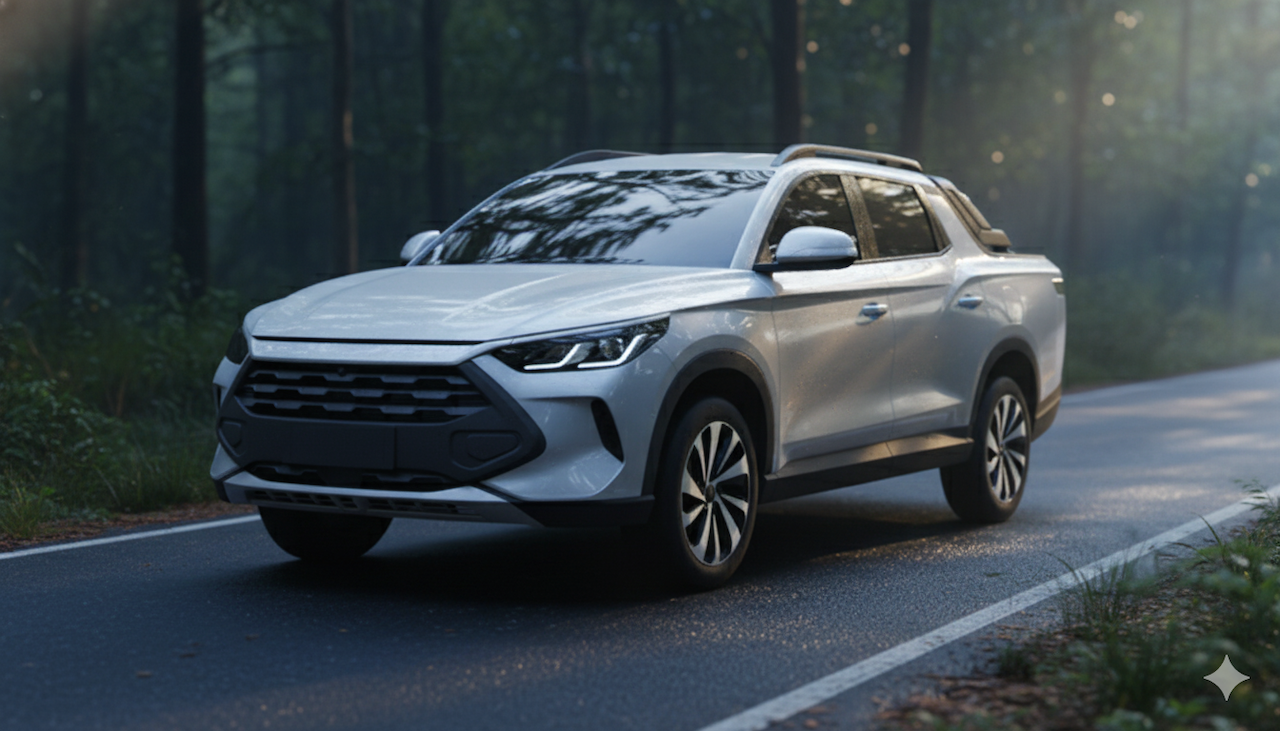
BYD debates baby Shark ute for Australia
BYD’s smaller dual-cab ute, widely dubbed the ‘Baby Shark’ or Shark 5, is being watched closely by the brand’s Australian arm, but is not currently part of its local product plans.
The light-duty plug-in hybrid ute has been spotted testing in both China and South America and is expected to go on sale in Brazil in 2026, where it will likely also be built.
Patent images lodged in Europe reveal a vehicle noticeably smaller than the 5.45-metre-long Shark 6 already on sale in Australia.
READ MORE: Baby Shark revealed! Australia-bound BYD small ute is based on plug-in Sealion 6, targets ultra-low pricing and an EV range beyond 130km
READ MORE: BYD confirms “tsunami of new models” for Australia led by expansion of BYD Shark 6 line-up
READ MORE: BYD Shark 6 is number one: Chinese ute takes just 12 months to become the best-selling PHEV of all-time in Australia
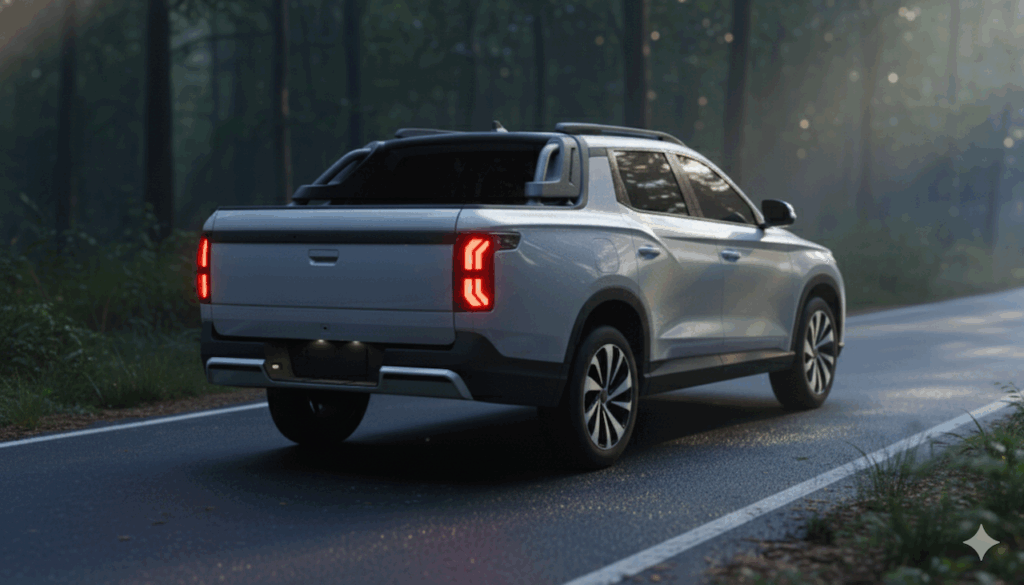
Rather than being a scaled-down version of the ladder-frame Shark 6, the Shark 5 is understood to use the same 1.5-litre petrol-electric plug-in hybrid system as the Sealion 6 SUV and is likely to sit on a car-based unibody platform.
Spy photos from Brazil show a cabin layout that closely mirrors the Sealion 6.
At around 4.8 metres long, the dual-cab is expected to offer a smaller cargo area and lower payload than its larger sibling, positioning it as a lighter-duty alternative to traditional diesel utes.
BYD Australia head of product Sajid Hasan said the local team has been approached by HQ in China about taking the new model, but any decision on an Australian introduction will depend on how it performs in other markets.
“We have been consulted on that model and I guess … we’re not ruling it out,” Hasan said. “But I’d like to see how it goes in … South America.
“I wouldn’t say that we have any concerns around it. It’s more of just how it resonates with customers and how it goes against the ladder frame chassis variants that are also on sale.”
Australia’s ute market is dominated by larger ladder-frame diesel utes. There are currently no smaller car-based utes on sale locally.
However, vehicles such as the Ford Maverick have found strong demand in the Americas, suggesting there may be appetite for a different style of ute.
Hasan said he is personally curious about whether such a vehicle could attract buyers who previously owned car-based utes derived from the Ford Falcon and Holden Commodore.
“I am genuinely curious as to how many customers would come back to that segment if we launch a product.
“The segment doesn’t really exist anymore. It went out with local manufacturing. But I am curious how many customers would come back to that segment.”
Despite its rapid expansion plans in Australia, BYD says it is prioritising established segments as it works through a crowded product pipeline.
“We can’t be a kid in the candy store,” Hasan said. “We have to be very pragmatic and judicious in how we roll out the products. So I think at this point in time, our focus is on the tried and tested segments and vehicle configurations that are ready at hand.”
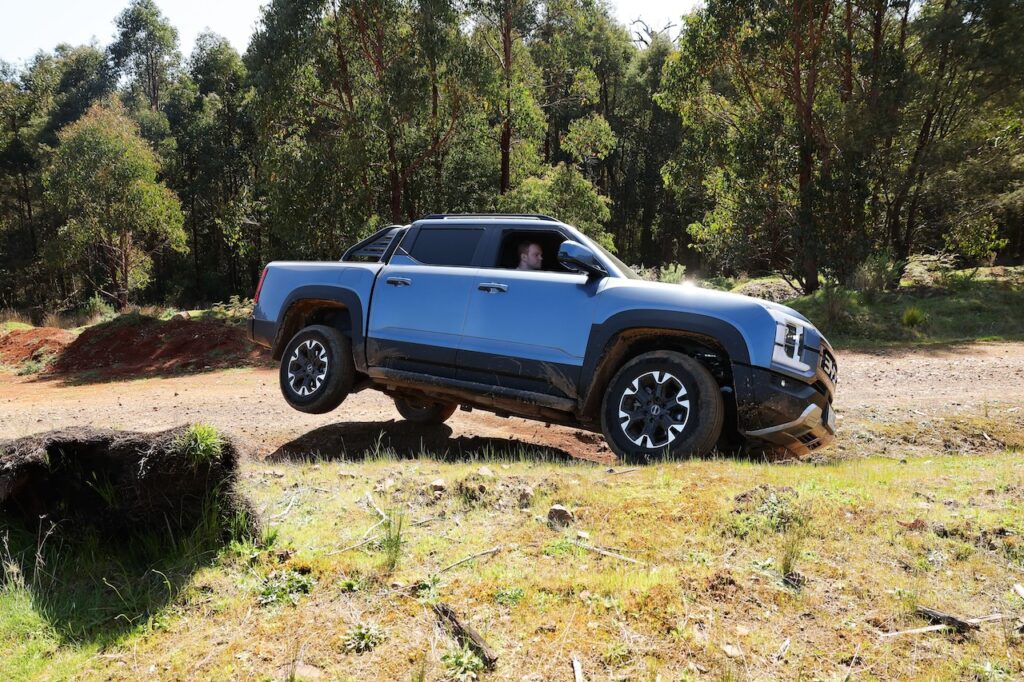
That focus includes expanding the Shark 6 range in 2026 with the addition of a cab chassis variant and a 2.0-litre version designed to offer greater towing and off-road capability.
BYD has also recently launched the Sealion 5 and Sealion 8 plug-in hybrid SUVs, while the Atto 1 and Atto 2 electric SUVs are also among a raft of new models recently released in Australia as the brand pushes towards an ambitious sales target this year.
A shame it’s just another petrol burner and not an EV
Great idea for Citi use and country