




EV sales trends analysed: Cheaper EVs are having an unexpected effect on buying intentions. It’s not necessarily good news…

Australia’s electric vehicle transition may not be stalling, but it is very clearly changing shape.
A major new consumer study commissioned by the Australian Automotive Dealer Association (AADA) shows that, despite an influx of cheaper EV brands, new government incentives and three years of overall growth in the new-car market, Australians’ intention to buy an electric vehicle as their next main car has not moved since 2022.
It is still sitting at 38 per cent.
READ MORE: Milestone achieved! EV annual sales crack 100K in Australia as government warned not to axe incentives
READ MORE: Volkswagen knocks Tesla off top spot in Europe: ID.3, ID.4 and ID.7 deliver big growth as demand slows for Model 3 and Model Y
READ MORE: Confirmed! While used EV sales rose in Australia in 2024 resale values fell … by a lot!
That headline finding comes from the fourth wave of the AADA’s national EV & Hybrid Vehicle Insights research, conducted in November 2025 across a representative sample of 2000 Australian drivers.
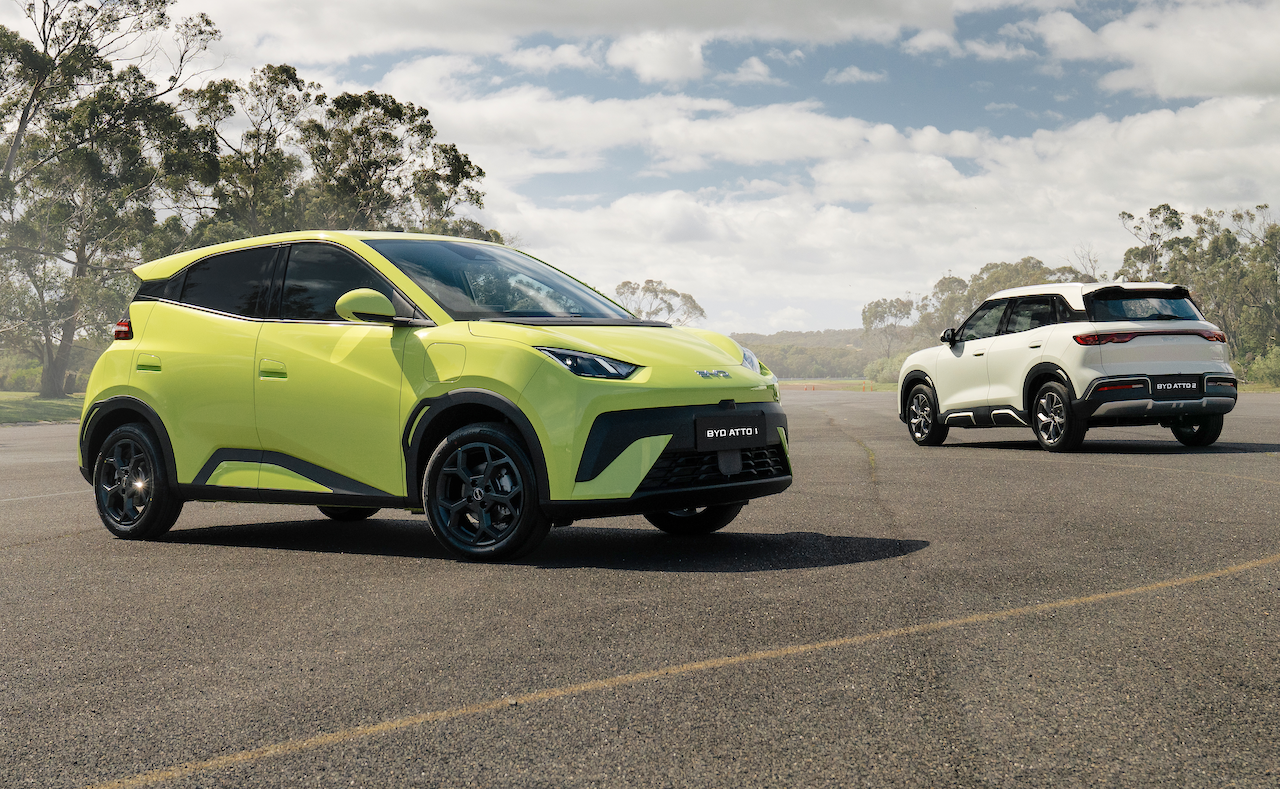
But buried inside the numbers is a much more revealing story about how Australians now think about EVs and why cheaper models such as the $23,990 BYD Atto 1 and $31,990 BYD Atto 2 (pictured top) have not translated into greater mainstream demand.
Cheaper EVs haven’t lifted demand — they’ve reset expectations
In January 2024, Australians indicated they were willing to pay an average eight per cent premium for an electric vehicle over an equivalent petrol model. By November 2024 that had fallen to six per cent.
In November 2025 it has collapsed to just two per cent.
When presented with a hypothetical $40,000 petrol car, respondents said they would on average pay $40,800 for an electric version.
This is one of the most significant shifts in the research.

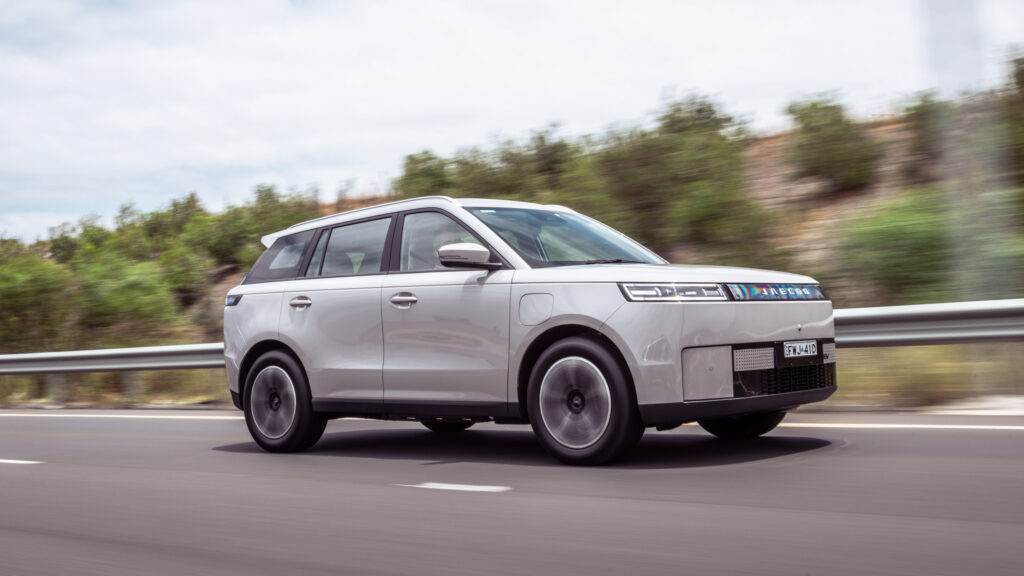
Rather than cheaper EVs encouraging more people into the market, they appear to have changed consumer psychology. Australians no longer see EVs as something worth paying extra for at all.
At the same time, 65 per cent of respondents agree they are now less willing to pay more for an EV because of current economic conditions.
Environmental appeal fading, value-for-money rising
The study also shows a marked shift in why people would consider an EV.
In January 2024, 67 per cent of likely EV buyers cited environmental benefits as a key driver. In November 2025 that figure has dropped to 49 per cent.
Meanwhile, perceptions that EVs are “good value for money” and “cheaper to run and recharge” have risen.
The data suggests EV buying is moving away from being a values-based decision and becoming a purely economic one.
Used EV price falls foreshadowed this shift
This change in sentiment closely mirrors what was already happening in the used car market during 2024.
As previously reported by EV Central, data from AutoGrab and the AADA showed one-year-old EVs lost 25 per cent of their original value in 2024, while hybrids retained 98.3 per cent of theirs.
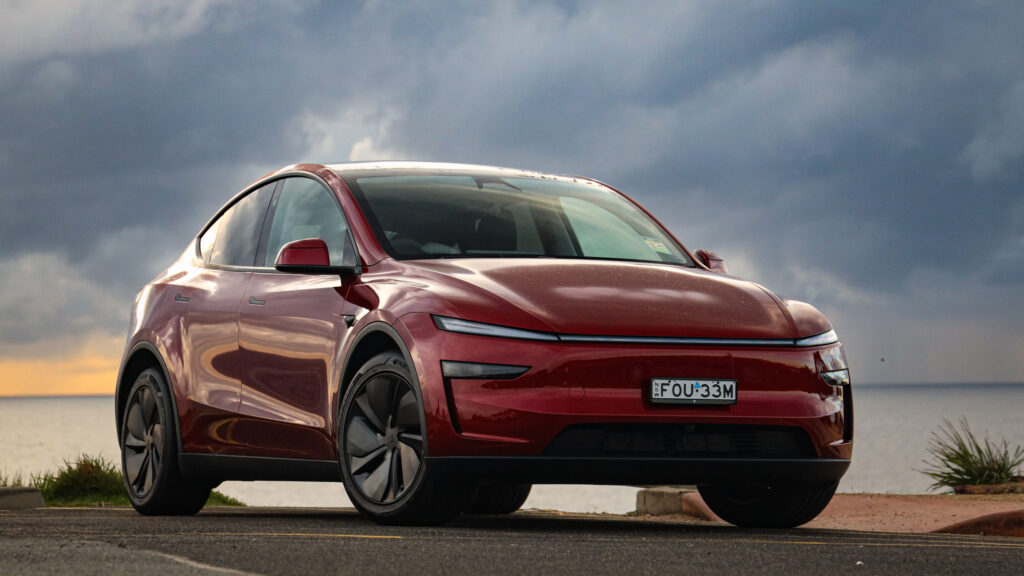
That collapse in resale values, driven by rapid battery advances, heavy discounting and growing competition from Chinese brands, appears to have filtered directly into consumer thinking.
EVs are no longer perceived as premium, and buyers are correspondingly unwilling to pay a premium for them.
EVs becoming a product for specific demographics
The research shows EV consideration is now heavily concentrated among:
- Drivers under 50
- Men
- Higher-income households
- Those living within 10km of a CBD
- Residents of Sydney, Melbourne and Brisbane
By contrast, consideration has dropped in regional and rural Australia, backing up what dealers have been reporting on the ground.
“Our members are committed to supporting Australia’s transition to lower-emissions vehicles and want to meet Australian driver’s needs,” said AADA CEO James Voortman.
“However new car dealers are not yet seeing a significant increase in the number of consumers intending to purchase an EV at the scale required.”
Hybrids and PHEVs quietly gaining ground
While EV intention remains flat at 38 per cent, openness to traditional hybrids sits at 53 per cent and plug-in hybrids at 37 per cent.
This aligns with recent sales trends showing strong growth in hybrid and PHEV demand.
“What we are seeing is the automotive transition is happening but at the pace of consumers’ choosing,” said Mr Voortman.
Potential policy headwind: Road User Charge
The survey also tested reaction to a proposed distance-based Road User Charge that would apply to EVs.
Twenty-seven per cent said it would make them less likely to buy an EV, while 20 per cent said it would make them more likely — a net negative impact of seven per cent on EV consideration.
A challenge for emissions modelling
The Federal Government’s emissions modelling assumes EVs will account for around 50 per cent of new car sales annually in 2035.
Based on this data, that trajectory looks challenging.
“The consumer survey shows this will be difficult,” Mr Voortman said.
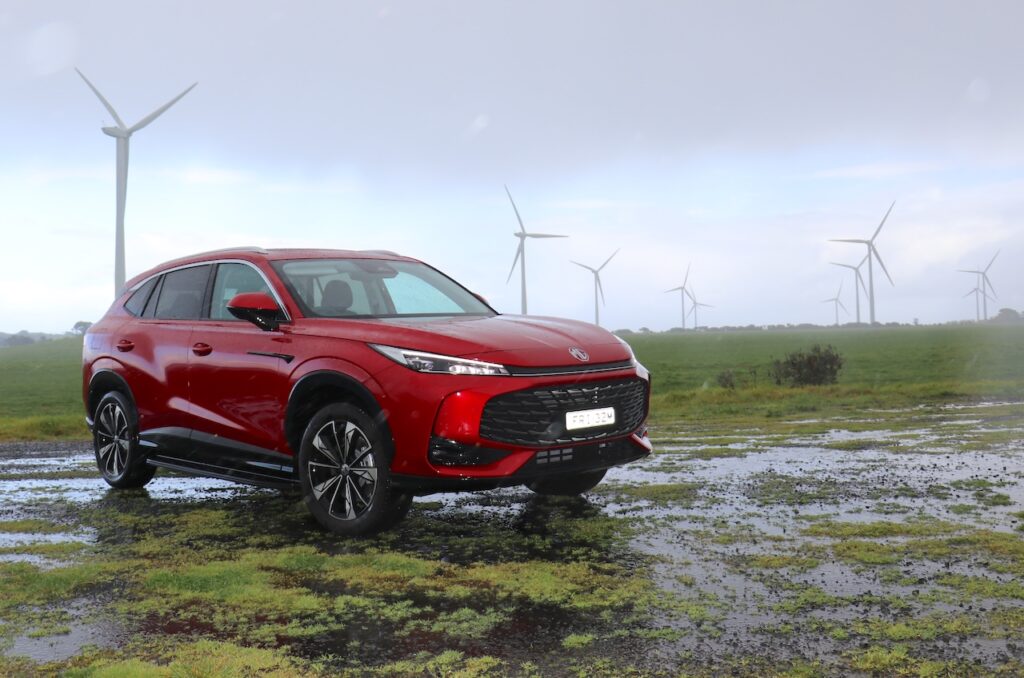
“However, there are positive indicators where there is an increase in consumers’ intention to purchase a hybrid or plug-in hybrid electric vehicle which is also demonstrated in recent sales data.”
The shape of the transition is changing
The AADA research does not suggest Australians are rejecting electrification.
It suggests they are choosing a different path to it.
EVs remain attractive — but primarily to younger, wealthier, inner-city drivers. For the broader market, hybrids and PHEVs increasingly appear to be the comfortable, financially sensible stepping stone.
Cheaper EVs have not sparked a surge in demand.
But they made Australians less willing to pay extra for one.

Plug in hybrids and hybrids are cars I would never buy. Why would I drive around in a car that has a battery, a electric motor, a fuel tank and a diesel or petrol engine. That is a lot to cart around when only half the propulsive system is working and a very complicated system to keep working fluidly.
Battery electric cars make much more sense by being propelled by a battery and a electric motor or two, and that is a much less complicated system. Very little servicing is required on a BEV, but with hybrids there are oil changers, filter changes, belts and hoses to regularly inspect. Not cheap.
I really can’t understand why hybrids and plug in hybrids are popular in Australia and if you think taking a road trip in a BEV is too scary, I’ve traveled to Adelaide twice from the Sunshine Coast and also to Cairns with ease.