2025 Hyundai Ioniq 9 Review: Hyundai goes Audi and BMW hunting with huge electric SUV
Hyundai’s answer to the Kia EV9 has arrived in the sky-scraping shape of the Ioniq 9 SUV, but there is at least one notable difference.
While Kia was keen to keep entry-level pricing below six figures, Hyundai has thrown that kind of caution to the wind, launching the Ioniq 9 in one flagship trim, the Calligraphy, which will set you back a not-insubstantial $119,750.
That’s real money — about the same as Volvo EX90 — but Hyundai goes some way to justifying it by throwing just about everything it has got at the Ioniq 9.
READ MORE:
2025 Hyundai Ioniq 9 price and equipment
You can choose between a traditional seven-seat layout, or swap the three-seat middle row for two far more comfortable captain’s chairs (but it will cost you an extra $2000). Plus there are two technologies never before seen on a Hyundai vehicle – a digital key that can be uploaded to your phone’s wallet, and active noise cancellation to help reduce tyre and wind noise.
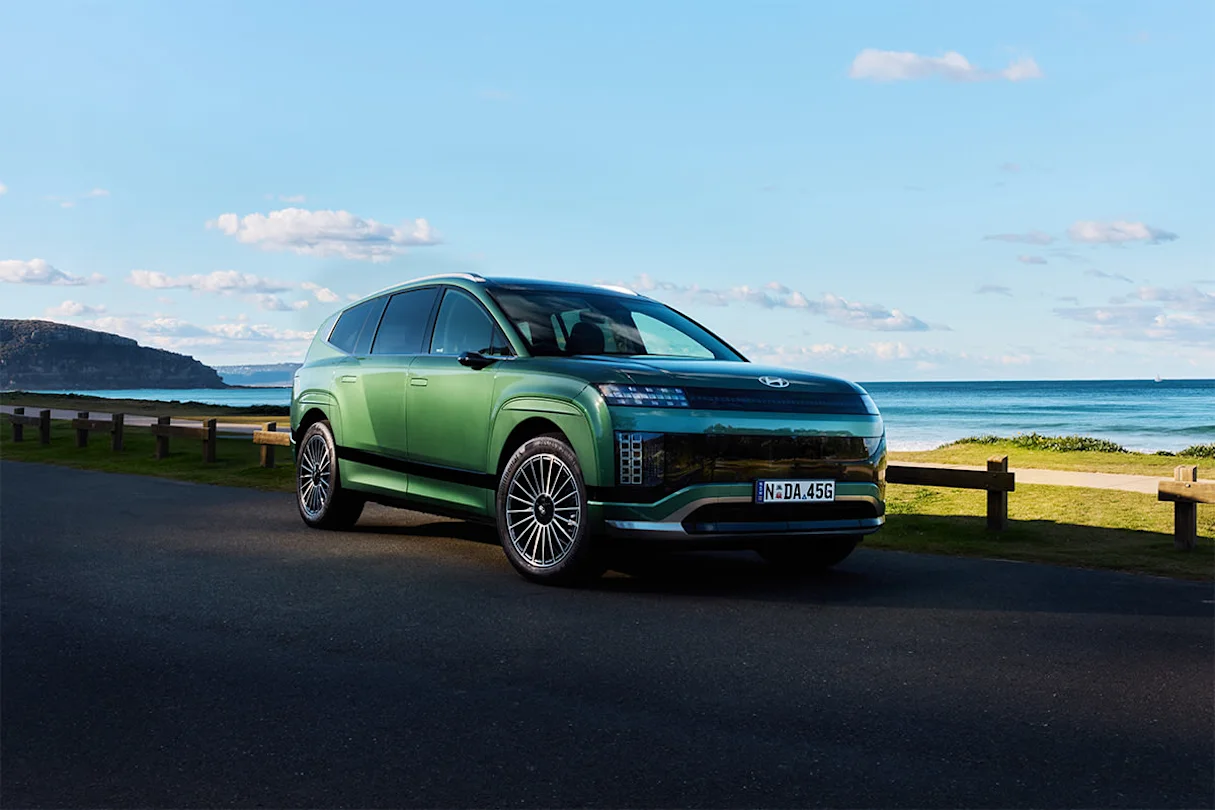
Elsewhere, expect LED lighting, a vast panoramic sunroof and huge 21-inch alloy wheels. The cabin bucks the eco-friendly trend of raiding the yellow recycling bin for materials, instead fitting real Nappa leather seats which are heated and ventilated in the first two rows. There’s also tri-zone climate, a heated steering wheel, a head-up display and a curved screen set-up that links the driver display with the central infotainment screen.
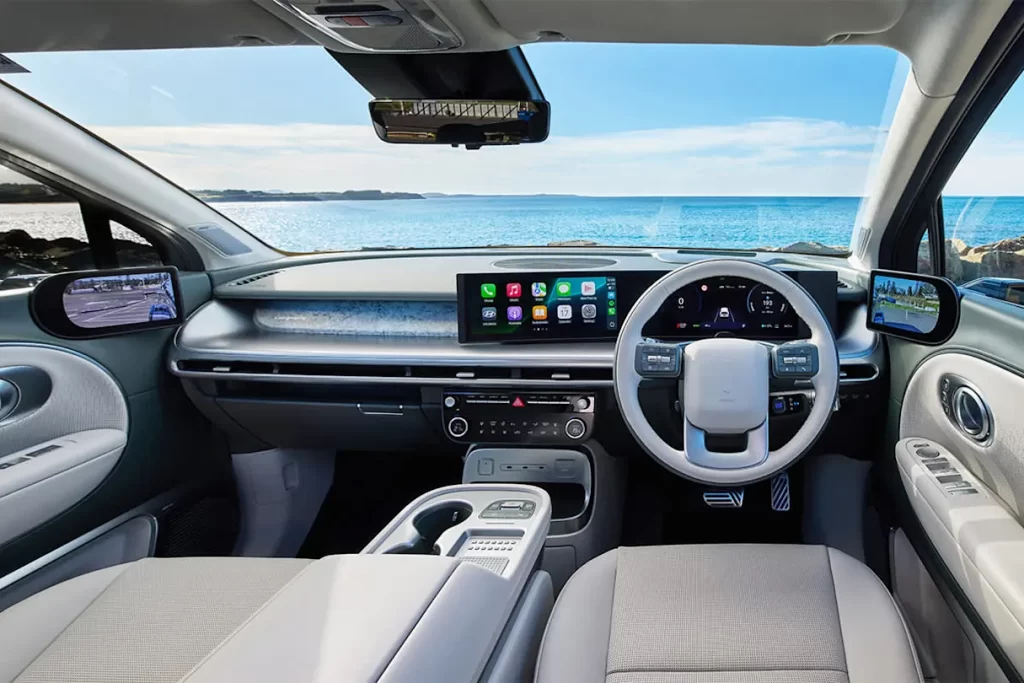
Apple CarPlay and Android Auto pair with a 14-speaker BOSE stereo, and there’s a fleet of USB connection ports in all three rows. What’s missing, though, is a household-style power point so common in EVs these days.
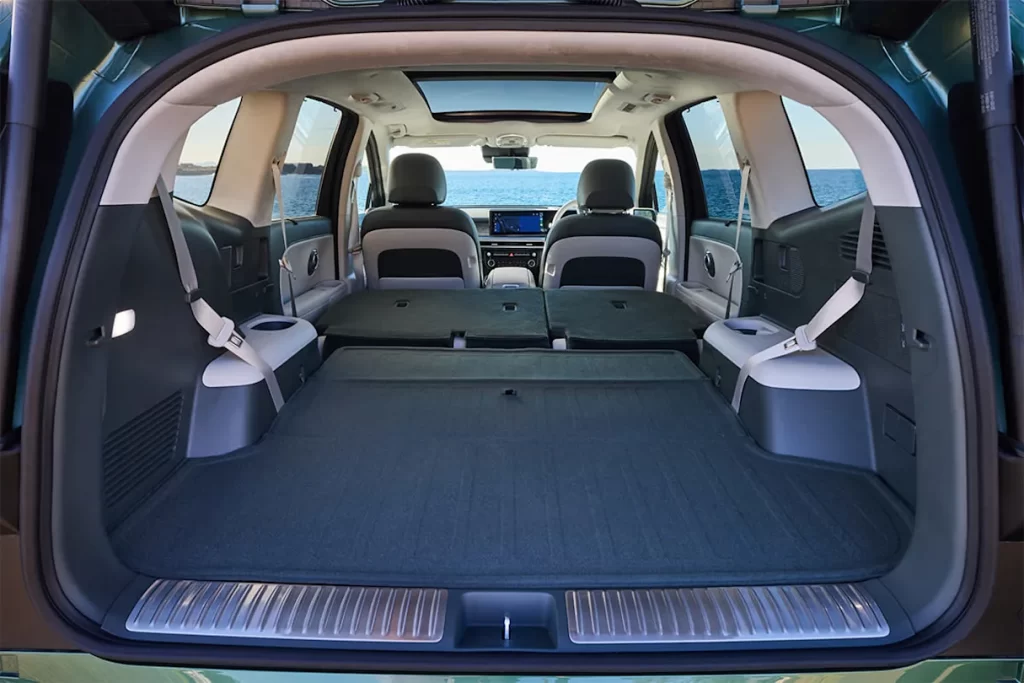
You also just get a whole lot of car, with the Ioniq 9 stretching more than five metres in length, almost two metres in width and around 1.8m in height. It weighs a hefty 2.7 tonnes, and can tow 2.5-tonne braked. Luggage space grows from an ok 338 litres with all three rows in place, to a much better 908 with the third row folded, to a gigantic 2410 litres if you use it as a two-seater.
Contributing to the overall weight is the massive battery beneath your feet, with the Ioniq 9 making use of a big 110.3kWh unit – almost twice as big as the one in the standard range Ioniq 5 – which delivers a claimed 600kms of driving range. An 800v architecture means a max DC charge rate of 233kW, which should take you from 10 to 80 per cent charged in 24 minutes in perfect conditions.
Also a little surprising is the hot-hatch-like punch on offer from the Ioniq 9, with the twin-motor powertrain serving up 314kW and 700Nm, and a super brisk run to 100km/h of 5.2 seconds.
There’s no word on an ANCAP score yet, but the brand reckons it’s hopeful of full marks, with 10 airbags on board, and a full suite of active safety stuff, including the debut of Highway Driving Assist 2, which is an upgrade to the active cruise control that sees the Ioniq 9 able to take evasive action should someone veer into your lane.
Finally, a word on ownership. Rumours of a seven-year warranty from Hyundai have yet to come to anything, which means you get five years and unlimited kilometres. Servicing is only every two years or 30,000kms, and the first six years should cost you $2005.
2025 Hyundai Ioniq 9: What we think
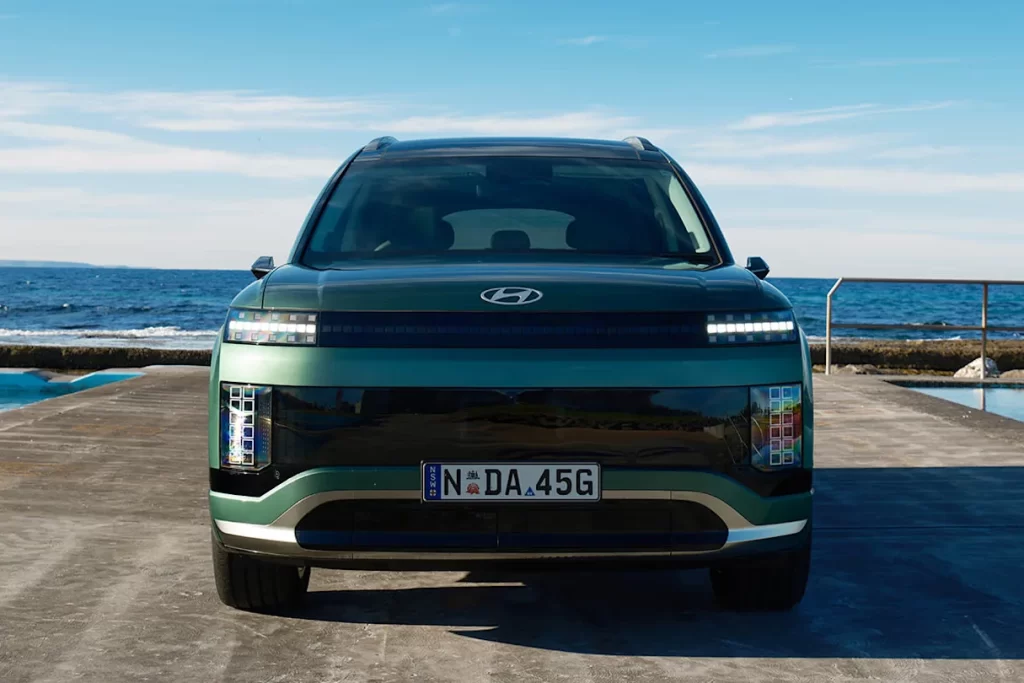
It’s surprisingly good, the Ioniq 9. And I don’t mean that in a shocked-that-Hyundai-makes-good-cars way, because that ship has long since sailed. I mean it more that you don’t expect a vehicle that appears to be modelled on an office block and that weighs almost as much as two i30 N hot hatchbacks to be anywhere near this much fun on a fast, flowing road.
I’m not entirely sure how it manages it, but the big Ioniq 9 somehow shrinks the moment you climb into the driver’s seat, feeling way smaller, tighter and more lithe than it looks from the outside as you approach it.
Now, it must be said, there are still plenty vehicles that are more fun to climb a mountain pass in than a three-row SUV, no matter how sorted, but I can confidently report that opting for posh practicality doesn’t mean you have to sacrifice all driving fun in the Hyundai.
Elsewhere, the Ioniq 9 largely shines from behind the wheel. It’s smooth and quiet in the city, commendably hushed at freeway speeds, and it feels engaged and connected, no matter where you’re driving it.
There’s also a huge amount of room in the second row, which feels especially luxurious with the six-seat configuration. The third row is tighter, and is still best left to the kids, but kudos to Hyundai for fitting seats six and seven with a speaker, a USB charge port and air vent.
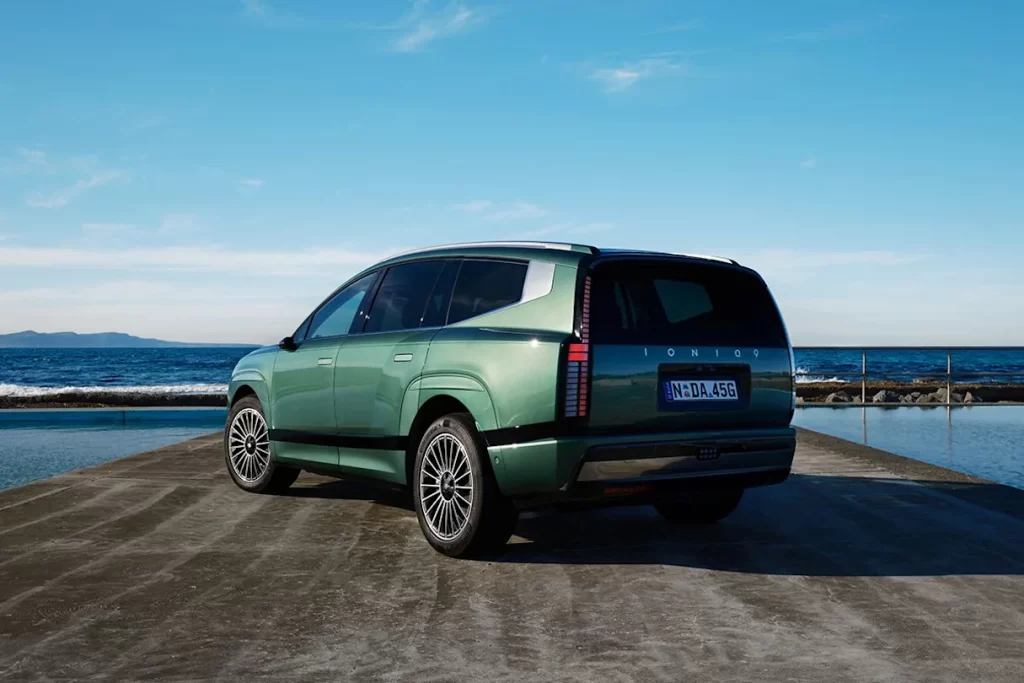
Three things, though. The steering wheel doesn’t match the drive, in my opinion. I like the minimalist feel to it, but it’s too big and bus-like for mine. That, and the claimed range is a fantasy. We had a live read-put of maximum and minimum range that adapts to your driving style, and there was a vast gap between the two numbers. And finally, I love the front end of the Ioniq 9, but hate the rear. It looks like an old station wagon on stilts from behind. A bit like the Santa Fe, then – best viewed from the front.
2025 Hyundai Ioniq 9: Verdict
To be honest, it feels a bit like Hyundai has given up on the Ioniq 9 before it has even hit showrooms, with the single flagship variant, and its price, sure to shrink the buyer pool. And that’s a shame, because this is a bloody good electric SUV, and one that deserves a full model lineup, including cheaper models, to attract more customers.
Score: 4/5
2025 Hyundai Ioniq 9 price and specifications
Price: $119,750
Basics: Electric, Six or seven seats, Five doors, SUV, AWD
Range: 600kms WLTP
Battery capacity: 110.3kWh
Battery warranty: 8 years/160,000km
Energy consumption: 20.6kWh/100km
Motors: Twin electric motors, 157kW/350Nm each
Combined output: 314kW/700Nm
AC charging: 10.5kW, Type 2 plug
DC charging: 233kW, CCS combo plug
0-100km/h: 5.2 seconds