
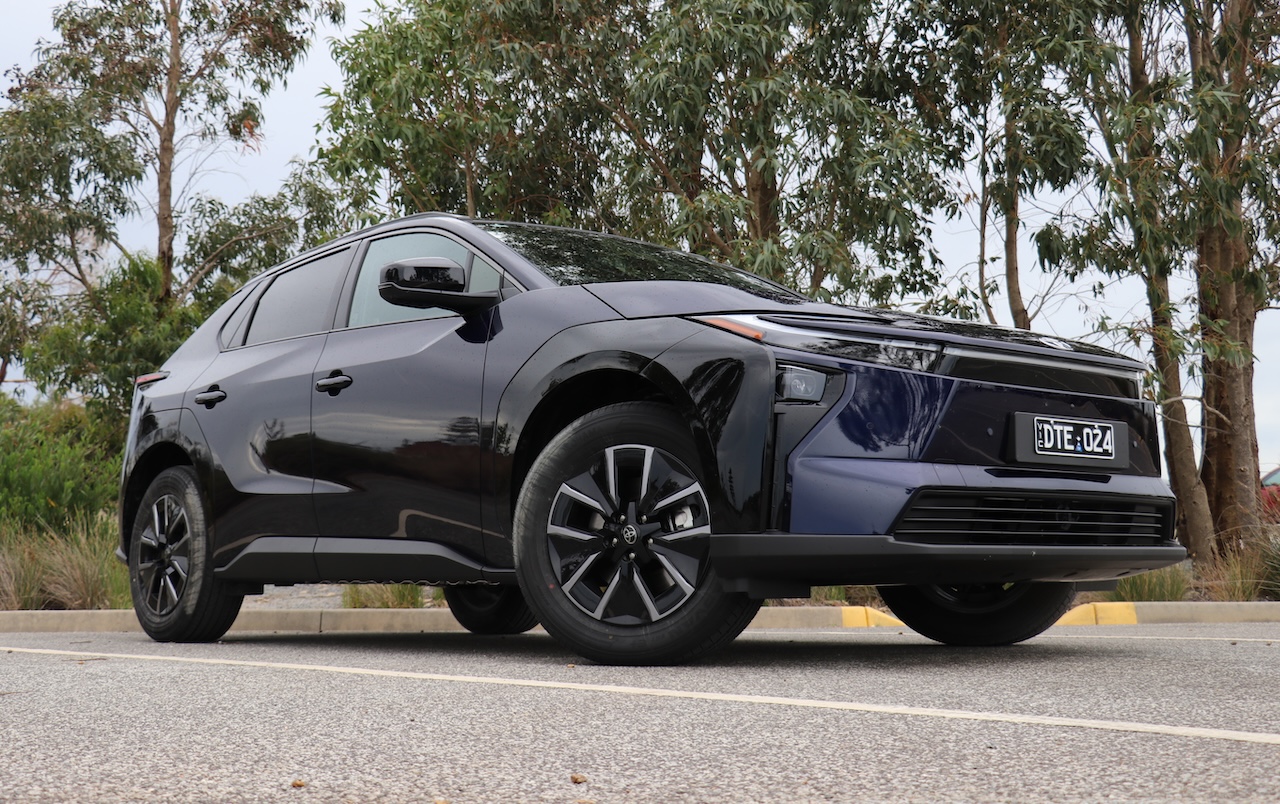
2026 Toyota bZ4X 2WD Review: A $10,000 price cut and a huge boost in range transform the bZ4X from pretender to contender
Such is Toyota’s reputation as an all-conquering sales force in Australia the failure of the original bZ4X to gain an audience was a shock.
But really, considering pricing that was quickly made uncompetitive by rivals, mediocre powertrain performance and some equipment shortfalls, it was the right result.
So plaudits to EV buyers for assessing on its merits the first Toyota battery electric vehicle to be sold in Australia rather than buying based on the reputation of the brand.
But now plaudits go to Toyota for its response to a rare rejection. Rather than sulk, it’s rolled out an updated bZ4X that’s dramatically cheaper with substantial claimed improvements in key areas.
Time to find out if the bZ4X is now worth your consideration.
READ MORE: Upgraded 2026 Toyota bZ4X is now $10,000 cheaper! Huge price cuts mean it’s more affordable than Tesla Model Y
READ MORE: Toyota chases 7400% sales lift for EVs and PHEVs in Australia!
READ MORE: 2026 Toyota RAV4 Hybrid Review: This car could be Australia’s best seller in 2026. It’s a bit of a struggle to understand why…
2026 Toyota bZ4X 2WD price and equipment
As per 2024 when it first launched, there are two models in the bZ4X line-up, the 2WD we’re testing here and the flagship AWD (all-wheel drive).
The headline is the price reduction of $10,010 for the 2WD to $55,990 (plus on-road costs) and the $6910 cut to $67,990 (plus ORCs) for the AWD.

This demonstration of Toyota’s corporate muscle means the bZ4X now undercuts the top-selling Tesla Model Y Rear-Wheel Drive on price ($58,900) as well as the Kia EV5 ($56,770) and Zeekr 7X ($57,900) and is in the ballpark against the BYD Sealion 7 ($54,990) and XPeng G6 ($54,800, all plus on-road costs).
Just as importantly, Toyota’s gone to work on the battery and powertrain, growing power (+15kW to 165kW) and battery size (from 71.4kWh to 74.7kWh) slightly.
Most impressively, it has boosted the claimed WLTP range from 155km to 591km.
This has essentially come via drive unit efficiency improvements that result in a claimed consumption drop from 16.89kWh/100km to 13.8kWh/100km.
The claimed maximum AC charging rate also doubles from 11kW to 22kW (three phase of course), but the 150kW DC fast charge rate remains unchanged.
The updated 2WD also adds some significant safety equipment including a blind spot monitor with safe exit assist, rear cross-traffic alert, a driver monitor camera, a panoramic view monitor and an additional driver’s knee airbag, bringing the total number of airbags to eight.
Design and comfort changes include a swap for the 2WD from 20-inch to 18-inch alloy wheels (better than it sounds … we’ll explain later) and the addition of roof rails, puddle lamps, headlamp cleaners and gloss black wheel arches.
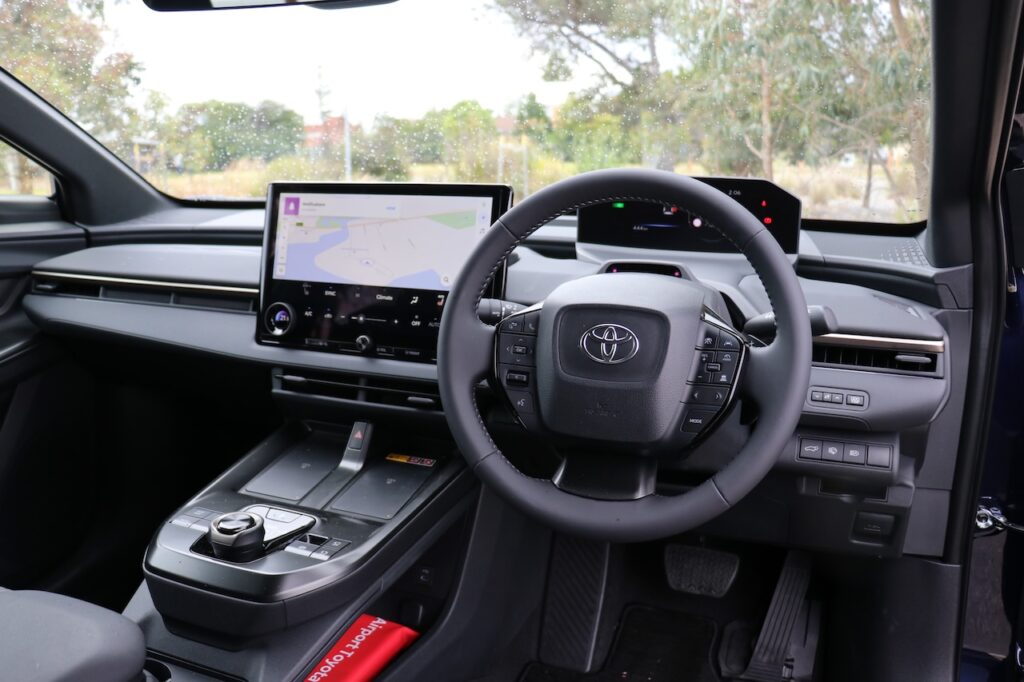
Inside, there’s a larger 14.0-inch touchscreen multimedia system (up from 12.3 inches), two front wireless smartphone chargers, heated steering wheel, ‘nanoeX’ cabin air ionisation, a powered tailgate with kick sensor and a 1500W vehicle to load inverter in the luggage area which can be used to remotely power smaller appliances.
Stuff that carries over includes LED headlights, autonomous emergency braking, various forms of lane keeping, dual-zone climate control, heated front seats, an eight-way powered driver’s seat, six-speaker audio, wireless Apple CarPlay and Android Auto, AM/FM and DAB radio and embedded satellite-navigation.
There’s no spare tyre, most paints add $600, there’s a five-year vehicle warranty, a battery warranty up to 10 years, 12 month/15,000km service intervals and servicing pricing capped at a very reasonable $180 per visit for the first five visits.
2026 Toyota bZ4X 2WD: What we think
Claimed consumption and range numbers are all well and good, but reality often disappoints.
Well, the 2026 Toyota bZ4X 2WD didn’t hits its claims during our three-week test, but it certainly went close enough to confirm that there’s been some solid development work done here.
Over hill and dale, navigating the suburbs and cruising on freeways and highways produced a combined average 14.8kWh/100km consumption.
Do the calculation based on battery size and you’re comfortably covering 400km-plus in the real world between mandatory recharges. Well over 400km if you’re mostly pottering and commuting.
The bZ4X doesn’t feel detuned to chase economy either. There is an economy mode but it’s still quite lively.
The power and torque numbers don’t read especially enticing, but given instant e-motor response it more than suffices.
There are now paddle shifters rather than a button on the centre console to manage regenerative braking levels and they work rather well. You can use them as quasi gear changes slowing into corners and accelerating out of them.
Which brings us to dynamics. The bZ4X 2WD is surprisingly engaging. There’s no sports mode and no adaptive choices for its independent suspension or electric-assist steering.
It’s just well-sorted, able to comfortably, cohesively and quietly deal with all sorts of road conditions. It’s a credit to the e-TNGA platform that underpins the bZ4X and the engineers who developed it.
The shift to 18-inch rubber and deeper sidewalls has helped take any edginess out of the ride, yet the bZ4X still handles and steers nicely.
And despite being front-wheel drive there’s no scrabbling or steering wheel twitches under acceleration.
Inside, there’s space front and rear for taller passengers and adequate cabin storage, even though the bZ4X does without a glovebox so a radiant heater can fit behind the firewall.
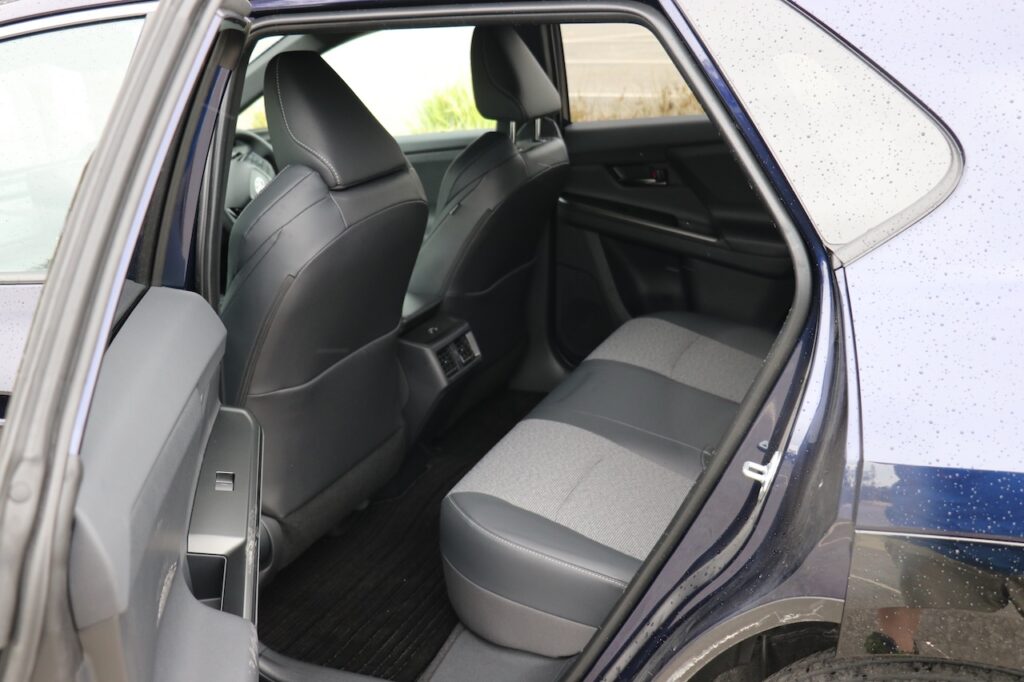
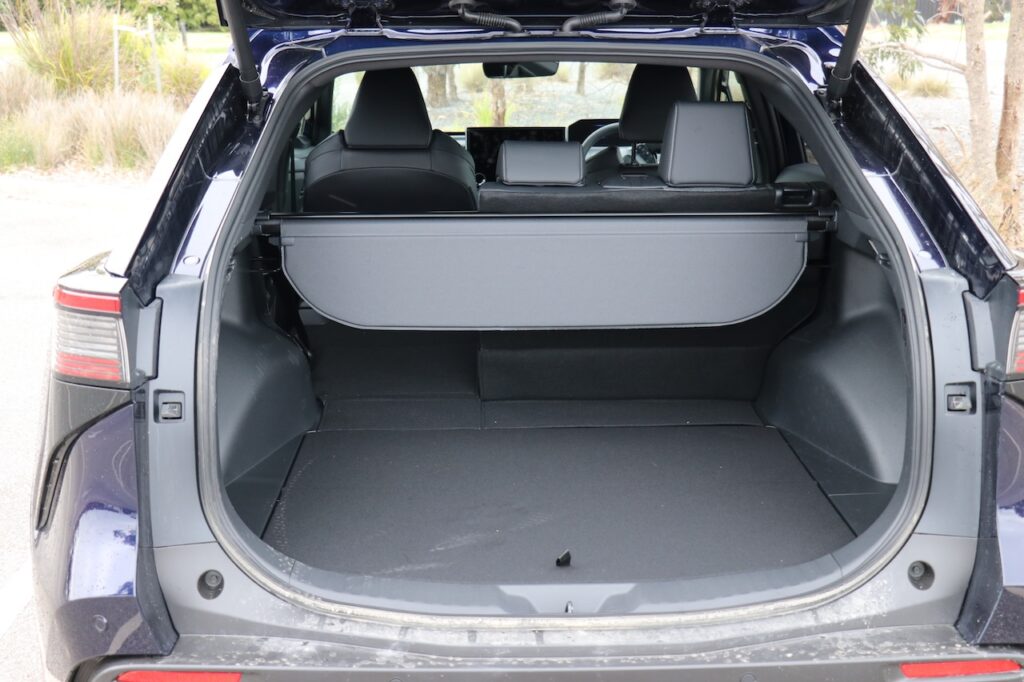
There’s also no frunk and the boot is quite small at 421 litres, although it opens up into a generous space once the rear seats are split-folded. Large mountain bike with front wheel still attached? No problem.
Perhaps the most irritating thing about the bZ4X is the way the positioning of the instrument cluster ensures it gets blocked by the rim of the steering wheel.
The only way I found to deal with it was to lower the steering wheel further than I would like. If ever a car needed a squircle steering wheel.
There are positives such as the physical buttons for audio and air-conditioning and a shortcut on the touchscreen to frequently used functions, including driver aids duch as lane keeping that are only moderately annoying.
We’d appreciate a rear windscreen wiper and a longer 240V charging cable, but apart from that there are no major criticisms.
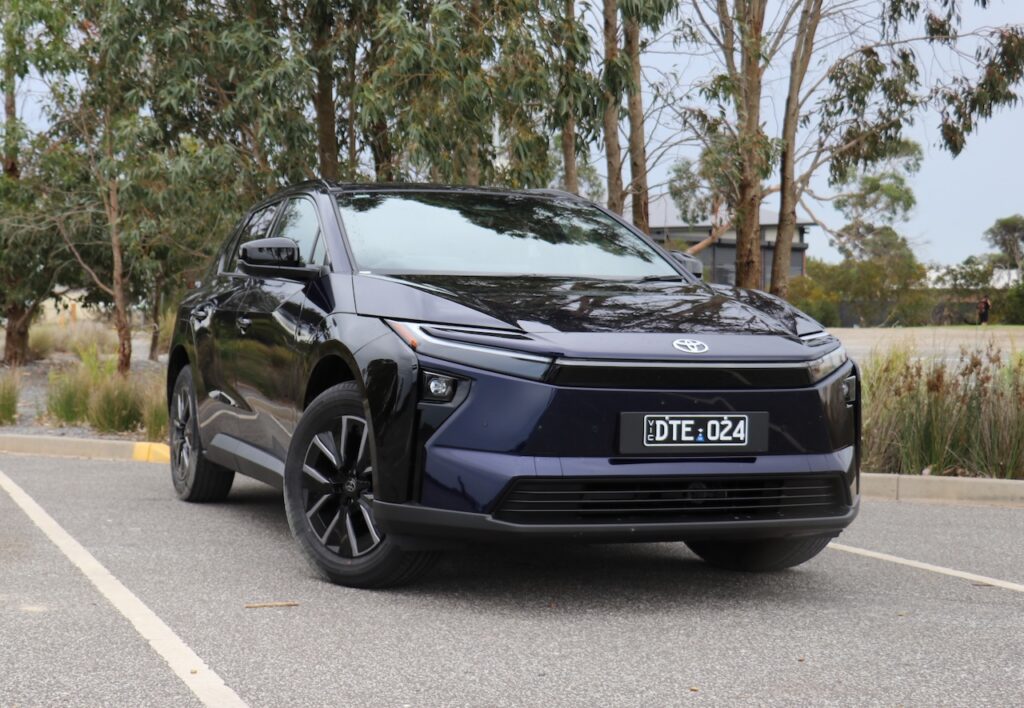
I’ll also mention in the exterior styling which isn’t so much a negative as forgettable.
This is a good car and it deserves a more pronounced character. And I mean car. Classifying this thing as an SUV, even if it does have more ground clearance than the old 2WD, is stretching things to the limit.
2026 Toyota bZ4X 2WD: Verdict
It’s very simple.
The 2026 Toyota bZ4X 2WD is a decent vehicle at a decent price with decent performance and equipment.
It’s got a couple of weakness like the driver’s seating position and boot size, but the improvements made for this update are fundamental.
It’s great to see Toyota present such a competitive vehicle in Australia’s most popular EV segment. It deserves to be taken seriously.
SCORE: 4.0/5.0
2026 Toyota bZ4X 2WD price and specifications
Price: $55,990 (plus on-road costs)
Basics: EV, 5 seats, 5 doors, SUV, 2WD
Range: 591km (WLTP)
Battery capacity: 74.7kWh lithium-ion
Battery warranty: 10 years
Energy consumption: 13.8kWh/100km
Motors: 1 front, 165kW/266.3Nm
AC charging: 22kW, Type 2 plug
DC charging: 150kW, CCS combo plug
0-100km/h: 7.4 seconds
Did you mean to add some words here?
“Classifying this thing as an SUV, even if it does have more ground clearance than the old 2WD.”
-is a bad move, wrong?
Thanks for the article. I suspect Toyota would have more of a market if it produced something like this but more corolla or yaris-sized. A lot of competition in this segment.
Book looks like a useful shape to me. Good to see rear air vents in Australia basically necessary IMO. And reasonable wheel clearance.
Thanks Erik, those words are added.