The most important new EV to be launched in 2026? And it’s unlikely to ever be sold in Australia
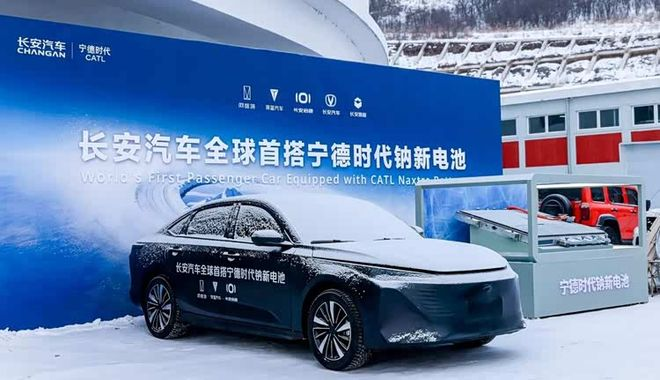
Changan Automobile has pulled the drapes off what could be the most important EV launch of 2026, even though the anonymous-looking Changan Nevo A06 sedan (pictured top) is unlikely to ever be offered in Australia.
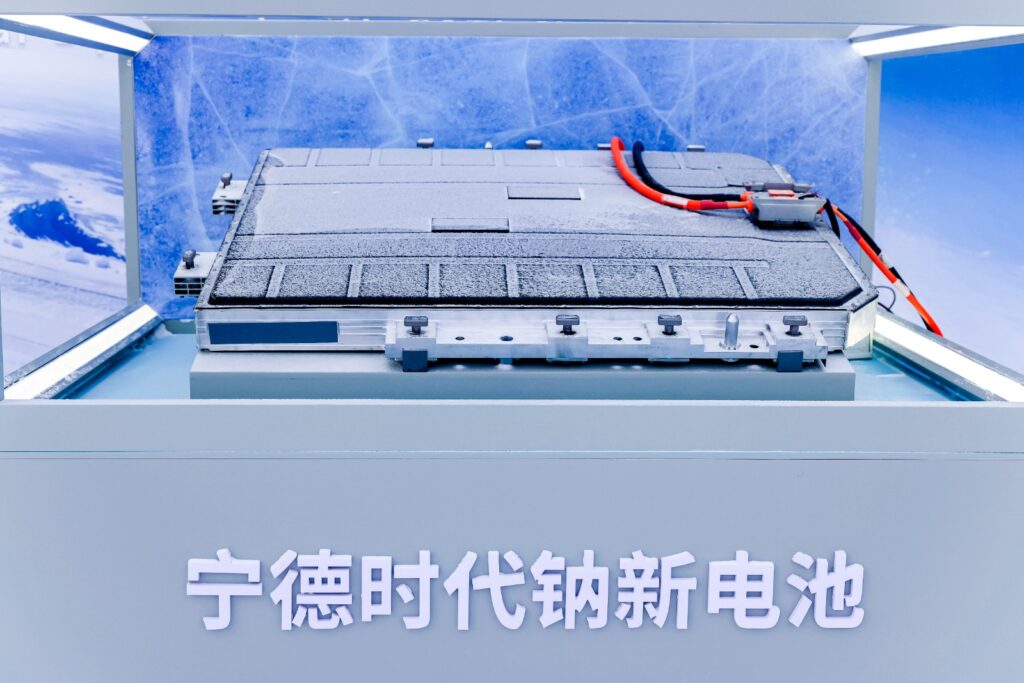
Instead, what’s made the car industry gasp is that it’s the first mass-produced EV to be fitted with CATL’s pioneering sodium-ion battery, a technology set to slash the price of electric cars to well below current combustion vehicles.
Equipped with CATL’s next-generation Naxtra battery, the Changan Nevo A06 uses a relatively small 45kWh pack that is said to provide a 400km driving range on the Chinese CLTC test cycle.
READ MORE: Revolutionary sodium-ion batteries enter mass production: Lithium prices are soaring and this is the cheap, sustainable solution
READ MORE: Used EV prices set to skyrocket in China thanks to new battery recycling rules. Should we do it in Australia?
READ MORE:EV cancer risks: Real-world study delivers verdict on battery electric electrosmog health threat
Those figures may sound unremarkable, but they are significant because the new powerpack ditches lithium in favour of cheap, abundant sodium found in rock salt and seawater.
The huge benefit — in addition to being more sustainable and environmentally friendly — is that sodium-ion batteries are predicted to cost between 30 and 40 per cent less to produce, while also being safer and more resistant to heat generated during ultra-fast DC charging.
Sodium-ion batteries are also capable of operating with little compromise in sub-zero temperatures.
More impressive is that, while earlier sodium-ion cells were less energy-dense than existing lithium tech, the first iteration of CATL’s Naxtra batteries delivers a cell energy density of 175Wh/kg, almost matching lithium iron phosphate (LFP) batteries, which typically sit between 180–200Wh/kg.
CATL is now expected to achieve parity with LFP battery packs within the next three years.
Following the release of the sodium-ion-powered sedan, Changan said the new battery — and the model itself — had met all testing requirements. The brand’s real-world test data reportedly shows that at -30°C the sodium cell discharged power at nearly three times the rate of an LFP battery.
The sodium-ion cells also maintained 90 per cent of their capability at -40°C and remained stable at temperatures as low as -50°C.
Safety performance also exceeded existing battery technologies, with no fire or explosion recorded even after cells were punctured, drilled and even sawed through while fully charged.
Changan said that following the launch of the Nevo A06, its Avatr, Deepal, Nevo and Uni brands will all roll out sodium-ion powered vehicles in the future.
With Deepal here and Avatr expected to come, the technology should arrive in Australia in the next few years,
CATL says future battery packs will be upsized to offer between 500–600km of range, while sodium-ion batteries designed for range-extender hybrids should deliver between 300–400km of EV-only range.
Despite these significant gains, lithium is expected to remain important, as ternary lithium-ion cells still average between 250–300Wh/kg — a level of energy density needed for long-range EVs.
Next-generation solid-state batteries, meanwhile, could see lithium demand increase further, as early predictions suggest energy density could rise to between 300–800Wh/kg while also allowing for ultra-fast charging.