Suzuki e Vitara Australian details announced: Two EV models and June on-sale confirmed
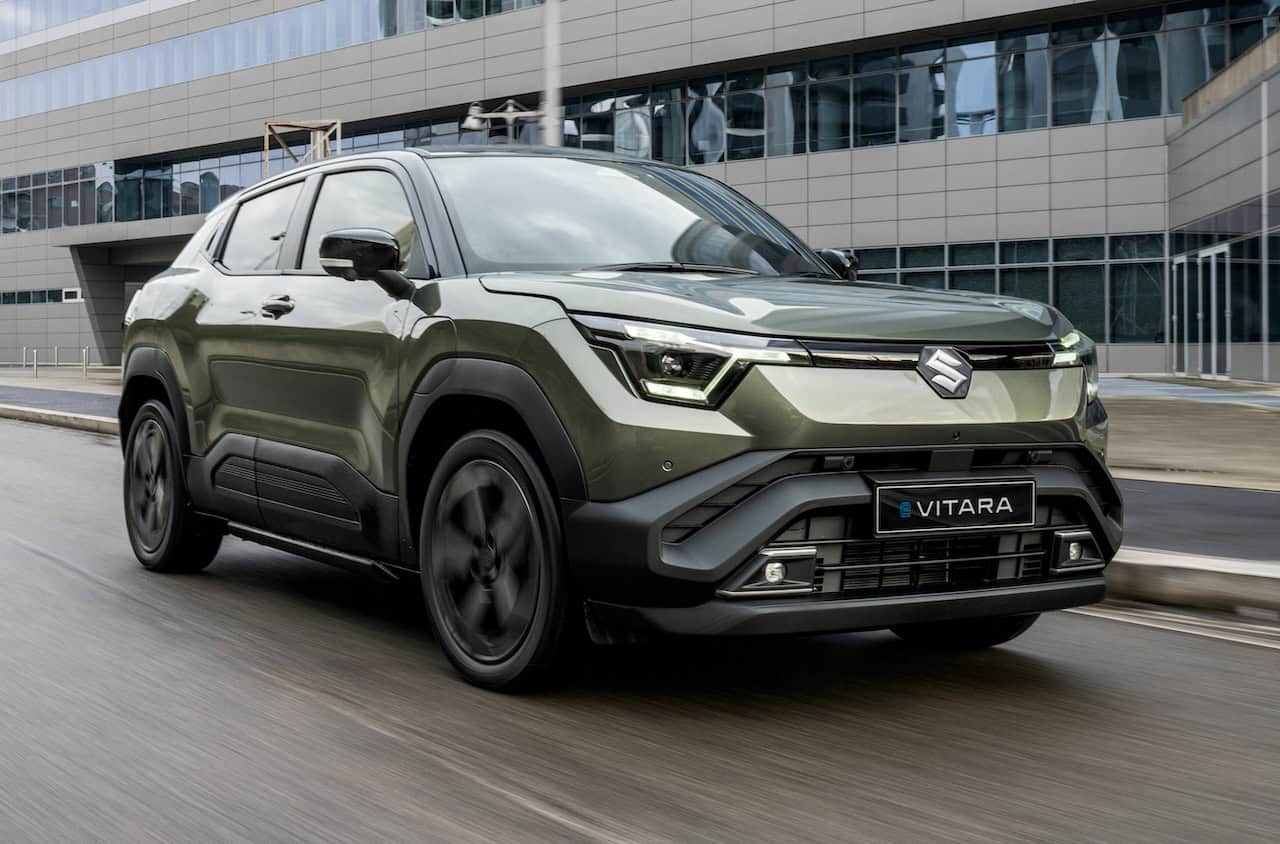
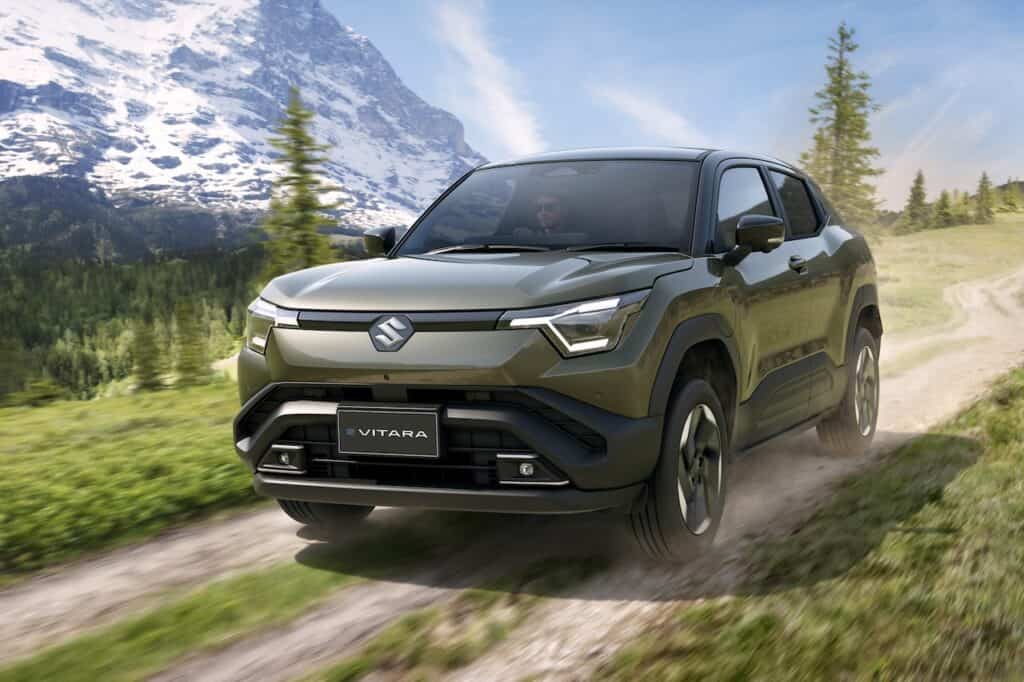
Suzuki Australia has confirmed detailed specifications for its first fully electric vehicle, the all-new Suzuki e Vitara, ahead of its local arrival from June 2026.
Just about the only important thing left unsaid is the pricing for the BYD Atto 3, Hyundai Kona and Kia EV3 rival, but somewhere beyond $40,000 would be a likely starting point.
The e Vitara marks Suzuki’s entry into the battery electric SUV market and will be offered locally in two variants, Motion and Ultra, with a choice of 49kWh front-wheel drive or 61kWh all-wheel drive powertrains..
READ MORE: Suzuki’s Aussie electrified overhaul! Cheap mild-hybrid Suzuki Fronx coming soon, electric Suzuki Vitaras will be here in 2026
READ MORE: First EVer: 2025 Suzuki eVitara is the brand’s first mass-produced EV. Watch out MG ZS EV, Hyundai Kona Electric and BYD Atto 3 if it gets the green light for Australia!
READ MORE: 2024 Suzuki Swift Hybrid review: Meet the cheapest electrified car now on-sale in Australia
It arrives at a time when Suzuki needs a boost in Australia, having suffered a 27.7 per cent sales reduction in 2026 due to a number of issues including the popular Jimny three-door being off the market and safety issues with the new Fronx.
Built on Suzuki’s newly developed Heartect-e platform, designed specifically for battery electric vehicles, the e Vitara is underpinned by a lithium iron phosphate (LFP) battery and an integrated heat pump battery thermal management system fitted as standard.
Suzuki says the new architecture is engineered to optimise cabin space, structural rigidity and driving range while efficiently integrating high-voltage systems.
In Motion guise, the 49kWh battery drives a 106kW electric motor with 193Nm of torque and a claimed driving range of 344km.
The Ultra’s 61kWh battery combines with dual motors producing 135kW and 307Nm, delivering a claimed 395km of range.
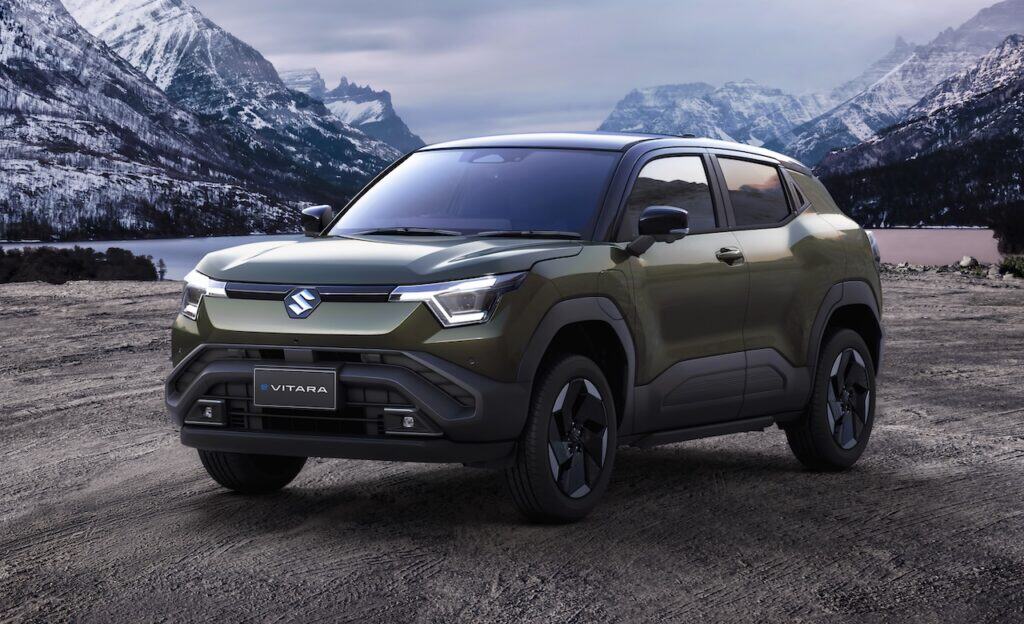
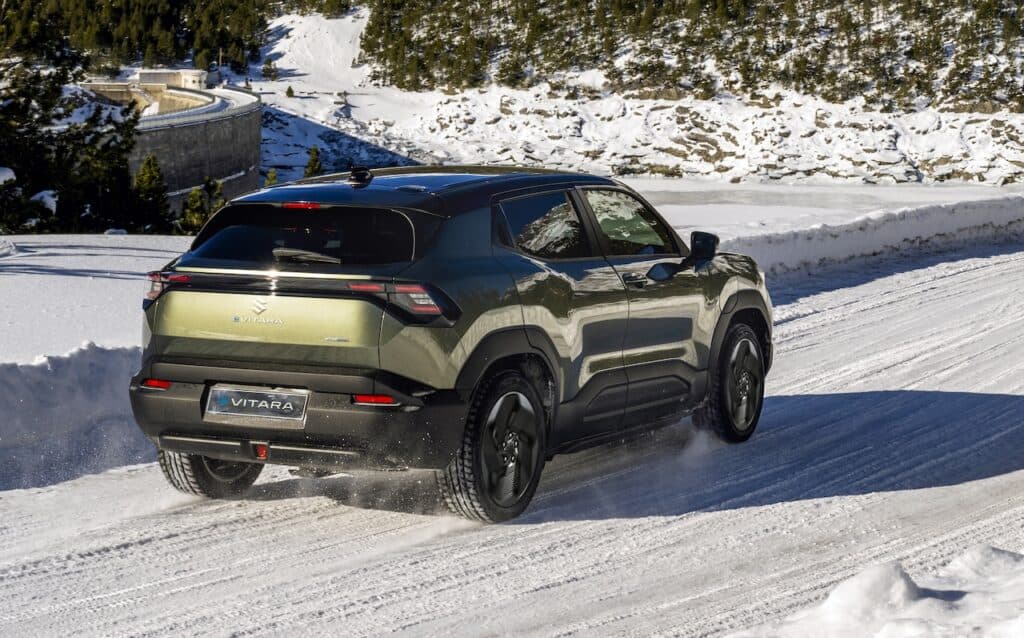
The Ultra variant also introduces Suzuki’s new Allgrip-e electric all-wheel drive system, which uses separate front and rear motors to provide torque distribution and additional traction on slippery surfaces.
Dimensionally, the e Vitara measures 4275mm long, 1800mm wide and 1635mm high, with a 2700mm wheelbase and 180mm of ground clearance.
It rides on 18-inch alloy wheels and has a five-seat layout.
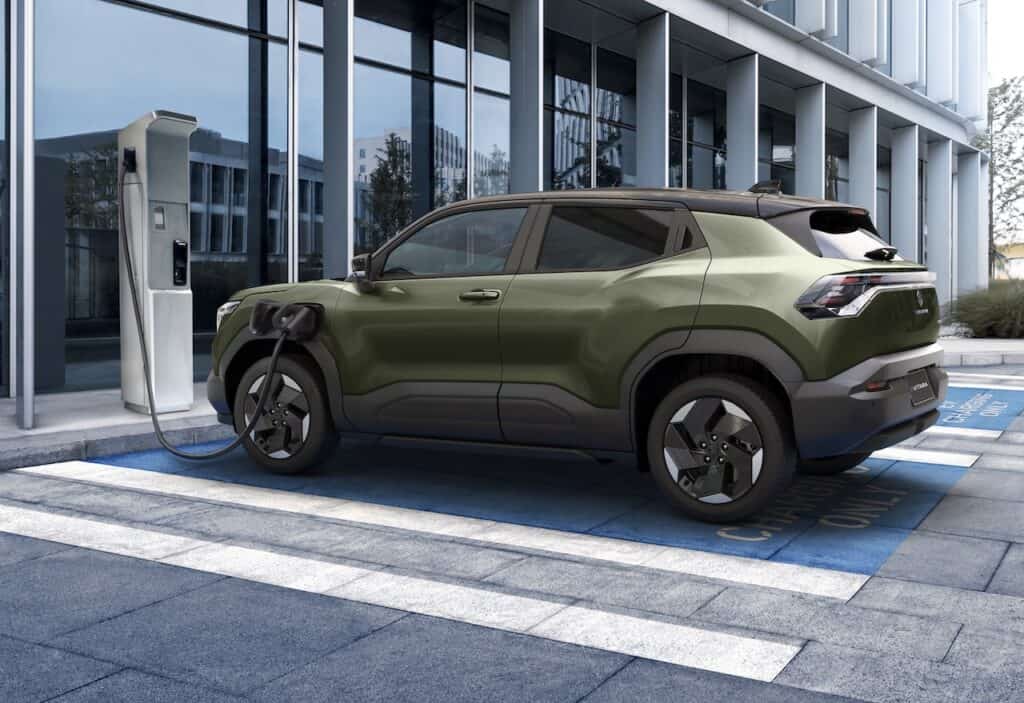
Suzuki says the e Vitara supports both AC and DC charging, with a targeted DC fast-charging time of 45 minutes from 10 to 80 per cent for both battery sizes.
On AC power, a 7kW single-phase supply is claimed to replenish the battery from 10 to 100 per cent in around 6.5 hours for the 49kWh model and nine hours for the 61kWh version, while 11kW three-phase charging reduces that to approximately 4.5 hours and 5.5 hours respectively.
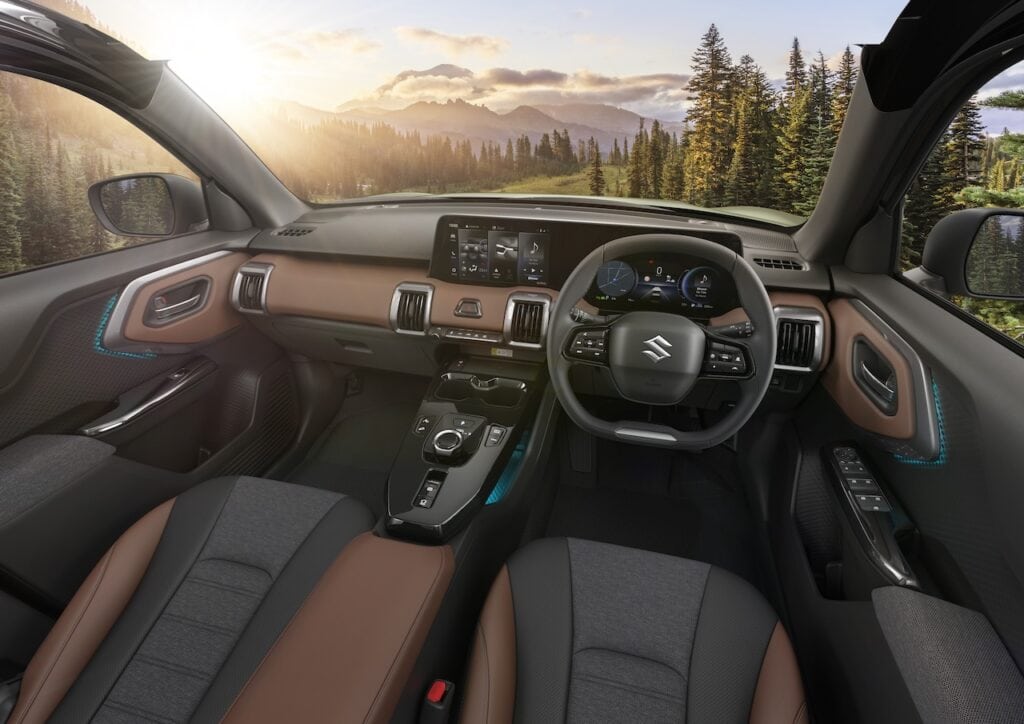
Inside, the e Vitara features a 10.25-inch digital instrument display and a 10.1-inch central touchscreen with Apple CarPlay and Android Auto connectivity, alongside physical climate control switches.
The Ultra adds items such as a glass roof with shade, Infinity sound system with subwoofer, wireless phone charging, heated front seats and an electrically adjustable driver’s seat.
Safety equipment across the range includes seven airbags, adaptive cruise control, autonomous emergency braking, lane keeping assist, blind spot monitoring, front and rear parking sensors and Suzuki’s Dual Sensor Brake Support II system.
Suzuki Australia general manager Michael Pachota said the e Vitara represents a significant milestone for the brand as it transitions into the electric era Suzuki. He highlighted a positive response to the vehicle by the Automotive Researchers’ & Journalists’ Conference of Japan (RJC).
“Strong interest across international markets gives us real confidence as we prepare to introduce this vehicle to Australian drivers,” he said.
“Recognition from respected organisations such as RJC is a proud achievement for Suzuki, reinforcing the strength of the e Vitara’s engineering and confirming that our practical, customer-focused approach to electrification is being recognised on a global stage,” said .
Expressions of interest for the e Vitara Motion and Ultra are now open via Suzuki Australia’s website, with drive-away sales expected to begin from June 2026.
E VITARA MOTION FEATURES:
- 49kWh
- FWD
- 344km driving range
- 18-inch alloys
- High Beam Assist
- RCTA
- 360 view camera
- Driving modes
- Auto headlight
- Rain-sensing wiper
- 10.25-inch digital IP
- 10.1-inch centre display with AA / CP / BT
- Leather-wrapped steering wheel
- Front & rear USB ports
- Single-zone climate control
- Interior ambient lighting (12 colours)
- Fabric seats
- 4-speaker audio
E VITARA ULTRA FEATURES, WITH ADDITION TO MOTION SPEC:
- 61 kWh
- 395km driving range
- AWD
- ALLGRIP-e
- Adaptive High Beam
- Front LED fog lamps
- Glass roof with shade
- Infinity sound system with subwoofer
- Wireless charger
- Fabric and synthetic leather seats
- Electrically adjustable driver seat
- Front heated seats
- Premium fabric and synthetic leather upholstery
SAFETY SUITE
Standard for both models:
- 7 Airbags
- Adaptive Cruise Control (ACC)
- Autonomous Emergency Braking (AEB)
- Lane Keeping Assist (LKA)
- Lane departure Prevention (LDP)
- Forward Collision Warning (FCW)
- High Beam Assist (HBA)
- Blind Spot Monitor
- Electronic Stability Control (ESC)
- Anti-Lock Braking System (ABS)
- Dual Sensor Brake Support II (DSBS II)
- Multi-Collision Braking (MCB)
- Front and rear parking sensors
TECHNICAL SPECIFICATIONS
| e VITARA Motion | e VITARA Ultra | |||||||
| Drive system | 2WD | 4WD | ||||||
| DIMENSIONS | ||||||||
| Overall length | 4,275 mm | |||||||
| Overall width | 1,800 mm | |||||||
| Overall height | 1,635 mm | |||||||
| Wheelbase | 2,700 mm | |||||||
| Tread | Front | 1,540 mm | ||||||
| Rear | 1,545 mm | |||||||
| Minimum turning radius | 5.2 mm | |||||||
| Minimum ground clearance | 180 mm | |||||||
| Seating capacity | 5 | |||||||
| MOTOR | ||||||||
| Maximum output | 106 kW | 135 kW | ||||||
| Maximum torque | 193Nm | 307 Nm | ||||||
| BATTERY | ||||||||
| Type | Lithium Iron | |||||||
| Total Capacity kWh | 49 kWh | 61kWh | ||||||
| CHARGING | ||||||||
| Estimated charging time | ||||||||
| AC charging, 7kW, 1 phase > hh:mm 10-100% | 6:30 | 9:00 | ||||||
| AC charging, 11kW, 3 phases > hh:mm 10-100% | 4:30 | 5:30 | ||||||
| DC rapid charging > hh:mm 10-80% | 0:45 | 0:45 | ||||||
| Charging inlet | AC charging inlet | Type2 (1phase) | ||||||
| DC charging inlet | CCS2 | |||||||
| TRANSMISSION | ||||||||
| Type | Single-speed electric drive | |||||||
| CHASSIS | ||||||||
| Steering | Rack & pinion | |||||||
| Front and rear brakes | Ventilated disc | |||||||
| Suspensions | Front | MacPherson strut with coil spring | ||||||
| Rear | Multi-link | |||||||
| WHEELS | ||||||||
| Tyres (width/profile) | 225/55/R18 | |||||||
| Wheel type | Machine- finished alloy wheel | |||||||
| WEIGHT | ||||||||
| Curb weight | 1,702 kg | 1,860-1,899 kg | ||||||